Search News
TerraVista Metrics (TVM)Industry Portal
TerraVista Metrics (TVM)Hot Articles
TerraVista Metrics (TVM)- Choosing an Amusement Equipment Testing Agency: Accreditation and ScopeChoosing an amusement equipment testing agency? Learn how to verify accreditation, assess technical scope, and compare reports before you commit.
- Global Temporary Buildings Market Forecast to Reach $5.88 Billion by 2032Global temporary buildings market is forecast to reach $5.88 billion by 2032. Explore the modular, reusable and rapid-assembly trends driving growth.
- Product Benchmarking: How to Compare Material Performance and DurabilityMaster product benchmarking and material comparison with practical tips for evaluating test data, durability and lifecycle costs. Make confident purchasing decisions.
Popular Tags
TerraVista Metrics (TVM)Industry NewsLeima Films Debuts Diffused Light Tech for Glamping Tents at HortEx2026 Thailand
auth.Julian Thorne (Sustainable Infrastructure Architect)Time
Nov 07, 2026Click Count
From May 20–22, 2026, Leima Films showcased its diffused-light PO film and blueberry-specific mulch film at HortEx2026 Thailand in Bangkok’s BITEC exhibition center. The event signals growing relevance of optical climate-control films for specialty agriculture and premium outdoor accommodation sectors — particularly in high-irradiance tropical and arid markets such as Southeast Asia, the Middle East, and Latin America.
Event Overview
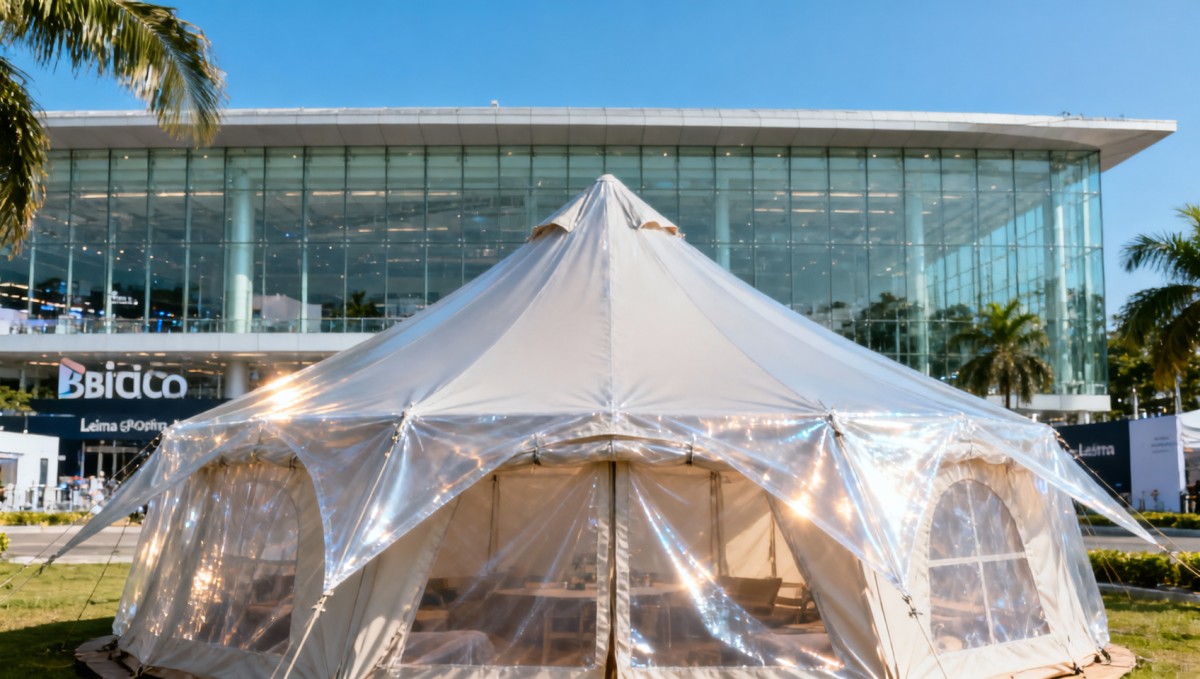
HortEx2026 Thailand took place from May 20 to 22, 2026, at the Bangkok International Trade & Exhibition Centre (BITEC). Leima Films exhibited its ‘Leima Diffused Light PO Film’ and ‘Blueberry-Specific Mulch Film’, highlighting its proprietary Diffused Light® technology. According to publicly shared information, this technology has been verified to reduce photoinhibition and leaf scorch risk under intense solar irradiation. It is now confirmed applicable to integrated climate-control greenhouse systems supporting glamping tent operations in tropical environments.
Industries Affected
Direct Export-Trading Firms
Exporters serving Southeast Asian, Middle Eastern, or Latin American horticultural infrastructure projects may face shifting product specifications. The demonstrated compatibility of Leima’s films with glamping-integrated greenhouse systems introduces a new application category beyond traditional row-crop mulching — one requiring certified optical performance and rapid installation readiness.
Raw Material Procurement Entities
Suppliers of polyolefin resins, masterbatches, or light-diffusing additives may observe early demand signals for formulations optimized for diffuse transmission and UV stability under high-temperature, high-humidity conditions. No volume or specification changes are confirmed; however, technical inquiries related to tropical performance validation have increased.
Manufacturers of Modular Climate-Control Structures
Firms producing prefabricated greenhouse shells, glamping support infrastructure, or turnkey agritourism enclosures may need to reassess film integration standards. Leima’s validation implies that film selection is no longer solely a post-installation procurement decision but part of structural thermal design — affecting compatibility testing, warranty frameworks, and installation protocols.
Distribution & Channel Partners in Tropical Agri-Input Markets
Regional distributors handling plastic mulch, greenhouse covers, or agritourism equipment may see rising requests for bundled solutions — e.g., film + mounting hardware + thermal performance documentation. Inventory planning may require greater attention to technical datasheets and regional certification status, rather than price or weight alone.
What Stakeholders Should Monitor and Act On
Track official technical validation reports from third-party tropical test sites
Leima’s claim of verified suitability for glamping-integrated systems is based on field trials — not yet published in open-access technical repositories. Stakeholders should monitor whether independent verification (e.g., from Thai Department of Agriculture or ASEAN Agri-Tech Centers) becomes available, as it would affect procurement confidence and tender eligibility.
Monitor shifts in public-sector agri-tourism infrastructure tenders
In Thailand, Indonesia, and the UAE, several national agritourism development plans include climate-resilient glamping zones. If upcoming tenders begin referencing optical film performance parameters (e.g., haze >85%, PAR transmission >75%, thermal attenuation index), it signals formalization of this application segment — warranting early engagement with technical sales teams.
Distinguish between demonstration-level adoption and scalable deployment
The HortEx2026 showcase reflects a proof-of-concept stage. There is no public confirmation of commercial orders, production ramp-up, or distribution partnerships. Stakeholders should treat current activity as an indicator of technical direction — not evidence of market saturation or imminent substitution of conventional films.
Prepare internal cross-functional alignment on film-as-system-component
For manufacturers and integrators, updating internal workflows to treat agricultural films as engineered components — rather than consumables — may be necessary. This includes aligning R&D, procurement, and after-sales service units around optical performance metrics, installation tolerances, and tropical aging data.
Editorial Perspective / Industry Observation
Observably, this appearance at HortEx2026 Thailand marks a strategic pivot: agricultural film suppliers are expanding their value proposition beyond soil and crop protection into ambient climate modulation for hybrid land-use models (e.g., agritourism + production). Analysis shows this is less about replacing existing greenhouse film categories and more about creating a new adjacency — one where optical properties directly influence guest comfort, energy load, and operational uptime in premium outdoor accommodations. From an industry standpoint, it reflects increasing convergence between horticultural engineering and experiential infrastructure design. Current activity is best understood as a signal — not yet a shift — indicating where material performance expectations may evolve over the next 12–24 months.

Leima Films’ participation in HortEx2026 Thailand was publicly announced via official exhibition channels and brand press releases dated May 2026. No third-party performance studies or commercial deployment data have been released as of publication. Ongoing observation is warranted for updates from regional agricultural extension bodies or glamping infrastructure developers in target markets.
Conclusion
This HortEx2026 Thailand appearance does not represent an immediate market transformation, but rather a measurable inflection point in how functional agricultural plastics interface with emerging land-use models. For stakeholders, it is better understood as an early-stage technical alignment — one highlighting the growing relevance of optical film properties in non-traditional, climate-sensitive applications. A measured, evidence-based approach — prioritizing verified performance data over promotional claims — remains the most appropriate response at this stage.
Source: Official HortEx2026 Thailand exhibition program (May 2026); Leima Films press release (May 2026). Pending further verification: independent tropical-field performance data and commercial deployment records.
Recommended News
 Oct 31, 2026RINA Prime: 37% of Italian Auction Properties Have Glamping PotentialItalian auction properties may offer glamping potential: explore RINA Prime’s 37% estimate and the essential checks for investors, developers and operators.
 Oct 19, 2026Gwynedd Glamping Pod Proposal Raises Concerns Over Protected BatsGwynedd glamping pod proposal faces protected bat concerns at Bluebell Woods. Explore what the survey means for the 11-pod scheme and the council’s planning decision.
 Aug 15, 2026Hainan Expands Huiqiongbao Direct Settlement to 20 Hospitals for Project Staff CoverageHainan expands Huiqiongbao direct settlement to 20 hospitals, improving medical reimbursement efficiency for foreign project staff and supporting compliance, ESG, and workforce planning in Modular Cabins, Glamping Tents, and Premium Camping projects.
 Aug 10, 2026EU CE Rule Takes Effect for Glamping Tent ExportsGlamping Tent exports to the EU now face a stricter CE compliance rule. Learn how EN 13782:2026 and ISO 22419:2026 reports affect customs clearance, buyer checks, and market access.
 Aug 09, 2026EU Rule Takes Effect for Glamping Tent CertificationEU Rule Takes Effect for Glamping Tent Certification: learn how EN 13782:2026 impacts fire and structural testing, CE compliance, costs, lead times, and EU market access.
 Aug 07, 2026CPSC Tightens Glamping Tent Testing RulesCPSC Tightens Glamping Tent Testing Rules: learn how ASTM F3497-26, 110 km/h wind testing, and burn-rate limits will affect certification, shipping, and U.S. import compliance from October 2026.
 Aug 06, 2026EU Tightens Glamping Tent Entry RulesEU Tightens Glamping Tent Entry Rules: learn how EN 14960:2026 changes EU market access, fire and structural testing, compliance timelines, and delivery planning.
 Aug 04, 2026CPSC Recalls 124,000 Glamping Tents Over Wind Test FailureCPSC recalls 124,000 glamping tents after an ASTM F3365-26 wind test failure. See how this impacts North America imports, customs clearance, inventory risk, and compliance-ready shipments.
 Aug 03, 2026EU Rule Takes Effect for Certified Glamping TentsEU Rule Takes Effect for Certified Glamping Tents: learn how EN 16433-2:2026 impacts compliance, customs clearance, certification timelines, and EU market access for premium camping suppliers.
 Aug 01, 2026EU Rule Takes Effect: Glamping Tents Need EN 13501-1 B-s1,d0Glamping Tents entering the EU now need EN 13501-1 B-s1,d0 compliance. Learn what the 2026 rule means for exporters, buyers, testing, and customs clearance.
 Jul 31, 2026EU PFAS Ban Hits Glamping Tent MaterialsEU PFAS ban hits glamping tent materials: learn how REACH Annex XVII affects coatings, customs clearance, compliance, and sourcing before August 1, 2026.
 Jul 30, 2026EU Requires EN 14749:2026 Approval for Glamping TentsEU Requires EN 14749:2026 Approval for Glamping Tents: learn how CE marking, type certification, and new EU compliance rules will impact exports, customs clearance, and delivery timelines.
 Jul 29, 2026EU Enforces EN 14749:2026 for Glamping Tent ExportsEU Enforces EN 14749:2026 for Glamping Tent Exports—learn how the new CE marking and Notified Body type examination rules affect compliance, testing, shipment timing, and EU market access.
 Jul 28, 2026EU Enforces EN 14749:2026 Labeling for Glamping TentsEU Enforces EN 14749:2026 Labeling for Glamping Tents: learn how the new EU compliance rule affects customs, documentation, inspections, and shipment readiness.
 Jul 27, 2026EU Rule Takes Effect for Glamping Tent CertificationEU Rule Takes Effect for Glamping Tent Certification: learn how EN 14749:2026 changes fire, wind, and CE compliance, and what exporters must do now to keep EU market access.
 Jul 25, 2026CPSC Sets Dual Certification Rule for Glamping TentsCPSC Sets Dual Certification Rule for Glamping Tents: learn how ASTM F3507-26 and UL 711A requirements from Oct. 1, 2026 may affect imports, testing, delivery, and U.S. market access.
 Jul 24, 2026EN 13857:2026 Tightens EU Rules for Glamping TentsEN 13857:2026 tightens EU rules for glamping tents with stricter wind resistance, structural stability, and anchoring tests. Learn what exporters and buyers must do before October 1, 2026.
 Jul 23, 2026CPSC Tightens Glamping Tent Safety Rule from Aug. 1CPSC tightens Glamping Tent safety rules from Aug. 1. Learn how new flame and wind-load tests may affect compliance, certification, imports, and shipment readiness.
 Jul 22, 2026EU Rule Tightens CE Access for Glamping TentsGlamping Tents face stricter EU CE access under EN 13782:2026+A1:2026. Learn how new fire Class B-s1,d0 and wind/snow load checks impact exports, certification, and market entry.
 Jul 20, 2026EU Enforces Dual Certification for Glamping TentsEU Enforces Dual Certification for Glamping Tents: learn how EN 14960:2026+A1:2026 changes fire, wind, CE documentation, and supplier compliance before EU shipments.
 Jul 19, 2026EU Rule Tightens Glamping Tent Entry RequirementsGlamping tent exporters to the EU face tighter entry rules from Oct 1, 2026. Learn how new fire and wind tests impact compliance, certification, sourcing, and market access.
 Jul 17, 2026CPSC Rule Takes Effect for Glamping Tent ImportsCPSC Rule Takes Effect for Glamping Tent Imports: learn how the new U.S. compliance standards affect customs clearance, testing, and market access for exporters and manufacturers.
 Jul 14, 2026EU Rule Change Sets Full-Scale Wind Test for Glamping TentsGlamping Tents face a major EU compliance shift: EN 13782:2026 now requires full-scale wind testing and third-party reports. Learn what exporters, buyers, and suppliers must do before October 2026.
 Jul 13, 2026SASO Opens New Glamping Tent Certification RouteSASO Opens New Glamping Tent Certification Route: learn how Saudi Arabia now accepts CNAS EN 13782:2026 reports, helping suppliers cut certification time, avoid duplicate testing, and enter the market faster.
{item.publish_time}{item.title}{item.description}Quarterly Executive Summaries Delivered Directly.
Join 50,000+ industry leaders who receive our proprietary market analysis and policy outlooks before they hit the public library.