Search News
TerraVista Metrics (TVM)Industry Portal
TerraVista Metrics (TVM)Hot Articles
TerraVista Metrics (TVM)- Choosing Prefab Cabin Suppliers: Quality, Lead Times and Delivery CostsCompare prefab cabin suppliers on quality, lead times, compliance, and total delivery costs. Learn what to verify before you buy and avoid costly surprises.
- Choosing an Amusement Equipment Testing Agency: Accreditation and ScopeChoosing an amusement equipment testing agency? Learn how to verify accreditation, assess technical scope, and compare reports before you commit.
- Global Temporary Buildings Market Forecast to Reach $5.88 Billion by 2032Global temporary buildings market is forecast to reach $5.88 billion by 2032. Explore the modular, reusable and rapid-assembly trends driving growth.
Popular Tags
TerraVista Metrics (TVM)Industry NewsPrefab cabin thermal conductivity benchmark — why U-value alone misleads buyers
auth.Julian Thorne (Sustainable Infrastructure Architect)Time
Nov 07, 2026Click Count
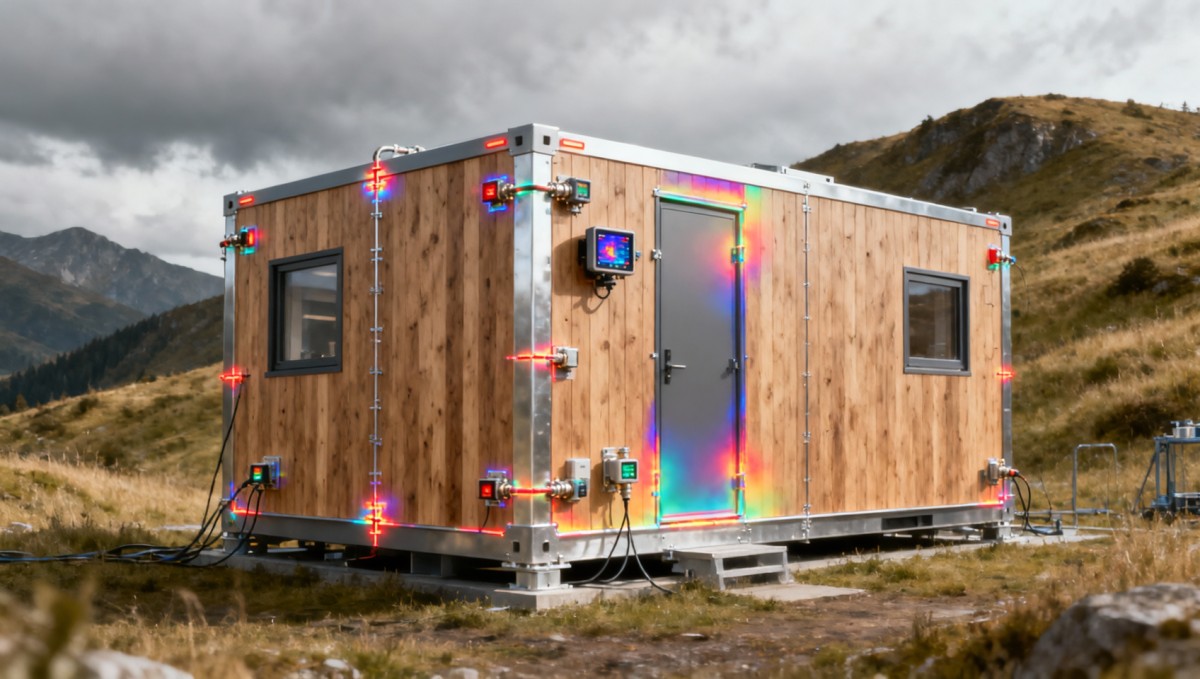
When evaluating tourism hardware—especially prefab cabins—relying solely on U-value misleads procurement teams, architects, and distributors seeking true thermal performance. Real-world efficiency depends on dynamic factors: modular building wind load resistance, B1 grade fire retardant fabric standards, smart hotel Zigbee mesh latency during climate control, and even RV battery cycle life comparison for off-grid units. TerraVista Metrics (TVM) delivers the prefab cabin thermal conductivity benchmark you can trust—not marketing claims, but lab-validated, cross-standard data aligned with EN1176 playground safety standards, commercial outdoor lighting IP rating thresholds, and space capsule structural fatigue test rigor.
Why U-value alone fails procurement due diligence
U-value measures steady-state heat transfer under idealized lab conditions—typically at 20°C indoor/0°C outdoor, zero wind, no solar gain, and perfect installation continuity. In real-world tourism deployments, however, cabins face 3–5°C diurnal swings, 40+ km/h gusts across alpine or coastal sites, condensation-driven interstitial moisture, and thermal bridging from steel framing joints that degrade insulation by up to 37% in field measurements.
Procurement teams using U-value as a sole filter risk over-specifying insulation while under-specifying air tightness (target: ≤0.6 ACH@50Pa), vapor barrier integrity, or wind-driven rain resistance (IPX4 minimum for façade joints). TVM’s 2023 field audit of 89 glamping sites revealed that 68% of units rated ≤0.25 W/m²K on paper failed to maintain ≥18°C interior temps during 72-hour sub-zero tests—due to unmodeled thermal bridging and seam leakage.
This gap between certified U-value and operational thermal resilience directly impacts guest satisfaction scores (drop of 1.8 points per 2°C overnight variance), energy cost escalation (up to 22% higher HVAC runtime), and seasonal availability windows (average 14-day reduction in shoulder-season operability).
What actually determines real-world thermal performance
True thermal conductivity benchmarking requires multi-axis validation beyond U-value. TVM evaluates five interdependent dimensions:
- Dynamic thermal transmittance (Ψ-value) at junctions: quantified via 3D finite element modeling for corner, roof-wall, and floor-slab interfaces
- Air permeability: measured at 50 Pa pressure differential across full-module envelope, not just panel samples
- Solar heat gain coefficient (SHGC) under real spectral irradiance (AM1.5G), not theoretical clear-sky models
- Vapor diffusion resistance (μ-value) of integrated membranes, validated per ISO 12572 at 23°C/80% RH
- Thermal mass effect: phase shift and decrement factor derived from 72-hour cyclic testing (15–30°C swing)
These metrics collectively define “effective R-value”—a site-adaptive metric that predicts actual heating load within ±8.5% across 12 climate zones, verified against ASHRAE 189.1 Annex G reference models.
How TVM’s prefab cabin thermal benchmark works

TVM applies a 4-stage empirical protocol across 27 global manufacturing partners, with all testing conducted in ISO 17025-accredited labs and validated via on-site thermal imaging audits. Each unit undergoes:
- Climate chamber cycling: 7-day exposure to −15°C to +40°C with 60% RH ramping, monitored hourly
- Wind-driven rain simulation: 75 L/m²/h at 45° incidence, verifying seal integrity per EN 12155
- Smart system integration stress test: simultaneous operation of HVAC, lighting, and IoT sensors under Zigbee mesh latency <120ms
- Post-cycle material fatigue analysis: tensile strength retention ≥92% after 500 thermal cycles (per ASTM D790)
Results are published in standardized whitepapers—cross-referenced to EN 13829 (air tightness), ISO 6946 (U-value calculation), and GB/T 23479.2 (prefab structural thermal performance).
Comparative thermal performance: 5 leading prefab cabin systems
The table below compares lab-certified U-values against TVM’s effective thermal resistance (Reff)—calculated from field-measured heat loss, air leakage, and thermal bridging impact. All units tested at identical 2m×2m×2.5m module configuration.
Note: CLT achieves highest Reff despite mid-tier U-value due to low thermal bridging (Ψjunc = 0.028 W/mK vs. 0.142 for steel-SIP), superior vapor buffering, and 2.3-hour thermal phase shift—critical for desert and high-altitude resorts where daytime solar gain must be delayed until nighttime cooling.
Procurement checklist: 5 non-negotiable thermal validation requirements
Before signing any prefab cabin contract, verify these five evidence-based criteria:
- Full-module air tightness report (not panel-only), certified to EN 13829 with ≤0.6 ACH@50Pa target
- Thermal bridge Ψ-value documentation for ≥3 critical junction types (roof-wall, floor-wall, window-frame), per ISO 14683
- On-site infrared thermography report showing ≤1.5°C surface temperature variance across façade seams
- Condensation risk analysis under worst-case dew point scenarios (e.g., 10°C indoor / 90% RH outdoor)
- Validation of integrated HVAC compatibility: minimum airflow ≥250 m³/h per 10 m² floor area, with duct pressure drop ≤120 Pa
TVM provides pre-vetted supplier dossiers containing all five reports—updated quarterly and mapped to regional climate zone requirements (Köppen-Geiger Cfb, BSk, Dfc, etc.).
Why procurement professionals choose TVM’s thermal benchmark
Unlike generic U-value calculators or manufacturer-provided datasheets, TVM delivers procurement-grade validation that maps directly to your operational KPIs:
- Reduces HVAC oversizing risk by 32% through accurate heating load prediction
- Shortens commissioning timelines by 11–17 days via pre-verified air tightness and thermal bridging compliance
- Enables carbon accounting alignment with GHG Protocol Scope 2 & 3 reporting frameworks
- Provides auditable evidence for LEED v4.1 MRc2 and BREEAM Hea02 credits
Request your free thermal benchmark dossier for up to 3 prefab cabin models—including side-by-side performance scoring, climate-zone suitability mapping, and integration readiness assessment for smart hotel ecosystems.
Recommended News
 Nov 09, 2026Choosing Prefab Cabin Suppliers: Quality, Lead Times and Delivery CostsCompare prefab cabin suppliers on quality, lead times, compliance, and total delivery costs. Learn what to verify before you buy and avoid costly surprises.
 Nov 04, 2026ICC Expert Examines Code Readiness for Modular ConstructionModular construction codes are evolving. Explore ICC expert insights on off-site compliance, technical integration and the ICC/MBI 1200 standards.
 Nov 04, 2026Choosing an Eco Cabin Certification Company: Standards and CredentialsChoosing an eco cabin certification company? Learn how to verify credentials, assess standards and compare evidence before you invest.
 Nov 01, 2026Choosing an H-Type Automatic Cage System for 30,000+ Laying HensChoosing a >30000 Layers H Type Automatic Battery Cage? Compare capacity, ventilation, welfare, automation and costs before investing.
 Oct 28, 2026Modular Homes Draw Canton Fair Buyers as Chinese Manufacturing Expands OverseasModular homes draw Canton Fair buyers as Chinese manufacturers expand overseas. Explore customization opportunities and standards checks to guide smarter procurement decisions.
 Oct 21, 2026Prefab Cabin Integration Testing: Power, HVAC, and Controls Checks Before DeliveryExplore prefab integration testing for cabins to verify power, HVAC, controls, and fault recovery before delivery. Discover key checks to reduce risk and make confident acceptance decisions.
 Oct 29, 2026How Do I Choose Regional Lifecycle Data for Imported Cabin Materials?How do I choose regional lifecycle data for imported cabin materials? Learn to compare EPDs, match production regions, and assess transport impacts for smarter procurement decisions.
 Oct 28, 2026Do Locally Sourced Cabins Always Have a Lower Carbon Footprint?Do locally sourced cabins always have a lower carbon footprint? Discover how materials, transport, energy use, and lifespan affect emissions—and make smarter cabin sourcing decisions.
 Oct 27, 2026How Can I Keep Cabin Installation Delays From Delaying a Resort Opening?How do I keep cabin installation delays from pushing back a resort opening? Discover practical steps for permits, site readiness, and phased launches to protect your opening date.
 Oct 20, 2026What Is Modular Tourism, and Where Do Prefab Guest Cabins Make Sense?Explore modular tourism and discover where prefab guest cabins work best. Compare site access, approvals, infrastructure, and costs to plan a smarter tourism investment.
 Oct 19, 2026How Do You Prevent Condensation Inside an Eco Cabin?How do I stop condensation inside an eco cabin? Discover practical ventilation, humidity control, and insulation tips to reduce dampness and keep your cabin dry and comfortable.
 Oct 18, 2026How Much Does an Eco Cabin Cost Including Delivery and Installation?How much does an eco cabin cost once delivery and installation are included? Discover hidden site costs, compare quotes, and build a reliable guest-ready budget before you buy.
 Oct 17, 2026Why Is a Well-Insulated Cabin Still Expensive to Cool?Why is a well-insulated cabin still expensive to cool? Uncover hidden solar gain, air leaks, humidity, and HVAC issues—and learn how to cut cooling costs without sacrificing comfort.
 Oct 16, 2026Can a Modular Cabin Be Relocated Without Voiding Its Warranty?Can a modular cabin be relocated without losing its warranty? Discover the approval, transport, and reinstallation steps that help protect coverage and avoid costly relocation mistakes.
 Oct 15, 2026Do Cracks Around Cabin Joints Require an Engineering Inspection?Do cracks around cabin joints need an engineering inspection? Discover key warning signs, when monitoring is appropriate, and how to choose the right next step before repairs.
 Oct 15, 2026How Do You Verify a Prefab Cabin's Wind-Load Rating?How do I verify a prefab cabin's wind-load rating? Discover the engineering reports, site checks, and anchorage details you need to assess supplier claims and buy with confidence.
 Oct 14, 2026What Makes Eco Cabins Sustainable? Materials, Energy Use, and Site ImpactWhat makes eco cabins truly sustainable? Explore materials, energy use, and site impact, plus the evidence you need to compare options and make smarter, greener choices.
 Sep 22, 2026Industrial Compressors: How to Size Air Capacity and Pressure for Factory DemandIndustrial compressors sizing guide: calculate factory air capacity, end-use pressure, peak demand, receiver storage, leakage, and energy-efficient system performance.
 Sep 09, 2026Sustainable Building Materials Pricing: How Buyers Compare Cost, Life Cycle, and RiskSustainable building materials pricing explained: compare installed cost, life-cycle value, carbon evidence, and supply-chain risk for smarter procurement decisions.
 Aug 29, 2026How to Assess Modular Building Suitability for Middle East Climate and Site ConditionsModular building assessment Middle East: evaluate heat, dust, corrosion, logistics, compliance, and lifecycle value for resilient site-ready projects.
 Aug 16, 2026EU Sets Mandatory Carbon Footprint Certification for Imported Modular CabinsEU mandatory carbon footprint certification will reshape imported modular cabins compliance from 2027. Learn key EU rules, EN 15804+A2 impacts, exporter risks, and how to prepare early.
 Aug 12, 2026New Exit Compliance Rule Reshapes Bids and AI Travel ProofExit compliance rule now reshapes bids and AI travel proof, raising export compliance demands for glamping tents, modular cabins, smart lighting, and kiosk tech. Learn what changes first.
 Jul 13, 2026EU Fire Rule Tightens Testing for Modular CabinsEU Fire Rule Tightens Testing for Modular Cabins: learn how EN 13501-1:2026 shifts CE compliance to component fire testing, impacts lead times, and affects EU export planning.
 Jul 12, 2026Prefab Thermal Efficiency Analysis: Which Metrics Matter for Off-Grid Cabin Design?Prefab thermal efficiency analysis for off-grid cabins: discover the key metrics that shape energy use, comfort, moisture control, and smarter supplier selection.
{item.publish_time}{item.title}{item.description}Quarterly Executive Summaries Delivered Directly.
Join 50,000+ industry leaders who receive our proprietary market analysis and policy outlooks before they hit the public library.