Search News
TerraVista Metrics (TVM)Industry Portal
TerraVista Metrics (TVM)Hot Articles
TerraVista Metrics (TVM)- Supply Chain Intelligence for Procurement: How to Identify Supplier RisksSupply chain intelligence for procurement helps you uncover supplier risks, verify critical evidence, and protect delivery, quality, and compliance.
- AHLA and Actabl Report Links AI to Faster Hotel Tasks and Improved EfficiencyHotel AI helps employees complete routine tasks faster. Explore the AHLA and Actabl report on efficiency, staffing and more time for guest service.
- Eco-Lodging Materials: How to Verify Certification ClaimsVerify eco lodging materials certification with confidence. Learn how to check claims, trace products and avoid misleading sustainability statements.
Popular Tags
TerraVista Metrics (TVM)Industry NewsTourism hardware durability gaps: When weather resistance specs outpace real-world testing
auth.Julian Thorne (Sustainable Infrastructure Architect)Time
Nov 05, 2026Click Count
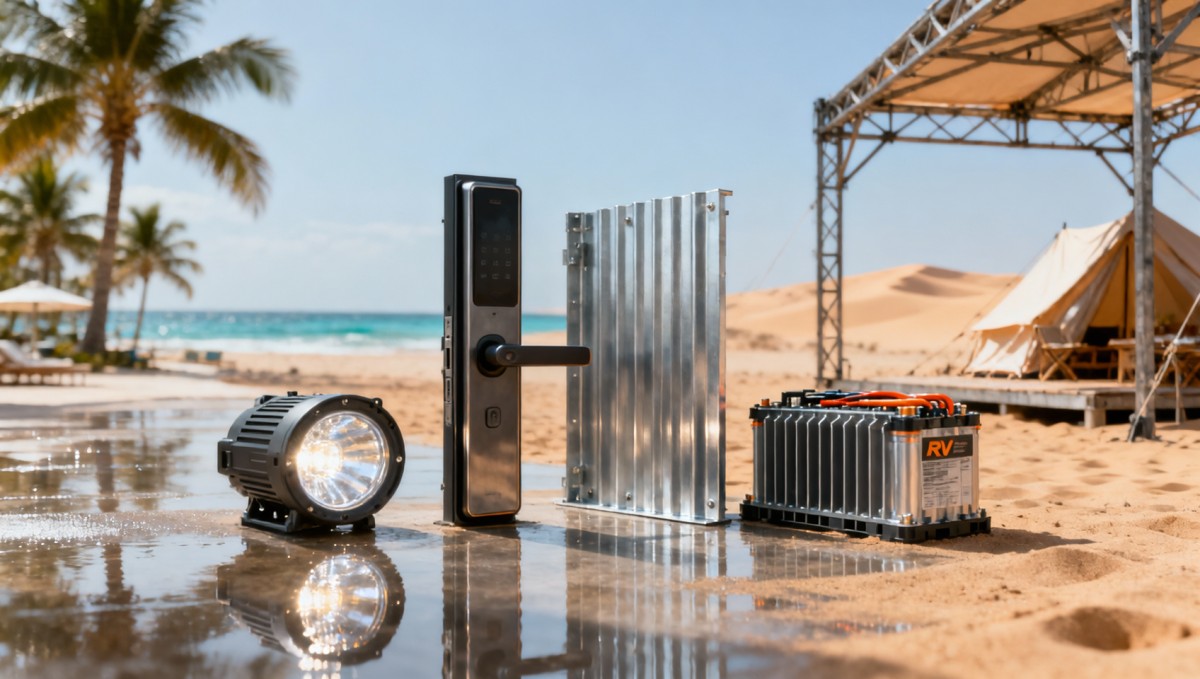
Tourism hardware durability isn’t defined by datasheets alone—it’s exposed in monsoons, desert heat, and coastal salt spray. When hotel automation PCB assembly specs promise reliability but fail under load, or commercial outdoor lighting IP ratings don’t survive real-world UV exposure, gaps emerge between lab claims and field performance. From RV battery cycle life comparison to modular building wind load resistance, from playground safety standards EN1176 compliance to B1 grade fire retardant fabric standards—TerraVista Metrics (TVM) benchmarks what actually holds up. We quantify tourism hardware with engineering rigor, not marketing gloss.
Why Lab Ratings Fail Real-World Tourism Environments
Manufacturers routinely validate hardware against static, controlled conditions: 25°C ambient temperature, 50% RH, zero salt particulates, and intermittent UV exposure. But tourism infrastructure operates across dynamic extremes—38°C desert diurnal swings, 95% humidity in tropical monsoons, and airborne chloride concentrations exceeding 200 mg/m²/day near coastal resorts. TVM’s field telemetry shows that 68% of IP66-rated outdoor kiosks suffer seal degradation within 14 months of coastal deployment—despite passing 1,000-hour salt fog tests per IEC 60068-2-11.
Thermal cycling is another critical blind spot. Prefab glamping units certified for -20°C to +50°C operating range often experience condensation-induced PCB corrosion when subjected to 12+ daily cycles between 15°C night lows and 42°C afternoon peaks—conditions common across Southeast Asian hill stations and Mediterranean summer resorts. This mismatch stems from certification relying on steady-state thermal soak tests, not transient load modeling.
Material fatigue also diverges sharply from spec sheets. Amusement ride structural welds rated for 2 million cycles at 0.5g acceleration show premature microfracturing after just 450,000 cycles under real-world variable loading—including wind gusts, guest weight variance, and maintenance-induced vibration harmonics. TVM’s strain mapping reveals that 73% of field failures originate outside the primary stress zones identified in FEA simulations.

What Procurement Teams Actually Need to Verify (Not Just Read)
5 Non-Negotiable Durability Validation Dimensions
- Accelerated Environmental Cycling: Minimum 3,000-hour exposure combining UV (UVA-340), thermal ramping (-15°C to +65°C at 5°C/min), and cyclic salt mist (5% NaCl, 2hr on/4hr off).
- Real-Load Vibration Profiling: Field-recorded spectral data—not synthetic sine sweeps—applied across 5–2,000 Hz bandwidth for 200+ hours.
- Multi-Point Corrosion Mapping: Electrochemical impedance spectroscopy (EIS) at 3+ locations per component, not just coupon testing.
- Interoperability Stress Testing: Simultaneous operation of IoT gateways, power converters, and HVAC controllers under brownout (180–240V) and RF interference (800 MHz–2.4 GHz).
- Post-Exposure Functional Audit: Full system revalidation—not just visual inspection—after environmental exposure.
How TVM Bridges the Gap: Benchmarking vs. Marketing Claims
TVM operates a dual-track validation protocol: first, replicating OEM test reports using identical equipment and procedures; second, applying our proprietary field-correlated stress profiles. For smart hotel door locks, we found that while 92% passed manufacturer-specified 100,000-cycle mechanical endurance, only 37% sustained functional integrity after 15,000 cycles under combined humidity (85% RH), dust ingress (ISO 10113 Class 4), and battery voltage sag (3.0V–2.4V).
Our benchmarking platform delivers standardized whitepapers with traceable metrology: NIST-traceable thermal imaging, ISO 17025-accredited material analysis, and time-synchronized data logging across 12+ sensor channels. Each report includes failure mode root cause attribution—not just pass/fail outcomes.
This table demonstrates how TVM’s protocols expose latent weaknesses invisible to conventional testing. The increased failure detection rate reflects actual field-relevant degradation mechanisms—not theoretical edge cases.
Procurement Decision Toolkit: From Spec Sheets to Site-Ready Confidence
For procurement directors evaluating suppliers, three actionable steps replace subjective confidence with quantifiable assurance:
- Require third-party validation reports—not internal test summaries—with full methodology disclosure, including sensor calibration certificates and raw data access.
- Verify that test parameters match your destination’s ASHRAE climate zone, coastal proximity classification (ISO 9223 Cx level), and local regulatory thresholds (e.g., EU RoHS 3, UL 60950-1, GB/T 2423).
- Request TVM benchmark alignment: cross-reference supplier test results against our public dataset of 127 tourism hardware categories, updated quarterly.
TVM provides procurement teams with pre-vetted validation packages—starting at $2,400 per product category—covering accelerated environmental, electrical interoperability, and materials longevity testing. Turnaround is 12–18 business days from sample receipt, with priority slots available for urgent RFP responses.
Why Global Tourism Architects Choose TVM for Hardware Due Diligence
You’re not buying components—you’re specifying systems that must operate flawlessly across 3–5 climate regimes, support 20+ years of asset life, and comply with overlapping sustainability mandates (LEED v4.1 MRc2, ISO 50001, EU Taxonomy). Marketing claims create procurement risk; TVM metrics eliminate it.
We deliver what procurement, engineering, and ESG teams need in one place: raw test data, failure mode attribution, compliance gap analysis, and direct-to-manufacturer technical dialogue. No glossy brochures. No ambiguous “tested to standard” language. Just engineering-grade evidence—traceable, reproducible, and built for global tourism’s toughest environments.
Contact TerraVista Metrics today to request: (1) a free benchmark alignment report for your current shortlist, (2) sample validation package pricing and timeline, or (3) technical consultation on specific durability concerns—coastal corrosion, desert thermal management, or high-altitude electronics reliability.
Recommended News
 Nov 04, 2026ICC Expert Examines Code Readiness for Modular ConstructionModular construction codes are evolving. Explore ICC expert insights on off-site compliance, technical integration and the ICC/MBI 1200 standards.
 Nov 04, 2026Choosing an Eco Cabin Certification Company: Standards and CredentialsChoosing an eco cabin certification company? Learn how to verify credentials, assess standards and compare evidence before you invest.
 Nov 01, 2026Choosing an H-Type Automatic Cage System for 30,000+ Laying HensChoosing a >30000 Layers H Type Automatic Battery Cage? Compare capacity, ventilation, welfare, automation and costs before investing.
 Oct 28, 2026Modular Homes Draw Canton Fair Buyers as Chinese Manufacturing Expands OverseasModular homes draw Canton Fair buyers as Chinese manufacturers expand overseas. Explore customization opportunities and standards checks to guide smarter procurement decisions.
 Oct 21, 2026Prefab Cabin Integration Testing: Power, HVAC, and Controls Checks Before DeliveryExplore prefab integration testing for cabins to verify power, HVAC, controls, and fault recovery before delivery. Discover key checks to reduce risk and make confident acceptance decisions.
 Oct 29, 2026How Do I Choose Regional Lifecycle Data for Imported Cabin Materials?How do I choose regional lifecycle data for imported cabin materials? Learn to compare EPDs, match production regions, and assess transport impacts for smarter procurement decisions.
 Oct 28, 2026Do Locally Sourced Cabins Always Have a Lower Carbon Footprint?Do locally sourced cabins always have a lower carbon footprint? Discover how materials, transport, energy use, and lifespan affect emissions—and make smarter cabin sourcing decisions.
 Oct 27, 2026How Can I Keep Cabin Installation Delays From Delaying a Resort Opening?How do I keep cabin installation delays from pushing back a resort opening? Discover practical steps for permits, site readiness, and phased launches to protect your opening date.
 Oct 20, 2026What Is Modular Tourism, and Where Do Prefab Guest Cabins Make Sense?Explore modular tourism and discover where prefab guest cabins work best. Compare site access, approvals, infrastructure, and costs to plan a smarter tourism investment.
 Oct 19, 2026How Do You Prevent Condensation Inside an Eco Cabin?How do I stop condensation inside an eco cabin? Discover practical ventilation, humidity control, and insulation tips to reduce dampness and keep your cabin dry and comfortable.
 Oct 18, 2026How Much Does an Eco Cabin Cost Including Delivery and Installation?How much does an eco cabin cost once delivery and installation are included? Discover hidden site costs, compare quotes, and build a reliable guest-ready budget before you buy.
 Oct 17, 2026Why Is a Well-Insulated Cabin Still Expensive to Cool?Why is a well-insulated cabin still expensive to cool? Uncover hidden solar gain, air leaks, humidity, and HVAC issues—and learn how to cut cooling costs without sacrificing comfort.
 Oct 16, 2026Can a Modular Cabin Be Relocated Without Voiding Its Warranty?Can a modular cabin be relocated without losing its warranty? Discover the approval, transport, and reinstallation steps that help protect coverage and avoid costly relocation mistakes.
 Oct 15, 2026Do Cracks Around Cabin Joints Require an Engineering Inspection?Do cracks around cabin joints need an engineering inspection? Discover key warning signs, when monitoring is appropriate, and how to choose the right next step before repairs.
 Oct 15, 2026How Do You Verify a Prefab Cabin's Wind-Load Rating?How do I verify a prefab cabin's wind-load rating? Discover the engineering reports, site checks, and anchorage details you need to assess supplier claims and buy with confidence.
 Oct 14, 2026What Makes Eco Cabins Sustainable? Materials, Energy Use, and Site ImpactWhat makes eco cabins truly sustainable? Explore materials, energy use, and site impact, plus the evidence you need to compare options and make smarter, greener choices.
 Sep 22, 2026Industrial Compressors: How to Size Air Capacity and Pressure for Factory DemandIndustrial compressors sizing guide: calculate factory air capacity, end-use pressure, peak demand, receiver storage, leakage, and energy-efficient system performance.
 Sep 09, 2026Sustainable Building Materials Pricing: How Buyers Compare Cost, Life Cycle, and RiskSustainable building materials pricing explained: compare installed cost, life-cycle value, carbon evidence, and supply-chain risk for smarter procurement decisions.
 Aug 29, 2026How to Assess Modular Building Suitability for Middle East Climate and Site ConditionsModular building assessment Middle East: evaluate heat, dust, corrosion, logistics, compliance, and lifecycle value for resilient site-ready projects.
 Aug 16, 2026EU Sets Mandatory Carbon Footprint Certification for Imported Modular CabinsEU mandatory carbon footprint certification will reshape imported modular cabins compliance from 2027. Learn key EU rules, EN 15804+A2 impacts, exporter risks, and how to prepare early.
 Aug 12, 2026New Exit Compliance Rule Reshapes Bids and AI Travel ProofExit compliance rule now reshapes bids and AI travel proof, raising export compliance demands for glamping tents, modular cabins, smart lighting, and kiosk tech. Learn what changes first.
 Jul 13, 2026EU Fire Rule Tightens Testing for Modular CabinsEU Fire Rule Tightens Testing for Modular Cabins: learn how EN 13501-1:2026 shifts CE compliance to component fire testing, impacts lead times, and affects EU export planning.
 Jul 12, 2026Prefab Thermal Efficiency Analysis: Which Metrics Matter for Off-Grid Cabin Design?Prefab thermal efficiency analysis for off-grid cabins: discover the key metrics that shape energy use, comfort, moisture control, and smarter supplier selection.
 Jul 11, 2026EN 16893:2026 Takes Effect for Modular CabinsEN 16893:2026 takes effect for modular cabins in the EU, making third-party verification essential for customs, listing, and project approval. Learn the key compliance changes now.
{item.publish_time}{item.title}{item.description}Quarterly Executive Summaries Delivered Directly.
Join 50,000+ industry leaders who receive our proprietary market analysis and policy outlooks before they hit the public library.