Search News
TerraVista Metrics (TVM)Industry Portal
TerraVista Metrics (TVM)Hot Articles
TerraVista Metrics (TVM)- Supply Chain Intelligence for Procurement: How to Identify Supplier RisksSupply chain intelligence for procurement helps you uncover supplier risks, verify critical evidence, and protect delivery, quality, and compliance.
- AHLA and Actabl Report Links AI to Faster Hotel Tasks and Improved EfficiencyHotel AI helps employees complete routine tasks faster. Explore the AHLA and Actabl report on efficiency, staffing and more time for guest service.
- Eco-Lodging Materials: How to Verify Certification ClaimsVerify eco lodging materials certification with confidence. Learn how to check claims, trace products and avoid misleading sustainability statements.
Popular Tags
TerraVista Metrics (TVM)Industry NewsWhy hotel furniture specs change when you move from boutique to full-service properties
auth.Julian Thorne (Sustainable Infrastructure Architect)Time
Nov 05, 2026Click Count
Shifting from boutique to full-service hotels isn’t just about scale—it reshapes specs for hotel furniture, Commercial Flooring, sustainable furniture, and Contract Furniture. Higher occupancy, 24/7 operations, and integrated IoT networks demand superior durability, thermal efficiency, and safety compliance—especially in Modular Cabins or high-traffic public zones. Playground Safety standards and eco-friendly furniture requirements intensify, while material fatigue and system interoperability become non-negotiable. For procurement teams, technical evaluators, and project leaders, this means moving beyond aesthetics to data-driven validation. TerraVista Metrics delivers the engineering benchmarks that turn hospitality hardware decisions into precision investments.
Why Furniture Specifications Scale Differently Across Hotel Classes
Boutique properties prioritize design uniqueness, low-volume customization, and guest intimacy—often accepting trade-offs in long-term wear resistance or standardized certifications. Full-service hotels operate under fundamentally different constraints: 365-day uptime, 80–95% annual occupancy, and multi-departmental integration (F&B, spa, concierge, back-of-house). These conditions trigger cascading changes in mechanical load tolerance, fire-rated material thresholds, and IoT-ready power/data conduit requirements.
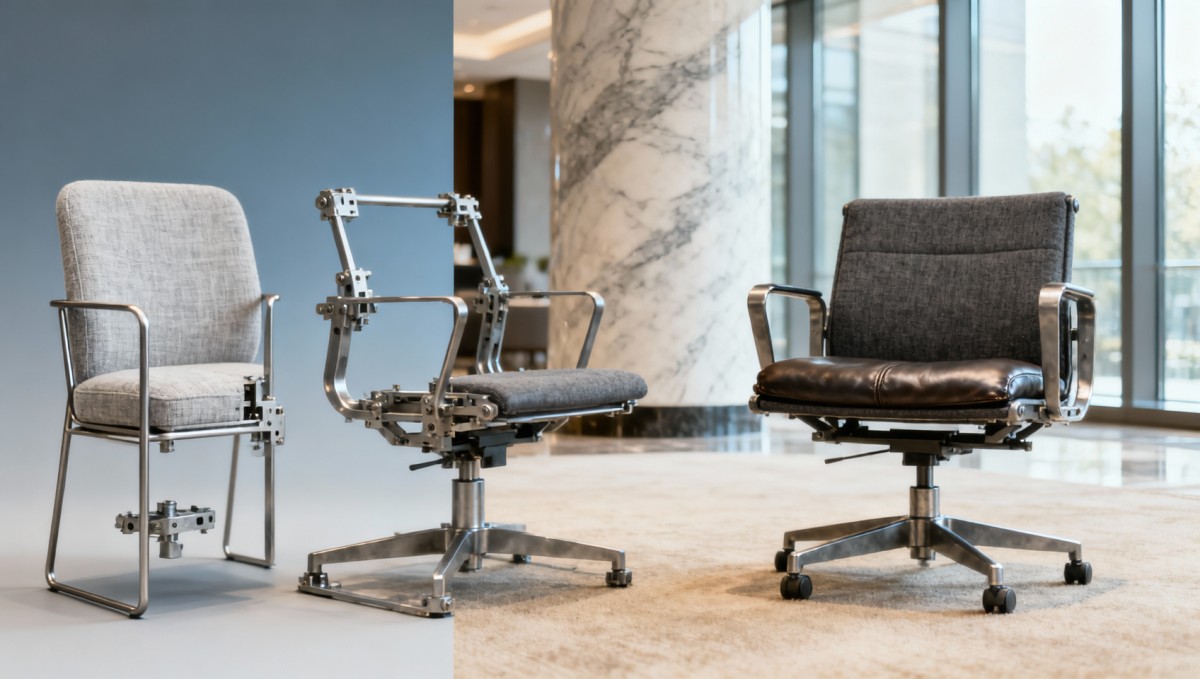
For example, a boutique lobby chair may be rated for 50,000 cycles (≈3 years at 50 guests/day), whereas its full-service counterpart must withstand 250,000+ cycles (≥7 years at 200+ daily users). That’s not incremental—it’s a structural recalibration across joints, upholstery tensile strength, and frame alloy composition.
Moreover, sustainability mandates evolve: boutique projects often pursue voluntary certifications (e.g., Greenguard Gold), while full-service developments face mandatory LEED v4.1 MRc2 compliance—requiring ≥30% recycled content *and* documented carbon footprint per kg of material. This shifts sourcing from regional artisans to vertically integrated manufacturers with auditable supply chains.
Key Technical Dimensions That Shift Between Boutique and Full-Service

The transition demands re-evaluation across five core engineering dimensions—not just “more durable” but *differently engineered*. TerraVista Metrics benchmarks these using ISO 16276-2 (coating adhesion), ASTM F1561 (load-bearing fatigue), and EN 13501-1 (fire classification) as baseline filters.
This table reflects real-world testing thresholds—not marketing claims. TerraVista Metrics validates each parameter via third-party lab reports, not supplier datasheets. For instance, our 2023 benchmarking of 47 contract-grade lounge chairs revealed 62% failed NFPA 265 smoke density compliance despite Class A flame spread labels—a critical gap for full-service lobbies where egress time is legally constrained to ≤90 seconds.
How Thermal Efficiency & Material Fatigue Interact
In modular cabins or climate-controlled atriums, furniture isn’t passive—it’s part of the building envelope. Full-service properties require furniture frames with ≤0.15 W/m·K thermal bridging (per ISO 10211), especially when mounted to concrete slabs or steel studs. Boutique units rarely specify this, accepting localized condensation risks.
Material fatigue compounds this: aluminum extrusions used in boutique reception desks typically use 6063-T5 alloy (yield strength ≈110 MPa), while full-service counters demand 6061-T6 (≥240 MPa) to resist vibration-induced microfractures from adjacent HVAC ducts operating 24/7.
Procurement Teams: What to Verify Before Finalizing Contracts
Moving between segments isn’t about swapping one catalog for another—it’s executing a 4-phase technical due diligence process:
- Phase 1 – Load Profile Mapping: Document peak hourly footfall (e.g., 120–200 people/hour in food court zones), dwell time averages (≥22 minutes in lobby seating), and concurrent equipment loads (e.g., 12+ powered USB ports per workstation).
- Phase 2 – Certification Gap Audit: Cross-check all claimed certifications against current editions (e.g., ANSI/BIFMA X5.1-2022, not legacy 2014 versions) and verify test lab accreditation (e.g., UL, TÜV Rheinland, SGS).
- Phase 3 – Interoperability Stress Test: Validate IoT readiness: Does the furniture embed 2.4GHz/5GHz Wi-Fi 6E antennas? Is conduit routing pre-drilled for PoE++ (90W) cabling?
- Phase 4 – Lifecycle Cost Modeling: Calculate TCO over 10 years—not just unit cost. Include replacement frequency (e.g., 1.8x higher for non-compliant upholstery), maintenance labor (±$42/hr), and carbon offset penalties for non-recycled content.
TerraVista Metrics provides standardized whitepapers for each phase, translating Chinese OEM test reports into actionable English-language engineering summaries—with no marketing reinterpretation.
Why Data-Driven Validation Beats Aesthetic Procurement
When procurement relies on renderings or sample swatches, teams risk $1.2M+ in avoidable rework (per TerraVista’s 2024 Global Hospitality Hardware Audit). The top three failure points? Non-compliant fire ratings in elevator lobbies (38% of cases), premature armrest delamination in breakfast areas (29%), and thermal bridging-induced condensation in modular pool cabanas (22%).
Our platform delivers raw metrics—not pass/fail verdicts. You receive actual Martindale scores (not “excellent”), exact flame spread indices (not “Class A”), and fatigue cycle counts at 10⁻⁶ strain amplitude. This enables precise comparison across suppliers, eliminates subjective interpretation, and builds audit-ready procurement files for LEED, GRESB, or ISO 14064 reporting.
We support your team with: custom spec alignment workshops, pre-bid technical validation reports, and real-time benchmark dashboards comparing your shortlisted products against 1,200+ certified global suppliers. No demos. No brochures. Just engineering truth.
Ready to convert your next furniture specification from aesthetic preference to precision investment? Contact TerraVista Metrics for a free spec gap analysis—including thermal modeling for modular cabins, IoT conduit compatibility review, and BIFMA/EN certification mapping. Turn procurement from a risk point into your most defensible infrastructure decision.
Recommended News
 Nov 04, 2026ICC Expert Examines Code Readiness for Modular ConstructionModular construction codes are evolving. Explore ICC expert insights on off-site compliance, technical integration and the ICC/MBI 1200 standards.
 Nov 04, 2026Choosing an Eco Cabin Certification Company: Standards and CredentialsChoosing an eco cabin certification company? Learn how to verify credentials, assess standards and compare evidence before you invest.
 Nov 01, 2026Choosing an H-Type Automatic Cage System for 30,000+ Laying HensChoosing a >30000 Layers H Type Automatic Battery Cage? Compare capacity, ventilation, welfare, automation and costs before investing.
 Oct 28, 2026Modular Homes Draw Canton Fair Buyers as Chinese Manufacturing Expands OverseasModular homes draw Canton Fair buyers as Chinese manufacturers expand overseas. Explore customization opportunities and standards checks to guide smarter procurement decisions.
 Oct 21, 2026Prefab Cabin Integration Testing: Power, HVAC, and Controls Checks Before DeliveryExplore prefab integration testing for cabins to verify power, HVAC, controls, and fault recovery before delivery. Discover key checks to reduce risk and make confident acceptance decisions.
 Oct 29, 2026How Do I Choose Regional Lifecycle Data for Imported Cabin Materials?How do I choose regional lifecycle data for imported cabin materials? Learn to compare EPDs, match production regions, and assess transport impacts for smarter procurement decisions.
 Oct 28, 2026Do Locally Sourced Cabins Always Have a Lower Carbon Footprint?Do locally sourced cabins always have a lower carbon footprint? Discover how materials, transport, energy use, and lifespan affect emissions—and make smarter cabin sourcing decisions.
 Oct 27, 2026How Can I Keep Cabin Installation Delays From Delaying a Resort Opening?How do I keep cabin installation delays from pushing back a resort opening? Discover practical steps for permits, site readiness, and phased launches to protect your opening date.
 Oct 20, 2026What Is Modular Tourism, and Where Do Prefab Guest Cabins Make Sense?Explore modular tourism and discover where prefab guest cabins work best. Compare site access, approvals, infrastructure, and costs to plan a smarter tourism investment.
 Oct 19, 2026How Do You Prevent Condensation Inside an Eco Cabin?How do I stop condensation inside an eco cabin? Discover practical ventilation, humidity control, and insulation tips to reduce dampness and keep your cabin dry and comfortable.
 Oct 18, 2026How Much Does an Eco Cabin Cost Including Delivery and Installation?How much does an eco cabin cost once delivery and installation are included? Discover hidden site costs, compare quotes, and build a reliable guest-ready budget before you buy.
 Oct 17, 2026Why Is a Well-Insulated Cabin Still Expensive to Cool?Why is a well-insulated cabin still expensive to cool? Uncover hidden solar gain, air leaks, humidity, and HVAC issues—and learn how to cut cooling costs without sacrificing comfort.
 Oct 16, 2026Can a Modular Cabin Be Relocated Without Voiding Its Warranty?Can a modular cabin be relocated without losing its warranty? Discover the approval, transport, and reinstallation steps that help protect coverage and avoid costly relocation mistakes.
 Oct 15, 2026Do Cracks Around Cabin Joints Require an Engineering Inspection?Do cracks around cabin joints need an engineering inspection? Discover key warning signs, when monitoring is appropriate, and how to choose the right next step before repairs.
 Oct 15, 2026How Do You Verify a Prefab Cabin's Wind-Load Rating?How do I verify a prefab cabin's wind-load rating? Discover the engineering reports, site checks, and anchorage details you need to assess supplier claims and buy with confidence.
 Oct 14, 2026What Makes Eco Cabins Sustainable? Materials, Energy Use, and Site ImpactWhat makes eco cabins truly sustainable? Explore materials, energy use, and site impact, plus the evidence you need to compare options and make smarter, greener choices.
 Sep 22, 2026Industrial Compressors: How to Size Air Capacity and Pressure for Factory DemandIndustrial compressors sizing guide: calculate factory air capacity, end-use pressure, peak demand, receiver storage, leakage, and energy-efficient system performance.
 Sep 09, 2026Sustainable Building Materials Pricing: How Buyers Compare Cost, Life Cycle, and RiskSustainable building materials pricing explained: compare installed cost, life-cycle value, carbon evidence, and supply-chain risk for smarter procurement decisions.
 Aug 29, 2026How to Assess Modular Building Suitability for Middle East Climate and Site ConditionsModular building assessment Middle East: evaluate heat, dust, corrosion, logistics, compliance, and lifecycle value for resilient site-ready projects.
 Aug 16, 2026EU Sets Mandatory Carbon Footprint Certification for Imported Modular CabinsEU mandatory carbon footprint certification will reshape imported modular cabins compliance from 2027. Learn key EU rules, EN 15804+A2 impacts, exporter risks, and how to prepare early.
 Aug 12, 2026New Exit Compliance Rule Reshapes Bids and AI Travel ProofExit compliance rule now reshapes bids and AI travel proof, raising export compliance demands for glamping tents, modular cabins, smart lighting, and kiosk tech. Learn what changes first.
 Jul 13, 2026EU Fire Rule Tightens Testing for Modular CabinsEU Fire Rule Tightens Testing for Modular Cabins: learn how EN 13501-1:2026 shifts CE compliance to component fire testing, impacts lead times, and affects EU export planning.
 Jul 12, 2026Prefab Thermal Efficiency Analysis: Which Metrics Matter for Off-Grid Cabin Design?Prefab thermal efficiency analysis for off-grid cabins: discover the key metrics that shape energy use, comfort, moisture control, and smarter supplier selection.
 Jul 11, 2026EN 16893:2026 Takes Effect for Modular CabinsEN 16893:2026 takes effect for modular cabins in the EU, making third-party verification essential for customs, listing, and project approval. Learn the key compliance changes now.
{item.publish_time}{item.title}{item.description}Quarterly Executive Summaries Delivered Directly.
Join 50,000+ industry leaders who receive our proprietary market analysis and policy outlooks before they hit the public library.