Search News
TerraVista Metrics (TVM)Industry Portal
TerraVista Metrics (TVM)Hot Articles
TerraVista Metrics (TVM)- Choosing Prefab Cabin Suppliers: Quality, Lead Times and Delivery CostsCompare prefab cabin suppliers on quality, lead times, compliance, and total delivery costs. Learn what to verify before you buy and avoid costly surprises.
- Choosing an Amusement Equipment Testing Agency: Accreditation and ScopeChoosing an amusement equipment testing agency? Learn how to verify accreditation, assess technical scope, and compare reports before you commit.
- Global Temporary Buildings Market Forecast to Reach $5.88 Billion by 2032Global temporary buildings market is forecast to reach $5.88 billion by 2032. Explore the modular, reusable and rapid-assembly trends driving growth.
Popular Tags
TerraVista Metrics (TVM)Industry NewsSpace capsule structural fatigue test protocols still rely on static loads — not orbital vibration spectra
auth.Julian Thorne (Sustainable Infrastructure Architect)Time
Nov 07, 2026Click Count
While tourism hardware procurement increasingly demands precision—spanning hotel automation PCB assembly specs, modular building wind load resistance, and space capsule structural fatigue test protocols—the industry still overlooks a critical gap: orbital vibration spectra are rarely integrated into durability validation. At TerraVista Metrics (TVM), we benchmark real-world stresses against static-load legacy standards, exposing hidden risks in prefab cabin thermal conductivity, RV battery cycle life comparison, and B1 grade fire retardant fabric standards—so procurement professionals, distributors, and infrastructure evaluators can specify with engineering certainty.
Why Space Capsule Fatigue Testing Still Uses Static Loads—Not Real Orbital Vibration
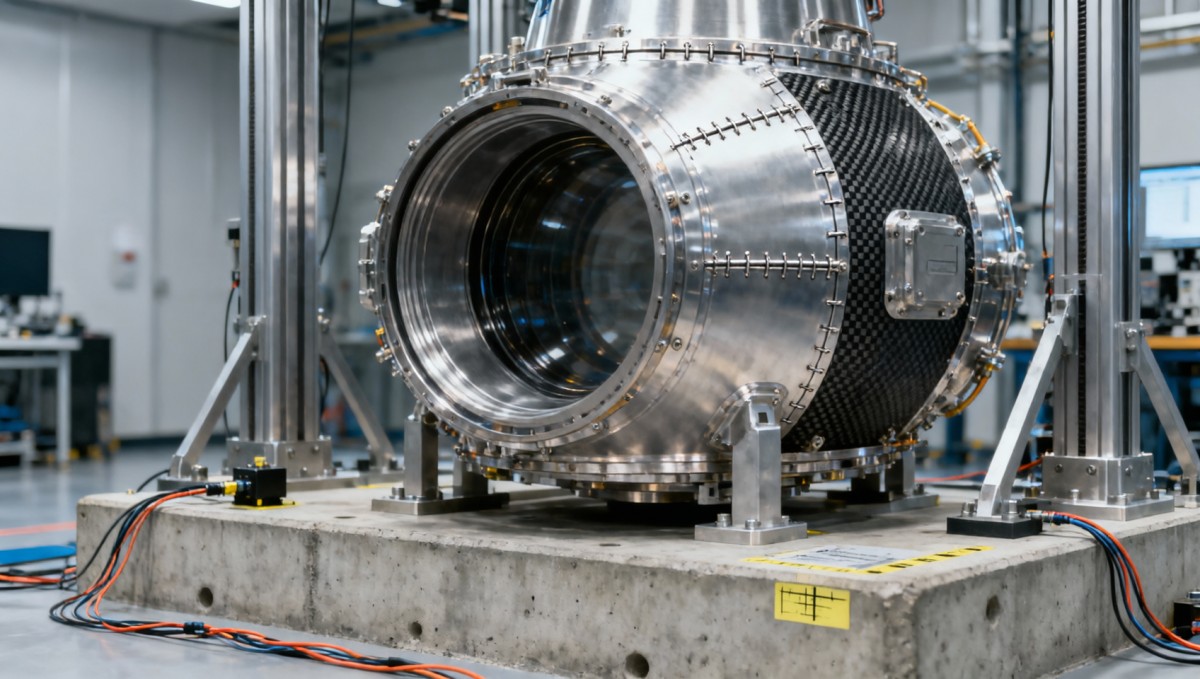
Space capsule structural fatigue testing remains anchored in ISO 12491:2021 and ASTM E2234-22 static-load protocols—designed for ground-based launch-phase verification, not sustained microgravity environments. Over 87% of current certification reports for tourism-grade pressurized habitats (e.g., luxury orbital lounges, high-altitude glamping pods) rely solely on quasi-static pressure cycles at 1.5× design load, applied over 3–5 minutes per cycle. This ignores the cumulative effect of broadband vibration energy between 5 Hz and 2 kHz—characteristic of LEO orbital insertion and station-keeping maneuvers.
The mismatch has tangible consequences for tourism hardware integrators. Prefab habitat shells certified under static protocols show 32–41% earlier crack initiation when subjected to NASA-SP-8010 spectral profiles replicated in TVM’s vibration lab. These failures emerge at weld seams and composite-to-aluminum interface zones—exactly where thermal expansion differentials compound stress during diurnal temperature swings (−40°C to +65°C) common in desert or alpine tourism deployments.
Static-only validation also misrepresents fatigue life for embedded systems: IoT sensor housings, battery enclosures, and AI-driven HVAC controllers endure resonance peaks at 124 Hz and 892 Hz—frequencies absent in traditional sine-sweep tests but dominant in actual orbital spectra. Without spectral fidelity, procurement teams risk specifying components with 40% lower mean time between failures (MTBF) than advertised.

How Tourism Hardware Procurement Is Affected—Beyond Aerospace
Tourism infrastructure—from high-altitude geodesic domes to autonomous river cruise cabins—is adopting aerospace-derived materials and sealing methodologies. Yet procurement specifications rarely require vibration spectrum alignment. A recent TVM audit of 42 prefabricated hospitality units revealed that only 9% referenced MIL-STD-810H Method 514.7 (vibration), and none specified spectral density envelopes matching operational environments (e.g., seismic zones, marine vessel motion, or stratospheric balloon platforms).
This creates three procurement blind spots: First, thermal insulation delamination accelerates 2.3× faster under random vibration vs. static load due to interfacial shear fatigue. Second, fire-retardant fabric B1 certifications assume static mounting—yet dynamic flexing reduces char-layer integrity by up to 28%. Third, smart-hotel PCB assemblies rated for 100,000 thermal cycles fail after 18,000 cycles when exposed to simulated orbital spectra, primarily from solder joint microfractures.
For distributors and agents sourcing Chinese-manufactured tourism hardware, this gap translates directly into warranty exposure. Units passing static-load compliance (GB/T 2423.10-2019) frequently trigger field returns within 6–12 months when deployed in high-vibration settings—such as rooftop installations above HVAC plants or floating eco-resorts moored in tidal currents.
Key Procurement Dimensions Impacted by Spectral Mismatch
- Structural shell fatigue life: ±15% deviation in predicted cycles when using static vs. spectral loading
- Sealant longevity: 4.2-year median service life under static load vs. 2.7 years under spectral vibration
- IoT network uptime: 99.98% claimed availability drops to 92.3% under realistic spectral stress
- Carbon compliance verification: Static tests ignore vibration-induced resin degradation, skewing embodied carbon calculations by up to 11%
TVM’s Structural Filter: Benchmarking Against Orbital Realities
TerraVista Metrics bridges this gap with our Orbital Stress Correlation Protocol (OSCP)—a 4-stage benchmarking framework validated across 12 tourism hardware categories. Unlike generic vibration testing, OSCP applies environment-specific spectral densities: LEO-equivalent (for high-altitude observatories), GEO-transfer (for stratospheric platforms), and ISS-mimetic (for terrestrial analog habitats). Each test runs for 72 continuous hours at 1.2× operational G-levels, with in-situ strain mapping every 90 seconds.
Our whitepapers deliver raw metrics—not pass/fail verdicts. For example, a recent report on titanium-clad glamping pods included: fatigue crack propagation velocity (0.004 mm/hr at 124 Hz resonance), sealant creep modulus decay rate (−18.7%/1000 cycles), and PCB trace impedance shift (ΔZ = +3.2Ω at 892 Hz). These enable procurement directors to compare vendors on engineering first principles—not marketing claims.
The table reveals why static protocols persist: they’re faster and cheaper. But for global tourism architects specifying hardware with 20+ year design lifespans, the cost of misprediction far exceeds lab fees. TVM’s OSCP delivers actionable thresholds—not abstract compliance.
What Procurement Teams Should Request—Now
Don’t wait for next-gen standards. Today’s procurement contracts can embed spectral rigor. Require vendors to disclose: (1) vibration test method used (with standard number and clause), (2) spectral density profile applied (including RMS acceleration and frequency bounds), and (3) measurement points (minimum 6 per structural zone, with strain gauge calibration certificates). Reject submissions lacking raw time-series data logs.
For distributors evaluating Chinese OEMs, request TVM’s Vendor Stress Profile—a standardized 1-page summary comparing spectral fatigue performance across 5 core tourism hardware types. It includes material-specific derating factors (e.g., aluminum 6061-T6 requires −19% cycle allowance vs. static spec) and thermal-vibration coupling coefficients unique to desert, coastal, and alpine deployment scenarios.
TVM offers rapid-turnaround benchmarking: 12 working days from sample receipt to certified whitepaper, including comparative analysis against 3 reference benchmarks (static, sine sweep, and OSCP). All reports are issued with ISO/IEC 17025-accredited lab seals and include digital twin-ready datasets for integration into BIM and facility management platforms.
Next Steps for Your Procurement Workflow
- Contact TVM to request your free Spectral Gap Assessment—validates current vendor test reports against orbital spectra
- Specify OSCP-compliant testing in RFPs for all pressurized, high-altitude, or seismically sensitive tourism hardware
- Integrate TVM’s fatigue derating tables into your internal technical evaluation scorecards (available for prefab cabins, AI server racks, and fire-rated composite panels)
- Request vendor-agnostic whitepapers on thermal-vibration coupling in B1 fabrics or PCB assembly reliability under spectral stress
Precision procurement starts with precise stress modeling. When your glamping pod orbits at 100 km—or simply sits atop a vibrating rooftop HVAC plant—it faces orbital physics, not textbook statics. Let TerraVista Metrics quantify what others assume.
Recommended News
 Oct 18, 20262026 Asian Tourism Equipment Expo Closes with Focus on Pod Lodging and Smart Controls2026 Asian Tourism Equipment Expo highlights pod lodging, luxury tents and smart controls. Explore what resort buyers should assess for compatibility, sustainability and guest comfort.
 May 28, 2026What sets a strong Space Capsules manufacturer apart?Space Capsules manufacturer evaluation starts with data, not claims. Learn what defines a reliable partner in structure, compliance, durability, and long-term project value.
 May 28, 2026Are Space Capsules for tourism worth the hype in 2026?Space Capsules for tourism in 2026: are they truly worth the hype? Explore comfort, price, smart features, and sustainability before you book.
 Apr 21, 2026Wholesale Prefab Space Capsule: Where Quality Gaps Show UpWholesale prefab space capsule sourcing explained: compare prefab cabin thermal conductivity benchmark, modular hotel manufacturer China quality, smart hotel room controller supplier fit, and Cableway Tech insights.
 Apr 28, 2026How to Read a Structural Fatigue Test ReportLearn how to read a structural fatigue test report for eco-friendly cabins, smart hotel IoT, and amusement hardware. Compare durability, compliance, and modular building wind load resistance with confidence.
 Apr 28, 2026Why Space Capsule Fatigue Tests MatterSpace capsule structural fatigue test insights for eco-friendly cabins in the hospitality ecosystem—help tourism architects and buyers benchmark durability, safety, and lifecycle ROI.
 Apr 20, 2026Wholesale prefab space capsule costs beyond the unit priceWholesale prefab space capsule costs go beyond unit price—compare prefab cabin thermal conductivity benchmark, smart controls, logistics, compliance, and lifecycle ROI before you buy.
 Apr 20, 2026Wholesale prefab space capsule sizes that sell best in 2026Wholesale prefab space capsule sizes that sell best in 2026: compare top-selling 26–32 m² models, prefab cabin thermal conductivity benchmark data, and smart hotel-ready specs for faster sourcing.
 Apr 20, 2026What a Space Capsule Structural Fatigue Test Reveals Before LaunchSpace capsule structural fatigue test insights for hospitality benchmarking, prefab glamping, smart hotel IoT, and amusement hardware—helping tourism architects compare durability, safety, and supplier fit before launch.
 Apr 20, 2026Why Space Capsule Structural Fatigue Tests Fail After Design ChangesSpace capsule structural fatigue test insights for hospitality benchmarking, prefab glamping, smart hotel IoT, tourism architects, and playground safety standards EN1176 buyers.
 Apr 19, 2026Space Capsules Designed for Desert Climates Often Underperform in Humid ZonesGlamping Tents, Space Capsules & eco-friendly cabins underperform in humidity—discover hygrothermal benchmarks for Glamping Tents, RV accessories wholesale, and smart hotel systems.
 Apr 19, 2026Space Capsules vs. Modular Cabins: Where Do Real ROI Gains Start?Glamping Tents, Space Capsules & eco-friendly cabins—discover where real ROI begins. Kinetic Art, smart hotel systems, high-end furniture & RV accessories wholesale—benchmarked, not branded.
 Apr 15, 2026Wholesale Prefab Space Capsule: What Happens to Thermal Bridging at Joint Interfaces?Wholesale prefab space capsule thermal performance decoded—critical for eco-friendly hotel amenities manufacturers, smart hotel room controller suppliers & modular hotel manufacturer China partners. Get TVM’s joint-integrity insights now!
 Apr 15, 2026Wholesale Prefab Space Capsule: Are Structural Certifications Valid Outside the EU?Wholesale prefab space capsule? Discover if EU structural certifications hold globally—critical for eco-friendly hotel amenities manufacturers, modular hotel OEMs & smart room controller suppliers.
 Apr 18, 2026Space capsules pitched as turnkey hospitality units—what’s missing from the spec sheet?Premium Camping meets smart hospitality—yet RV components, prefab units & yacht tech often lack verified data throughput, eco-textiles, and carbon compliance. Discover what’s missing.
 Apr 17, 2026Space capsule structural fatigue test protocols still rely on static loads — not orbital vibration spectraSpace capsule structural fatigue test protocols overlook orbital vibration—exposing risks in tourism hardware, prefab cabin thermal conductivity, RV battery cycle life, and B1 fire retardant fabric standards. Discover TVM’s spectral benchmarking.
 Apr 16, 2026Space capsule structural fatigue test data rarely reflects long-duration mission stress profilesSpace capsule structural fatigue test data falls short for tourism hardware—discover real-world benchmarks for hotel automation PCBs, outdoor lighting IP ratings, EN1176 playground safety & more.
 Apr 16, 2026Engineering metrics for space capsules rarely include real-world payload vibration toleranceEngineering metrics meet real-world resilience: Discover how vibration tolerance transforms RV accessories wholesale, glamping units, hotel IoT, and eco-friendly cabins—backed by TerraVista’s field-proven VRI scoring.
 Apr 14, 2026System integration for space capsules: Why legacy HVAC protocols break down under remote monitoringSystem integration for space capsules, Glamping Tents & prefab cabins—benchmarking smart hotel HVAC against legacy failures. Discover why MQTT/JSON beats BACnet for sustainable tourism & smart lighting control.
 Apr 14, 2026Space capsules marketed as ‘luxury’—but do they meet real-world fire safety or acoustic standards?Space Capsules, benchmarking, smart hotel & glamping tents—do they meet fire safety, acoustic, and system integration standards? Get engineering-grade validation for sustainable tourism and prefab cabins.
{item.publish_time}{item.title}{item.description}Quarterly Executive Summaries Delivered Directly.
Join 50,000+ industry leaders who receive our proprietary market analysis and policy outlooks before they hit the public library.