Search News
TerraVista Metrics (TVM)Industry Portal
TerraVista Metrics (TVM)Hot Articles
TerraVista Metrics (TVM)- RCEP Philippines Green Customs Rule for Glamping Tents Takes EffectRCEP Philippines Green Customs Rule for Glamping Tents is live: CNAS-issued ISO 14067 carbon reports now fast-track clearance to 3 days—key for exporters & sustainable suppliers.
- CPSC Launches Recall Review for Guestroom Automation DevicesCPSC launches recall review for guestroom automation devices—urgent action for PIR sensor safety in hotels. Learn compliance steps, firmware fixes & cold-weather validation now.
- Multi-Dept AI Terminal Intelligence Standard ReleasedMulti-Dept AI Terminal Intelligence Standard GB/T 45288-2026 is live—unlock L3+ certification for government procurement, ASEAN/Korea market access & competitive edge in smart travel tech.
Popular Tags
TerraVista Metrics (TVM)Industry NewsWhere Amusement Hardware Corrosion Creates Hidden Maintenance Costs
auth.Lydia Vancini (Smart Hospitality IoT Consultant)Time
May 17, 2026Click Count
Corrosion in amusement hardware rarely appears on purchase spreadsheets, yet it can quietly inflate lifecycle costs across tourism projects. For tourism architects, procurement teams, and hospitality benchmarking analysts, understanding how material decay affects safety, uptime, and replacement cycles is essential—especially when sourcing from a playground equipment factory or evaluating smart hotel IoT and prefab glamping infrastructure.
Why hidden corrosion costs are often missed during procurement

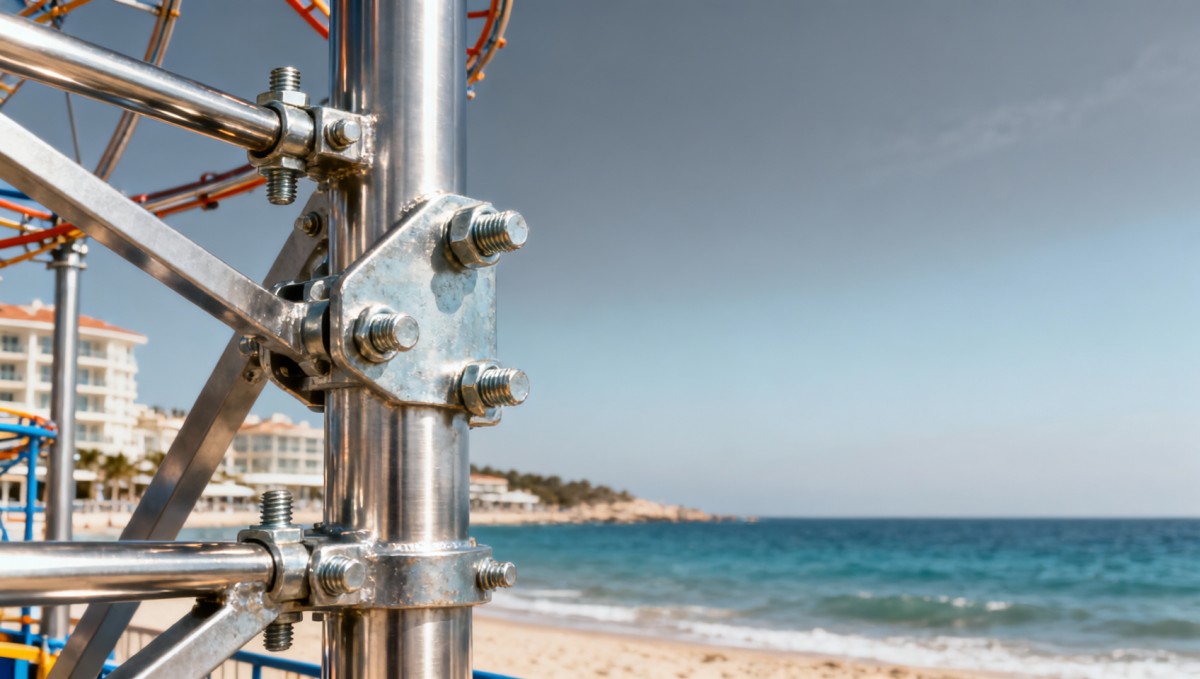
In tourism infrastructure, corrosion is rarely a single visible defect. It usually starts as a chain reaction between material selection, environmental exposure, coating quality, fastener mismatch, and maintenance discipline. In amusement hardware, especially in coastal parks, humid resorts, indoor water-adjacent zones, and high-touch public installations, early corrosion can begin within 6–12 months if the original specification does not match the service environment.
For information researchers and procurement teams, the challenge is that initial quotations often emphasize unit price, appearance, and lead time, while lifecycle behavior remains under-documented. A low-cost component from a playground equipment factory may look equivalent at delivery, yet require repainting in 12–24 months, bolt replacement every 18 months, or more frequent shutdown inspections. Those expenses rarely sit in the original capex line.
This becomes more serious in mixed tourism projects where amusement hardware operates alongside prefab glamping cabins, smart hotel systems, landscape steelwork, and guest circulation assets. Once corrosion triggers localized failure, the operator faces indirect costs beyond repair: downtime, safety cordons, labor scheduling, spare-part delays, and guest-experience damage. For commercial evaluators, these hidden maintenance costs can distort ROI far more than a 5%–10% purchase price difference.
TerraVista Metrics (TVM) approaches this issue through measurable engineering filters rather than marketing claims. For tourism developers and distributors, the right question is not simply whether a metal part resists rust, but how the full assembly performs over 3–5 years under specific humidity cycles, salt exposure, cleaning chemicals, load frequencies, and integration requirements with broader hospitality infrastructure.
Where buyers usually underestimate risk
- They compare visible material grades but ignore joints, weld seams, anchors, and hidden cavities where moisture is retained.
- They treat powder coating, galvanization, and stainless steel as interchangeable, even though each performs differently in splash zones, UV exposure, and chloride-rich air.
- They budget for annual inspection but omit mid-cycle refinishing, seal replacement, and fastener compatibility checks.
- They evaluate a component in isolation rather than as part of a tourism ecosystem with cleaning protocols, guest traffic, and seasonal shutdown patterns.
Which corrosion mechanisms create the biggest maintenance burden?
Not all corrosion behaves the same way, and that matters for sourcing decisions. General surface rust may be manageable with scheduled refinishing, but crevice corrosion, galvanic corrosion, and coating breakdown near welds can increase maintenance complexity quickly. In tourism projects, the burden rises when operators must inspect equipment every month, isolate guest access, or replace non-standard parts from multiple suppliers.
A common mistake is to focus only on the base metal while overlooking system compatibility. For example, stainless steel hardware paired with carbon steel anchors, dissimilar metal contact in moist conditions, or poor drainage geometry can accelerate localized attack. The result is not just cosmetic deterioration. It may affect moving components, structural confidence, and insurance-related inspection notes within a 2–4 year operating period.
For procurement personnel, the most practical approach is to classify risk by environment, contact condition, and maintenance access. A dry inland leisure zone, a tropical resort, and a seaside family attraction should not use the same corrosion assumptions. The hidden cost of amusement hardware corrosion is often highest where access is difficult and shutdown windows are short, such as integrated hotel entertainment decks or premium destination parks operating 7 days a week.
The table below helps buyers compare common corrosion mechanisms in tourism hardware and understand why the maintenance profile differs from one installation context to another.
For distributors, agents, and commercial reviewers, this comparison clarifies why maintenance planning should be tied to mechanism, not only material label. A supplier may claim corrosion resistance, but without details on weld treatment, fastener compatibility, drainage design, and coating process, the real maintenance burden remains uncertain.
Three practical indicators to request before approval
1. Assembly-level material mapping
Ask for the material breakdown of the full assembly, not just the main frame. This should include tubing, brackets, weld filler where relevant, bolts, anchors, and touchpoint accessories. Corrosion risk often starts in the cheapest secondary part.
2. Coating and surface treatment description
Confirm whether the protection system is powder coating, galvanizing, duplex treatment, passivation, or another method. Also ask for expected maintenance intervals under inland, tropical, or coastal use conditions.
3. Inspection access and replacement logic
Hardware that is easy to inspect every quarter and replace in modular sections usually creates lower hidden cost than a visually attractive design that requires dismantling large areas for minor repairs.
How lifecycle cost changes across materials, coatings, and site conditions
For procurement teams, the most useful comparison is not cheapest versus premium, but lower capex versus lower total maintenance burden. Amusement hardware in tourism environments may rely on painted carbon steel, galvanized steel, stainless steel, aluminum alloys, or mixed-material assemblies. Each option changes upfront cost, maintenance frequency, touch-up complexity, and expected service stability over a 3-year, 5-year, or 8-year asset planning horizon.
Inland dry sites may tolerate lower-cost systems with scheduled recoating, while marine-adjacent properties often benefit from more corrosion-resistant material combinations despite higher initial investment. Buyers should also consider cleaning chemicals, chlorinated mist, landscaping irrigation, and trapped debris. These site factors can shift an apparently economical option into a high-maintenance liability within two seasonal cycles.
TVM’s benchmarking logic is especially relevant here because it translates manufacturing claims into decision-ready metrics. For a hotel procurement director or destination developer, the question is whether a component supports predictable maintenance windows and stable guest operations, not simply whether the specification sounds premium in a brochure.
The following table offers a practical lifecycle comparison framework for amusement hardware corrosion decisions in tourism and hospitality settings.
This comparison is not a universal ranking. It is a reminder that corrosion strategy should follow site exposure, brand positioning, access difficulty, and maintenance resources. For a distributor managing several resort clients, choosing the wrong protection system can create repeated warranty disputes and spare-part pressure long after installation.
A simple way to model hidden maintenance cost
- Estimate routine inspection frequency: monthly, quarterly, or biannual depending on traffic and exposure.
- Add touch-up and coating maintenance events over 3–5 years.
- Include downtime cost for cordoned areas, guest rerouting, and labor scheduling.
- Factor spare-part lead time, especially if custom connectors or imported fittings are involved.
- Compare this total against the initial saving from the lower-priced quotation.
What should buyers ask a playground equipment factory or hardware supplier?
When amusement hardware is sourced for tourism developments, good procurement does not end with a catalog review. Buyers need a verification routine that covers engineering detail, maintenance predictability, and compatibility with the destination’s operating model. This is especially important for commercial assessment teams comparing several factories that appear similar in photos but differ significantly in process control and after-sales support.
A structured request can reduce uncertainty within 7–15 working days before final approval. Rather than asking broad questions such as “Is it anti-rust?” buyers should ask for environment-specific recommendations, service interval assumptions, repair logic, and assembly drawings showing where corrosion may initiate. These details often reveal whether a supplier understands tourism-grade durability or merely general industrial output.
TVM helps global tourism stakeholders by translating such technical details into comparable benchmarking language. That matters for cross-border procurement, where Chinese manufacturing capability may be strong, but documentation standards, terminology, and maintenance expectations must be aligned with international project teams, hotel operators, and distribution partners.
The checklist below can be used by procurement officers, distributors, and evaluators during quotation review, factory communication, or pre-award technical clarification.
Five questions that prevent expensive surprises
- What are the exact materials and surface treatments for frame, joints, fasteners, anchors, and concealed connectors?
- Which site conditions are assumed: inland dry, tropical humid, chlorinated atmosphere, or coastal saline exposure?
- What maintenance intervals are recommended in the first 12 months, then over a 3-year operating cycle?
- Can damaged parts be replaced modularly, or does repair require disassembly of larger sections?
- Which documents are available for technical review: coating description, weld treatment notes, inspection guidance, and spare-part lists?
How standards and compliance fit the decision
Compliance should not be used as a shortcut for durability assumptions, but it remains important. Buyers may request documentation aligned with relevant material, fabrication, surface-treatment, and safety standards used in their market. In practice, this means checking whether the supplier can support consistent documentation, not just whether a generic statement appears in the quotation.
For hospitality and tourism projects, corrosion-resistant design also intersects with sustainability and asset longevity. A component that requires fewer replacement cycles over 5–8 years may support broader carbon and lifecycle planning goals, particularly when the destination is positioning itself around sustainable infrastructure and durable guest-facing hardware.
Where corrosion risk is highest in tourism and hospitality scenarios
Amusement hardware does not operate in a vacuum. The surrounding tourism environment often determines whether a material system performs smoothly or begins generating hidden maintenance costs. The same assembly may behave very differently in a mountain eco-resort, a beachfront family destination, an indoor attraction linked to hotel leisure space, or a glamping site with seasonal occupancy and variable maintenance staffing.
In coastal or island settings, salt-laden air can settle on exposed hardware even when equipment is not directly splashed. In tropical properties, high humidity and rainfall increase moisture retention in joints and shaded surfaces. In indoor-outdoor transition zones, condensation and cleaning chemicals create another set of corrosion triggers. These variables matter because maintenance access is often restricted to short windows, sometimes only 4–8 hours before guest operations resume.
From a business perspective, hidden maintenance costs are especially damaging in premium destinations where visual quality is part of the brand promise. Corrosion around hand-contact areas, decorative steel, or family activity hardware can quickly affect guest perception, not just engineering integrity. That is why tourism architects and hotel procurement managers increasingly want comparative technical evidence rather than generic anti-rust claims.
Below are the tourism scenarios where corrosion control should receive early procurement attention instead of becoming a reactive maintenance issue later.
High-risk application scenarios
- Beachfront parks and island resorts where saline air shortens coating life and affects exposed fasteners.
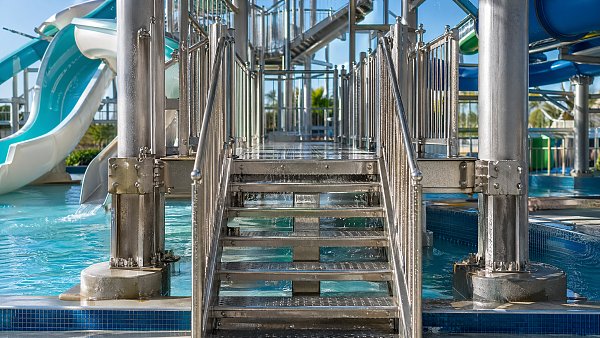
- Water-adjacent leisure areas near splash zones, pools, mist features, or chlorinated environments.
- Glamping and eco-lodge destinations with variable staffing, delayed inspection routines, and difficult spare-part logistics.
- Integrated hotel entertainment decks where aesthetics, uptime, and guest safety all carry commercial weight.
FAQ for researchers and procurement teams
How often should amusement hardware be inspected for corrosion?
There is no universal interval, but many operators structure visual checks monthly in high-exposure zones and more detailed inspections quarterly or biannually depending on environment, traffic, and local maintenance protocols. Coastal, humid, and water-adjacent sites typically require shorter review intervals than dry inland locations.
Is stainless steel always the best option?
No. Stainless steel can reduce some visible corrosion issues, but grade selection, surface finish, fabrication quality, and compatibility with anchors or adjacent metals still matter. In some projects, a well-designed galvanized or duplex-protected system may offer a more balanced cost-performance outcome.
What is the biggest mistake when comparing suppliers?
The biggest mistake is comparing only headline material descriptions and unit price. Buyers should compare the full assembly, expected maintenance interval, replacement method, site suitability, and documentation quality. Hidden maintenance cost usually appears where these details were skipped during the quotation stage.
Can corrosion risk affect broader tourism infrastructure decisions?
Yes. Corrosion planning influences downtime, staffing, spare-part strategy, visual standards, sustainability goals, and asset replacement schedules. In integrated projects, the same lifecycle mindset should also apply to prefab glamping structures, outdoor steel systems, and smart hospitality hardware exposed to demanding site conditions.
Why technical benchmarking matters before you commit
For tourism developers, hotel procurement directors, distributors, and evaluation teams, the value of technical benchmarking is clarity. It converts corrosion risk from a vague concern into a comparison framework: material logic, environment fit, maintenance frequency, replacement complexity, and lifecycle cost exposure. That is the gap TerraVista Metrics is built to close.
TVM does not rely on aesthetic language or broad manufacturer claims. We organize engineering evidence into practical decision tools for global tourism infrastructure buyers. Whether you are reviewing amusement hardware, prefab glamping units, or smart hotel IoT systems, our role is to quantify durability, integration readiness, and long-term operating implications so procurement becomes more precise and commercially defensible.
If you are currently comparing a playground equipment factory, reviewing corrosion-related maintenance risk, or preparing a tourism hardware sourcing package, we can help structure the assessment. Typical support topics include 3-part material verification, coating and assembly review, scenario-based procurement comparison, maintenance interval mapping, delivery-cycle clarification, and document screening for compliance-oriented buyers.
Contact TVM if you need help with parameter confirmation, supplier comparison, corrosion-risk review, lifecycle cost framing, customized benchmarking, sample evaluation logic, or quotation-stage technical questions. For teams managing tight delivery windows or cross-border sourcing decisions, a clearer corrosion assessment today can prevent years of hidden maintenance cost tomorrow.
- surface treatment
- EMS
- ESS
- PPE
- procurement
- AR
- Cement
- playground equipment factory
- hospitality infrastructure
- smart hotel IoT
- hospitality benchmarking
- tourism hardware
- glamping units
- hotel procurement
- amusement hardware
- tourism architects
- prefab glamping
- smart hospitality
- smart hotel systems
- tourism infrastructure
- benchmarking
- hotel IoT
- smart hotel
Recommended News
 Apr 29, 2026What High-End Amusement Hardware Changes in Guest ExperienceHigh-end amusement hardware shapes safety, comfort, and uptime. Compare amusement hardware standards, specifications, and durable solutions for water parks and theme parks.
 Apr 29, 2026Why Water Parks Need Different Amusement Hardware SpecificationsAmusement hardware specifications for water parks differ from theme parks. Learn durable, high-end amusement hardware standards, pricing, quotes, and how to choose the right supplier.
 Apr 27, 2026Amusement Hardware Buying Guide for 2026Amusement hardware buying guide for 2026: compare playground safety standards EN1176, smart hotel IoT, factory audits, and modular building wind load resistance for safer, smarter sourcing.
 Apr 20, 2026Where Amusement Hardware Corrosion Creates Hidden Maintenance CostsAmusement hardware corrosion drives hidden costs. Explore hospitality benchmarking insights for tourism architects, playground equipment factory sourcing, prefab glamping, and smart hotel IoT decisions.
 Apr 20, 2026Amusement Hardware Failures That Usually Start with Small PartsAmusement hardware risks often begin with tiny defects. Learn how hospitality benchmarking, smart hotel IoT, prefab glamping, and playground equipment factory teams can spot failure signals early.
Quarterly Executive Summaries Delivered Directly.
Join 50,000+ industry leaders who receive our proprietary market analysis and policy outlooks before they hit the public library.