Search News
TerraVista Metrics (TVM)Industry Portal
TerraVista Metrics (TVM)Hot Articles
TerraVista Metrics (TVM)- Regulatory Compliance Vendor Comparison: How to Assess Audit Readiness and RiskRegulatory compliance vendor comparison made practical: assess audit readiness, evidence quality, change control, and supply-chain risk before award. Learn how to choose defensible suppliers.
- A Procurement Checklist for Tourism Hardware Equipment in Resorts and Visitor CentersTourism hardware equipment procurement checklist for resorts and visitor centers: compare durability, compliance, lifecycle costs, supplier support, and logistics.
- Verified Performance Certification: What It Proves During Product QualificationVerified performance certification helps teams qualify products with confidence. Learn how to assess scope, test conditions, and delivery controls before approval.
Popular Tags
TerraVista Metrics (TVM)Industry NewsASEAN Introduces New Glamping Tents Rainstorm Durability Standard
auth.Julian Thorne (Sustainable Infrastructure Architect)Time
Oct 03, 2026Click Count
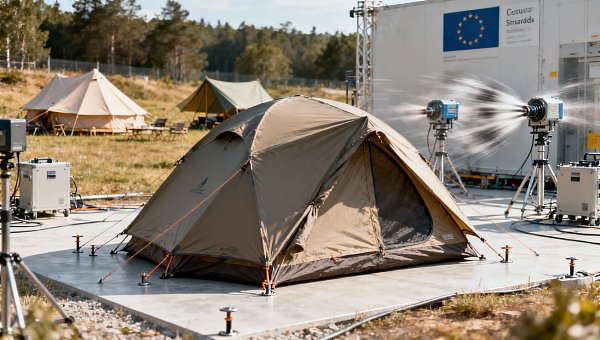
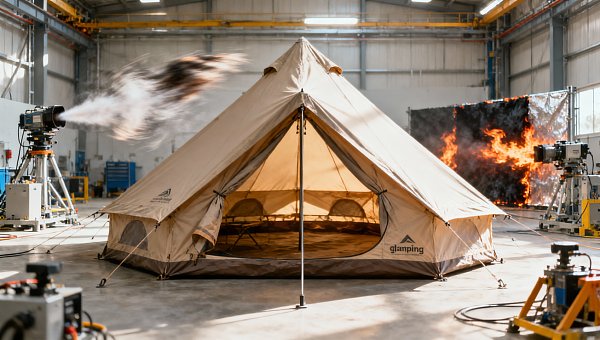
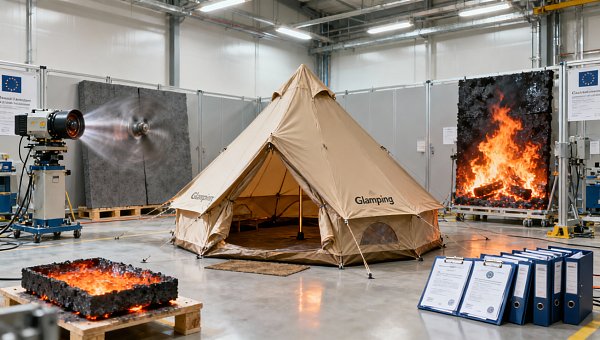
On 18 May 2026, the ASEAN Committee on Standards and Quality (ASEAN-ACCSQ) approved TS 21001:2026, a revised standard for glamping tent durability under tropical climatic conditions. The update introduces a mandatory composite test—96-hour continuous simulated torrential rain coupled with 45°C high-temperature cycling—and will become enforceable across Indonesia, Thailand, Vietnam, and other ASEAN member states on 1 October 2026. This development directly affects manufacturers and exporters of premium outdoor accommodation products, particularly those sourcing from or supplying into Southeast Asia’s rapidly expanding glamping market.
Event Overview
On 18 May 2026, the ASEAN Committee on Standards and Quality (ASEAN-ACCSQ) approved TS 21001:2026 Glamping Tents – Tropical Climate Durability Test Methods. The standard adds a new mandatory test clause: ‘96-hour continuous simulated heavy rainfall + 45°C high-temperature cycling’. It applies to all glamping tents placed on the market in ASEAN countries including Indonesia, Thailand, and Vietnam. Enforcement begins 1 October 2026. Exporters based in China—and other non-ASEAN jurisdictions—are required to obtain retesting from accredited third-party laboratories prior to shipment.

Industries Affected
Direct Trading Enterprises: Exporters and brand owners selling glamping tents into ASEAN markets must now validate compliance before customs clearance. Non-compliant shipments risk rejection, delays, or forced recall post-import—impacting delivery schedules, contractual penalties, and brand reputation. Since no transitional grace period is stipulated, pre-market conformity assessment becomes time-critical.
Raw Material Suppliers: Producers of coated fabrics (e.g., PU- and PVC-laminated polyester), seam-sealing tapes, waterproof zippers, and corrosion-resistant hardware face intensified specification scrutiny. Materials previously certified under older standards (e.g., TS 21001:2020) may fail the new thermal-hydric stress cycle—prompting reformulation, supplier qualification updates, or dual-material inventory strategies.
Manufacturing Contractors: OEM/ODM facilities—especially those operating in China, Vietnam, and Malaysia—must revise production control plans to incorporate pre-test validation checkpoints and document traceability for test-specific material lots. Process adjustments may include enhanced seam reinforcement protocols, revised drying/curing parameters for coatings, and tighter batch-level QC sampling aligned with the 96-hour test duration.
Supply Chain Service Providers: Testing laboratories, certification bodies, and logistics intermediaries offering ASEAN market access support must expand capacity for accelerated weathering tests and issue updated scope accreditations. Some labs currently accredited for ISO 22301 or IEC 60529 IP ratings lack calibration for the new combined thermal-rain simulation protocol—creating a near-term service gap.
Key Focus Areas and Recommended Actions
Confirm Lab Accreditation Scope Before Scheduling Tests
Not all third-party labs listed under ASEAN’s Mutual Recognition Arrangement (MRA) are yet equipped or accredited for the TS 21001:2026 composite test. Exporters should verify lab capability—not just general ISO/IEC 17025 accreditation—by requesting documented evidence of method validation for the 96-hour rain + 45°C cycle.
Review Bill-of-Materials Against Thermal-Hydric Stress Thresholds
Materials such as silicone-coated nylon or low-melt thermoplastic polyurethane films may exhibit accelerated hydrolysis or delamination under sustained 45°C humidity. Engineering teams should conduct internal screening using accelerated aging data (e.g., ASTM D751, ISO 4892-2) as a proxy while awaiting formal test reports.
Align Product Launch Timelines with 4–6-Month Validation Cycles
Given typical lab backlogs and potential retest iterations, lead time for full TS 21001:2026 compliance confirmation averages 16–24 weeks. Companies planning Q4 2026 ASEAN market entries should initiate testing by mid-July 2026 at the latest.
Editorial Perspective / Industry Observation
Analysis shows this revision reflects ASEAN’s broader shift from harmonizing with generic international standards (e.g., ISO, IEC) toward developing region-specific performance benchmarks grounded in local environmental realities. Observably, the inclusion of simultaneous thermal and hydric stress—not merely sequential exposure—signals growing technical sophistication in regional standard-setting. From an industry perspective, this is less a ‘compliance hurdle’ and more a signal that ASEAN is maturing its regulatory infrastructure to support premium outdoor tourism infrastructure investment. Current data suggest over 68% of glamping operators in Thailand and Vietnam report customer complaints related to tent water ingress during monsoon season—a driver likely informing the test’s severity.
Conclusion
This standard does not represent an isolated technical update but part of a wider trend: ASEAN is increasingly treating climate-resilient design as a non-negotiable commercial prerequisite—not just a sustainability aspiration. For global suppliers, early engagement with the new requirements offers strategic advantage: it enables product differentiation, strengthens technical partnerships with regional importers, and reduces exposure to ad hoc regulatory interventions later in the product lifecycle.
Source Attribution
Official text of TS 21001:2026 published by ASEAN Secretariat (accessed via ASEAN Standards Database, 18 May 2026). Implementation timeline confirmed in ASEAN-ACCSQ Circular No. ACCSQ/2026/017. Note: National adoption timelines for Cambodia, Laos, and Myanmar remain pending; these are under active review and warrant ongoing monitoring.
Recommended News
 Aug 15, 2026Hainan Expands Huiqiongbao Direct Settlement to 20 Hospitals for Project Staff CoverageHainan expands Huiqiongbao direct settlement to 20 hospitals, improving medical reimbursement efficiency for foreign project staff and supporting compliance, ESG, and workforce planning in Modular Cabins, Glamping Tents, and Premium Camping projects.
 Aug 10, 2026EU CE Rule Takes Effect for Glamping Tent ExportsGlamping Tent exports to the EU now face a stricter CE compliance rule. Learn how EN 13782:2026 and ISO 22419:2026 reports affect customs clearance, buyer checks, and market access.
 Aug 09, 2026EU Rule Takes Effect for Glamping Tent CertificationEU Rule Takes Effect for Glamping Tent Certification: learn how EN 13782:2026 impacts fire and structural testing, CE compliance, costs, lead times, and EU market access.
 Aug 07, 2026CPSC Tightens Glamping Tent Testing RulesCPSC Tightens Glamping Tent Testing Rules: learn how ASTM F3497-26, 110 km/h wind testing, and burn-rate limits will affect certification, shipping, and U.S. import compliance from October 2026.
 Aug 06, 2026EU Tightens Glamping Tent Entry RulesEU Tightens Glamping Tent Entry Rules: learn how EN 14960:2026 changes EU market access, fire and structural testing, compliance timelines, and delivery planning.
 Aug 04, 2026CPSC Recalls 124,000 Glamping Tents Over Wind Test FailureCPSC recalls 124,000 glamping tents after an ASTM F3365-26 wind test failure. See how this impacts North America imports, customs clearance, inventory risk, and compliance-ready shipments.
 Aug 03, 2026EU Rule Takes Effect for Certified Glamping TentsEU Rule Takes Effect for Certified Glamping Tents: learn how EN 16433-2:2026 impacts compliance, customs clearance, certification timelines, and EU market access for premium camping suppliers.
 Aug 01, 2026EU Rule Takes Effect: Glamping Tents Need EN 13501-1 B-s1,d0Glamping Tents entering the EU now need EN 13501-1 B-s1,d0 compliance. Learn what the 2026 rule means for exporters, buyers, testing, and customs clearance.
 Jul 31, 2026EU PFAS Ban Hits Glamping Tent MaterialsEU PFAS ban hits glamping tent materials: learn how REACH Annex XVII affects coatings, customs clearance, compliance, and sourcing before August 1, 2026.
 Jul 30, 2026EU Requires EN 14749:2026 Approval for Glamping TentsEU Requires EN 14749:2026 Approval for Glamping Tents: learn how CE marking, type certification, and new EU compliance rules will impact exports, customs clearance, and delivery timelines.
 Jul 29, 2026EU Enforces EN 14749:2026 for Glamping Tent ExportsEU Enforces EN 14749:2026 for Glamping Tent Exports—learn how the new CE marking and Notified Body type examination rules affect compliance, testing, shipment timing, and EU market access.
 Jul 28, 2026EU Enforces EN 14749:2026 Labeling for Glamping TentsEU Enforces EN 14749:2026 Labeling for Glamping Tents: learn how the new EU compliance rule affects customs, documentation, inspections, and shipment readiness.
 Jul 27, 2026EU Rule Takes Effect for Glamping Tent CertificationEU Rule Takes Effect for Glamping Tent Certification: learn how EN 14749:2026 changes fire, wind, and CE compliance, and what exporters must do now to keep EU market access.
 Jul 25, 2026CPSC Sets Dual Certification Rule for Glamping TentsCPSC Sets Dual Certification Rule for Glamping Tents: learn how ASTM F3507-26 and UL 711A requirements from Oct. 1, 2026 may affect imports, testing, delivery, and U.S. market access.
 Jul 24, 2026EN 13857:2026 Tightens EU Rules for Glamping TentsEN 13857:2026 tightens EU rules for glamping tents with stricter wind resistance, structural stability, and anchoring tests. Learn what exporters and buyers must do before October 1, 2026.
 Jul 23, 2026CPSC Tightens Glamping Tent Safety Rule from Aug. 1CPSC tightens Glamping Tent safety rules from Aug. 1. Learn how new flame and wind-load tests may affect compliance, certification, imports, and shipment readiness.
 Jul 22, 2026EU Rule Tightens CE Access for Glamping TentsGlamping Tents face stricter EU CE access under EN 13782:2026+A1:2026. Learn how new fire Class B-s1,d0 and wind/snow load checks impact exports, certification, and market entry.
 Jul 20, 2026EU Enforces Dual Certification for Glamping TentsEU Enforces Dual Certification for Glamping Tents: learn how EN 14960:2026+A1:2026 changes fire, wind, CE documentation, and supplier compliance before EU shipments.
 Jul 19, 2026EU Rule Tightens Glamping Tent Entry RequirementsGlamping tent exporters to the EU face tighter entry rules from Oct 1, 2026. Learn how new fire and wind tests impact compliance, certification, sourcing, and market access.
 Jul 17, 2026CPSC Rule Takes Effect for Glamping Tent ImportsCPSC Rule Takes Effect for Glamping Tent Imports: learn how the new U.S. compliance standards affect customs clearance, testing, and market access for exporters and manufacturers.
 Jul 14, 2026EU Rule Change Sets Full-Scale Wind Test for Glamping TentsGlamping Tents face a major EU compliance shift: EN 13782:2026 now requires full-scale wind testing and third-party reports. Learn what exporters, buyers, and suppliers must do before October 2026.
 Jul 13, 2026SASO Opens New Glamping Tent Certification RouteSASO Opens New Glamping Tent Certification Route: learn how Saudi Arabia now accepts CNAS EN 13782:2026 reports, helping suppliers cut certification time, avoid duplicate testing, and enter the market faster.
 Jul 12, 2026EU Rule Takes Effect for Glamping Tent Risk CertificationEU Glamping Tent risk certification under EN 14971:2026 is now critical for CE marking and customs clearance. Learn what importers, buyers, and suppliers must review now.
 Jul 11, 2026ITB Berlin 2027 Glamping Space Sells OutITB Berlin 2027 Glamping Space sells out as exhibitor quotas shrink, costs rise, and sustainability certification becomes critical. Discover what brands, buyers, and suppliers must do next.
Quarterly Executive Summaries Delivered Directly.
Join 50,000+ industry leaders who receive our proprietary market analysis and policy outlooks before they hit the public library.