Search News
TerraVista Metrics (TVM)Industry Portal
TerraVista Metrics (TVM)Hot Articles
TerraVista Metrics (TVM)- Roseate Targets 30 Hotels by 2030, Plans New Smart Hotel BrandRoseate Hotels & Resorts targets 30 hotels by 2030, with an upscale smart hotel brand planned for early 2027. Explore its expansion strategy across India's smaller cities and core markets.
- EU Cableway Compliance: Safety Analysis and Pre-Opening Approval RequirementsMaster EU cableway systems regulatory compliance: explore safety analysis, conformity evidence, and pre-opening approval requirements to avoid delays and prepare for passenger service.
- Synthetic Rattan Resort Furniture: What to Check for Coastal DurabilityBuying synthetic rattan resort furniture? Discover key checks for UV resistance, corrosion protection, and warranty coverage to reduce coastal replacement costs and buy with confidence.
Popular Tags
TerraVista Metrics (TVM)Industry NewsVietnam Requires Safety Labels on Imported Glamping Tents
auth.Julian Thorne (Sustainable Infrastructure Architect)Time
Oct 25, 2026Click Count
Vietnam’s Ministry of Industry and Trade announced a new compliance requirement on June 11, 2026 that will affect imported premium camping tents entering the local market from September 1, 2026. For suppliers, importers, distributors, and service providers involved in inflatable, modular connected, and photovoltaic-integrated glamping tents, the development is worth close attention because it turns product labeling into a customs, delivery, and penalty risk rather than a simple packaging detail.

What the new rule requires
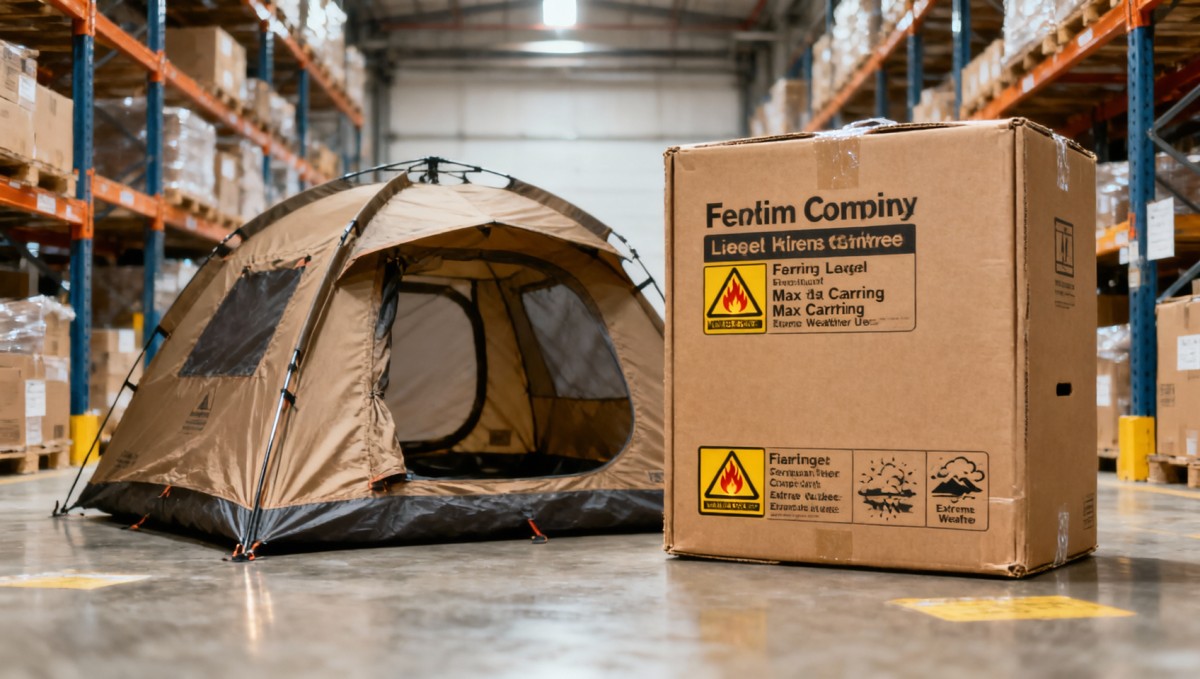
According to Circular No. 28/2026/TT-BCT issued by Vietnam’s Ministry of Industry and Trade on June 11, 2026, all imported premium camping tents must carry Vietnamese-language safety warning labels in a prominent position on both the product itself and its outer packaging starting September 1, 2026.
The requirement covers high-end camping tents including inflatable models, modular connected structures, and photovoltaic-integrated tents.
The required warning content includes fire rating information under QCVN 01:2025, maximum load capacity, and limitations on use in extreme weather conditions.
Goods that do not comply will face a fine equal to 20% of the cargo value and will be returned.
Where the pressure will appear across the supply chain
Import operations face a direct compliance checkpoint
From an industry perspective, direct trading companies and importers are likely to feel the impact first because the rule applies at the point where goods enter Vietnam. The main operational pressure will fall on product preparation, packaging review, and pre-shipment compliance checks, since non-compliant cargo risks both financial penalties and return shipment.
Manufacturers need to align product and packaging execution
For manufacturers producing glamping tents for the Vietnamese market, the issue is not only translation but also execution on the physical product and outer packaging. Analysis shows that suppliers will need to confirm whether current production, labeling, and packing workflows can support prominent Vietnamese-language warnings covering fire rating, maximum load, and extreme-weather restrictions.
Distributors and channel partners may face delivery disruption risk
Channel operators and downstream distribution businesses may be affected through shipment timing, inventory planning, and customer commitments. Observably, if inbound goods are delayed, fined, or returned for labeling deficiencies, the disruption does not stay at customs; it can move into warehousing, launch schedules, and downstream order fulfillment.
Supply chain service providers will need clearer document coordination
Logistics coordinators, packaging service providers, and compliance support firms may also see added pressure in document matching and shipment readiness. What deserves closer attention is whether labeling content, placement, and product scope are confirmed early enough to avoid last-minute adjustments that can slow dispatch or create disputes over responsibility.
What companies should watch before September 1
Confirm which tent categories fall within shipment plans
Businesses should first review whether their Vietnam-bound portfolio includes the covered tent types, especially inflatable, modular connected, and photovoltaic-integrated products. In practice, category confirmation matters because the rule is tied to imported premium camping tents rather than to general outdoor goods.
Check whether labels are present on both required positions
One practical point is that the rule requires Vietnamese-language safety warnings on both the product itself and the outer packaging. Companies involved in sourcing, packing, or final inspection should pay attention to this dual-location requirement rather than treating the change as carton labeling only.
Prepare content review around the named warning items
The warning label content identified in the notice is specific: fire rating under QCVN 01:2025, maximum load capacity, and limits on use in extreme weather. Analysis shows that companies should focus on whether these items are complete, clearly presented, and consistently reflected across product marking and packaging materials.
Track official wording and execution details continuously
Because the compliance date is fixed at September 1, 2026, businesses should closely monitor any further official wording, implementation clarification, or enforcement interpretation connected to Circular No. 28/2026/TT-BCT. What deserves closer attention is the difference between the core policy signal already stated and any later operational detail that may affect inspection, shipment release, or responsibility allocation between supplier and importer.
Why this matters beyond a label update
Analysis shows that this is not best understood as a minor packaging adjustment. The rule links safety warnings, product scope, and enforcement consequences in a way that makes market access more dependent on execution quality. The combination of mandatory Vietnamese-language labeling, a defined effective date, and penalties that include both a 20% fine and return shipment suggests a compliance signal with immediate operational consequences.
At the same time, it is more appropriate to understand this as a targeted regulatory development rather than as proof of a broader market shift beyond the covered product categories. Continued observation is still necessary because the current confirmed facts relate specifically to imported premium camping tents and the warning items named in the notice.
How the industry should read the latest move
At this stage, the clearest takeaway is that labeling for imported glamping tents in Vietnam is moving from a secondary packaging matter to a frontline compliance issue. For affected businesses, the most reasonable reading is that this is a near-term operational change with immediate relevance for shipment planning, supplier coordination, and import readiness, while its wider market implications still require further observation.
Basis of this article
This article is based on the user-provided news title, event date, and summary concerning Vietnam’s new requirement for Vietnamese-language safety warning labels on imported glamping tents. Source types commonly relevant to this kind of update may include official notices, company compliance communications, industry association materials, authoritative media reports, and standards-related documents.
A specific official source link was not provided in the input, so the underlying text and any later implementation details still require continued verification. Follow-up attention should remain on any additional official clarification regarding execution, scope, and enforcement practice under Circular No. 28/2026/TT-BCT.
Recommended News
 Oct 19, 2026Gwynedd Glamping Pod Proposal Raises Concerns Over Protected BatsGwynedd glamping pod proposal faces protected bat concerns at Bluebell Woods. Explore what the survey means for the 11-pod scheme and the council’s planning decision.
 Aug 15, 2026Hainan Expands Huiqiongbao Direct Settlement to 20 Hospitals for Project Staff CoverageHainan expands Huiqiongbao direct settlement to 20 hospitals, improving medical reimbursement efficiency for foreign project staff and supporting compliance, ESG, and workforce planning in Modular Cabins, Glamping Tents, and Premium Camping projects.
 Aug 10, 2026EU CE Rule Takes Effect for Glamping Tent ExportsGlamping Tent exports to the EU now face a stricter CE compliance rule. Learn how EN 13782:2026 and ISO 22419:2026 reports affect customs clearance, buyer checks, and market access.
 Aug 09, 2026EU Rule Takes Effect for Glamping Tent CertificationEU Rule Takes Effect for Glamping Tent Certification: learn how EN 13782:2026 impacts fire and structural testing, CE compliance, costs, lead times, and EU market access.
 Aug 07, 2026CPSC Tightens Glamping Tent Testing RulesCPSC Tightens Glamping Tent Testing Rules: learn how ASTM F3497-26, 110 km/h wind testing, and burn-rate limits will affect certification, shipping, and U.S. import compliance from October 2026.
 Aug 06, 2026EU Tightens Glamping Tent Entry RulesEU Tightens Glamping Tent Entry Rules: learn how EN 14960:2026 changes EU market access, fire and structural testing, compliance timelines, and delivery planning.
 Aug 04, 2026CPSC Recalls 124,000 Glamping Tents Over Wind Test FailureCPSC recalls 124,000 glamping tents after an ASTM F3365-26 wind test failure. See how this impacts North America imports, customs clearance, inventory risk, and compliance-ready shipments.
 Aug 03, 2026EU Rule Takes Effect for Certified Glamping TentsEU Rule Takes Effect for Certified Glamping Tents: learn how EN 16433-2:2026 impacts compliance, customs clearance, certification timelines, and EU market access for premium camping suppliers.
 Aug 01, 2026EU Rule Takes Effect: Glamping Tents Need EN 13501-1 B-s1,d0Glamping Tents entering the EU now need EN 13501-1 B-s1,d0 compliance. Learn what the 2026 rule means for exporters, buyers, testing, and customs clearance.
 Jul 31, 2026EU PFAS Ban Hits Glamping Tent MaterialsEU PFAS ban hits glamping tent materials: learn how REACH Annex XVII affects coatings, customs clearance, compliance, and sourcing before August 1, 2026.
 Jul 30, 2026EU Requires EN 14749:2026 Approval for Glamping TentsEU Requires EN 14749:2026 Approval for Glamping Tents: learn how CE marking, type certification, and new EU compliance rules will impact exports, customs clearance, and delivery timelines.
 Jul 29, 2026EU Enforces EN 14749:2026 for Glamping Tent ExportsEU Enforces EN 14749:2026 for Glamping Tent Exports—learn how the new CE marking and Notified Body type examination rules affect compliance, testing, shipment timing, and EU market access.
 Jul 28, 2026EU Enforces EN 14749:2026 Labeling for Glamping TentsEU Enforces EN 14749:2026 Labeling for Glamping Tents: learn how the new EU compliance rule affects customs, documentation, inspections, and shipment readiness.
 Jul 27, 2026EU Rule Takes Effect for Glamping Tent CertificationEU Rule Takes Effect for Glamping Tent Certification: learn how EN 14749:2026 changes fire, wind, and CE compliance, and what exporters must do now to keep EU market access.
 Jul 25, 2026CPSC Sets Dual Certification Rule for Glamping TentsCPSC Sets Dual Certification Rule for Glamping Tents: learn how ASTM F3507-26 and UL 711A requirements from Oct. 1, 2026 may affect imports, testing, delivery, and U.S. market access.
 Jul 24, 2026EN 13857:2026 Tightens EU Rules for Glamping TentsEN 13857:2026 tightens EU rules for glamping tents with stricter wind resistance, structural stability, and anchoring tests. Learn what exporters and buyers must do before October 1, 2026.
 Jul 23, 2026CPSC Tightens Glamping Tent Safety Rule from Aug. 1CPSC tightens Glamping Tent safety rules from Aug. 1. Learn how new flame and wind-load tests may affect compliance, certification, imports, and shipment readiness.
 Jul 22, 2026EU Rule Tightens CE Access for Glamping TentsGlamping Tents face stricter EU CE access under EN 13782:2026+A1:2026. Learn how new fire Class B-s1,d0 and wind/snow load checks impact exports, certification, and market entry.
 Jul 20, 2026EU Enforces Dual Certification for Glamping TentsEU Enforces Dual Certification for Glamping Tents: learn how EN 14960:2026+A1:2026 changes fire, wind, CE documentation, and supplier compliance before EU shipments.
 Jul 19, 2026EU Rule Tightens Glamping Tent Entry RequirementsGlamping tent exporters to the EU face tighter entry rules from Oct 1, 2026. Learn how new fire and wind tests impact compliance, certification, sourcing, and market access.
 Jul 17, 2026CPSC Rule Takes Effect for Glamping Tent ImportsCPSC Rule Takes Effect for Glamping Tent Imports: learn how the new U.S. compliance standards affect customs clearance, testing, and market access for exporters and manufacturers.
 Jul 14, 2026EU Rule Change Sets Full-Scale Wind Test for Glamping TentsGlamping Tents face a major EU compliance shift: EN 13782:2026 now requires full-scale wind testing and third-party reports. Learn what exporters, buyers, and suppliers must do before October 2026.
 Jul 13, 2026SASO Opens New Glamping Tent Certification RouteSASO Opens New Glamping Tent Certification Route: learn how Saudi Arabia now accepts CNAS EN 13782:2026 reports, helping suppliers cut certification time, avoid duplicate testing, and enter the market faster.
 Jul 12, 2026EU Rule Takes Effect for Glamping Tent Risk CertificationEU Glamping Tent risk certification under EN 14971:2026 is now critical for CE marking and customs clearance. Learn what importers, buyers, and suppliers must review now.
{item.publish_time}{item.title}{item.description}Quarterly Executive Summaries Delivered Directly.
Join 50,000+ industry leaders who receive our proprietary market analysis and policy outlooks before they hit the public library.