Search News
TerraVista Metrics (TVM)Industry Portal
TerraVista Metrics (TVM)Hot Articles
TerraVista Metrics (TVM)- Verified Performance Certification: What It Proves During Product QualificationVerified performance certification helps teams qualify products with confidence. Learn how to assess scope, test conditions, and delivery controls before approval.
- North American Yacht Tech: Market Shifts Reshaping Retrofit and New-Build DemandYacht tech North America is reshaping retrofit and new-build choices. Explore smarter energy, connectivity, cybersecurity, and lifecycle strategies for lasting yacht value.
- Multiaxial Material Fatigue Analysis for Predicting Service Life Under Variable LoadsMultiaxial material fatigue analysis helps predict service life under variable loads, enabling safer procurement, lower lifecycle risk, and durable tourism infrastructure.
Popular Tags
TerraVista Metrics (TVM)Industry NewsMaterial Fatigue Warning Signs in High-Use Cabin Components
auth.Julian Thorne (Sustainable Infrastructure Architect)Time
Oct 01, 2026Click Count
In high-use cabin components, early material fatigue often appears long before visible failure—through microcracks, deformation, loosened joints, or declining load performance. For quality control and safety management, recognizing these warning signs helps prevent downtime, reduce liability, and protect long-term operating integrity. In tourism infrastructure, where cabins face frequent occupancy, transport stress, moisture cycles, and repeated loading, material fatigue has become a practical risk signal rather than a distant engineering concern.
This shift matters across the broader hospitality supply chain. Durable cabins are no longer judged only by appearance, insulation claims, or installation speed. They are judged by how structural parts age under real use. As more destinations adopt modular units, glamping suites, service pods, and movable guest cabins, material fatigue data is becoming a decisive factor in design validation, inspection planning, and asset lifecycle forecasting.
Why material fatigue is becoming a frontline signal in cabin performance

High-use cabins now operate in tougher conditions than many legacy structures. Occupancy is denser, turnover is faster, and service expectations are higher. Doors, frames, hinges, floor panels, support brackets, bunk structures, and fastening zones experience thousands of stress cycles each season.
At the same time, sustainability standards are pushing lighter materials, hybrid assemblies, and modular construction methods. These innovations improve logistics and carbon performance, but they also change how material fatigue develops. Fatigue may emerge earlier at joints, interfaces, welds, or repetitive load points.
For tourism infrastructure, this creates a clear trend: operators increasingly need proof of structural endurance under repeated use, not only static load compliance. Material fatigue evaluation is moving from specialist testing into mainstream quality benchmarking.
The warning signs of material fatigue are showing up earlier and in subtler ways
Visible breakage is usually the final stage. Earlier material fatigue often appears through small, progressive changes that are easy to dismiss during routine checks. These signals deserve closer attention because they often precede service disruption.
Common early indicators in high-use cabin components
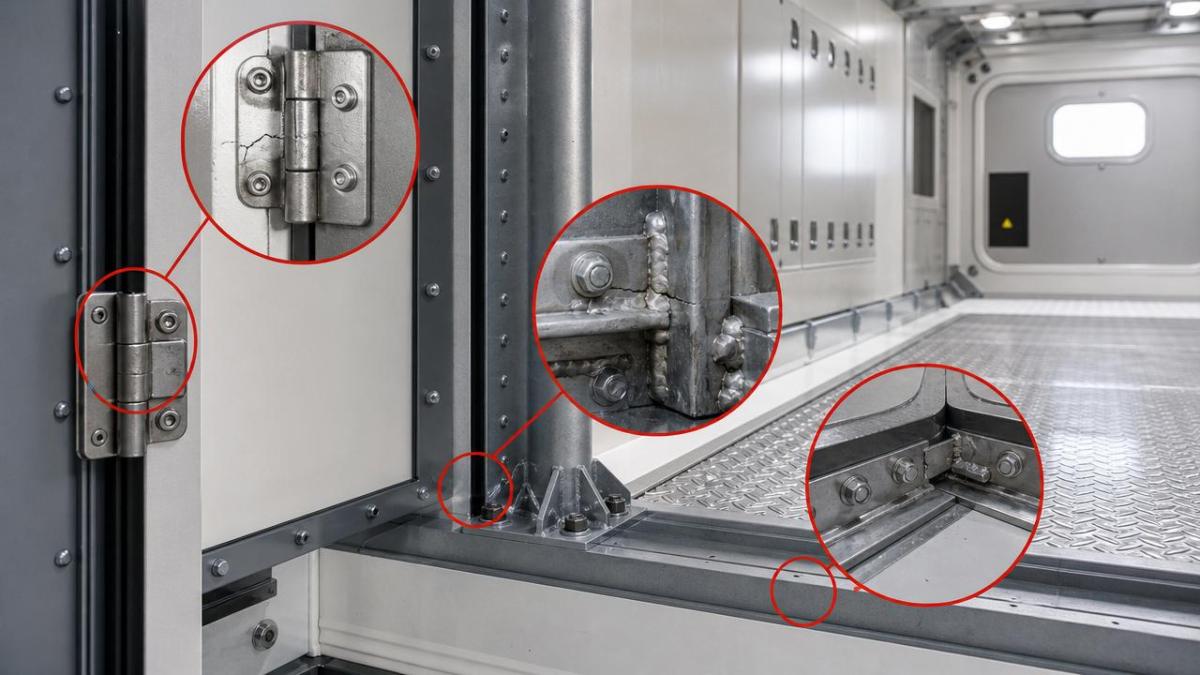
- Hairline cracks near welds, bolt holes, corners, and bracket bases
- Permanent deformation in floor panels, frames, rails, or mounting plates
- Loosened joints that recur soon after tightening
- Misalignment in doors, windows, access hatches, or modular connection points
- Creaking, vibration, or shifting under loads that were previously stable
- Declining load performance during repeat-use testing
- Surface coating rupture that exposes stressed substrate zones
These signs do not always indicate immediate failure. However, repeated appearance in the same location strongly suggests material fatigue progression. Trend tracking is more valuable than one-time visual judgment.
Why subtle symptoms matter
Material fatigue is cumulative. Small stress cycles gradually weaken the material structure until crack growth accelerates. In cabins, this process is often hidden beneath finish layers, under flooring, inside hardware interfaces, or around fastened composite connections.
Because fatigue damage can remain invisible for long periods, relying only on surface appearance creates blind spots. A component may still look acceptable while stiffness, alignment, or load response is already declining.
What is driving the rise of material fatigue risk in modern cabin systems
Several market and engineering changes are increasing exposure to material fatigue in tourism cabins. The drivers are not isolated. They interact across design, manufacturing, transport, installation, and operation.
The result is clear: material fatigue can no longer be treated as a rare issue limited to heavy industrial hardware. It is now a relevant durability variable in premium hospitality structures, especially those marketed for frequent use and long service life.
Where material fatigue tends to concentrate in cabin components
Not all parts face the same fatigue risk. In high-use cabins, damage usually starts where repeated force combines with geometry changes, fastening pressure, vibration, or moisture exposure.
Priority inspection zones
- Door hinge plates and latch mounting areas
- Floor-to-frame interfaces near entry points
- Bed supports, folding structures, and overhead storage brackets
- Window corners and fastener clusters
- Roof support transitions and welded junctions
- Lift points and transport restraint locations
- Mechanical equipment mounts and vibration-carrying brackets
These areas deserve more than routine visual checks. If a site records recurring adjustments, misalignment, or noise in the same location, material fatigue should become part of the diagnostic process.
Testing priorities are moving from simple compliance to fatigue-informed validation
A major industry shift is the growing demand for performance data that reflects real use. Static load tests remain important, but they do not fully represent the repeated stress patterns that drive material fatigue in cabin service.
Useful testing approaches
- Cycle testing for doors, bunks, access panels, and movable assemblies
- Repeated load testing on floors, seating platforms, and support frames
- Non-destructive testing for microcrack detection in welded or stressed zones
- Vibration testing for transportable and relocatable cabin units
- Environmental cycling combined with mechanical loading
When these methods are combined, material fatigue becomes measurable instead of speculative. This supports better benchmarking, stronger warranty interpretation, and more realistic maintenance intervals.
TVM’s benchmarking approach is especially relevant here. Raw engineering metrics help separate cosmetic quality from structural resilience. For tourism infrastructure, that distinction is increasingly central to asset planning.
The impact extends across safety, uptime, brand reliability, and lifecycle cost
Material fatigue is not only a maintenance issue. It affects guest safety, facility availability, refurbishment timing, transport readiness, and long-term capital efficiency. Small failures in high-traffic cabin parts can quickly become operational disruptions.
In premium tourism settings, repeated defects also weaken trust in build quality. A door that drags, a floor that flexes, or a bracket that loosens creates visible evidence of hidden fatigue. That perception can influence reputation as much as actual repair cost.
For global projects sourcing modular hospitality hardware across borders, material fatigue data also supports more consistent technical comparison. It helps normalize expectations between design claims, certification documents, and actual service endurance.
What deserves closer attention in the next inspection cycle
A risk-based approach is more effective than uniform inspection. Components should be ranked by usage frequency, consequence of failure, environmental exposure, and repair difficulty. This allows material fatigue monitoring to focus where it matters most.
Core focus points
- Track recurring defects instead of treating each one as isolated
- Record deformation, alignment drift, and retightening frequency
- Inspect hidden interfaces behind trim, covers, and panels
- Review transport history for movable or seasonal units
- Compare field symptoms with test-cycle assumptions
- Use non-destructive methods where crack initiation risk is high
This approach turns material fatigue assessment into a repeatable operational discipline. It also improves the quality of future procurement specifications and technical acceptance criteria.
A practical response framework can reduce fatigue-related surprises
Material fatigue rarely announces itself with one dramatic event. It usually leaves a trail of small evidence. Organizations that build this evidence into inspection logic are more likely to prevent costly failures.
The next step is better fatigue visibility, not just more maintenance
As tourism hardware becomes smarter, lighter, and more modular, material fatigue will remain a key durability question. The strongest response is not reactive repair. It is better visibility into how components age under actual operating conditions.
That means integrating inspection records, cycle-based testing, and engineering benchmarks into one decision framework. With clearer fatigue data, cabin infrastructure can be specified, monitored, and renewed with greater precision.
For teams evaluating high-use cabin systems, the immediate action is simple: identify the highest-cycle components, inspect known stress concentration zones, and verify whether current test evidence truly reflects service reality. Material fatigue is easier to manage when its early signals are treated as measurable trends rather than minor defects.
Recommended News
 Sep 22, 2026Industrial Compressors: How to Size Air Capacity and Pressure for Factory DemandIndustrial compressors sizing guide: calculate factory air capacity, end-use pressure, peak demand, receiver storage, leakage, and energy-efficient system performance.
 Sep 09, 2026Sustainable Building Materials Pricing: How Buyers Compare Cost, Life Cycle, and RiskSustainable building materials pricing explained: compare installed cost, life-cycle value, carbon evidence, and supply-chain risk for smarter procurement decisions.
 Aug 29, 2026How to Assess Modular Building Suitability for Middle East Climate and Site ConditionsModular building assessment Middle East: evaluate heat, dust, corrosion, logistics, compliance, and lifecycle value for resilient site-ready projects.
 Aug 16, 2026EU Sets Mandatory Carbon Footprint Certification for Imported Modular CabinsEU mandatory carbon footprint certification will reshape imported modular cabins compliance from 2027. Learn key EU rules, EN 15804+A2 impacts, exporter risks, and how to prepare early.
 Aug 12, 2026New Exit Compliance Rule Reshapes Bids and AI Travel ProofExit compliance rule now reshapes bids and AI travel proof, raising export compliance demands for glamping tents, modular cabins, smart lighting, and kiosk tech. Learn what changes first.
 Jul 13, 2026EU Fire Rule Tightens Testing for Modular CabinsEU Fire Rule Tightens Testing for Modular Cabins: learn how EN 13501-1:2026 shifts CE compliance to component fire testing, impacts lead times, and affects EU export planning.
 Jul 12, 2026Prefab Thermal Efficiency Analysis: Which Metrics Matter for Off-Grid Cabin Design?Prefab thermal efficiency analysis for off-grid cabins: discover the key metrics that shape energy use, comfort, moisture control, and smarter supplier selection.
 Jul 11, 2026EN 16893:2026 Takes Effect for Modular CabinsEN 16893:2026 takes effect for modular cabins in the EU, making third-party verification essential for customs, listing, and project approval. Learn the key compliance changes now.
 Jul 10, 2026China Customs Tightens EU Modular Cabin DeclarationsChina Customs tightens EU Modular Cabin declarations: learn the new EN 16893:2026 and CNAS filing rules, 72-hour delay risks, and how exporters can stay compliant.
 Jul 09, 2026Berlin ITMA 2026 Adds Modular Cabins ZoneBerlin ITMA 2026 adds a Modular Cabins Zone for carbon-neutral prefab solutions, featuring verification, compatibility testing, and cross-border sourcing insights. See what buyers and suppliers should watch.
 Jul 09, 2026Modular Tourism Structures Cost: 7 Factors That Affect Budget, Transport, and InstallationModular tourism structures cost explained: discover the 7 key factors shaping budget, transport, and installation, and learn how to avoid hidden expenses before signing.
 Jul 07, 2026Vietnam Enforces New Import Rules for Modular CabinsVietnam Enforces New Import Rules for Modular Cabins: learn how VNSP registration, QR labeling, and LCA carbon filings affect customs clearance, supplier readiness, and delivery risk.
![]() Jul 06, 2026Vietnam Mandates QR Traceability Labels for Modular CabinsVietnam mandates QR traceability labels for Modular Cabins from July 15, 2026. Learn the new compliance rules, port return risks, and key actions for exporters and buyers.
Jul 06, 2026Vietnam Mandates QR Traceability Labels for Modular CabinsVietnam mandates QR traceability labels for Modular Cabins from July 15, 2026. Learn the new compliance rules, port return risks, and key actions for exporters and buyers. Jul 05, 2026Pre-Engineered Cabins Buying Guide: Key Specs, Layout Options, and Cost FactorsPre-engineered cabins buying guide covering key specs, layout options, and real cost factors. Learn how to compare suppliers, avoid hidden costs, and choose units built for long-term performance.
 Jul 04, 2026How to Choose Insulated Hospitality Units for Year-Round Resorts and Remote SitesInsulated hospitality units for year-round resorts and remote sites: learn how to compare thermal performance, durability, compliance, and lifecycle cost for smarter investment decisions.
 Jul 01, 2026EN 13501-1:2026 Takes Effect for Modular CabinsEN 13501-1:2026 now reshapes market access for Modular Cabins. Learn how B-s1,d0 ratings, third-party testing, and CE/UKCA marking affect exports, customs, and delivery planning.
 Jun 30, 2026Djibouti Port Adds Dual Checks for Modular CabinsDjibouti Port adds dual checks for Modular Cabins: thermal imaging and advance EPD filing. Learn how the 3.7-day pre-clearance rule impacts Red Sea shipping, escort priority, and delivery planning.
 Jun 29, 2026EU Fire Rule Tightens for Modular Cabin ExportsModular Cabins exporters face a major EU compliance shift: EN 13501-1:2026 now ties CE marking to mandatory SBI fire testing. Learn the risks, deadlines, and actions needed for EU market access.
 Jun 27, 2026EU EN 16435:2026 Takes Effect for Modular CabinsEU EN 16435:2026 takes effect for Modular Cabins on July 1, 2026, adding Rf 60 and Sd2 tests. Learn how the new CE compliance rules impact certification, testing timelines, and EU shipments.
 Jun 27, 2026Prefab Hospitality Testing and Code Compliance: What to Check Before Project ApprovalPrefab hospitality testing code compliance starts with the right checks. Learn what to verify in structure, fire, MEP, accessibility, and documentation before project approval.
 Jun 26, 2026Red Sea Disruption Extends Modular Cabin Lead TimesRed Sea disruption extends Modular Cabin lead times as Asia-Europe shipping costs rise and 40HQ transit reaches 42 days. See how exporters and buyers can reduce delivery risk now.
 Jun 24, 2026Riyadh Modular Housing Tenders AccelerateRiyadh modular housing tenders accelerate as 27 projects seek SASO 2201:2025-compliant prefabricated units. Explore the 32,000 modular cabins opportunity and 180-day delivery challenge.
 Jun 23, 2026Hormuz Reopening May Cut Camp Export Freight Costs 12%Hormuz reopening may cut camp export freight costs 12%, helping Modular Cabins and Glamping Tents shipments to Saudi Arabia, the UAE, and Qatar. See what exporters should adjust now.
 Jun 22, 2026CBAM Reporting Extends to PV Mounts From JulyCBAM Reporting Extends to PV Mounts From July, making batch-level carbon reporting a critical export requirement. Learn how PV mounts suppliers can protect EU and U.S. project access.
Quarterly Executive Summaries Delivered Directly.
Join 50,000+ industry leaders who receive our proprietary market analysis and policy outlooks before they hit the public library.