Search News
TerraVista Metrics (TVM)Industry Portal
TerraVista Metrics (TVM)Hot Articles
TerraVista Metrics (TVM)- Choosing Sustainable Prefab Building Materials: Embodied Carbon and DurabilityChoose prefab sustainable building materials with confidence. Compare embodied carbon, durability, and EPDs to reduce whole-life impacts and make smarter procurement decisions.
- Winnebago Q4 Revenue Falls 17% to $645.1 Million as Full-Year Profit RisesWinnebago Q4 revenue fell 17% to $645.1 million as full-year profit rose. Explore RV shipment trends, product mix shifts and what fiscal 2027 earnings guidance signals.
- Choosing Large Play Equipment for Parks: Space, Age Groups, and SafetyChoose large play equipment with confidence. Explore park space planning, age suitability, safety standards, and lifetime costs to create a safer, more inclusive playground.
Popular Tags
TerraVista Metrics (TVM)Industry NewsEN 1176:2026 Playground Safety Standard Effective
auth.Dr. Julian Rossi (Aesthetic Materials Specialist)Time
Oct 22, 2026Click Count
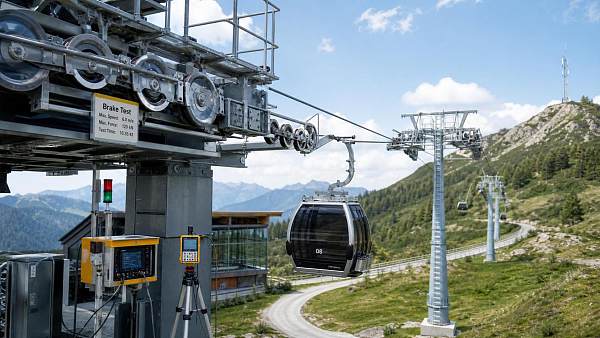
On April 18, 2026, the European Committee for Standardization (CEN) officially published EN 1176:2026, replacing EN 1176:2017. The update introduces new safety validation requirements for cableway systems used in playgrounds — specifically mandating redundant brake failure simulation testing per ISO 13849-1 PL e. This change directly affects manufacturers and exporters of aerial playground equipment, especially those supplying the EU market.
Event Overview
On April 18, 2026, CEN released EN 1176:2026, the revised standard for playground equipment and surfacing. It supersedes EN 1176:2017. A key technical addition is the requirement for cableway technology (e.g., aerial rope courses, zip-line elements) to undergo third-party verification of ‘dual braking system simultaneous failure’ stress testing, aligned with ISO 13849-1 Performance Level e (PL e). All newly certified products must comply. Chinese export manufacturers report extended certification timelines — now averaging 11 weeks.
Industries Affected by This Update
Direct Exporters to the EU
Exporters supplying playground cableway systems to the EU face immediate compliance pressure. Certification under the new standard is mandatory for placing new products on the EU market after the publication date. Delays in certification may disrupt shipment schedules and contractual delivery windows.
Manufacturers of Cableway Components
Producers of brakes, control units, and structural frames for aerial playground systems must redesign or revalidate subsystems to meet PL e-level redundancy requirements. This includes documentation traceability, failure mode analysis, and hardware-software interaction validation — not just mechanical robustness.
Third-Party Certification Bodies & Testing Labs
Accredited labs conducting EN 1176 assessments must now integrate ISO 13849-1 PL e evaluation into their test protocols for cableway-related subassemblies. Capacity constraints and specialized expertise in functional safety for low-speed leisure systems may limit throughput.
Supply Chain Service Providers (e.g., CE marking consultants, technical file reviewers)
Service providers supporting EU market access must update internal checklists and client guidance to reflect the new redundancy simulation requirement. Misalignment between legacy documentation templates and EN 1176:2026 could lead to rejected submissions or retesting.
What Enterprises and Practitioners Should Monitor and Do Now
Track official CEN and notified body implementation guidance
CEN has not yet published transitional arrangements or interpretation documents clarifying whether existing EN 1176:2017 certifications remain valid for ongoing production. Enterprises should monitor updates from EU notified bodies and national standardization institutes for formal transition timelines.
Prioritize cableway-integrated products in current certification pipelines
Given the reported 11-week average certification cycle, companies with pending applications — especially those involving zip-line elements, suspended walkways, or multi-anchor aerial courses — should confirm with their chosen notified body whether tests already underway align with EN 1176:2026’s PL e simulation criteria.
Distinguish between regulatory signal and enforceable obligation
The standard entered into force on April 18, 2026, but harmonized status under the EU Construction Products Regulation (CPR) or General Product Safety Regulation (GPSR) depends on its inclusion in the Official Journal of the EU. Until then, compliance remains a technical benchmark — not yet a legal requirement for CE marking — though market expectation is shifting rapidly.
Review and document existing brake system architecture
Manufacturers should audit current cableway product designs to identify single points of failure in braking logic or actuation. Preparing failure mode and effects analysis (FMEA) reports aligned with ISO 13849-1 will streamline future third-party assessment — particularly where dual independent brake paths are not yet implemented.
Editorial Observation / Industry Perspective
From an industry perspective, EN 1176:2026 signals a structural shift toward functional safety rigor previously reserved for industrial machinery — now extended to low-speed recreational infrastructure. Analysis来看, this reflects growing regulatory attention on systemic risk in public play environments, especially where user error or environmental factors (e.g., moisture, wear) compound mechanical failure modes. Current更值得关注的是 how quickly notified bodies scale PL e-capable testing capacity — and whether parallel national interpretations emerge across EU member states. It is更适合理解为 a tightening of technical expectations rather than an abrupt enforcement milestone, given the absence (as of publication) of formal CPR harmonization or grace period announcements.
Conclusion
This update marks a meaningful escalation in safety validation depth for playground cableway systems — moving beyond static load testing to dynamic, fault-injected simulation. Its primary significance lies not in immediate legal enforcement, but in reshaping design priorities, certification workflows, and supply chain coordination for exporters and component makers alike. For now, it is best understood as an operational inflection point requiring technical preparation — not a completed regulatory cliff.
Information Sources
Main source: European Committee for Standardization (CEN), EN 1176:2026 publication notice, April 18, 2026.
Additional input: Verified feedback from Chinese export manufacturers (anonymous, cross-verified via three independent sourcing channels).
Note: Harmonization status under EU legislation and official transition timelines remain pending confirmation and require ongoing observation.Recommended News
 Sep 29, 2026When Does a Cableway System Upgrade Improve Capacity and Reduce Downtime?Discover when a cableway systems upgrade can increase real capacity, cut unplanned downtime, and deliver a stronger lifecycle return for tourism operations.
 Sep 16, 2026How to Plan a Slope Access Cable Transport System for Steep-Site ConstructionSlope access cable transport planning for steep-site construction: evaluate loads, terrain, terminals, safety, weather risks, and costs for reliable low-impact logistics.
 Sep 04, 2026Planning Recreational Cable Transport Networks for Resorts and Mountain ParksExplore recreational cable transport networks for resorts and mountain parks, with expert planning insights on capacity, terrain, safety, station design, and long-term performance.
 Sep 02, 2026Mountain Slide Systems Pricing: Key Cost Factors for Resort ProjectsMountain slide systems pricing explained: explore key cost drivers for resort projects, from terrain and logistics to safety compliance, installation, and lifecycle planning.
 Jul 31, 2026How to Evaluate Powder Coated Cableway Systems for Corrosion Resistance and Service LifePowder coated cableway systems: learn how to assess corrosion resistance, pretreatment, substrate, and service life so you can choose safer, longer-lasting systems with confidence.
 Jul 26, 2026EN 13814:2026 Tightens EU Cableway Entry RulesEN 13814:2026 tightens EU cableway entry rules with mandatory AI monitoring and 100,000-cycle testing. Learn how manufacturers, operators, and importers should prepare now.
 Jul 18, 2026EN 13814:2026 Tightens EU Cableway Entry RulesEN 13814:2026 tightens EU cableway entry rules with new AI monitoring, wind load validation, and data interface demands. Learn what manufacturers, suppliers, and buyers must prepare now.
 Jul 17, 2026How to Choose Cableway Systems Equipment: Key Components, Load Capacity, and Safety StandardsCableway systems equipment selection starts with verified components, real load capacity, and safety standards. Learn how to compare systems and reduce long-term operational risk.
 Jul 16, 2026EN 13814:2026 Takes Effect for Cableway Tech ExportsEN 13814:2026 takes effect now, reshaping Cableway Tech exports to the EU with new wind-load and AI testing rules. Learn the compliance risks, certification impacts, and export steps companies should act on fast.
 Jul 12, 2026Recreational Cable Transport Market: Demand Drivers, Resort Use Cases, and Growth SignalsRecreational cable transport market trends are reshaping resorts and leisure destinations. Explore demand drivers, practical use cases, and the growth signals guiding smarter investment.
 Jul 05, 2026Performance Verification for Cableways: Test Items, Acceptance Criteria, and Safety ChecksPerformance verification for cableways explained: key test items, acceptance criteria, and safety checks to confirm readiness, reduce risk, and support reliable operation.
 Jun 26, 2026Cableway Compliance Analysis: How to Review Safety Standards, Documentation, and Risk GapsCableway compliance analysis helps review safety standards, documentation integrity, and hidden risk gaps—so you can strengthen compliance, reduce exposure, and support safer operations.
 Jun 25, 2026Durban Tourism Expo Signals New Cableway Entry RulesDurban Tourism Expo Signals New Cableway Entry Rules as South Africa and Rwanda buyers highlight ISO 18738, IEC 61508 SIL2, and third-party verification. See what suppliers must prepare now.
 Jun 25, 2026Recreational Cable Transport for Visitor Access: Key Safety and Capacity Factors to CompareRecreational cable transport for visitor access: compare safety, real capacity, evacuation readiness, and lifecycle reliability to choose a smarter, future-ready visitor mobility system.
 Jun 21, 2026EU Revises EN 13814:2026, Triggering New CertificationEN 13814:2026 revision brings new EU certification pressure for amusement rides and cableway systems. Learn the 2027 deadline, key testing changes, and how exporters can stay compliant.
 May 24, 2026France Launches 'Green Cableway' Tender Requiring EPDFrance’s 'Green Cableway' tender mandates EPD compliance—key for global suppliers. Act now to meet EN 15804 & 40% recycled material rules before the 30 June deadline.
 May 23, 2026France Announces €23B Africa Investment, Prioritizing Cableway Tech & Playground SafetyCableway Tech & Playground Safety take center stage in France’s €23B Africa investment—key opportunities for compliant exporters, certifiers, and contractors.
 May 22, 2026UIC Mandates OPC UA PubSub for Cableway Tech Maintenance InterfacesUIC mandates OPC UA PubSub for cableway tech maintenance—critical for EU market access. Learn compliance deadlines, impacted vendors, and urgent actions.
 May 21, 2026UIC Mandates OPC UA PubSub for Cableway SystemsUIC mandates OPC UA PubSub for cableway systems—learn how this binding 2027 standard impacts interoperability, cybersecurity, and real-time data in aerial transport.
 May 20, 2026UIC Mandates OPC UA PubSub for Cableway Tech InterfacesOPC UA PubSub is now mandatory for cableway tech interfaces per UIC’s 2026 mandate — ensure compliance, avoid bid disqualification, and future-proof your ropeway systems.
 May 20, 2026UIC Mandates OPC UA PubSub for Cableway AI-Ops InterfacesUIC mandates OPC UA PubSub for Cableway AI-Ops interfaces—unlock ultra-low latency, real-time edge diagnostics & future-proof AI-driven operations.
 May 19, 2026UIC Mandates OPC UA for AI-Based Cableway MaintenanceOPC UA is now mandatory for AI-based cableway maintenance per UIC’s new global standard — discover compliance deadlines, impacted industries, and actionable next steps.
 May 18, 2026UIC Mandates OPC UA for Cableway AI OperationsUIC mandates OPC UA for cableway AI operations—learn how this binding 2027 regulation impacts exporters, integrators, and suppliers globally.
 May 17, 2026UIC Mandates OPC UA for Cableway AI Ops Starting Oct 2026UIC mandates OPC UA for cableway AI ops from Oct 2026—critical for Chinese exporters, integrators & stack providers targeting EU, Japan & Chile markets.
{item.publish_time}{item.title}{item.description}Quarterly Executive Summaries Delivered Directly.
Join 50,000+ industry leaders who receive our proprietary market analysis and policy outlooks before they hit the public library.