Search News
TerraVista Metrics (TVM)Industry Portal
TerraVista Metrics (TVM)Hot Articles
TerraVista Metrics (TVM)- Trailborn Acquires Two Yosemite Lodges and Takes Over Firefall Ranch ManagementTrailborn acquires two Yosemite lodges and takes over Firefall Ranch management. Explore the deal and what it means for outdoor hospitality.
- What Is Premium Camping? Comfort, Costs, and What to ExpectDiscover what premium camping offers, from comfortable beds to outdoor stays. Compare costs, amenities, and practical tips before you book.
- Hong Kong Unveils First Five-Year Modular Construction Plan to Advance Greater Bay Area CooperationHong Kong's five-year modular construction plan aims to boost Greater Bay Area cooperation. Explore its potential impact on projects and procurement.
Popular Tags
TerraVista Metrics (TVM)Industry NewsChoosing an Amusement Equipment Testing Agency: Accreditation and Scope
auth.Dr. Julian Rossi (Aesthetic Materials Specialist)Time
Nov 21, 2026Click Count
Choose an amusement equipment testing agency by matching its documented capabilities to the equipment, assessment activities, and acceptance requirements of the project. An accreditation certificate can establish that an organization has been assessed for certain activities, but its detailed scope determines whether those activities cover the work you need.
That distinction matters when a procurement decision depends on several kinds of evidence. A laboratory may be qualified to test a material sample, while a separate inspection body evaluates installation on site. Neither result, on its own, establishes that a complete ride is suitable for operation. Before comparing quotations, define the decisions each report must support and the gaps that may remain between them.
Start with the decision the assessment must support
The same piece of amusement equipment may require different evidence at design, manufacturing, installation, and operation. A buyer comparing suppliers may need a review of design assumptions and selected test results. An operator preparing to open an attraction may also need site-specific inspection, functional checks, and documentation for the relevant authority.
Prepare a short assessment brief before approaching agencies. Include the equipment type and configuration, intended location, expected use, project stage, and the documents already available. State whether the work concerns a complete attraction, a structural assembly, a restraint, a control system, or a particular material. Identify who will use the report and what decision they expect to make from it.
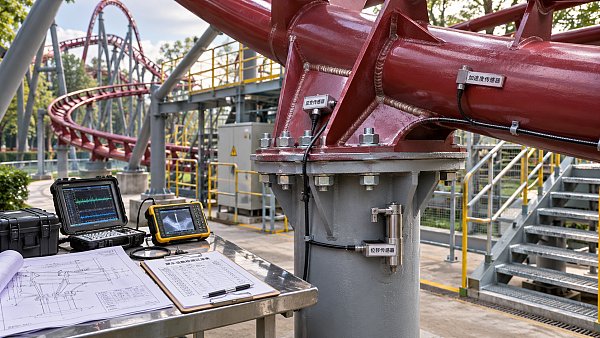
For example, a fatigue assessment of a structural component can inform a design decision, but its value depends on the assumed loads, cycles, connections, and environment. If the planned operating conditions differ from those assumptions, the report may not answer the buyer’s question. A useful brief makes those conditions visible before an agency commits to a method.
Read the accreditation scope, not just the certificate
Accreditation is an assessment of an organization’s competence for defined activities. It is not a general approval of every service the organization offers. Ask for the current certificate and the detailed scope, then compare both with the proposed work.
The scope should be specific enough to identify the relevant activity: what the body tests or inspects, the methods or categories covered, and any stated limits. Check that the legal entity and location responsible for the work match the accreditation documents. A provider with several offices may not perform the same accredited activities at every location.
Pay particular attention to these distinctions:
- Testing: Produces results from measurements or examinations using defined methods. A material test, for example, describes the tested sample and conditions; it does not automatically establish the performance of the assembled ride.
- Inspection: Examines a product, installation, process, or condition against specified requirements. The basis and extent of the inspection matter as much as the inspector’s credentials.
- Certification: Involves a conformity assessment decision under a defined certification scheme. Its meaning depends on the scheme, the product covered, and any ongoing conditions.
- Engineering review: Can assess calculations, drawings, assumptions, or technical evidence. Ask whether the review is accredited, what it covers, and whether it reaches a conformity conclusion or provides technical comments.
A proposal may include both accredited and non-accredited work. That is not automatically a reason to reject it: some useful engineering activities may sit outside an accreditation scope. The distinction should be clear, however, so the buyer does not mistake an advisory opinion for an accredited test or inspection result.
Use the accreditation body’s public directory to check the organization’s status and scope, and resolve discrepancies with the provider before placing the order. Also determine whether the intended regulator, owner, insurer, or other decision-maker accepts the proposed body and type of report. Accreditation alone does not settle every acceptance requirement.
Match the technical scope to the attraction
“Amusement equipment testing” can cover a wide range of machinery and operating conditions. A useful scope names the equipment and identifies the hazards or performance questions the assessment will address. Broad wording such as “complete safety testing” is less useful than a clear schedule of activities and exclusions.
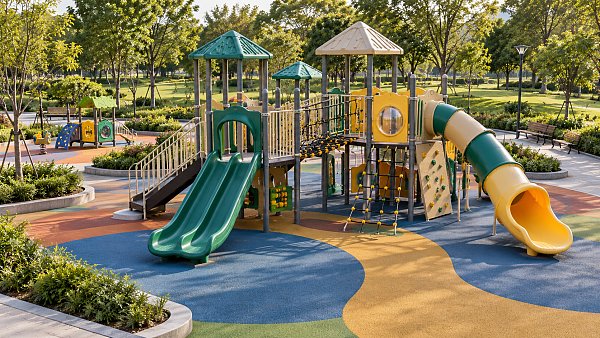
For a mechanically complex ride, the assessment may involve structural calculations, load paths, restraint performance, braking, control functions, emergency procedures, and interfaces between subsystems. For inflatable or playground-style equipment, materials, seams, anchorage, geometry, and the intended user group may be more relevant. The correct scope follows the equipment and its use, rather than a standard package offered to every buyer.
Ask each candidate to explain how it would address the following areas where relevant to the project:
- Mechanical and structural behavior: Which components, connections, operating loads, and failure modes are included? Are calculations reviewed, measurements taken, or both?
- Fatigue and service life: Are repeated loads assessed using documented assumptions about operating cycles and load variation? Does the work address critical joints and the possibility of damage accumulating in service?
- Materials and fabrication: Are material identification, weld quality, or other fabrication records part of the review? If samples are tested, how do they represent the supplied components?
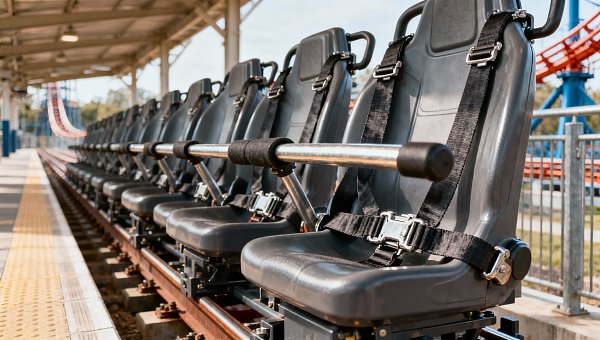
- Controls and protective functions: Are sensors, interlocks, stops, power loss, and foreseeable fault conditions considered? A normal operating cycle alone may not reveal how the system responds to a fault.
- Installation and site conditions: Does the work cover foundations, anchorage, clearances, assembly, environmental exposure, and interfaces with site infrastructure?
- Maintenance and continued operation: Will the assessment identify inspection points, assumptions, or documentation needed to manage the equipment after handover?
These are not universal test requirements. They are prompts for defining the work. A well-qualified agency should be able to explain which items apply, which do not, and which need another specialist.
Make standards part of the scope discussion
Ask the provider to list the standards, methods, and contractual criteria it proposes to use, including the applicable editions and any clauses or activities excluded from its assessment. The relevant set depends on the equipment, location, and purpose of the work. Different jurisdictions or acceptance bodies may also have their own requirements.
A quotation that lists a standard without specifying the equipment and assessment activities leaves room for misunderstanding. The same applies when a report says a product was “tested to” a standard: determine which tests were performed and whether the result supports the broader claim being made. A selected test can be useful evidence without demonstrating conformity with every requirement in that standard.
Understand how the evidence will be produced
Two agencies may offer similar-sounding services but use different evidence. One may witness a manufacturer’s test; another may conduct an independent test using its own equipment. A design review may rely entirely on documents supplied by the manufacturer, while a site inspection may include direct observations and functional checks. Each approach can have a legitimate role, but they answer different questions.
Ask who selects samples, where the work takes place, which instruments or methods will be used, and how the agency will identify the item assessed. If a test is destructive or impractical on the finished assembly, establish how a sample or substitute represents the production item. Differences in material, fabrication, geometry, or operating conditions can limit the conclusions drawn from a sample.
Also ask about subcontracting. A provider may coordinate several specialists, which can simplify project management, but the proposal should identify the work each party performs and any relevant accreditation. Establish who integrates the findings and who issues each report. A single cover letter should not obscure the source or limitations of the underlying evidence.
Check independence and technical competence
Competence depends on the people and resources assigned to the project as well as the organization’s credentials. Request relevant experience by equipment type and assessment discipline, along with the roles of the personnel who will review calculations, conduct tests, inspect the installation, and authorize reports.
Independence deserves particular attention when an agency also advises on design, helps a manufacturer prepare documentation, or has a commercial relationship with a supplier. These relationships do not necessarily make a provider unsuitable, but they can affect the acceptance of its findings or create conflicts in the assessment. Ask how the organization identifies and manages conflicts of interest, and whether the intended recipient requires a particular degree of independence.
For a complex attraction, no single individual needs to master every discipline. The stronger proposal shows how mechanical, structural, electrical, controls, and other relevant specialists will coordinate, particularly at interfaces where responsibilities can otherwise be missed.
Compare the reports before comparing the price
Request a sample report or a detailed description of the deliverables. The finished documentation should allow a reviewer to understand what was examined, which requirements were used, what evidence was obtained, and how the conclusions follow from that evidence.
Look for clear identification of the equipment and configuration, test or inspection dates, methods, results, observations, deviations, and limitations. Where the agency makes a conformity statement, the report should identify the requirements against which the decision was made. Where it reports measurements or observations only, that boundary should be visible.
Define the treatment of nonconformities before work begins. A practical agreement states how findings will be communicated, who is responsible for corrective action, what evidence is needed to close an issue, and whether reinspection or retesting is included. Without that clarity, a low initial quotation can leave the buyer with an unresolved report and an additional round of work.
Timing matters too. Design review after fabrication may identify a problem that is expensive to correct; installation inspection scheduled too late may delay opening. Compare proposals against the project schedule, the availability of equipment and records, and the time needed to address findings. Price is meaningful only when the proposed scope and deliverables are comparable.
Turn the comparison into a defensible selection
Use the same project brief and acceptance criteria for each shortlisted provider. Then build a comparison around the decisions the project needs to make:
- Map each required activity to the provider’s documented scope, named personnel, and proposed method.
- Separate accredited activities from other services, and identify any subcontracted work.
- Record exclusions and decide who will cover them, especially site installation, controls, and follow-up after findings.
- Confirm that the proposed reports will be useful to the organizations expected to review or accept them.
- Compare cost and schedule only after the technical scope is aligned.
If a provider cannot cover the complete assignment, a combination of specialists may be appropriate. Give one party clear responsibility for coordinating interfaces and maintaining a record of outstanding issues; otherwise, each report can be sound while a significant part of the attraction remains unassessed.
TerraVista Metrics describes its amusement and attractions work as engineering review of material fatigue, mechanical performance, and regulatory compliance. For a project considering that type of support, define the specific review and deliverables required, then assess whether any testing, inspection, or formal acceptance work must be assigned separately.
The preferred partner is the one whose proposal makes the evidence chain clear: the equipment and conditions assessed, the methods used, the people responsible, and the decisions the resulting reports can support. That clarity gives procurement and operations teams a workable basis for resolving gaps before the attraction enters service.
Recommended News
 Nov 08, 2026Choosing an Amusement Equipment Testing Agency: Accreditation and ScopeChoosing an amusement equipment testing agency? Learn how to verify accreditation, assess technical scope, and compare reports before you commit.
 Oct 24, 2026Six Flags to Add Seat Belts to Goliath and Similar Roller CoastersSix Flags plans to add seat belts to Goliath and similar roller coasters. Learn about the safety changes, Goliath’s closure and what visitors should watch for next.
 Oct 22, 2026Choosing Large Play Equipment for Parks: Space, Age Groups, and SafetyChoose large play equipment with confidence. Explore park space planning, age suitability, safety standards, and lifetime costs to create a safer, more inclusive playground.
 Sep 07, 2026Amusement Equipment Testing for Family Entertainment Centers: Key Safety ChecksAmusement equipment testing for family entertainment centers: discover essential safety checks for restraints, brakes, interlocks, structural wear, and daily operations.
 Aug 25, 2026How to Evaluate Play Equipment Suppliers in North America for Safety and FitPlay equipment North America buyers: learn how to compare suppliers for safety, compliance, materials, installation support, and long-term fit before costly mistakes happen.
 Aug 22, 2026Poured Rubber Surfacing for Playgrounds: What to Evaluate Before Specifying ItPoured rubber surfacing for playgrounds looks ideal, but performance depends on drainage, substrate, testing, and maintenance. Learn what to evaluate before you specify it.
 Aug 16, 2026What Playground Surfacing Standards Should You Meet for Safer School and Public Play Areas?Playground surfacing standards help school and public play areas stay safer, accessible, and compliant. Learn what to check before approval and avoid costly safety gaps.
 Aug 13, 2026EU Updates EN 13814:2026 for Modular CabinsEU updates EN 13814:2026 for Modular Cabins, adding AI load simulation to compliance. Learn what exporters must prepare before March 2027 to avoid CE delays and rising certification costs.
 Aug 08, 2026EN 13814:2026 Takes Effect, Raising EU Ride Safety Certification RequirementsEN 13814:2026 now raises EU ride safety certification requirements. Learn how dynamic load fatigue testing and third-party approval affect EU customs clearance, suppliers, and buyers.
 Aug 05, 2026EN 13814:2026 Tightens EU Playground Safety RulesEN 13814:2026 tightens EU playground safety rules with a fast transition deadline. Learn how the new standard affects CE compliance, testing, and delivery planning.
 Jul 21, 2026CPSC Adopts ASTM F1487-26 for Playground SafetyCPSC adopts ASTM F1487-26 for Playground Safety starting Oct. 1, 2026. Learn how the new rules affect CPC certification, U.S. market access, inventory risk, and compliance planning.
 Jul 14, 2026Vietnam Requires GS1 Traceability Codes for Imported Playground EquipmentVietnam Requires GS1 Traceability Codes for Imported Playground Equipment from Aug 15, 2026. Learn what MOIT’s new QR code rule means for exporters, importers, and compliance readiness.
 Jul 13, 2026Vietnam Requires QR Labels on Imported Playground EquipmentVietnam requires QR labels on imported playground equipment from Aug 1, 2026. Learn how VN-QR 2026 rules affect customs, documents, and shipment readiness.
 Jul 12, 2026Vietnam Requires UV Aging Test for Imported SlidesVietnam requires UV aging test for imported slides under VN-TIS 123:2026. Learn how the new rule impacts compliance, testing costs, shipment timing, and supplier selection.
 Jul 11, 2026CPSC Tightens Playground Safety Rules for Export Supply ChainsCPSC playground safety rules tighten U.S. export compliance for slides, climbing frames, and swing supports. Learn ASTM F1487-26a impacts, DIA testing changes, sourcing risks, and supply chain actions before Oct. 1, 2026.
 Jul 11, 2026Amusement Equipment Testing for Public Parks: What Safety Items Should Be Checked First?Amusement equipment testing for public parks should start with structure, restraints, electrical systems, moving parts, and records. Learn the first safety checks that prevent shutdowns and protect visitors.
 Jul 09, 2026How to Choose an Amusement Equipment Testing System for Compliance and Daily InspectionAmusement equipment testing system selection made practical: learn how to compare compliance features, inspection workflows, data accuracy, and audit readiness for safer, more efficient operations.
 Jul 04, 2026Amusement Ride Testing Services: What Tests Are Required Before Opening to the Public?Amusement ride testing services cover structural, load, control, restraint, and emergency checks before opening. Learn what tests matter most to protect safety, compliance, and uptime.
 Jul 01, 2026All Weather Slide Systems: Key Safety, Drainage, and Material Factors for Outdoor ProjectsAll weather slide systems for outdoor projects: explore key safety, drainage, and material factors to reduce risk, improve uptime, and choose durable solutions with confidence.
 Jun 29, 2026CPSC Alert Tightens Scrutiny on Playground AnchorsCPSC Alert tightens scrutiny on playground anchors as CBP inspections expand. Learn how recall-linked defects may delay clearance, raise compliance risks, and impact playground safety supply chains.
 Jun 26, 2026CPSC Sets Trilingual Warning Label Rule for Playground EquipmentCPSC trilingual warning label rule for playground equipment takes effect August 1, 2026. Learn ASTM F1487-25 requirements, import risks, and how exporters and buyers can stay compliant.
 Jun 18, 2026CPSC Tightens Playground Impact Testing for Modular ImportsCPSC tightens playground impact testing for modular imports under ASTM F1487-26e1. Learn key compliance changes, shipment risks, and document updates before Sept. 1, 2026.
 Jun 17, 2026Amusement Ride Testing Explained: Key Standards, Test Types, and Safety CheckpointsAmusement ride testing explained: learn key standards, test types, and safety checkpoints to improve compliance, reduce downtime, and protect attraction performance.
 Jun 13, 2026How to Request an Amusement Hardware Quotation Without Missing Specs or Safety RequirementsAmusement hardware quotation guide: learn how to request accurate specs, safety documents, and compliance details to avoid hidden costs, delays, and risky supplier gaps.
{item.publish_time}{item.title}{item.description}Quarterly Executive Summaries Delivered Directly.
Join 50,000+ industry leaders who receive our proprietary market analysis and policy outlooks before they hit the public library.