Search News
TerraVista Metrics (TVM)Industry Portal
TerraVista Metrics (TVM)Hot Articles
TerraVista Metrics (TVM)- How to Evaluate Campground Equipment for Heavy Use and Outdoor ExposureCampground tourism equipment evaluation made practical: assess durability, weather resistance, safety, and lifecycle costs to choose equipment built for heavy use. Explore the guide.
- Gwynedd Glamping Pod Proposal Raises Concerns Over Protected BatsGwynedd glamping pod proposal faces protected bat concerns at Bluebell Woods. Explore what the survey means for the 11-pod scheme and the council’s planning decision.
- Resort Supplier Data: What to Verify Before Shortlisting VendorsVerify resort supplier data before shortlisting vendors. Learn how to check product evidence, compliance, delivery capacity, and support to reduce procurement risks.
Popular Tags
TerraVista Metrics (TVM)Industry NewsUL 1598C 3rd Edition Raises Smart Lighting Tests
auth.Lydia Vancini (Smart Hospitality IoT Consultant)Time
Oct 19, 2026Click Count
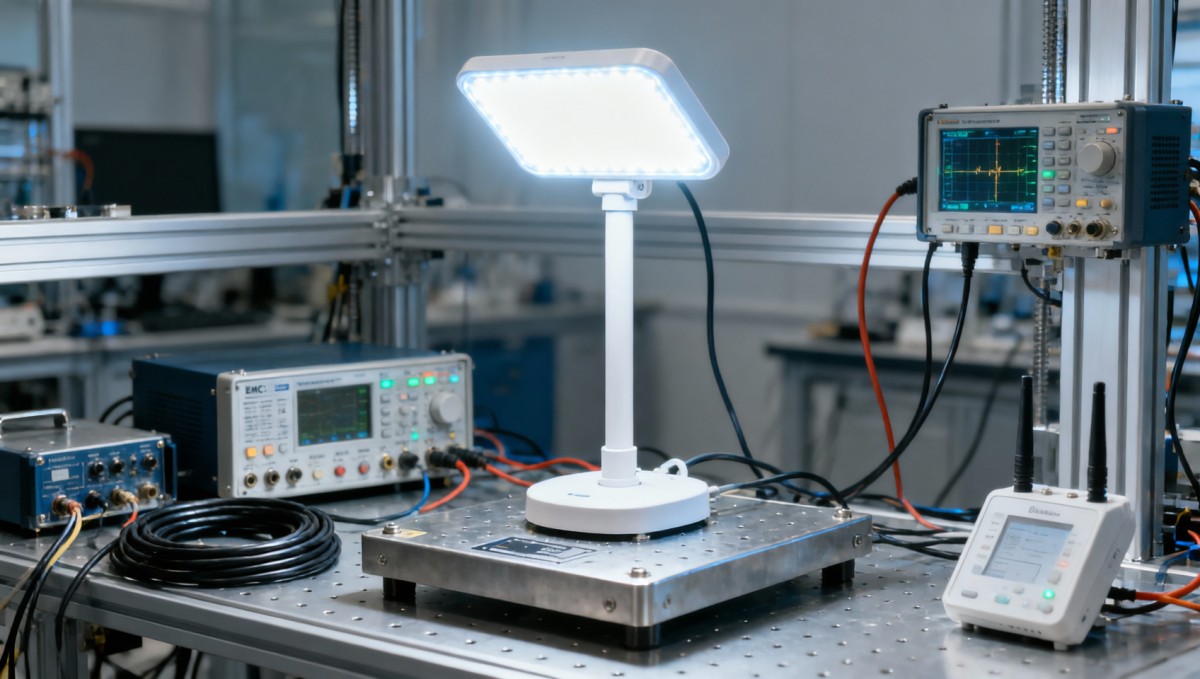
On May 30, 2026, UL published the third edition of UL 1598c, adding new surge immunity and EMC requirements for Smart Lighting products. The update deserves attention from LED luminaire exporters, smart lighting manufacturers, wireless control solution providers, certification teams, and supply chain service providers because the new requirements will become mandatory for UL certification from December 1, 2026.

Event Overview
UL released the third edition of UL 1598c on May 30, 2026. According to the available information, the updated standard adds an IEC 61000-4-5 Level 4 surge immunity test requirement, including 4 kV line-to-ground testing, for Smart Lighting products.
The update also introduces CISPR 15:2018 Class B radiated disturbance limit requirements. The scope covers LED luminaires with wireless communication functions, including Zigbee, Matter, and Bluetooth LE, as well as LED luminaires with dimming control functions.
The new requirements will become mandatory items for UL certification from December 1, 2026. Based on the disclosed information, the update is directly related to Smart Lighting products intended for the U.S. market that require UL certification.
Which Industry Segments Are Affected
Exporters of Smart Lighting Products
From an industry perspective, exporters shipping Smart Lighting products to the United States are among the most directly affected parties. The reason is that the new requirements are tied to UL certification, and the mandatory date has been set for December 1, 2026.
The impact may mainly appear in certification planning, shipment scheduling, and product documentation review. Exporters handling LED luminaires with Zigbee, Matter, Bluetooth LE, or dimming control functions should pay particular attention to whether existing certified models will need additional testing under the updated UL 1598c requirements.
LED Luminaire Manufacturers
Analysis shows that manufacturers of LED luminaires with wireless communication or dimming control functions may need to review product design and testing arrangements more carefully. The update adds both surge immunity and radiated disturbance requirements, which may affect how manufacturers prepare products for UL certification.
The main impact is likely to appear in pre-compliance testing, engineering verification, and certification timelines. For manufacturers with products already under development, the December 1, 2026 mandatory date creates a clear compliance checkpoint that should be considered before finalizing production and certification schedules.
Wireless and Dimming Control Solution Providers
From an industry perspective, solution providers involved in Zigbee, Matter, Bluetooth LE, or dimming control functions may also be affected because the updated standard specifically covers LED luminaires with these capabilities.
The influence is not limited to the complete luminaire manufacturer. Control modules, wireless communication functions, and dimming-related designs may become more closely reviewed during product-level certification. What deserves closer attention now is whether the complete luminaire can meet the newly added surge and EMC requirements when these functions are integrated.
Certification, Testing, and Compliance Service Providers
Observably, testing and compliance service providers will need to align their project planning with the new UL 1598c third edition requirements. Since the update adds IEC 61000-4-5 Level 4 and CISPR 15:2018 Class B radiated disturbance requirements, test planning for applicable Smart Lighting products may need to be adjusted accordingly.
The impact may appear in test item confirmation, certification communication, and customer guidance before the mandatory date. Service providers should clearly distinguish between products that fall within the stated scope and products that do not, based on the presence of wireless communication or dimming control functions.
Channel and Distribution Businesses
Analysis shows that channel and distribution businesses serving the U.S. lighting market should pay attention to certification status and product applicability. If Smart Lighting products entering the channel after the mandatory date require UL certification under the updated rules, incomplete compliance confirmation may affect procurement and sales arrangements.
The main issue for distributors is not technical testing itself, but whether suppliers can provide updated certification information in time. For products with wireless communication or dimming control functions, channel partners may need clearer confirmation before placing orders or planning inventory.
What Companies and Practitioners Should Watch and How to Respond
Confirm Whether Products Fall Within the Updated Scope
Companies should first identify whether their LED luminaires include Zigbee, Matter, Bluetooth LE, or dimming control functions. The disclosed scope of the updated UL 1598c requirements specifically points to LED luminaires with wireless communication or dimming control capabilities.
From an industry perspective, this scope confirmation should be handled before certification scheduling. Products outside the stated scope should not be automatically treated as affected, while products with the listed functions should be reviewed against the new test requirements.
Review Certification Timelines Before December 1, 2026
The mandatory date is a key operational point. Companies planning UL certification for applicable Smart Lighting products should check whether certification projects may extend beyond December 1, 2026.
Analysis shows that the practical response is to align product development, sample preparation, testing, and certification communication around this date. For projects already in progress, companies should confirm with relevant certification contacts how the transition to the third edition requirements will be handled.
Prepare for Surge Immunity and EMC Test Requirements
The update adds IEC 61000-4-5 Level 4 surge immunity testing, including 4 kV line-to-ground testing, and CISPR 15:2018 Class B radiated disturbance limits. Companies should ensure that internal engineering teams and external testing partners are working from the same requirement set.
What deserves closer attention now is not only whether a product can pass a single test, but whether the product design, documentation, and certification plan are consistent with the updated UL 1598c requirements. This is especially relevant for Smart Lighting products that combine LED lighting, wireless communication, and dimming control functions.
Strengthen Supplier and Customer Communication
Exporters, manufacturers, and distributors should communicate the new requirements across the supply chain. For applicable Smart Lighting products, suppliers should be asked to clarify whether models are designed and tested with the new UL 1598c third edition requirements in mind.
More appropriately understood as a compliance transition issue, the update may require clearer documentation exchange between manufacturers, exporters, channel partners, and testing service providers. Early communication can reduce uncertainty around procurement, delivery planning, and certification readiness.
Editor’s View / Industry Observation
Analysis shows that the UL 1598c third edition update is more than a routine standard revision for companies involved in Smart Lighting exports to the United States. Because it adds defined surge immunity and EMC requirements and sets a mandatory certification date, it creates a practical compliance timeline for affected products.
More appropriately understood as both a regulatory signal and an upcoming certification requirement, the update indicates that Smart Lighting products with wireless communication or dimming control functions are facing more specific electrical immunity and radiated disturbance expectations under UL certification.
Observably, the industry needs to continue monitoring how certification projects apply the new requirements in practice. The confirmed information already establishes the standard update, scope, test items, and mandatory date, while practical implementation details may still require ongoing attention during actual certification work.
Conclusion
The release of UL 1598c third edition is significant for Smart Lighting companies targeting the U.S. market. It directly affects LED luminaires with Zigbee, Matter, Bluetooth LE, or dimming control functions and adds clear surge immunity and EMC testing requirements to UL certification from December 1, 2026.
From an industry perspective, the update should be understood as a concrete compliance milestone rather than a general market trend. The most rational response is to confirm product scope, review certification schedules, prepare for the new test items, and maintain close communication across engineering, certification, export, and channel teams.
Information Source Statement
Main source: UL 1598c third edition release information dated May 30, 2026.
Information currently available: the publication date, added IEC 61000-4-5 Level 4 4 kV line-to-ground surge immunity requirement, added CISPR 15:2018 Class B radiated disturbance limits, applicable product scope, and December 1, 2026 mandatory UL certification date.
Items requiring continued observation: practical certification transition arrangements, product-level applicability confirmation, and implementation details during UL certification projects for Smart Lighting products.
Recommended News
 Aug 02, 2026EU EN 16798-2:2026 Raises Smart Lighting Export BarEN 16798-2:2026 reshapes smart lighting exports to the EU with stricter CE-related testing, faster compliance deadlines, and new customs risks. Learn what buyers and manufacturers must do now.
 Jul 23, 2026How to Choose Commercial LED Lighting for Offices, Retail Stores, and WarehousesCommercial LED lighting guide for offices, retail stores, and warehouses. Learn how to compare performance, controls, and lifecycle cost to choose smarter, longer-lasting solutions.
 Jul 15, 2026UL 1598C v2.1 Takes Effect for Smart LightingUL 1598C v2.1 takes effect for smart lighting, making cybersecurity certification mandatory for U.S. market entry. Learn who is affected, what products are in scope, and how to stay compliant.
 Jul 14, 2026UL 1598C v2.1 Makes Cybersecurity a Gate for Smart LightingUL 1598C v2.1 makes cybersecurity mandatory for smart lighting in the U.S. and Canada. Learn what cULus changes mean for compliance, exports, ODMs, and market access before Dec 1, 2026.
 Jul 13, 2026UL 1598C Rule Tightens Access for Smart Lighting ExportsUL 1598C Rule Tightens Access for Smart Lighting exports to the U.S. and Canada. Learn how OTA security, firmware verification, and network isolation now impact certification, listings, and shipment continuity.
 Jul 10, 2026UL 62368-3:2026 Reshapes U.S. Smart Lighting ExportsUL 62368-3:2026 reshapes U.S. smart lighting exports with new dynamic blue light and system certification rules. Learn the compliance risks, listing impact, and actions exporters should take now.
 Jun 28, 2026ISH 2027 Signals New Hotel Lighting Bid RulesISH 2027 highlights new hotel lighting bid rules as smart lighting buyers favor DALI-2 and Bluetooth Mesh. See what exporters and suppliers must prepare to win more hotel projects.
 Jun 27, 2026ITMA 2026 Countdown: Smart Lighting Enters Hotel TendersITMA 2026 smart lighting tenders are reshaping hotel procurement. Discover how DALI-2, EnOcean, ISO 50001 data, and EN 50131-1 may impact supplier shortlist access.
 Jun 26, 2026Berlin ITMA 2026 Signals New Hotel Buying RulesBerlin ITMA 2026 signals new hotel buying rules as smart lighting shifts into compliance. Learn how certification, BEMS interoperability, and procurement standards may reshape supplier selection.
 Jun 25, 2026Beijing Summit Report Makes Smart Lighting a New Procurement BenchmarkSmart lighting is emerging as a new procurement benchmark after the Beijing Summit report. See how DALI-2, Bluetooth Mesh, AI optimization, and response latency may reshape tourism infrastructure tenders.
 Jun 24, 2026HiYue Sets Up Singapore Unit for Smart Lighting ComplianceSmart Lighting exporters should watch HiYue’s new Singapore unit as it may streamline ASEAN origin certification, SGS energy-efficiency labeling, and REACH market-entry compliance.
 Jun 23, 2026CME Disruption Delays Quotes, Raises Copper Cost RisksCME disruption delays quotes and heightens copper cost risks, pressuring Smart Lighting Q3 pricing, surcharges, and supply chains. See what exporters and buyers should monitor now.
 Jun 23, 2026Zhejiang E-commerce Expo Opens with Compliance FocusZhejiang E-commerce Expo Opens with Compliance Focus, highlighting overseas warehousing, logistics, and cross-border compliance support to help exporters enter 22 markets with confidence.
 Jun 22, 2026Vietnam Requires VietCloud SDK in Smart Lighting ImportsVietnam Requires VietCloud SDK in Smart Lighting Imports from Sept. 1, 2026. Learn compliance steps, VIEPA testing impact, and how exporters can avoid licensing delays.
 Jun 21, 2026Vietnam Tightens Smart Lighting Entry RulesSmart lighting exporters face new Vietnam entry rules as VIEPA ties imports to VnCloud-IoT connectivity and lab verification. Learn the key compliance risks, timeline, and trade impact.
 Jun 20, 2026Indium Export Review Raises Display Module ConcernsIndium export review raises display module concerns for OLED and Mini-LED supply. Learn how sourcing, compliance, BOM costs, and delivery risks may impact smart hardware projects.
 Jun 18, 2026EU Sets 2026 Carbon Footprint Label Rule for Smart LightingEU 2026 carbon footprint label rule for smart lighting: learn how EPD, EN 15804+A2 verification, and new EU compliance deadlines will affect exporters, buyers, and project planning.
 Jun 17, 2026EU Moves to Require Carbon Labels for Smart LightingEU carbon labels for Smart Lighting are set to reshape compliance. Learn how ESPR rules, CE DoC carbon modules, and third-party verification impact EU exports and guestroom automation projects.
 Jun 16, 2026EU Enforces System-Level Smart Lighting Energy CertificationEU smart lighting energy certification now shifts to system-level testing under EN 15193-1:2026. Learn the new EU compliance rules, third-party certification impact, and export risks.
 Jun 15, 2026EU Rule Takes Effect: Smart Lighting Exports Need EN 15193-1:2026EU Rule Takes Effect: Smart Lighting Exports Need EN 15193-1:2026. Learn who must prove system-level energy efficiency, avoid EU customs holds, and protect shipments.
 Jun 14, 2026EU EPBD Rule Raises Integration Bar for Smart LightingEU EPBD Rule Raises Integration Bar for Smart Lighting from May 2026. Learn how EU smart lighting compliance, building automation, Matter, DALI-253, and SRI may reshape tenders and market access.
 Jun 13, 2026EU Enforces EN 63284-1:2026 for Smart LightingEU enforces EN 63284-1:2026 for smart lighting, making CE compliance and new certification essential for EU market access. Learn the risks, scope, and urgent actions for exporters and buyers.
 Jun 12, 2026EU Starts EN 63284-1:2026 Certification for Smart LightingEU Starts EN 63284-1:2026 Certification for Smart Lighting: learn how the new EU rules on EMC, cybersecurity, OTA security, and AI dimming affect exports, customs clearance, and market access.
 Jun 10, 2026UL 60335-2-107:2026 Adds New Tests for Smart LightingUL 60335-2-107:2026 adds new tests for smart lighting, including RF immunity and thermal runaway checks. Learn how the Dec 1, 2026 rule affects US exports, documents, and lead times.
Quarterly Executive Summaries Delivered Directly.
Join 50,000+ industry leaders who receive our proprietary market analysis and policy outlooks before they hit the public library.