Search News
TerraVista Metrics (TVM)Industry Portal
TerraVista Metrics (TVM)Hot Articles
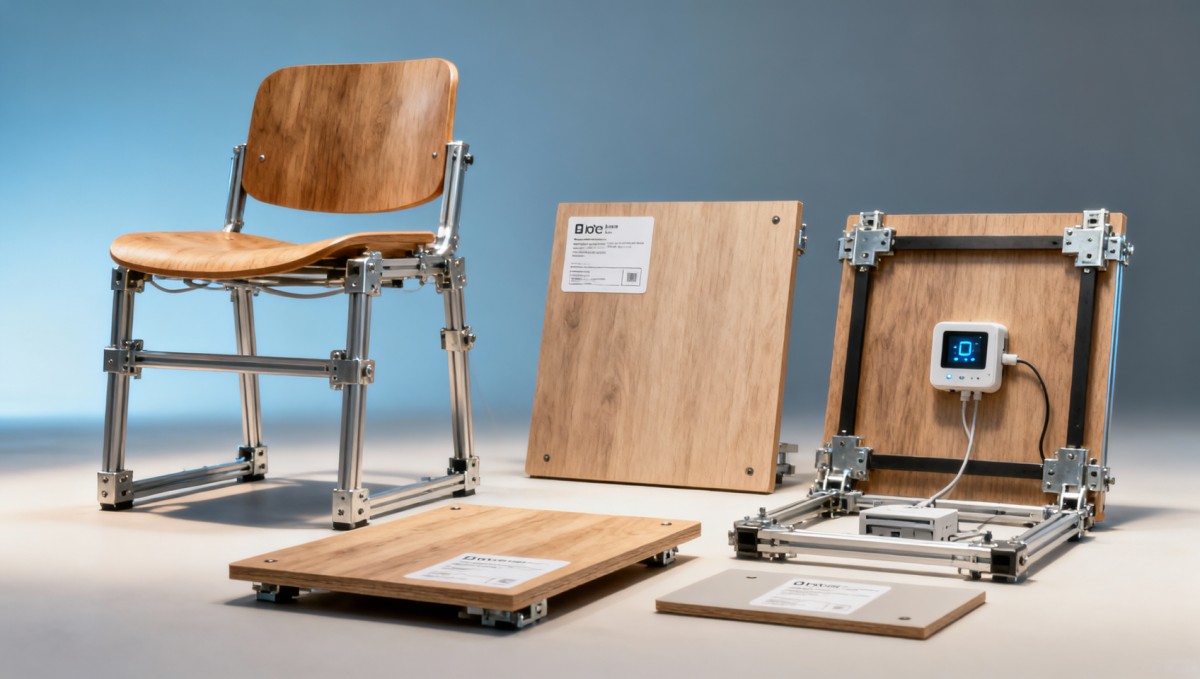
TerraVista Metrics (TVM)- Choosing Sustainable Prefab Building Materials: Embodied Carbon and DurabilityChoose prefab sustainable building materials with confidence. Compare embodied carbon, durability, and EPDs to reduce whole-life impacts and make smarter procurement decisions.
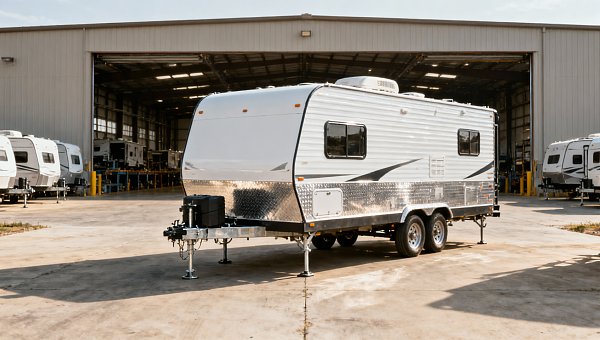
- Winnebago Q4 Revenue Falls 17% to $645.1 Million as Full-Year Profit RisesWinnebago Q4 revenue fell 17% to $645.1 million as full-year profit rose. Explore RV shipment trends, product mix shifts and what fiscal 2027 earnings guidance signals.
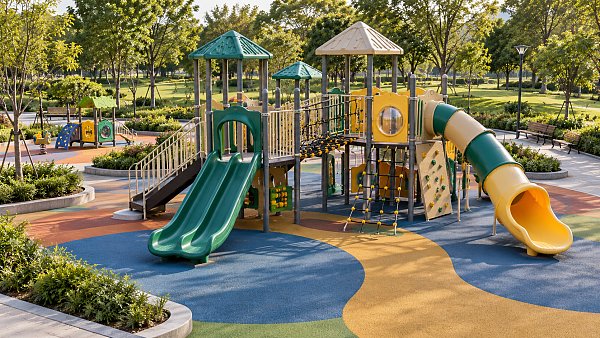
- Choosing Large Play Equipment for Parks: Space, Age Groups, and SafetyChoose large play equipment with confidence. Explore park space planning, age suitability, safety standards, and lifetime costs to create a safer, more inclusive playground.
Popular Tags
TerraVista Metrics (TVM)Industry NewsSustainable furniture certifications that don’t cover end-of-life disassembly
auth.Time
Oct 22, 2026Click Count
Many sustainable furniture certifications—like FSC, GREENGUARD, or Cradle to Cradle—focus heavily on material sourcing and manufacturing emissions, yet conspicuously omit end-of-life disassembly, modularity, and reuse potential. For hotel furniture, contract furniture, and eco-friendly furniture deployed in modular cabins or smart hospitality environments, this gap undermines true circularity. As IoT networks, thermal efficiency, and commercial flooring systems grow more integrated, procurement professionals need metrics that extend beyond 'eco-labeled' claims—especially when specifying playground safety components, hospitality furniture, or high-performance commercial flooring. TerraVista Metrics (TVM) bridges that gap with engineering-grade benchmarking rooted in real-world deconstruction feasibility.
Why Most Sustainability Certifications Stop at the Loading Dock
Sustainable furniture certifications are widely trusted—but their scope is often narrowly defined. FSC certifies wood traceability across supply chains; GREENGUARD validates low-VOC off-gassing during occupancy; Cradle to Cradle (C2C) assesses material health and recyclability *in theory*. None, however, require documented disassembly protocols, torque specifications for fastener removal, or standardized component labeling for post-use sorting.
This omission has tangible consequences in tourism infrastructure. Prefab glamping units replaced every 3–7 years, smart hotel lobbies undergo tech-refresh cycles every 24–36 months, and high-traffic commercial flooring sees full replacement after 8–12 years of operation. Without design-for-disassembly (DfD) validation, 60–80% of furniture components end up landfilled—not because they’re worn out, but because separation is technically unfeasible or economically unviable.
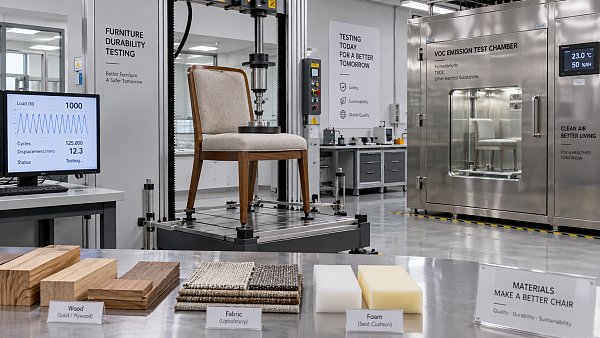
TVM’s benchmarking goes beyond compliance checkboxes. We test actual deconstruction time per unit (e.g., 12.4 ± 1.7 minutes for a modular lounge chair under ISO 14040-aligned conditions), catalog fastener types and accessibility scores (rated 1–5 per joint), and map material flow paths using digital twin-assisted reverse logistics simulations.

Which Certifications Fall Short on End-of-Life Performance?
Below is a comparative analysis of five widely adopted sustainability certifications against three core circularity criteria tied directly to procurement decision-making in tourism hardware deployment:
The table reveals a consistent pattern: certifications validate upstream inputs and midstream emissions, but lack downstream accountability. TVM fills this void by measuring what matters operationally—how quickly and cleanly furniture can be taken apart, sorted, and reintegrated into new systems without thermal degradation or hazardous residue.
Where This Gap Hits Procurement Hard
For procurement teams managing tourism hardware across mixed-use sites—from alpine eco-lodges to urban smart hotels—the certification gap translates into real risk exposure:
- Warranty misalignment: A 10-year structural warranty assumes intact assembly; DfD failure voids coverage if disassembly damages load-bearing joints.
- Logistics cost inflation: Non-modular units increase transport volume by 35–52% versus flat-pack alternatives validated for field reassembly.
- Carbon accounting gaps: Up to 22% of embodied carbon in hospitality furniture stems from end-of-life landfilling—untracked by current standards.
- Smart system obsolescence: IoT-integrated seating or lighting fixtures become stranded assets if firmware and mechanical interfaces aren’t decoupled per ISO/IEC 29147 guidelines.
TVM’s benchmarking integrates with procurement workflows via 4-step verification: (1) CAD-based DfD scoring, (2) physical deconstruction timing under ISO 9241-210 ergonomics constraints, (3) material recovery rate quantification (kg/unit), and (4) IoT interface decoupling latency testing (≤150ms tolerance).
How TVM Translates Disassembly Data Into Procurement Clarity
TVM doesn’t replace certifications—we augment them with actionable engineering intelligence. Our reports deliver procurement-ready outputs:
- DfD Scorecard: A weighted index (0–100) combining fastener accessibility, tool standardization, and joint reversibility—benchmarked against 127 tourism hardware SKUs.
- Recovery Yield Forecast: Predictive modeling of reusable mass (kg/unit) and residual waste fraction (%), validated across 3 climate zones (temperate, arid, tropical).
- Integration Readiness Index: Measures compatibility with smart hospitality ecosystems—including AI-driven maintenance scheduling, thermal envelope synchronization, and BIM-ready component tagging.
- Deconstruction Labor Cost Estimate: Field-tested labor hours per unit, aligned with local wage benchmarks across 14 countries.
These metrics feed directly into RFP evaluation matrices, enabling procurement directors to compare suppliers not just on price or marketing claims—but on verifiable circular performance across 5 key dimensions: disassembly speed, material fidelity, interface modularity, logistics efficiency, and integration resilience.
Why Choose TVM for Sustainable Hardware Benchmarking?
If your procurement process relies on certifications alone, you’re missing 40–60% of the circularity equation—specifically, the engineering reality of what happens after installation. TVM delivers what others promise but don’t measure:
- Independent, third-party deconstruction testing—no self-declaration, no audit waivers.
- Benchmarking aligned with ISO 14040/14044, EN 15804, and LEED v4.1 MRc3 requirements.
- Whitepapers co-developed with Tier-1 Chinese manufacturers—standardized, translation-verified, and ready for global tender submission.
- Turnaround of ≤10 business days for certified benchmark reports, including raw data exports and BIM-compatible metadata.
Contact TVM today to request: (1) a free DfD feasibility scan for your next furniture specification, (2) benchmark comparison against 3 competitive SKUs, or (3) integration of our metrics into your existing procurement scorecard framework.
Recommended News
 Oct 23, 2026Choosing Sustainable Prefab Building Materials: Embodied Carbon and DurabilityChoose prefab sustainable building materials with confidence. Compare embodied carbon, durability, and EPDs to reduce whole-life impacts and make smarter procurement decisions.
 Oct 22, 2026Winnebago Q4 Revenue Falls 17% to $645.1 Million as Full-Year Profit RisesWinnebago Q4 revenue fell 17% to $645.1 million as full-year profit rose. Explore RV shipment trends, product mix shifts and what fiscal 2027 earnings guidance signals.
 Oct 22, 2026Choosing Large Play Equipment for Parks: Space, Age Groups, and SafetyChoose large play equipment with confidence. Explore park space planning, age suitability, safety standards, and lifetime costs to create a safer, more inclusive playground.
 Oct 21, 2026Prefab Cabin Integration Testing: Power, HVAC, and Controls Checks Before DeliveryExplore prefab integration testing for cabins to verify power, HVAC, controls, and fault recovery before delivery. Discover key checks to reduce risk and make confident acceptance decisions.
 Oct 20, 2026Amadeus Adds Embedded Travel Protection to iHotelierAmadeus adds embedded travel protection to iHotelier with Pattern. Explore the potential for greater guest confidence, new hotel revenue and key considerations before adoption.
 Oct 20, 2026How to Evaluate Campground Equipment for Heavy Use and Outdoor ExposureCampground tourism equipment evaluation made practical: assess durability, weather resistance, safety, and lifecycle costs to choose equipment built for heavy use. Explore the guide.
 Oct 19, 2026Gwynedd Glamping Pod Proposal Raises Concerns Over Protected BatsGwynedd glamping pod proposal faces protected bat concerns at Bluebell Woods. Explore what the survey means for the 11-pod scheme and the council’s planning decision.
 Oct 19, 2026Resort Supplier Data: What to Verify Before Shortlisting VendorsVerify resort supplier data before shortlisting vendors. Learn how to check product evidence, compliance, delivery capacity, and support to reduce procurement risks.
 Oct 18, 20262026 Asian Tourism Equipment Expo Closes with Focus on Pod Lodging and Smart Controls2026 Asian Tourism Equipment Expo highlights pod lodging, luxury tents and smart controls. Explore what resort buyers should assess for compatibility, sustainability and guest comfort.
 Oct 18, 2026Tourism Asset Evaluation Criteria: Assessing Demand, Cash Flow, and Investment RiskExplore tourism asset evaluation criteria to assess demand, cash flow, lifecycle costs, and investment risk. Discover how to identify resilient assets and make smarter investment decisions.
 Oct 17, 2026Custom Smart Hotel Solutions: Integrating Room Controls With Your Existing PMSDiscover a smart hotel custom solution that connects room controls to your existing PMS, enhances guest comfort, and improves reliability without unnecessary infrastructure replacement.
 Oct 16, 2026Integrated Systems for Destination Planning: How to Connect GIS and Visitor DataExplore integrated systems for destination planning that connect GIS and visitor data to reveal bottlenecks, assess capacity, and guide smarter infrastructure investments.
 Oct 15, 2026Industry Reports Library: How to Find Reliable Data for Market ResearchExplore an industry reports library to find reliable market data, verify sources, and compare findings. Learn practical steps to turn research into confident business decisions.
 Oct 23, 2026Keeping Hotel Information Kiosks Accurate When Guest Services ChangeKeep hotels information kiosk content accurate as services change. Discover practical workflows, screen checks, and multilingual tips to reduce confusion and improve guest service.
 Oct 23, 2026Self-Service Kiosks vs. Staffed Check-In: Which Fits Your Hotel?Considering a kiosk in hospitality sector operations? Compare self-service and staffed hotel check-in, costs, integration, and guest experience to find the right fit for your property.
 Oct 22, 2026Where to Place Smart Sensors in Hotels for Early Water Leak DetectionDiscover where to place smart sensors for hospitality properties to detect water leaks early. Protect guestrooms, HVAC units, and service areas with practical placement tips.
 Oct 22, 2026How Smart Sensors Connect to Hotel Property and Building Management SystemsExplore smart sensors for hospitality property management: learn how PMS and BMS integration supports guest comfort, reliable controls, and security—and what to verify before deployment.
 Oct 21, 2026Furniture Sustainability Testing: What Evidence Supports Green Claims?Furniture sustainability testing helps verify green claims through emissions data, sourcing records, and durability evidence. Discover what to check before approving your next purchase.
 Oct 21, 2026Kinetic Art Production: Balancing Motion, Motor Loads, and Structural SafetyExplore kinetic art production essentials: balance motion, motor loads, and structural safety to create reliable installations. Discover practical engineering and testing insights.
 Oct 20, 2026Hotel Technology ROI: Calculating Payback Beyond Labor SavingsCalculate hotel technology ROI beyond labor savings. Discover how revenue gains, energy savings, ownership costs, and adoption risks affect payback—and make smarter investment decisions.
 Oct 20, 2026What Is Modular Tourism, and Where Do Prefab Guest Cabins Make Sense?Explore modular tourism and discover where prefab guest cabins work best. Compare site access, approvals, infrastructure, and costs to plan a smarter tourism investment.
 Oct 19, 2026How Can You Verify Energy Cost Savings From Hotel Room Automation?How do I check whether room automation actually reduced energy costs? Learn to verify hotel savings with occupancy-adjusted data, tariff analysis, and comfort checks before investing.
 Oct 19, 2026How Do You Prevent Condensation Inside an Eco Cabin?How do I stop condensation inside an eco cabin? Discover practical ventilation, humidity control, and insulation tips to reduce dampness and keep your cabin dry and comfortable.
 Oct 18, 2026How Much Does an Eco Cabin Cost Including Delivery and Installation?How much does an eco cabin cost once delivery and installation are included? Discover hidden site costs, compare quotes, and build a reliable guest-ready budget before you buy.
{item.publish_time}{item.title}{item.description}Quarterly Executive Summaries Delivered Directly.
Join 50,000+ industry leaders who receive our proprietary market analysis and policy outlooks before they hit the public library.