Search News
TerraVista Metrics (TVM)Industry Portal
TerraVista Metrics (TVM)Hot Articles
TerraVista Metrics (TVM)- Green electronics suppliers are changing material claims fastGreen electronics suppliers are shifting claims fast. Learn how to verify durability, compliance, and real project fit in hospitality sourcing with scenario-based benchmarks.
- Solar rack mounting mistakes that raise long-term site riskSolar rack mounting mistakes can silently raise long-term site risk. Learn the key failures, warning signs, and controls hospitality teams need to protect safety, compliance, and asset performance.
- Solar street lights fail early when this detail is ignoredSolar street lights often fail early due to hidden charging-path issues like shading, poor sealing, or wrong controller settings. Learn how to spot the real cause and reduce repeat faults.
Popular Tags
TerraVista Metrics (TVM)Industry NewsRCEP Adds Glamping Tents to Carbon Footprint Mutual Recognition
auth.Lydia Vancini (Smart Hospitality IoT Consultant)Time
May 05, 2026Click Count
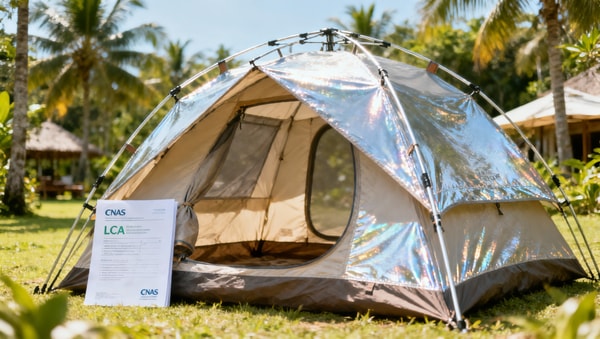
RCEP’s 12th Technical Annex, issued on 2026-05-04, introduces carbon footprint mutual recognition for glamping tents — with Myanmar Standardization and Metrology Department (MSM) accepting LCA reports accredited by China National Accreditation Service (CNAS) under ISO 14040/44. Exporters of glamping tents from China, outdoor equipment manufacturers, and green supply chain service providers should monitor implications for customs clearance, tariff treatment, and subsidy eligibility in Myanmar.
Event Overview
On 2026-05-04, the RCEP Secretariat published Technical Annex No. 12, formally adding glamping tents to the RCEP Green Product Mutual Recognition List. The annex specifies that the Myanmar Standardization and Metrology Department (MSM) will accept Life Cycle Assessment (LCA) reports issued by laboratories accredited by the China National Accreditation Service (CNAS), compliant with ISO 14040 and ISO 14044, for import customs clearance and green subsidy applications in Myanmar. Chinese exporters presenting such reports are eligible for a 5-percentage-point tariff reduction on glamping tent imports into Myanmar.
Industries Affected
Direct Exporters of Glamping Tents
Chinese manufacturers and trading companies exporting glamping tents to Myanmar are directly affected. The acceptance of CNAS-accredited LCA reports enables them to claim both tariff reductions and green subsidies — contingent on report validity and alignment with MSM’s procedural requirements.
Outdoor Equipment Component Suppliers
Suppliers of structural frames, waterproof fabrics, or solar-integrated accessories used in glamping tents may face upstream data requests. Buyers may require verified environmental data for subcomponents to support full-system LCA reporting — increasing traceability expectations across tiers.
Third-Party LCA Providers & Certification Bodies
Laboratories accredited by CNAS and offering ISO 14040/44-compliant LCA services gain a defined use case in RCEP-aligned green trade. However, only reports issued by CNAS-accredited labs — not those merely referencing ISO standards — qualify under the current annex.
Import Agents & Customs Compliance Services in Myanmar
Local agents handling glamping tent imports must verify report authenticity (e.g., CNAS accreditation status, scope of accreditation, report issuance date) prior to customs submission. Misalignment between report scope and product description could delay clearance despite formal eligibility.
What Enterprises and Practitioners Should Focus On
Monitor official implementation guidance from MSM
MSM has not yet published detailed procedural guidelines (e.g., report format, minimum data requirements, verification timelines). Enterprises should track MSM’s official notices and consult Myanmar-based legal or compliance advisors for updates before initiating submissions.
Verify CNAS accreditation scope for LCA reporting
Not all CNAS-accredited labs are authorized for LCA under ISO 14040/44. Exporters must confirm that the issuing lab’s CNAS certificate explicitly covers LCA services — including system boundary definition, inventory analysis, and impact assessment per ISO 14044.
Distinguish policy eligibility from operational readiness
The annex establishes eligibility criteria, but does not guarantee automatic tariff application or subsidy disbursement. Enterprises should treat this as a procedural prerequisite — not an automatic benefit — and prepare documentation well ahead of shipment schedules.
Align internal data collection with LCA reporting requirements
Manufacturers should review raw material sourcing records, energy consumption logs, and transport logistics data. Gaps in primary data (e.g., electricity grid mix for production sites, end-of-life assumptions) may limit report acceptability even if the lab is CNAS-accredited.
Editorial Perspective / Industry Observation
Observably, this development signals RCEP’s incremental expansion of environmental criteria into product-specific trade facilitation — moving beyond broad sustainability declarations toward standardized, verifiable metrics. Analysis shows it functions primarily as a procedural enabler rather than a market access breakthrough: eligibility depends entirely on technical compliance, not volume thresholds or phased adoption. From an industry perspective, it reflects growing convergence between regional trade rules and life-cycle thinking — but remains narrowly scoped to one product category and one partner economy (Myanmar) at this stage. Continued monitoring is warranted, particularly for potential replication with other RCEP members or product categories.

Conclusion
This update marks a targeted step in harmonizing environmental data requirements across RCEP markets — specifically enabling tariff and subsidy advantages for CNAS-verified glamping tent exports to Myanmar. It does not represent a general green tariff scheme nor a de facto standard for all RCEP countries. Currently, it is best understood as a pilot mechanism: operationally actionable for select exporters, but requiring careful attention to accreditation validity, report scope, and local implementation details.Information Sources
Main source: RCEP Secretariat, Technical Annex No. 12 (issued 2026-05-04).
Note: MSM’s internal implementation procedures, including document review timelines and subsidy application workflows, remain pending official publication and are subject to ongoing observation.Recommended News
 May 05, 2026RCEP Adds Glamping Tents to Carbon Footprint Mutual RecognitionRCEP adds glamping tents to carbon footprint mutual recognition—CNAS-accredited LCA reports now unlock tariff cuts & green subsidies in Myanmar.
 May 05, 2026ADQ Launches $210M Premium Camping Fund Targeting Chinese Glamping TentsADQ Launches $210M Premium Camping Fund targeting Chinese glamping tents — ISO 21932:2025 & GCC green certified suppliers gain priority access. Act now!
 May 04, 2026RCEP Adds Glamping Tents to Carbon Footprint Mutual RecognitionRCEP Adds Glamping Tents to Carbon Footprint Mutual Recognition — streamline Myanmar market access with CNAS-accepted LCA reports and cut certification costs now.
 May 03, 2026RCEP Adds Glamping Tents Carbon Footprint Mutual RecognitionRCEP Adds Glamping Tents Carbon Footprint Mutual Recognition: Myanmar now accepts CNAS-accredited LCA reports for faster green procurement & customs clearance.
 May 02, 2026Qatar Restores 24/7 Maritime Transit: Glamping Tents Delivery to Middle East Shortens by 5–8 DaysGlamping tents delivery to Middle East speeds up by 5–8 days as Qatar restores 24/7 maritime transit through Strait of Hormuz—boosting GCC tourism supply chains.
 May 02, 2026RCEP Adds Cambodia, Laos to Carbon Label Mutual Recognition for Glamping TentsRCEP carbon label mutual recognition now covers Cambodia & Laos for Glamping Tents — streamline customs, cut costs, and accelerate market entry with CNAS/ISO 14067-compliant reports.
 May 02, 2026ASTM F3509-26 Enforces Dual UL 2111 + Carbon Footprint Verification for Glamping TentsASTM F3509-26 mandates dual UL 2111 + carbon footprint verification for glamping tents—key to U.S. market access. Act now to avoid CPSC rejection.
 May 01, 2026ASTM F3509-26 Enforces Dual UL 2111 + Carbon Footprint Compliance for US Glamping TentsASTM F3509-26 mandates dual UL 2111 + carbon footprint compliance for US glamping tents—act now to avoid port delays, rejections, and lost revenue.
 May 01, 2026RCEP Adds Cambodia, Laos to Carbon Label Mutual Recognition for Glamping TentsRCEP carbon label mutual recognition now covers Cambodia & Laos for Glamping Tents — leverage GB/T 32150-2025 reports to speed customs clearance and win green tenders.
 Apr 30, 2026ASTM F3509-26 Enforced: Glamping Tents Require UL 2111 + Carbon Footprint Verification for US MarketASTM F3509-26 enforced: Glamping tents for US market now require UL 2111 flammability testing + ISO 14067 carbon footprint verification—act now to avoid port detention.
 Apr 30, 2026RCEP Adds Cambodia, Laos to Carbon Label Mutual Recognition for Glamping TentsRCEP adds Cambodia & Laos to carbon label mutual recognition for glamping tents—unlock faster, low-cost green exports with ISO 14067-compliant reports.
 Apr 29, 2026ASTM F3509-26 Enacted: Glamping Tents Require UL 2111 + PAS 2050ASTM F3509-26 is live: Glamping tents now require UL 2111 + PAS 2050 compliance for U.S. parks & platforms—act now to avoid listing bans.
 Apr 29, 2026RCEP Adds Cambodia, Laos to Carbon Label Mutual Recognition for Glamping TentsRCEP carbon label mutual recognition now includes Cambodia & Laos for glamping tents—leverage GB/T 32150-2025 reports for faster clearance & green procurement wins.
 Apr 28, 2026RCEP Adds Cambodia, Laos to Carbon Label Mutual RecognitionRCEP Adds Cambodia, Laos to Carbon Label Mutual Recognition—unlock faster clearance & lower tariffs for Glamping Tents with CNAS-verified carbon reports.
 Apr 28, 2026ASTM F3509-26 Enforced: Glamping Tents Require UL 2111 + Carbon VerificationASTM F3509-26 enforced: Glamping tents now require UL 2111 flame resistance + verified carbon footprint—key for U.S. importers, OEMs & sustainability teams.
 Apr 29, 2026ASTM F3509-26 Enacted: Glamping Tents Require UL 2111 + Carbon Footprint VerificationASTM F3509-26 is live: Glamping tents for the U.S. now require UL 2111 Class A fire safety + ISO 14067 carbon footprint verification—act now to avoid delisting.
 Apr 27, 2026RCEP Adds Cambodia, Laos to Glamping Tents Carbon Label Mutual RecognitionRCEP Adds Cambodia, Laos to Glamping Tents Carbon Label Mutual Recognition — streamline low-carbon exports, cut retesting costs & accelerate green procurement across ASEAN.
 Apr 26, 2026RCEP Carbon Label Mutual Recognition Extended to Cambodia and LaosRCEP Carbon Label Mutual Recognition now extends to Cambodia and Laos for Glamping Tents — unlock faster customs clearance and green procurement advantages today.
 Apr 26, 2026ASTM F3509-26 Enforces Dual UL 2111 + Carbon Footprint Compliance for Glamping TentsASTM F3509-26 mandates dual UL 2111 Class A + carbon footprint ≤8.2 kg CO₂e/m² for U.S.-bound glamping tents—act now to avoid customs delays & Amazon delisting!
 Apr 25, 2026RCEP Green Mutual Recognition Expanded for Glamping TentsRCEP Green Mutual Recognition now covers Glamping Tents—EPD & LCA reports from Chinese certifiers accepted in 6 ASEAN markets for faster, greener customs clearance.
 Apr 24, 2026RCEP Green Mutual Recognition Expands to Glamping TentsRCEP Green Mutual Recognition now covers glamping tents—unlock faster ASEAN customs clearance with ISO 14067-compliant carbon reports.
 Apr 23, 2026RCEP Green Mutual Recognition Expanded for Glamping TentsRCEP Green Mutual Recognition now covers glamping tents — CNAS-issued ISO 14067 reports accepted across 6 ASEAN markets for faster clearance & green trade advantage.
 Apr 22, 2026RCEP Green Mutual Recognition Expands for Glamping TentsRCEP Green Mutual Recognition now covers glamping tents—unlock faster ASEAN customs clearance with ISO 14067:2023 carbon reports from CNAS labs.
 Apr 21, 2026Commercial Glamping Tent Wholesale: Fabric Specs That MatterCommercial glamping tent wholesale guide: compare fabric specs that impact waterproofing, UV resistance, fire safety, insulation, and ROI for smarter bulk buying.
Quarterly Executive Summaries Delivered Directly.
Join 50,000+ industry leaders who receive our proprietary market analysis and policy outlooks before they hit the public library.