Search News
TerraVista Metrics (TVM)Industry Portal
TerraVista Metrics (TVM)Hot Articles
TerraVista Metrics (TVM)- Winnebago Q4 Revenue Falls 17% to $645.1 Million as Full-Year Profit RisesWinnebago Q4 revenue fell 17% to $645.1 million as full-year profit rose. Explore RV shipment trends, product mix shifts and what fiscal 2027 earnings guidance signals.
- Choosing Large Play Equipment for Parks: Space, Age Groups, and SafetyChoose large play equipment with confidence. Explore park space planning, age suitability, safety standards, and lifetime costs to create a safer, more inclusive playground.
- Prefab Cabin Integration Testing: Power, HVAC, and Controls Checks Before DeliveryExplore prefab integration testing for cabins to verify power, HVAC, controls, and fault recovery before delivery. Discover key checks to reduce risk and make confident acceptance decisions.
Popular Tags
TerraVista Metrics (TVM)Industry NewsRCEP Green Mutual Recognition Expanded for Glamping Tents
auth.Julian Thorne (Sustainable Infrastructure Architect)Time
Oct 21, 2026Click Count
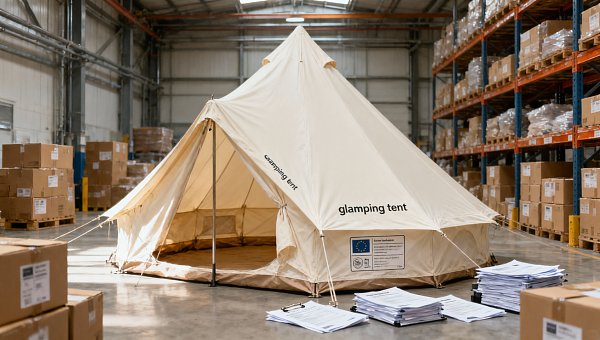
On April 24, 2026, the RCEP Secretariat announced an expansion of its green mutual recognition mechanism to six ASEAN countries—including Thailand, Vietnam, and Malaysia—accepting EPD and LCA reports for Glamping Tents issued by Chinese certification bodies. This development directly affects exporters and supply chain stakeholders in outdoor recreation equipment, sustainable manufacturing, and cross-border trade compliance.
Event Overview
On April 24, 2026, the RCEP Secretariat confirmed that the green mutual recognition mechanism now covers Thailand, Vietnam, Malaysia, Indonesia, the Philippines, and Cambodia. Under this update, Environmental Product Declarations (EPDs) and Life Cycle Assessment (LCA) reports for Glamping Tents—issued by accredited Chinese certification institutions—are formally accepted for customs clearance. As a result, customs inspection rates for such products entering these six markets have dropped to below 0.3%.
Industries Affected by This Development
Direct Exporters & Trade Enterprises: These firms face reduced documentation friction and shorter clearance cycles when shipping Glamping Tents to the six ASEAN countries. The primary impact is operational: lower compliance overhead per shipment and more predictable lead times.
Manufacturers & OEM/ODM Producers: Companies producing Glamping Tents—or integrating certified low-carbon components—now see stronger differentiation potential in ASEAN tenders and B2B procurement. Impact centers on product certification readiness and alignment with LCA reporting standards.
Raw Material & Component Suppliers: Suppliers of fabrics, frames, coatings, or insulation materials used in certified Glamping Tents may experience upstream demand shifts if buyers begin specifying carbon-verified inputs to support downstream EPD claims.
Distribution & Logistics Service Providers: Freight forwarders and customs brokers handling outdoor gear exports to ASEAN may need to adjust documentation workflows to include verified EPD/LCA report submission—particularly for shipments targeting preferential clearance under the updated mechanism.
What Enterprises and Practitioners Should Monitor and Do Now
Track official implementation guidance from national customs authorities
The RCEP Secretariat’s announcement confirms policy acceptance in principle. However, national-level customs procedures—including document formats, digital submission portals, and verification timelines—remain subject to individual ASEAN member state rollout. Enterprises should monitor updates from each country’s customs or trade ministry websites.
Verify which Glamping Tent models or configurations are currently covered
The policy applies specifically to products accompanied by EPD/LCA reports issued by Chinese certification bodies. It does not automatically extend to all tent types, sub-assemblies, or non-certified variants. Exporters should confirm whether their existing certifications align with the scope recognized by each of the six countries.
Distinguish between regulatory signal and operational readiness
Analysis来看, this expansion signals growing institutional alignment on environmental data interoperability under RCEP—but does not guarantee uniform enforcement speed or inspector training across all six markets. Early adopters may still encounter ad hoc verification requests at port level until local capacity builds.
Prepare documentation templates and internal coordination protocols
Export teams should standardize how EPD/LCA reports are referenced in commercial invoices, packing lists, and customs declarations. Cross-functional alignment between sustainability, quality assurance, and export compliance units is advisable before scaling shipments under the new pathway.
Editorial Perspective / Industry Observation
From industry angle, this update is best understood as a procedural milestone—not yet a fully matured trade facilitation channel. It reflects progress in harmonizing environmental data requirements across RCEP economies, but actual clearance efficiency will depend on national implementation depth and inter-agency coordination. Observation来看, the 0.3% inspection rate cited is a target outcome tied to compliant documentation; it is not a guaranteed floor across all entry points or cargo categories. Current relevance lies less in immediate cost savings and more in signaling which product categories—and which certification pathways—are gaining regional policy traction.
Conclusion
This development marks a targeted step toward greener trade infrastructure within RCEP, with concrete implications for manufacturers and exporters of certified Glamping Tents. It does not represent broad-based regulatory simplification, nor does it eliminate the need for market-specific due diligence. Rather, it offers a defined, narrow corridor where environmental transparency translates directly into faster customs processing—provided documentation meets precise, nationally enforced criteria. For now, it is more accurately interpreted as a pilot-aligned policy signal than a universally applicable operational shortcut.
Information Sources
Main source: RCEP Secretariat official announcement (April 24, 2026).
Points requiring ongoing observation: National customs implementation timelines and format requirements in Thailand, Vietnam, Malaysia, Indonesia, the Philippines, and Cambodia.Recommended News
 Oct 19, 2026Gwynedd Glamping Pod Proposal Raises Concerns Over Protected BatsGwynedd glamping pod proposal faces protected bat concerns at Bluebell Woods. Explore what the survey means for the 11-pod scheme and the council’s planning decision.
 Aug 15, 2026Hainan Expands Huiqiongbao Direct Settlement to 20 Hospitals for Project Staff CoverageHainan expands Huiqiongbao direct settlement to 20 hospitals, improving medical reimbursement efficiency for foreign project staff and supporting compliance, ESG, and workforce planning in Modular Cabins, Glamping Tents, and Premium Camping projects.
 Aug 10, 2026EU CE Rule Takes Effect for Glamping Tent ExportsGlamping Tent exports to the EU now face a stricter CE compliance rule. Learn how EN 13782:2026 and ISO 22419:2026 reports affect customs clearance, buyer checks, and market access.
 Aug 09, 2026EU Rule Takes Effect for Glamping Tent CertificationEU Rule Takes Effect for Glamping Tent Certification: learn how EN 13782:2026 impacts fire and structural testing, CE compliance, costs, lead times, and EU market access.
 Aug 07, 2026CPSC Tightens Glamping Tent Testing RulesCPSC Tightens Glamping Tent Testing Rules: learn how ASTM F3497-26, 110 km/h wind testing, and burn-rate limits will affect certification, shipping, and U.S. import compliance from October 2026.
 Aug 06, 2026EU Tightens Glamping Tent Entry RulesEU Tightens Glamping Tent Entry Rules: learn how EN 14960:2026 changes EU market access, fire and structural testing, compliance timelines, and delivery planning.
 Aug 04, 2026CPSC Recalls 124,000 Glamping Tents Over Wind Test FailureCPSC recalls 124,000 glamping tents after an ASTM F3365-26 wind test failure. See how this impacts North America imports, customs clearance, inventory risk, and compliance-ready shipments.
 Aug 03, 2026EU Rule Takes Effect for Certified Glamping TentsEU Rule Takes Effect for Certified Glamping Tents: learn how EN 16433-2:2026 impacts compliance, customs clearance, certification timelines, and EU market access for premium camping suppliers.
 Aug 01, 2026EU Rule Takes Effect: Glamping Tents Need EN 13501-1 B-s1,d0Glamping Tents entering the EU now need EN 13501-1 B-s1,d0 compliance. Learn what the 2026 rule means for exporters, buyers, testing, and customs clearance.
 Jul 31, 2026EU PFAS Ban Hits Glamping Tent MaterialsEU PFAS ban hits glamping tent materials: learn how REACH Annex XVII affects coatings, customs clearance, compliance, and sourcing before August 1, 2026.
 Jul 30, 2026EU Requires EN 14749:2026 Approval for Glamping TentsEU Requires EN 14749:2026 Approval for Glamping Tents: learn how CE marking, type certification, and new EU compliance rules will impact exports, customs clearance, and delivery timelines.
 Jul 29, 2026EU Enforces EN 14749:2026 for Glamping Tent ExportsEU Enforces EN 14749:2026 for Glamping Tent Exports—learn how the new CE marking and Notified Body type examination rules affect compliance, testing, shipment timing, and EU market access.
 Jul 28, 2026EU Enforces EN 14749:2026 Labeling for Glamping TentsEU Enforces EN 14749:2026 Labeling for Glamping Tents: learn how the new EU compliance rule affects customs, documentation, inspections, and shipment readiness.
 Jul 27, 2026EU Rule Takes Effect for Glamping Tent CertificationEU Rule Takes Effect for Glamping Tent Certification: learn how EN 14749:2026 changes fire, wind, and CE compliance, and what exporters must do now to keep EU market access.
 Jul 25, 2026CPSC Sets Dual Certification Rule for Glamping TentsCPSC Sets Dual Certification Rule for Glamping Tents: learn how ASTM F3507-26 and UL 711A requirements from Oct. 1, 2026 may affect imports, testing, delivery, and U.S. market access.
 Jul 24, 2026EN 13857:2026 Tightens EU Rules for Glamping TentsEN 13857:2026 tightens EU rules for glamping tents with stricter wind resistance, structural stability, and anchoring tests. Learn what exporters and buyers must do before October 1, 2026.
 Jul 23, 2026CPSC Tightens Glamping Tent Safety Rule from Aug. 1CPSC tightens Glamping Tent safety rules from Aug. 1. Learn how new flame and wind-load tests may affect compliance, certification, imports, and shipment readiness.
 Jul 22, 2026EU Rule Tightens CE Access for Glamping TentsGlamping Tents face stricter EU CE access under EN 13782:2026+A1:2026. Learn how new fire Class B-s1,d0 and wind/snow load checks impact exports, certification, and market entry.
 Jul 20, 2026EU Enforces Dual Certification for Glamping TentsEU Enforces Dual Certification for Glamping Tents: learn how EN 14960:2026+A1:2026 changes fire, wind, CE documentation, and supplier compliance before EU shipments.
 Jul 19, 2026EU Rule Tightens Glamping Tent Entry RequirementsGlamping tent exporters to the EU face tighter entry rules from Oct 1, 2026. Learn how new fire and wind tests impact compliance, certification, sourcing, and market access.
 Jul 17, 2026CPSC Rule Takes Effect for Glamping Tent ImportsCPSC Rule Takes Effect for Glamping Tent Imports: learn how the new U.S. compliance standards affect customs clearance, testing, and market access for exporters and manufacturers.
 Jul 14, 2026EU Rule Change Sets Full-Scale Wind Test for Glamping TentsGlamping Tents face a major EU compliance shift: EN 13782:2026 now requires full-scale wind testing and third-party reports. Learn what exporters, buyers, and suppliers must do before October 2026.
 Jul 13, 2026SASO Opens New Glamping Tent Certification RouteSASO Opens New Glamping Tent Certification Route: learn how Saudi Arabia now accepts CNAS EN 13782:2026 reports, helping suppliers cut certification time, avoid duplicate testing, and enter the market faster.
 Jul 12, 2026EU Rule Takes Effect for Glamping Tent Risk CertificationEU Glamping Tent risk certification under EN 14971:2026 is now critical for CE marking and customs clearance. Learn what importers, buyers, and suppliers must review now.
{item.publish_time}{item.title}{item.description}Quarterly Executive Summaries Delivered Directly.
Join 50,000+ industry leaders who receive our proprietary market analysis and policy outlooks before they hit the public library.