Search News
TerraVista Metrics (TVM)Industry Portal
TerraVista Metrics (TVM)Hot Articles
TerraVista Metrics (TVM)- Buyer’s Guide to Kinetic Art: Choosing Safe, Durable Pieces for Public SpacesBuyer guides kinetic art for public spaces: learn how to choose safe, durable, low-maintenance installations with reliable engineering, materials, controls, and lifecycle value.
- Regulatory Compliance Vendor Comparison: How to Assess Audit Readiness and RiskRegulatory compliance vendor comparison made practical: assess audit readiness, evidence quality, change control, and supply-chain risk before award. Learn how to choose defensible suppliers.
- A Procurement Checklist for Tourism Hardware Equipment in Resorts and Visitor CentersTourism hardware equipment procurement checklist for resorts and visitor centers: compare durability, compliance, lifecycle costs, supplier support, and logistics.
Popular Tags
TerraVista Metrics (TVM)Industry NewsHow to judge thermal efficiency beyond brochure claims
auth.Time
Oct 04, 2026Click Count
Brochure numbers rarely tell the full story of thermal efficiency, especially when procurement decisions affect long-term operating costs, compliance, and guest comfort. In tourism infrastructure, thermal efficiency must be judged through tested conditions, assembly quality, climate fit, and system-level behavior. A published U-value or energy-saving claim is only useful when the test method, boundary conditions, and installation context are fully disclosed.
For modular cabins, hotel envelopes, smart guest rooms, and service buildings, thermal efficiency shapes energy demand, condensation risk, maintenance cycles, and indoor stability. TerraVista Metrics approaches this topic through measurable engineering data, helping technical reviews move beyond marketing aesthetics toward comparable, decision-ready evidence.
Why thermal efficiency changes by tourism infrastructure scenario

The same thermal efficiency claim can perform very differently across tourism settings. A prefab glamping unit in a coastal site faces moisture, salt air, and daily temperature swings. A mountain lodge faces wind exposure and heating peaks. An urban boutique hotel may depend more on glazing ratio, occupancy load, and HVAC coordination.
That is why scenario-based judgment matters. Thermal efficiency is not just a material property. It is the result of envelope design, installation quality, thermal bridges, ventilation control, and operating patterns. Real performance appears only when these factors work together.
Key reason brochure claims often mislead
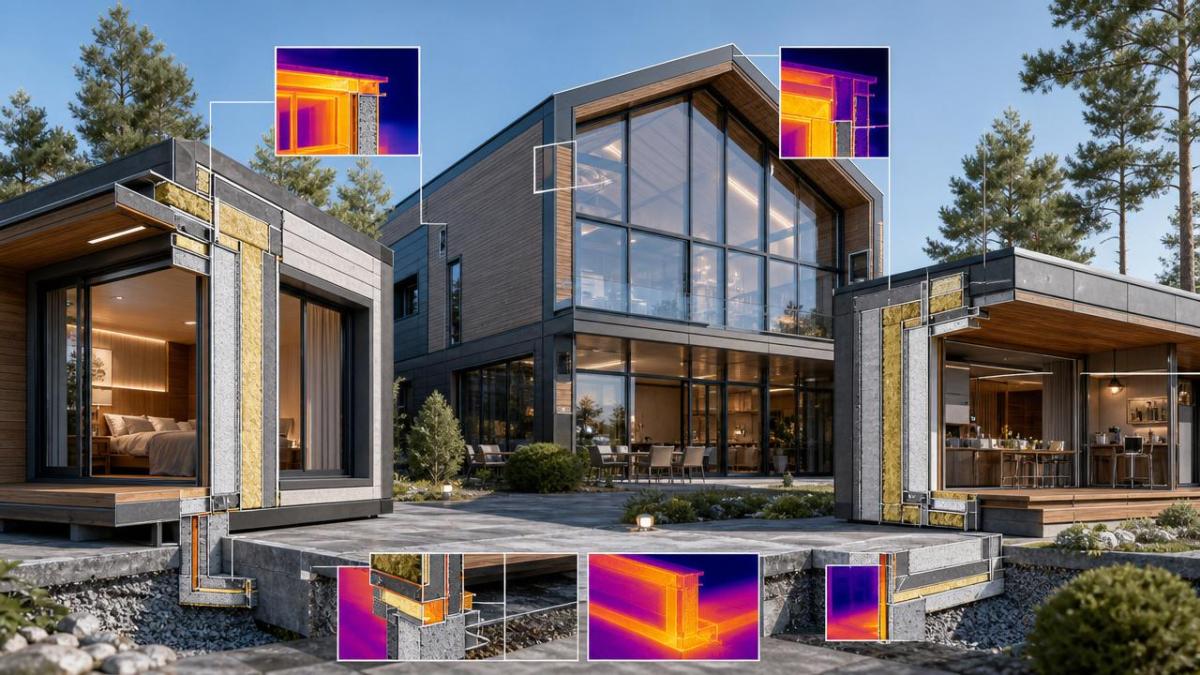
Brochures usually present best-case values. They may highlight center-of-panel insulation, while ignoring joints, corners, doors, frames, or foundation connections. Those overlooked areas often drive the largest thermal losses.
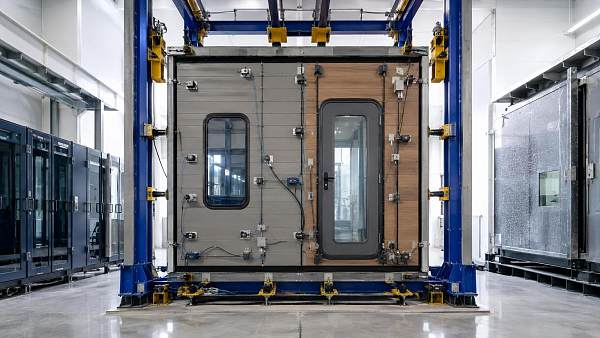
Some documents also mix steady-state lab results with real-world expectations. Thermal efficiency measured under controlled temperature and humidity cannot automatically predict field performance under wind, rain, solar gain, and variable occupancy.
How to judge thermal efficiency in prefab accommodation units
Prefab accommodation is a common tourism asset, but thermal efficiency depends on more than insulation thickness. Wall build-up, sealing quality, transport deformation, and onsite assembly all affect final performance.
Check the full envelope, not one isolated number
Ask whether the stated thermal efficiency covers walls only, or the full envelope including roof, floor, glazing, and doors. In compact cabins, glazing percentage can dominate heat gain and heat loss.
Review the following points:
- Declared U-values for wall, roof, floor, window, and door assemblies
- Air leakage rate under pressure testing
- Thermal bridge treatment at panel joints and steel framing
- Condensation control layers and vapor management
- Performance after transport and onsite installation
Judge climate suitability, not generic efficiency
A unit optimized for dry inland climates may fail in humid destinations. Thermal efficiency should be read alongside dew-point behavior, moisture migration, and mold resistance. Good thermal efficiency without moisture resilience is incomplete.
Where day-night swings are large, thermal mass also matters. Lightweight construction may show strong brochure thermal efficiency, yet still create unstable indoor comfort without proper shading and ventilation control.
How to judge thermal efficiency in hotels and mixed-use hospitality buildings
In hotels, thermal efficiency is a system issue. Guest rooms, corridors, atriums, kitchens, laundry zones, and back-of-house areas operate differently. A brochure may describe efficient façade materials, while actual loads come from poor zoning or weak controls.
Focus on interface points between envelope and systems
Thermal efficiency improves when the building envelope and HVAC logic are coordinated. If occupancy sensors, room controls, and ventilation rates are disconnected, efficient materials alone cannot deliver efficient operation.
Useful checks include:
- Window-to-wall ratio versus local solar exposure
- Glass specification, frame breaks, and shading strategy
- Room pressurization and fresh-air control
- BMS or smart controls linked to occupancy and temperature
- Commissioning records for actual thermal efficiency outcomes
Use operating data, not design intent alone
Design models estimate thermal efficiency, but post-installation data shows whether targets are achieved. Trending of room temperatures, equipment runtime, and seasonal energy intensity offers stronger evidence than static product sheets.
This is especially relevant in hospitality assets using smart IoT infrastructure. Sensors can validate thermal efficiency through continuous performance records, highlighting overheating, infiltration, or control drift.
How to judge thermal efficiency in outdoor leisure and support facilities
Visitor centers, ticket halls, wellness pods, service kiosks, and seasonal structures often receive less engineering scrutiny. Yet thermal efficiency in these facilities strongly affects guest experience and lifecycle costs.
Look for intermittent-use performance
Some tourism facilities are occupied only during peak hours or seasons. Here, thermal efficiency should be judged by warm-up speed, standby loss, recovery after door opening, and resilience under partial operation.
A material with strong static thermal efficiency may still waste energy if the building reheats slowly or leaks heavily during repeated visitor access cycles.
Different scenario demands for thermal efficiency at a glance
Practical steps to verify thermal efficiency before commitment
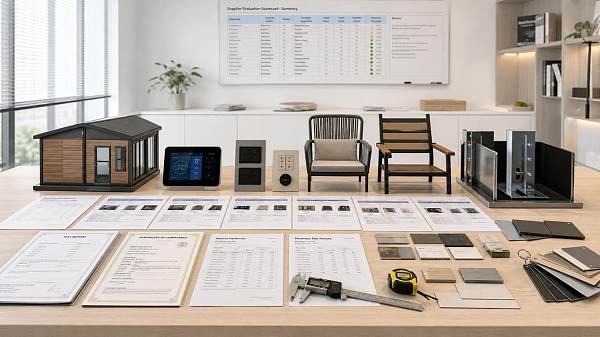
A strong review process compares declarations with evidence. Thermal efficiency should be supported by standardized test reports, detail drawings, and field validation where available.
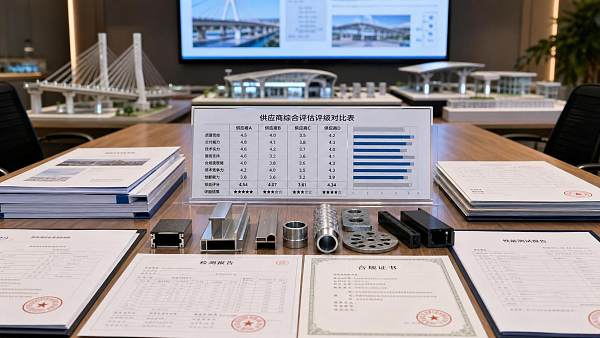
- Request test standards, dates, and issuing laboratories
- Confirm whether values are for components or full assemblies
- Review junction details for floors, corners, and openings
- Ask for climate-matched simulation or field data
- Check if thermal efficiency changes after installation
- Compare maintenance needs that affect long-term performance
Metrics that deserve more attention
Do not stop at insulation thickness. Better thermal efficiency assessment often includes linear thermal transmittance, airtightness, solar heat gain coefficient, surface temperature uniformity, and seasonal energy use intensity.
For tourism assets, acoustic comfort and thermal efficiency may also interact. Some assemblies insulate heat well but underperform acoustically, leading to redesign compromises later.
Common mistakes when reading thermal efficiency claims
One common mistake is trusting a single number without asking where it applies. Another is assuming thermal efficiency in laboratory conditions will match coastal, tropical, alpine, or desert exposure.
A further mistake is ignoring degradation. Wet insulation, compressed seals, damaged vapor layers, and poorly fitted windows can reduce thermal efficiency long before visible failure appears.
The last major error is evaluating products separately from systems. In smart hospitality environments, thermal efficiency depends on integrated controls, occupancy response, and envelope consistency across all connected zones.
Next-step framework for better thermal efficiency decisions
The most reliable path is to assess thermal efficiency by scenario, not by brochure headline. Start with climate, occupancy pattern, and asset type. Then test whether the claimed performance survives real assembly details and operational conditions.
TerraVista Metrics supports this evidence-first approach by translating technical product claims into benchmarkable engineering metrics. When thermal efficiency is reviewed through standardized data, tourism infrastructure decisions become clearer, lower-risk, and easier to defend over the full lifecycle.
Before any final commitment, create a verification checklist covering test method, climate fit, installation sensitivity, control integration, and maintenance impact. That process turns thermal efficiency from a marketing phrase into a measurable basis for confident infrastructure selection.
Recommended News
 Sep 27, 2026How to Design Scalable System Integration Testing for Multi-Vendor DeploymentsScalable system integration testing for multi-vendor deployments: build resilient, secure, and growth-ready operations with proven interface, resilience, and acceptance strategies.
 Sep 24, 2026Hotel Tourism Benchmarking: Which KPIs Reveal Competitive Market Position?Tourism benchmarking for hotels reveals the KPIs that define competitive position, from RevPAR index and demand quality to profit, guest experience, and asset resilience.
 Sep 20, 2026Supply Chain Analysis: How to Identify Cost, Risk, and Lead-Time BottlenecksSupply chain analysis helps tourism project leaders uncover cost, risk, and lead-time bottlenecks—protecting opening dates, budgets, and guest-ready operations.
 Sep 19, 2026How to Choose Industry Benchmarking Tools That Deliver Actionable Performance InsightsIndustry benchmarking tools: learn how to validate data, compare lifecycle costs, assess compliance, and turn performance evidence into smarter decisions.
 Sep 14, 2026Engineering Performance Testing Trends Reshaping Product Validation WorkflowsEngineering performance testing trend analysis reveals how assembly validation, realistic environmental loads, and digital resilience improve product reliability and reduce field failures.
 Sep 12, 2026Cloud Integration Interoperability Testing: Methods, Metrics, and Release GatesSystem interoperability testing cloud integration: explore practical methods, key metrics, and evidence-based release gates for secure, reliable connected operations.
 Sep 05, 2026What Engineering Performance Testing Should Cover During a Specification ReviewEngineering performance testing for specification review: learn how to verify structural strength, durability, safety, sustainability, and system reliability before costly project decisions.
 Aug 11, 2026How to Evaluate Materials Performance Analysis Services in Europe for Compliance-Critical ProjectsMaterials performance analysis Europe: learn how to compare accredited labs, verify compliance readiness, and choose a provider whose data, methods, and reports stand up to real project scrutiny.
 Jul 27, 2026Product Application Analysis for Procurement: How to Compare Fit, Risk, and ROIProduct application analysis for procurement helps buyers compare fit, compliance risk, lifecycle cost, and ROI with confidence. Learn a practical framework to avoid costly sourcing mistakes.
 Jul 22, 2026How to Evaluate Weather Resistance in Materials Performance Analysis?Materials performance analysis weather resistance explained: learn how to assess UV, moisture, temperature, and corrosion risks to choose durable materials with confidence.
 Jul 15, 2026Cloud Storage for Business: How to Compare Security, Access Speed, and Backup CostsCloud storage for business: compare security, access speed, and backup costs with a practical framework to reduce risk, control spend, and choose the right provider with confidence.
 Jul 14, 2026What Are Standardized Performance Benchmarks Ratings Used For in Vendor Evaluation?Standardized performance benchmarks rating explains how buyers compare vendors with verified data on compliance, durability, and lifecycle value for smarter procurement decisions.
 Jul 13, 2026Product Benchmarking Rating Explained: How to Compare Scores Across SuppliersProduct benchmarking rating explained: learn how to compare supplier scores with confidence, verify methodology, spot hidden risks, and make smarter procurement decisions.
 Jul 13, 2026How to Choose a Product Benchmarking Data Provider for Reliable Market ComparisonsProduct benchmarking data provider selection starts with methodology, transparency, and sector fit. Learn how to compare providers for reliable market insights and smarter procurement decisions.
 Jul 10, 2026Technical Integration Resilience Explained: How to Reduce Downtime Across Connected SystemsTechnical integration resilience explained: learn how to reduce downtime, prevent cascading failures, and improve uptime across connected systems with practical planning insights.
 Jul 08, 2026How to Use Product Benchmarking KPIs to Compare Competing SolutionsProduct benchmarking KPIs help you compare competing solutions with real evidence. Learn how to measure performance, lifecycle cost, compliance, and risk for smarter buying decisions.
 Jul 05, 2026How to Run an Environmental Sustainability Assessment: Metrics, Boundaries, and Trend AnalysisEnvironmental sustainability assessment trend analysis made practical: learn how to set metrics and boundaries, compare lifecycle impacts, and turn sustainability data into smarter decisions.
 Jul 04, 2026Hospitality Design Benchmarks Metrics Explained: Which KPIs Matter for Guestroom Upgrades?Hospitality design benchmarks metrics explained: discover the KPIs that matter most for guestroom upgrades, from lifecycle cost and durability to energy use, maintenance, and guest satisfaction.
 Jul 02, 2026How to Compare Product Category Pricing Models for Better Margin PlanningProduct category pricing model comparison made practical: learn how to evaluate total cost, hidden risks, and lifecycle value to improve margin planning and make smarter sourcing decisions.
 Jun 30, 2026How Technical Explainer Content for Procurement Helps Compare Specs, Risks, and SuppliersTechnical explainer content for procurement helps teams compare specs, uncover supplier risks, and choose solutions that improve compliance, lifecycle value, and long-term performance.
 Jun 29, 2026System Interoperability Testing Vendors: Key Criteria for Compliance and PerformanceSystem interoperability testing vendors compared: discover how to assess compliance, performance, independence, and real-world reliability before costly integration failures happen.
 Jun 28, 2026Product Benchmarking Explained: How to Compare Performance, Cost, and QualityProduct benchmarking explained: learn how to compare performance, cost, and quality with a practical framework that reduces risk, improves supplier selection, and supports smarter long-term decisions.
 Jun 27, 2026How to Build a Product Benchmarking Comparison Matrix for Hospitality Equipment SelectionProduct benchmarking comparison matrix guide for hospitality equipment selection. Learn to compare cost, compliance, durability, and lifecycle value with confidence.
 Jun 25, 2026What Drives System Interoperability Testing Implementation Cost in Multi-Vendor Projects?System interoperability testing implementation cost rises in multi-vendor projects due to scope gaps, retesting, compliance, and downtime risk. Learn how to control costs early.
Quarterly Executive Summaries Delivered Directly.
Join 50,000+ industry leaders who receive our proprietary market analysis and policy outlooks before they hit the public library.