Search News
TerraVista Metrics (TVM)Industry Portal
TerraVista Metrics (TVM)Hot Articles
TerraVista Metrics (TVM)- How to Plan a Slope Access Cable Transport System for Steep-Site ConstructionSlope access cable transport planning for steep-site construction: evaluate loads, terrain, terminals, safety, weather risks, and costs for reliable low-impact logistics.
- System Integration Testing for Device Integration: Key Interfaces and Failure RisksSystem integration testing device integration: identify critical interfaces, hidden failure risks, recovery gaps, and acceptance evidence before connected devices go live.
- Engineering Performance Testing Trends Reshaping Product Validation WorkflowsEngineering performance testing trend analysis reveals how assembly validation, realistic environmental loads, and digital resilience improve product reliability and reduce field failures.
Popular Tags
TerraVista Metrics (TVM)Industry NewsIndustrial & Manufacturing Tech Choices That Raise Hidden Costs
auth.Time
Sep 14, 2026Click Count
In Industrial & Manufacturing procurement, the most expensive mistakes often hide behind attractive specs, low upfront quotes, and vague performance claims. For buyers in tourism infrastructure and smart hospitality, overlooked issues like durability gaps, integration failures, and carbon compliance risks can quietly inflate total cost over time. Understanding which technology choices create these hidden costs is essential to making more accurate, future-ready purchasing decisions.
For procurement teams buying prefabricated lodging units, hotel automation systems, amusement hardware, utility modules, or connected guest-experience equipment, the challenge is rarely the visible purchase price alone. The bigger issue is life-cycle performance across 5 to 15 years, especially when assets are deployed in coastal, desert, alpine, or high-humidity tourism environments where failure rates can rise quickly if industrial and manufacturing decisions are poorly validated.
This is where disciplined technical benchmarking matters. In tourism projects, a cabin wall panel with weak thermal stability, an IoT gateway with insufficient throughput, or a ride component with unclear fatigue performance can trigger maintenance events, energy waste, retrofit costs, and guest-service disruption. For buyers, the goal is not to buy the cheapest system, but to buy the most predictable operating outcome.
Where Hidden Costs Begin in Industrial & Manufacturing Procurement
In many tourism and hospitality projects, hidden costs start before purchase orders are signed. A supplier may present acceptable technical sheets, but leave out duty-cycle assumptions, test conditions, maintenance intervals, or material degradation data. For assets expected to run 12 to 20 hours per day, 6 to 7 days per week, missing operational context can distort total cost calculations by a wide margin.
Procurement teams often face pressure to compare 3 to 5 bids within short review windows of 7 to 14 days. Under that pressure, decisions tend to favor visible metrics such as nominal power, unit price, or lead time. However, in Industrial & Manufacturing sourcing for tourism infrastructure, hidden costs usually come from four less visible areas: durability, compatibility, compliance, and serviceability.
1. Durability Claims That Do Not Match Real Operating Conditions
A component may be rated for indoor commercial use, yet installed in an outdoor resort with salt spray, UV exposure, and temperature swings from -10°C to 40°C. On paper, the product appears suitable. In practice, corrosion, seal failure, insulation loss, or structural fatigue can emerge in 12 to 24 months. That shortens replacement cycles and raises labor costs, spare part demand, and downtime exposure.
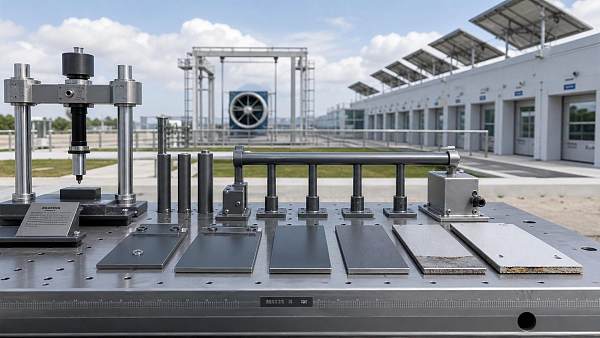
For modular cabins, facade systems, decking hardware, and high-touch guest fixtures, procurement should request measurable indicators such as thermal transmittance range, coating thickness, load tolerance, water ingress resistance, and fatigue testing methodology. Without those details, price comparisons between suppliers remain incomplete.
Typical durability blind spots
- Metal finishes selected for appearance rather than 3 to 8 year environmental exposure performance
- Insulation systems tested in controlled settings but not in high-humidity tourism climates
- Moving parts specified by peak load, not by repeated cycle counts
- Fasteners and joints without long-term vibration or thermal expansion assessment
2. Integration Gaps Across Smart Hospitality Systems
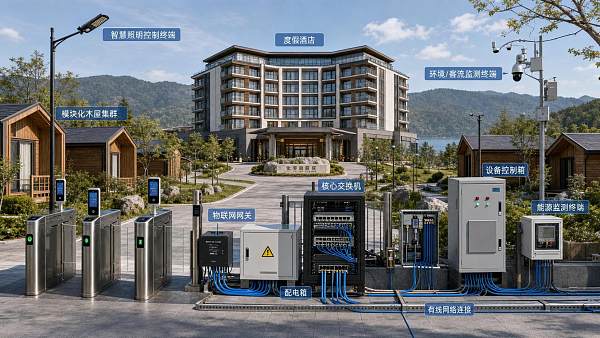
Another major hidden cost in Industrial & Manufacturing procurement comes from system incompatibility. A hotel may source smart locks, occupancy sensors, HVAC controls, lighting gateways, and PMS-facing software from different vendors. If protocols, data structures, or update cycles do not align, integration costs can exceed the original hardware savings within the first 6 to 18 months.
The problem is especially common in tourism assets where operators expect centralized control dashboards, room-level automation, and energy analytics. Procurement teams should verify whether the supplier can define throughput limits, device concurrency, latency ranges, firmware update pathways, and failure fallback logic. “Compatible” is not a sufficient answer without measurable parameters.
The table below outlines common hidden-cost triggers in Industrial & Manufacturing selections for tourism infrastructure and how buyers can identify them earlier in the sourcing process.
The key takeaway is that hidden costs rarely come from one catastrophic failure. More often, they emerge through small mismatches repeated across dozens or hundreds of rooms, cabins, devices, or mechanical assemblies. A 5% performance gap multiplied across a 120-unit resort can quickly become a major operating burden.
The Highest-Risk Technology Choices for Tourism Infrastructure Buyers
Not every Industrial & Manufacturing decision carries the same long-term financial risk. In tourism development, the most sensitive categories are those that affect energy use, guest uptime, maintenance access, and regulatory exposure. Buyers should prioritize deeper evaluation in categories where a defect or mismatch can propagate across the entire site.
Prefab and Modular Structures
Eco-lodges, glamping cabins, and modular hospitality units are often marketed through visual design and speed of installation. Yet procurement teams should examine structural tolerances, moisture control layers, acoustic isolation, floor loading, and envelope performance. A unit delivered in 8 weeks may still become expensive if post-installation sealing, floor leveling, or thermal correction requires 3 to 6 additional site interventions.
When evaluating suppliers, request a performance view rather than a rendering view. Buyers should ask how the unit behaves at 85% relative humidity, what insulation value is maintained after transport stress, and what maintenance tasks are expected in years 1, 3, and 5. This shifts the conversation from aesthetics to operational reality.
Hotel AI, Sensors, and Connected Control Systems
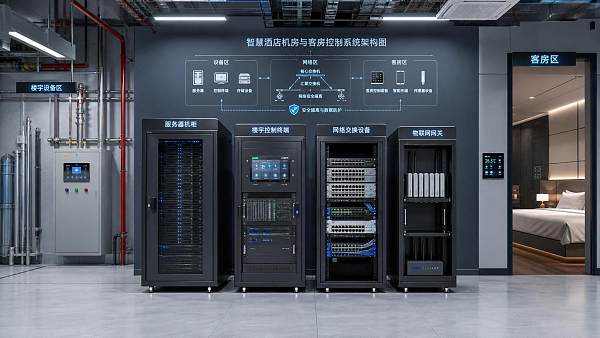
Smart hospitality platforms promise labor savings, better energy control, and stronger guest personalization. However, savings depend on reliable implementation. If occupancy sensors drift, room controllers lose sync, or AI recommendations cannot connect to property systems, the operational result may be more manual troubleshooting instead of less. Procurement should define acceptable latency, packet loss tolerance, offline behavior, and integration ownership before contract award.
A practical benchmark is to test how the system performs under realistic load: for example, 150 to 300 connected endpoints across guest rooms, public areas, and back-of-house functions. Buyers should also confirm whether updates can be staged without disrupting room availability during peak occupancy periods.
High-End Leisure and Attraction Hardware
In amusement, mobility, and guest-engagement hardware, hidden costs often come from wear rates, spare-part dependency, and inspection complexity. A system that performs well in the first 90 days may still become expensive if maintenance requires imported components with 4 to 10 week replenishment cycles. Procurement teams should map not only the asset cost, but the service ecosystem behind it.
The strongest suppliers in Industrial & Manufacturing categories are usually able to provide maintenance logic in plain operational terms: inspection every 250 to 500 hours, replacement threshold ranges, tooling requirements, and fault-isolation steps. That level of clarity helps operators plan rather than react.
How Procurement Teams Can Evaluate Hidden Cost Before Purchase
Buyers do not need perfect certainty to reduce hidden cost exposure. What they need is a disciplined comparison framework. In Industrial & Manufacturing sourcing for tourism projects, the most effective procurement process usually combines technical review, operating scenario testing, compliance screening, and service planning. Even a 4-step framework can significantly improve decision quality.
Step 1: Define the Operating Envelope
Before comparing suppliers, document the real environment: altitude, temperature range, occupancy pattern, salt exposure, grid stability, target life span, and daily use cycles. A mountain eco-resort and a coastal luxury camp may buy similar assets but require very different engineering priorities. Procurement errors often begin when the operating envelope is left generic.
Step 2: Ask for Test Context, Not Just Test Results
A product may show acceptable performance values, but buyers should ask how those values were produced. Was the test static or dynamic? Was it performed at full load or partial load? Was the humidity controlled? Was the sample pre-conditioned after transport simulation? In tourism infrastructure, those details often determine whether an asset remains stable after 18 months, not just after commissioning.
Step 3: Model 3 Cost Layers
A reliable procurement decision should compare at least three cost layers: purchase cost, operating cost, and intervention cost. Operating cost includes energy use, staffing impact, and consumables. Intervention cost includes maintenance labor, downtime, guest displacement, integration troubleshooting, and compliance remediation. This approach exposes false savings hidden in low opening bids.
Step 4: Verify Support Capacity Before Delivery
For international sourcing, response capability matters as much as manufacturing capability. Buyers should clarify spare-part stocking logic, remote diagnostics availability, documentation quality, escalation time, and language support. A low-cost asset can become expensive if each technical issue takes 5 to 10 days to diagnose and another 2 to 4 weeks to resolve.
The table below provides a practical checklist that procurement personnel can use when comparing Industrial & Manufacturing suppliers for hospitality and tourism projects.
This checklist is especially valuable when a project includes multiple sourced systems. It helps buyers compare not only what the supplier sells, but how that technology will perform in a hospitality asset over time.
Why Carbon Compliance and Engineering Transparency Now Affect Cost
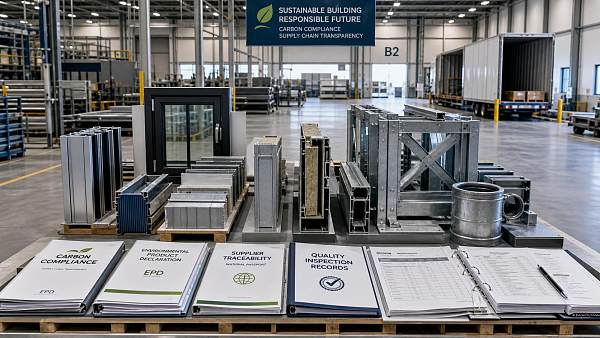
For tourism developers and operators, hidden cost is no longer limited to maintenance and energy. Carbon-related documentation, material traceability, and environmental performance are becoming direct procurement issues. A component that cannot support reporting needs or local approval requirements may create redesign loops, delayed handover, or restricted project eligibility.
This matters in Industrial & Manufacturing sourcing because procurement teams increasingly need evidence, not narratives. For instance, when comparing prefab structures or utility modules, it is not enough to hear that a system is “green.” Buyers need to understand insulation composition, recyclability considerations, service life assumptions, and replacement frequency. Those details influence both embodied impact and operational cost across 10-year planning horizons.
What Transparent Suppliers Should Be Able to Show
- Material and subsystem breakdowns that help engineering review
- Clear maintenance schedules for year 1, year 3, and year 5
- Defined operating thresholds such as humidity range, load range, or cycle range
- Integration architecture notes for connected hospitality hardware
- Delivery and replacement planning based on realistic logistics windows
For buyers, transparency has a direct economic value. It reduces bid ambiguity, shortens technical review time, and improves confidence when comparing suppliers from different manufacturing bases. In cross-border procurement, that clarity often becomes the difference between a smooth installation and a costly corrective project.
How TerraVista Metrics Supports Better Industrial & Manufacturing Decisions
For tourism infrastructure buyers, the hardest part of Industrial & Manufacturing procurement is often separating engineered performance from polished presentation. TerraVista Metrics addresses that gap by focusing on measurable infrastructure benchmarks rather than marketing language. This is particularly useful for procurement teams evaluating suppliers across prefab hospitality units, smart hotel networks, and leisure hardware where long-term risk is not always visible in standard brochures.
By converting manufacturing capability into structured technical interpretation, TVM helps developers, site operators, and hotel procurement directors ask sharper questions. Instead of accepting generic claims, buyers can compare thermal efficiency behavior, network throughput logic, fatigue exposure, and serviceability criteria in a more disciplined way. That reduces uncertainty at the specification stage, where the largest cost consequences usually begin.
Best Fit for Procurement Teams
TVM is especially relevant for teams managing resort expansions, eco-lodge programs, smart hospitality upgrades, and destination infrastructure packages involving multiple vendors. If your project includes 20, 50, or 200 deployed units, even small technical variances can scale into material operating costs. A benchmarking-driven approach helps prevent those cumulative losses before equipment reaches the site.
Industrial & Manufacturing choices do not become expensive because technology is inherently risky. They become expensive when procurement lacks enough engineering visibility to understand what the asset will cost after installation. Better sourcing starts with better verification, better comparison logic, and clearer supplier accountability.
If you are evaluating tourism hardware, modular hospitality assets, or smart infrastructure systems and want greater clarity before committing budget, TerraVista Metrics can help you benchmark technical risk with more precision. Contact us to discuss your procurement scenario, request a tailored evaluation framework, or learn more about decision support for future-ready tourism infrastructure.
Recommended News
 Sep 11, 2026Hotel Security Protocols: A Compliance Checklist for Protecting Guests and StaffSecurity protocols for hospitality: use this practical hotel compliance checklist to protect guests, staff, data, access points, and emergency operations.
 Sep 03, 2026How to Plan Theme Park Infrastructure for Mixed-Use DevelopmentsTheme park infrastructure for mixed use developments: plan resilient utilities, circulation, attractions, hospitality, and digital systems for scalable destinations.
 Aug 23, 2026What Makes Community Based Eco Resort Development Successful in Rural Destinations?Community based eco resort development succeeds when land fit, local participation, infrastructure, and operations align. Discover practical strategies for resilient, high-value rural eco resorts.
 Aug 21, 2026How Many Rooms Should an Eco Resort Have to Balance ROI and Guest Experience?Eco resort development room count directly shapes ROI, infrastructure efficiency, and guest privacy. Learn how to choose the right key range to protect margins and elevate the experience.
 Aug 15, 2026How to Analyze Stainless Steel Fatigue in Cyclic Load ApplicationsStainless steel fatigue analysis helps you spot hidden cyclic load risks early, improve reliability, and prevent costly failures in real-world applications.
 Aug 08, 2026Hospitality Engineering Standards for Resorts: Key Compliance Checks Before Design ApprovalHospitality engineering standards for resorts explained: discover the key compliance checks before design approval to avoid delays, reduce risk, and build guest-ready, resilient resort projects.
 Jul 21, 2026Tourism Destination Infrastructure Solutions: How to Plan Smarter Visitor FacilitiesTourism destination infrastructure solutions for smarter visitor facilities: learn how to reduce risk, improve uptime, and plan scalable, data-backed destinations that perform long term.
 Jul 19, 2026How to Choose Rustproof Hotel Furniture for Coastal and High-Humidity PropertiesRustproof hotel furniture is essential for coastal and high-humidity properties. Learn how to compare materials, finishes, and supplier claims to reduce maintenance costs and extend service life.
 Jul 16, 2026How to Choose Resort Bar Furniture for Outdoor Hospitality SpacesResort bar furniture buying guide for outdoor hospitality spaces: compare materials, durability, comfort, and maintenance to choose stylish, long-lasting commercial pieces.
 Jul 15, 2026Commercial Thermal Efficiency Testing: Key Metrics, Test Methods, and Compliance BasicsCommercial thermal efficiency testing explained: learn key metrics, test methods, common compliance risks, and practical steps to improve performance, cut costs, and make smarter asset decisions.
 Jul 14, 2026Smart Tourism Integration vs Standalone Systems: Which Setup Fits Multi-Site Operations?Smart tourism integration or standalone systems? Discover which setup best fits multi-site tourism operations, improves visibility, compliance, scalability, and guest experience.
 Jul 13, 2026Export Market Opportunities in Latin America: How to Identify Profitable Entry PointsExport market opportunities in Latin America are shifting toward high-margin, compliant sectors. Discover how to spot profitable entry points in tourism, hospitality, and smart infrastructure.
 Jul 12, 2026Carbon Compliance in North America: Key Reporting Rules and Risk Points for ManufacturersCarbon compliance North America: learn the key U.S. and Canada reporting rules, top risk points for manufacturers, and how to strengthen data, supplier checks, and compliance readiness.
 Jul 11, 2026How to Evaluate Coated Surface Structural Performance Testing for Outdoor InstallationsCoated surface structural performance testing for outdoor installations: learn how to assess adhesion, crack resistance, corrosion durability, and real-world structural risk before procurement.
 Jul 10, 2026Outdoor Furniture Durability Cost: Which Materials Last Longer and Cost Less to Maintain?Outdoor furniture durability cost explained: compare aluminum, teak, steel, and HDPE to find materials that last longer, reduce maintenance, and deliver better long-term value.
 Jul 09, 2026Technical Integration Security: Key Standards, System Architecture, and Risk ChecksTechnical integration security explained: explore key standards, system architecture signals, and risk checks to build resilient, compliant, and scalable connected infrastructure.
 Jul 08, 2026Tourism Asset Evaluation in Middle East: Key Metrics for Hotel and Resort ProjectsTourism asset evaluation in Middle East explained through key metrics for hotel and resort projects, covering location, infrastructure, lifecycle cost, sustainability, and technology.
![]() Jul 07, 2026Eco Building Materials Manufacturer Checklist: Certifications, MOQ, and Custom OptionsEco building materials manufacturer checklist covering certifications, MOQ, and custom options. Learn how to compare suppliers, reduce project risk, and choose sustainable materials with confidence.
Jul 07, 2026Eco Building Materials Manufacturer Checklist: Certifications, MOQ, and Custom OptionsEco building materials manufacturer checklist covering certifications, MOQ, and custom options. Learn how to compare suppliers, reduce project risk, and choose sustainable materials with confidence. Jul 06, 2026Hospitality Fire Safety Standards Explained: Key Compliance Points for Hotels and ResortsHospitality fire safety standards explained for hotels and resorts: learn key compliance points, risk areas, and practical steps to protect guests, assets, and operations.
 Jul 03, 2026How to Specify High Traffic Furniture Weight Capacity for Hotels, Lobbies, and Public AreasHigh traffic furniture weight capacity for hotels, lobbies, and public areas: learn how to verify load ratings, testing standards, and durability specs to reduce risk and choose smarter.
 Jul 03, 2026Hospitality Procurement Finish Standards Explained: How to Compare Durability, Cost, and ComplianceHospitality procurement finish standards explained: compare durability, lifecycle cost, and compliance with a practical framework for smarter sourcing and fewer costly project delays.
 Jun 30, 2026Tourism Equipment Evaluation Compliance: What to Check Before Purchase and Site DeploymentTourism equipment evaluation compliance: learn what to verify before purchase and site deployment to reduce risk, control costs, ensure safety, and choose suppliers with confidence.
 Jun 28, 2026How to Select Durable Hotel Furniture for Waiting Areas with High Guest TurnoverDurable hotel furniture for waiting areas: learn how to choose seating and surfaces that withstand high guest turnover, reduce maintenance costs, and protect your hotel’s first impression.
 Jun 27, 2026Sustainable Tourism Construction: 7 Design Priorities for Low-Impact Hospitality ProjectsSustainable tourism construction: discover 7 design priorities for low-impact hospitality projects that cut risk, improve lifecycle performance, and boost guest, investor, and ESG value.
Quarterly Executive Summaries Delivered Directly.
Join 50,000+ industry leaders who receive our proprietary market analysis and policy outlooks before they hit the public library.