Search News
TerraVista Metrics (TVM)Industry Portal
TerraVista Metrics (TVM)Hot Articles
TerraVista Metrics (TVM)- How to Use Practical Industry Reports to Identify Market Risks and Growth OpportunitiesPractical industry reports help uncover market risks, validate supplier claims, and identify growth opportunities before capital is committed.
- Cloud Integration Interoperability Testing: Methods, Metrics, and Release GatesSystem interoperability testing cloud integration: explore practical methods, key metrics, and evidence-based release gates for secure, reliable connected operations.
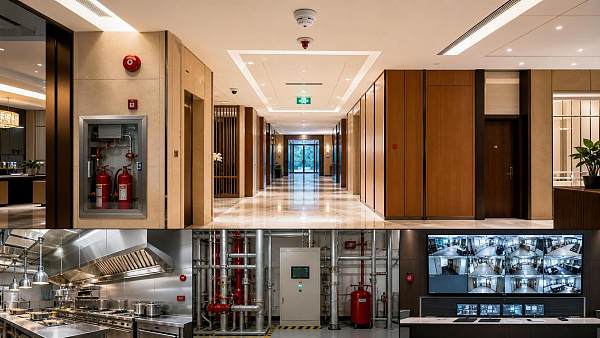
- Hotel Security Protocols: A Compliance Checklist for Protecting Guests and StaffSecurity protocols for hospitality: use this practical hotel compliance checklist to protect guests, staff, data, access points, and emergency operations.
Popular Tags
TerraVista Metrics (TVM)Industry NewsVertical Farming Technology Costs That Often Get Missed
auth.Time
Sep 11, 2026Click Count
Vertical farming technology is often praised for yield, control, and sustainability, yet many project managers underestimate the hidden costs that shape real project viability. Beyond equipment pricing, factors such as energy loads, system integration, maintenance complexity, and long-term facility performance can significantly affect budgets. Understanding these often-missed cost drivers is essential for making smarter planning, procurement, and investment decisions.
What costs do people usually miss when budgeting for vertical farming technology?
Most early budgets for vertical farming technology focus on visible capital items: grow racks, LED lighting, climate control units, irrigation systems, sensors, and software licenses. Those are important, but they are only the starting layer. For project managers and engineering leads, the larger risk often comes from secondary cost categories that emerge during commissioning and operation.
A common blind spot is facility adaptation. A building that looks suitable on paper may still require reinforcement for rack loads, upgraded insulation, drainage redesign, humidity-resistant finishes, fire code modifications, backup power capacity, and electrical distribution changes. These site-related items can materially alter total project cost, especially in retrofits where older industrial or commercial structures were not originally designed for dense agricultural systems.
Another missed category is operational readiness. Even if the core vertical farming technology package is competitively priced, teams may still need spending for standard operating procedures, staff training, calibration tools, spare parts inventory, sanitation protocols, nutrient testing, and remote monitoring integration. These are not decorative expenses; they directly affect uptime, crop consistency, and compliance.
In practice, hidden costs usually appear where engineering meets operations. The technology itself may be advanced, but if the project model ignores infrastructure, support systems, and lifecycle maintenance, the financial picture becomes incomplete.
Why does energy become one of the biggest underestimated expenses?
Energy is one of the most decisive long-term cost drivers in vertical farming technology because nearly every controlled growing function depends on it. Lighting, dehumidification, cooling, pumping, fertigation, air circulation, data systems, and backup redundancy all draw power. Teams often compare supplier proposals by fixture efficiency or equipment nameplate values, but that does not reveal the true operating profile of the entire facility.
The first issue is interaction load. LEDs generate heat, which increases cooling demand. Evapotranspiration raises humidity, which increases dehumidification demand. Airflow design influences both disease control and HVAC energy use. In other words, one subsystem changes the burden on another. A project that appears optimized at component level may still perform poorly at system level.
The second issue is utility structure. Project managers need to review tariff schedules, peak demand charges, power quality requirements, and local grid reliability. In some markets, the cost of vertical farming technology is shaped less by equipment procurement and more by how electricity pricing aligns with daily crop cycles. A technically efficient facility can still become commercially weak if peak-hour power costs are ignored.
The third issue is redundancy. Controlled-environment agriculture cannot always tolerate outages. Backup generators, uninterruptible power systems, transfer switches, and emergency controls add both capital cost and maintenance obligations. For high-value crops, resilience planning is not optional, yet many early-stage budgets treat it as a later enhancement rather than an integral part of project viability.
How does system integration add hidden cost to vertical farming technology projects?
System integration is one of the least visible but most influential cost layers in vertical farming technology. Vendors may provide excellent standalone components, but project success depends on whether lighting controls, nutrient dosing, water treatment, environmental sensors, HVAC logic, cultivation planning, and reporting dashboards can function as one coordinated system.
Integration cost appears in several ways. First, there is interface engineering: communication protocols, control architecture, data mapping, alarm logic, and user permissions all need planning. Second, there is commissioning complexity: tuning environmental recipes, validating response times, correcting sensor drift, and resolving interoperability problems can take longer than expected. Third, there is long-term support: software updates, cybersecurity management, and compatibility between old and new devices can create ongoing expense.
For engineering project leaders, this means procurement should not be based only on a low unit price. The cheaper supplier can become the more expensive choice if the equipment requires custom middleware, repeated field troubleshooting, or specialist intervention every time a control fault occurs. Integration maturity, documentation quality, and service responsiveness deserve as much attention as hardware specifications.
This is where a benchmarking mindset is valuable. Similar to how technical buyers in hospitality and infrastructure evaluate durability, throughput, and compatibility rather than just brochure claims, buyers of vertical farming technology should examine measurable system behavior: sensor accuracy, environmental recovery time, software stability, and maintenance access. Those engineering metrics reveal hidden cost far earlier than sales presentations do.
Are maintenance and labor more expensive than many investors expect?
Yes, and this is one of the most persistent misunderstandings around vertical farming technology. Because the environment is automated, many stakeholders assume labor demand will be low and maintenance predictable. In reality, automation changes labor structure rather than eliminating labor cost. Facilities still need operators who understand crop cycles, sanitation, nutrient management, environmental troubleshooting, harvest scheduling, and digital controls.
Maintenance costs rise because the operating environment is demanding. High humidity, continuous cycles, water exposure, chemical cleaning, and dense equipment layouts accelerate wear on fans, seals, pumps, valves, sensors, and connectors. Components that seem minor on a bill of materials can become recurring failure points. If spare parts are not locally stocked or if service requires vendor-specific technicians, downtime costs can grow quickly.
Labor also becomes more specialized over time. A project may require fewer traditional field workers, but it often needs more technically capable staff who can interpret data, maintain system hygiene, and respond to process deviations before crop quality is affected. Recruiting, retaining, and training this hybrid workforce can be costlier than expected, especially in regions where controlled-environment agriculture talent is limited.
For project planning, the useful question is not “How automated is the farm?” but “What labor profile does this version of vertical farming technology create?” That includes skill level, shift coverage, preventive maintenance hours, contractor dependency, and response time requirements.
What facility and compliance issues can unexpectedly increase total cost?
Facility performance is often underestimated because many decision-makers treat the farm system and the building as separate budget lines. In reality, they are deeply connected. Vertical farming technology performs best only when the surrounding envelope, utilities, and safety systems support stable operation.
Humidity control is a prime example. If walls, ceilings, insulation assemblies, and vapor barriers are not designed for the moisture profile of indoor agriculture, condensation and material degradation can follow. Over time, this creates repair costs, hygiene risks, and performance inefficiencies. Similarly, insufficient drainage slope, poor floor coatings, or undersized water treatment systems can create operational friction that is expensive to correct after launch.
Compliance can also be broader than expected. Depending on location and crop type, teams may face food safety controls, worker safety rules, wastewater standards, electrical inspections, fire suppression requirements, and environmental reporting obligations. Each one may require design revisions, validation records, or third-party testing. These costs are often not dramatic individually, but together they can materially affect budget and schedule.
For managers responsible for delivery, the lesson is simple: vertical farming technology should be evaluated as a facility system, not just as cultivation equipment. The more tightly teams connect engineering, compliance, and operations during planning, the fewer surprises emerge later.
How can project managers compare hidden cost risks before procurement?
The best way to compare vertical farming technology options is to build a lifecycle-based evaluation model instead of relying on purchase price alone. This means converting technical claims into measurable commercial implications. A lower upfront bid may still be the higher-risk choice if it drives more energy use, more downtime, more custom integration, or shorter component life.
Start by separating costs into at least five categories: core equipment, building adaptation, utilities and energy, operations and labor, and service and replacement. Then ask each supplier to provide data that can be verified, not just marketing language. Useful indicators include power consumption under typical production settings, maintenance intervals, critical spare part lead times, sensor calibration frequency, environmental stability range, software support terms, and expected component life under continuous operation.
Project teams should also run scenario testing. What happens if energy prices rise? What if one subsystem fails during peak production? What if humidity exceeds target bands for 48 hours? What if a replacement sensor takes three weeks to arrive? These are practical procurement questions because real project cost is shaped by stress conditions, not just by normal-day performance.
What are the most common mistakes when evaluating vertical farming technology costs?
The first mistake is assuming that high yield potential automatically offsets high operating cost. Yield matters, but only if crop quality, market demand, and cost per kilogram remain commercially aligned. The second mistake is comparing suppliers on hardware specification without evaluating controls, serviceability, and integration maturity. The third is underestimating the cost of adapting an existing facility to controlled-environment agriculture standards.
Another frequent error is treating pilot data as if it scales linearly. A small demonstration room may not reveal the same airflow imbalance, energy intensity, labor strain, or maintenance burden seen in larger facilities. Scale changes complexity. So does crop mix. A system optimized for leafy greens may not maintain the same economics for herbs, berries, or specialty crops.
Finally, some buyers overlook the value of objective technical benchmarking. In capital-intensive sectors, durable decisions usually come from measurable evidence: real operating data, component testing, and lifecycle analysis. Vertical farming technology should be judged the same way. Without that discipline, projects can look attractive in presentations yet struggle in execution.
What should you confirm first if you plan to move forward?
Before moving into design freeze or procurement, confirm the variables that determine hidden cost most strongly. First, define the target crop profile, output volume, and environmental tolerances, because those set the baseline for system sizing. Second, verify the building and utility condition, including electrical capacity, drainage, insulation, structural loading, and backup resilience. Third, map the integration architecture so that controls, sensors, reporting, and alarms are understood before installation begins.
It is also wise to request operating assumptions from each supplier in writing. Ask what staffing level they assume, what maintenance schedule they expect, what energy model they use, and what uptime depends on local service availability. These details often explain why two proposals for vertical farming technology can differ sharply in real cost even when they appear similar on headline pricing.
For project managers, the goal is not simply to buy equipment. It is to build a dependable production environment with predictable lifecycle economics. If you need to confirm a specific solution, performance parameter, implementation path, schedule, quotation logic, or collaboration model, start by discussing six questions: What are the verified operating metrics? What facility upgrades are non-negotiable? How will systems integrate? What maintenance model is assumed? What compliance steps apply locally? And what happens financially if actual conditions differ from the sales case? Those answers will do more to protect project viability than any low initial price alone.
Recommended News
 Sep 11, 2026Hotel Security Protocols: A Compliance Checklist for Protecting Guests and StaffSecurity protocols for hospitality: use this practical hotel compliance checklist to protect guests, staff, data, access points, and emergency operations.
 Sep 03, 2026How to Plan Theme Park Infrastructure for Mixed-Use DevelopmentsTheme park infrastructure for mixed use developments: plan resilient utilities, circulation, attractions, hospitality, and digital systems for scalable destinations.
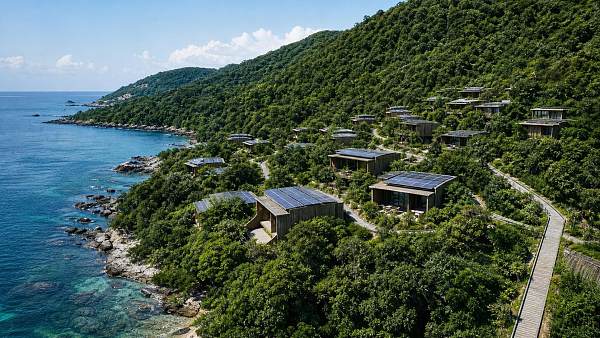
 Aug 23, 2026What Makes Community Based Eco Resort Development Successful in Rural Destinations?Community based eco resort development succeeds when land fit, local participation, infrastructure, and operations align. Discover practical strategies for resilient, high-value rural eco resorts.
 Aug 21, 2026How Many Rooms Should an Eco Resort Have to Balance ROI and Guest Experience?Eco resort development room count directly shapes ROI, infrastructure efficiency, and guest privacy. Learn how to choose the right key range to protect margins and elevate the experience.
 Aug 15, 2026How to Analyze Stainless Steel Fatigue in Cyclic Load ApplicationsStainless steel fatigue analysis helps you spot hidden cyclic load risks early, improve reliability, and prevent costly failures in real-world applications.
 Aug 08, 2026Hospitality Engineering Standards for Resorts: Key Compliance Checks Before Design ApprovalHospitality engineering standards for resorts explained: discover the key compliance checks before design approval to avoid delays, reduce risk, and build guest-ready, resilient resort projects.
 Jul 21, 2026Tourism Destination Infrastructure Solutions: How to Plan Smarter Visitor FacilitiesTourism destination infrastructure solutions for smarter visitor facilities: learn how to reduce risk, improve uptime, and plan scalable, data-backed destinations that perform long term.
 Jul 19, 2026How to Choose Rustproof Hotel Furniture for Coastal and High-Humidity PropertiesRustproof hotel furniture is essential for coastal and high-humidity properties. Learn how to compare materials, finishes, and supplier claims to reduce maintenance costs and extend service life.
 Jul 16, 2026How to Choose Resort Bar Furniture for Outdoor Hospitality SpacesResort bar furniture buying guide for outdoor hospitality spaces: compare materials, durability, comfort, and maintenance to choose stylish, long-lasting commercial pieces.
 Jul 15, 2026Commercial Thermal Efficiency Testing: Key Metrics, Test Methods, and Compliance BasicsCommercial thermal efficiency testing explained: learn key metrics, test methods, common compliance risks, and practical steps to improve performance, cut costs, and make smarter asset decisions.
 Jul 14, 2026Smart Tourism Integration vs Standalone Systems: Which Setup Fits Multi-Site Operations?Smart tourism integration or standalone systems? Discover which setup best fits multi-site tourism operations, improves visibility, compliance, scalability, and guest experience.
 Jul 13, 2026Export Market Opportunities in Latin America: How to Identify Profitable Entry PointsExport market opportunities in Latin America are shifting toward high-margin, compliant sectors. Discover how to spot profitable entry points in tourism, hospitality, and smart infrastructure.
 Jul 12, 2026Carbon Compliance in North America: Key Reporting Rules and Risk Points for ManufacturersCarbon compliance North America: learn the key U.S. and Canada reporting rules, top risk points for manufacturers, and how to strengthen data, supplier checks, and compliance readiness.
 Jul 11, 2026How to Evaluate Coated Surface Structural Performance Testing for Outdoor InstallationsCoated surface structural performance testing for outdoor installations: learn how to assess adhesion, crack resistance, corrosion durability, and real-world structural risk before procurement.
 Jul 10, 2026Outdoor Furniture Durability Cost: Which Materials Last Longer and Cost Less to Maintain?Outdoor furniture durability cost explained: compare aluminum, teak, steel, and HDPE to find materials that last longer, reduce maintenance, and deliver better long-term value.
 Jul 09, 2026Technical Integration Security: Key Standards, System Architecture, and Risk ChecksTechnical integration security explained: explore key standards, system architecture signals, and risk checks to build resilient, compliant, and scalable connected infrastructure.
 Jul 08, 2026Tourism Asset Evaluation in Middle East: Key Metrics for Hotel and Resort ProjectsTourism asset evaluation in Middle East explained through key metrics for hotel and resort projects, covering location, infrastructure, lifecycle cost, sustainability, and technology.
![]() Jul 07, 2026Eco Building Materials Manufacturer Checklist: Certifications, MOQ, and Custom OptionsEco building materials manufacturer checklist covering certifications, MOQ, and custom options. Learn how to compare suppliers, reduce project risk, and choose sustainable materials with confidence.
Jul 07, 2026Eco Building Materials Manufacturer Checklist: Certifications, MOQ, and Custom OptionsEco building materials manufacturer checklist covering certifications, MOQ, and custom options. Learn how to compare suppliers, reduce project risk, and choose sustainable materials with confidence. Jul 06, 2026Hospitality Fire Safety Standards Explained: Key Compliance Points for Hotels and ResortsHospitality fire safety standards explained for hotels and resorts: learn key compliance points, risk areas, and practical steps to protect guests, assets, and operations.
 Jul 03, 2026How to Specify High Traffic Furniture Weight Capacity for Hotels, Lobbies, and Public AreasHigh traffic furniture weight capacity for hotels, lobbies, and public areas: learn how to verify load ratings, testing standards, and durability specs to reduce risk and choose smarter.
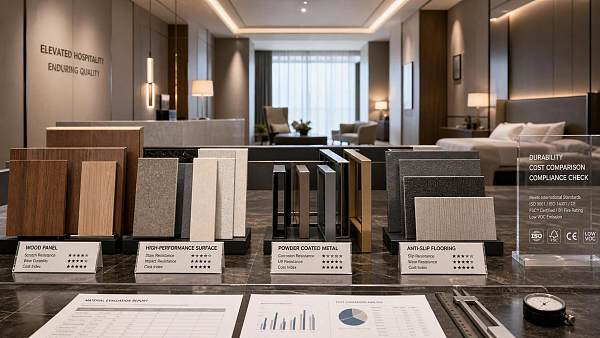
 Jul 03, 2026Hospitality Procurement Finish Standards Explained: How to Compare Durability, Cost, and ComplianceHospitality procurement finish standards explained: compare durability, lifecycle cost, and compliance with a practical framework for smarter sourcing and fewer costly project delays.
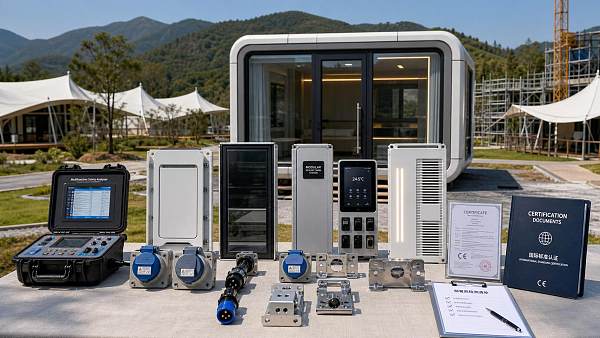
 Jun 30, 2026Tourism Equipment Evaluation Compliance: What to Check Before Purchase and Site DeploymentTourism equipment evaluation compliance: learn what to verify before purchase and site deployment to reduce risk, control costs, ensure safety, and choose suppliers with confidence.
 Jun 28, 2026How to Select Durable Hotel Furniture for Waiting Areas with High Guest TurnoverDurable hotel furniture for waiting areas: learn how to choose seating and surfaces that withstand high guest turnover, reduce maintenance costs, and protect your hotel’s first impression.
 Jun 27, 2026Sustainable Tourism Construction: 7 Design Priorities for Low-Impact Hospitality ProjectsSustainable tourism construction: discover 7 design priorities for low-impact hospitality projects that cut risk, improve lifecycle performance, and boost guest, investor, and ESG value.
Quarterly Executive Summaries Delivered Directly.
Join 50,000+ industry leaders who receive our proprietary market analysis and policy outlooks before they hit the public library.