Search News
TerraVista Metrics (TVM)Industry Portal
TerraVista Metrics (TVM)Hot Articles
TerraVista Metrics (TVM)- Choosing Sustainable Prefab Building Materials: Embodied Carbon and DurabilityChoose prefab sustainable building materials with confidence. Compare embodied carbon, durability, and EPDs to reduce whole-life impacts and make smarter procurement decisions.
- Winnebago Q4 Revenue Falls 17% to $645.1 Million as Full-Year Profit RisesWinnebago Q4 revenue fell 17% to $645.1 million as full-year profit rose. Explore RV shipment trends, product mix shifts and what fiscal 2027 earnings guidance signals.
- Choosing Large Play Equipment for Parks: Space, Age Groups, and SafetyChoose large play equipment with confidence. Explore park space planning, age suitability, safety standards, and lifetime costs to create a safer, more inclusive playground.
Popular Tags
TerraVista Metrics (TVM)Industry NewsSystem Integration Services: Buy or Build?
auth.Time
Oct 22, 2026Click Count
Choosing between buying and building system integration services is usually not about technical preference alone. For tourism developers, hotel operators, procurement managers, and commercial evaluators, the better choice depends on how quickly the system must go live, how complex the operational environment is, what compliance standards apply, and how much internal capability exists to manage long-term integration. In most cases, buying is the smarter route when speed, predictable deployment, and vendor accountability matter most. Building becomes more attractive when the operation requires highly customized workflows, proprietary data control, or a long-term digital infrastructure strategy that off-the-shelf integration cannot support well.
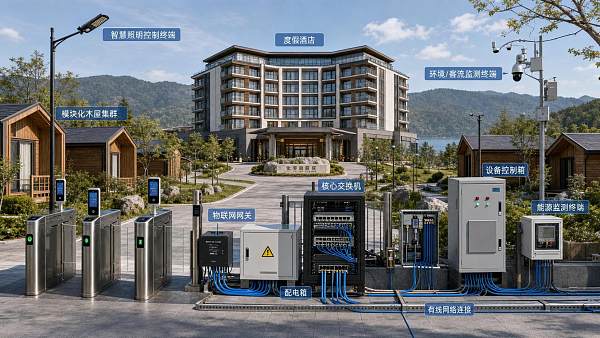
For organizations in tourism and hospitality, this decision is especially important because integration now connects far more than software. It often includes smart hotel systems, IoT networks, energy management, booking platforms, guest experience technologies, security controls, and sustainability reporting. A poor decision can create hidden costs, fragmented data, vendor lock-in, or operational bottlenecks. A well-structured benchmarking process helps teams compare buy-versus-build options with more confidence and less guesswork.
What decision-makers are really asking when they search “system integration services: buy or build?”
Most readers searching this topic are not looking for theory. They want a practical way to evaluate which path reduces risk and creates better business value. Their real questions usually include:
- Which option is more cost-effective over the full lifecycle, not just at launch?
- How fast can the integration be deployed without disrupting operations?
- Will the system scale across multiple sites, brands, or property formats?
- How much customization is actually necessary?
- What compliance, cybersecurity, and sustainability risks come with each model?
- How dependent will we become on external vendors?
- Can internal teams realistically maintain a custom-built integration layer?
For procurement and business evaluation teams, the key is not simply identifying the cheaper option. It is determining which approach creates the best balance of reliability, interoperability, compliance, maintainability, and return on investment.
Buy vs. build: the short answer for tourism and hospitality organizations
If your organization needs a proven integration framework, faster implementation, external support, and lower execution risk, buying system integration services is often the right choice. This is especially true for hotel groups, tourism site operators, mixed-use resort developers, and procurement teams rolling out smart infrastructure across multiple locations.
If your business model depends on unique operating logic, proprietary data orchestration, custom guest journeys, or unusual infrastructure combinations, building may generate stronger long-term value. However, this only works if your organization has the budget, technical leadership, governance discipline, and ongoing maintenance resources to support it.
In practice, many organizations benefit most from a hybrid model: buy the core integration framework, then build selective custom layers where differentiation or data control truly matters. That approach often delivers better speed-to-value while avoiding unnecessary complexity.
When buying system integration services makes more sense
Buying is generally the stronger option when the integration requirements are common, time-sensitive, and dependent on proven interoperability. In tourism and hospitality, this often includes connecting property management systems, smart room controls, building management platforms, access systems, energy monitoring, guest apps, and reporting dashboards.
Buying is usually the better choice when:
- You need faster deployment across hotels, resorts, attractions, or tourism assets
- Your internal technical team is small or focused on operations rather than software development
- You need clear service-level agreements, implementation accountability, and vendor support
- The use case depends on widely adopted standards and APIs
- Procurement needs predictable budgeting and lower project uncertainty
- Compliance validation and cybersecurity assurance are easier with established vendors
The biggest advantage of buying is reduced execution risk. Proven integration providers have already solved many compatibility, security, and deployment issues. For organizations managing guest experience and site uptime, that reliability can be more valuable than theoretical customization freedom.
When building system integration services is worth the investment
Building becomes more defensible when integration is central to competitive advantage. If your business needs to combine operational systems in a way that standard integration platforms cannot support well, a custom approach may be justified.
Building is often worth considering when:
- You operate a highly differentiated hospitality or tourism model with non-standard workflows
- You need deep control over data architecture, ownership, and processing logic
- Your organization already has mature in-house engineering and product management capabilities
- Long-term transaction volume or scale makes custom infrastructure economically reasonable
- Existing vendor tools create serious limitations around flexibility, interoperability, or analytics
That said, building introduces ongoing obligations. You are not just funding development. You are also committing to version control, security patching, documentation, testing, retraining, compatibility updates, and long-term support. Many organizations underestimate these costs, especially after the first deployment succeeds.
The cost question: why total cost of ownership matters more than project price
A common mistake in buy-versus-build analysis is comparing only the visible upfront price. This leads to distorted decisions. The better method is to compare total cost of ownership over a realistic planning horizon, often three to five years.
When buying, cost typically includes:
- Licensing or subscription fees
- Implementation and configuration charges
- Vendor support and maintenance
- Training and onboarding
- Upgrade or expansion costs
When building, cost typically includes:
- Solution architecture and development labor
- Testing, QA, and deployment
- Cloud infrastructure or hosting
- Security engineering and compliance validation
- Maintenance, bug fixing, and feature updates
- Dependency on key internal staff or external contractors
For tourism infrastructure projects, there are also indirect costs: delayed opening timelines, system downtime, poor guest experience, fragmented reporting, and difficulty integrating future assets. These costs can easily exceed the initial technology budget if the wrong integration path is chosen.
How benchmarking helps teams make a better buy-or-build decision
A structured benchmarking process turns an abstract technology debate into a measurable business decision. Instead of relying on sales claims or internal bias, teams can compare options using objective performance and delivery criteria.
Useful benchmarking dimensions include:
- Interoperability: How well does the solution connect with existing hotel, facility, IoT, and analytics systems?
- Deployment speed: How long does implementation take across one site versus multiple sites?
- Scalability: Can the system support growth in properties, devices, transactions, and data volume?
- Reliability: What is the expected uptime, fault tolerance, and recovery performance?
- Security and compliance: Does the solution meet operational, privacy, and regulatory standards?
- Lifecycle cost: What is the three-to-five-year ownership profile?
- Vendor dependency: How hard is it to switch providers or modify the architecture later?
- Customization fit: Does the available functionality support actual operational needs without excessive workaround?
For organizations evaluating tourism hardware and digital infrastructure together, benchmarking is even more important. Integration quality can affect system response times, energy efficiency, operational resilience, and the practical usability of smart hospitality investments. Objective engineering metrics help separate real performance from marketing language.
Key risks that procurement and evaluation teams should not overlook
Whether you buy or build, certain risks repeatedly undermine integration projects. These should be reviewed early in the decision process.
- Underestimating complexity: Multi-vendor environments often involve hidden compatibility issues.
- Over-customizing too early: Building custom logic for non-critical features can delay the project and increase maintenance burden.
- Ignoring data governance: Poor integration architecture can create unreliable reporting and weak operational visibility.
- Vendor lock-in: Some purchased solutions are difficult to exit because of proprietary connectors or data structures.
- Internal capability gaps: A build strategy can fail if key staff leave or internal ownership is unclear.
- Compliance blind spots: Security, privacy, and sustainability reporting requirements must be addressed from the start.
For commercial buyers, these risks should be translated into procurement criteria, not treated as technical side notes. Decision quality improves when teams evaluate integration services through operational resilience and business continuity, not just feature lists.
A practical decision framework: how to choose with more confidence
If your team needs a clear internal method, use the following framework:
- Define the business objective first. Are you optimizing speed, differentiation, cost control, data ownership, or multi-site standardization?
- Map the integration scope. List every system, device class, platform, and reporting requirement that must connect.
- Classify requirements as standard or strategic. Standard needs are often better bought. Strategic differentiators may justify building.
- Benchmark three to five realistic options. Compare vendors, hybrid models, and custom-build scenarios using the same criteria.
- Model total cost over several years. Include maintenance, scaling, retraining, and risk-related costs.
- Assess internal readiness. Be honest about engineering capacity, governance maturity, and support ownership.
- Run a pilot or phased rollout. Validate interoperability and operational fit before committing at full scale.
This framework is particularly useful in hospitality and tourism environments where integration affects both guest-facing systems and infrastructure performance. A phased, benchmark-led evaluation usually produces stronger outcomes than a one-time procurement decision based on price alone.
Why many organizations end up choosing a hybrid model
The buy-or-build debate often sounds binary, but real-world deployments rarely are. A hybrid model allows organizations to purchase mature integration services for common operational needs while building custom modules for analytics, workflow orchestration, sustainability dashboards, or differentiated guest experiences.
This model can be especially effective when:
- You want faster deployment without giving up all customization
- Your core systems use standard interfaces, but reporting or control logic is unique
- You need to reduce dependency on one vendor while avoiding a full custom stack
- You want to preserve future flexibility as tourism sites, hardware layers, or digital services evolve
For many buyers, this is the most commercially sensible option because it aligns investment with actual business value. You avoid building what is already mature in the market, while reserving custom development for areas that directly support operational advantage.
Final takeaway: buy for speed and certainty, build for differentiation and control
For most tourism and hospitality organizations, buying system integration services is the better default when the priority is lower implementation risk, faster rollout, and reliable vendor support. Building makes sense when integration itself is a strategic asset and the organization has the resources to manage it as a long-term capability.
The strongest decisions come from structured benchmarking, not assumptions. When teams compare interoperability, lifecycle cost, scalability, compliance, and maintenance demands in a disciplined way, the buy-versus-build question becomes much easier to answer. In a market where smart infrastructure, sustainability, and digital guest experience increasingly depend on seamless integration, the best choice is the one that performs reliably in the real operating environment—not just on paper.
Recommended News
 Oct 18, 2026Can Hotel Room Accessibility Be Improved Without a Full Renovation?Can hotel rooms be made more accessible without a full renovation? Discover practical upgrades to layouts, controls, and bathrooms—and learn when bigger changes are needed.
 Oct 16, 2026How Can You Fix Scratched Luxury Furniture Without Replacing It?How can I repair scratched luxury furniture finishes without replacing the furniture? Discover finish-safe touch-ups, color matching, and expert repair tips to restore elegance and protect value.
 Oct 04, 2026A Procurement Checklist for Tourism Hardware Equipment in Resorts and Visitor CentersTourism hardware equipment procurement checklist for resorts and visitor centers: compare durability, compliance, lifecycle costs, supplier support, and logistics.
 Sep 23, 2026Planning Smart Classroom Solutions for Hybrid Learning Without Creating AV Support GapsSmart classroom solutions for reliable hybrid learning: standardize workflows, strengthen AV support, and deliver seamless teaching experiences.
 Sep 11, 2026Hotel Security Protocols: A Compliance Checklist for Protecting Guests and StaffSecurity protocols for hospitality: use this practical hotel compliance checklist to protect guests, staff, data, access points, and emergency operations.
 Sep 03, 2026How to Plan Theme Park Infrastructure for Mixed-Use DevelopmentsTheme park infrastructure for mixed use developments: plan resilient utilities, circulation, attractions, hospitality, and digital systems for scalable destinations.
 Aug 23, 2026What Makes Community Based Eco Resort Development Successful in Rural Destinations?Community based eco resort development succeeds when land fit, local participation, infrastructure, and operations align. Discover practical strategies for resilient, high-value rural eco resorts.
 Aug 21, 2026How Many Rooms Should an Eco Resort Have to Balance ROI and Guest Experience?Eco resort development room count directly shapes ROI, infrastructure efficiency, and guest privacy. Learn how to choose the right key range to protect margins and elevate the experience.
 Aug 15, 2026How to Analyze Stainless Steel Fatigue in Cyclic Load ApplicationsStainless steel fatigue analysis helps you spot hidden cyclic load risks early, improve reliability, and prevent costly failures in real-world applications.
 Aug 08, 2026Hospitality Engineering Standards for Resorts: Key Compliance Checks Before Design ApprovalHospitality engineering standards for resorts explained: discover the key compliance checks before design approval to avoid delays, reduce risk, and build guest-ready, resilient resort projects.
 Jul 21, 2026Tourism Destination Infrastructure Solutions: How to Plan Smarter Visitor FacilitiesTourism destination infrastructure solutions for smarter visitor facilities: learn how to reduce risk, improve uptime, and plan scalable, data-backed destinations that perform long term.
 Jul 19, 2026How to Choose Rustproof Hotel Furniture for Coastal and High-Humidity PropertiesRustproof hotel furniture is essential for coastal and high-humidity properties. Learn how to compare materials, finishes, and supplier claims to reduce maintenance costs and extend service life.
 Jul 16, 2026How to Choose Resort Bar Furniture for Outdoor Hospitality SpacesResort bar furniture buying guide for outdoor hospitality spaces: compare materials, durability, comfort, and maintenance to choose stylish, long-lasting commercial pieces.
 Jul 15, 2026Commercial Thermal Efficiency Testing: Key Metrics, Test Methods, and Compliance BasicsCommercial thermal efficiency testing explained: learn key metrics, test methods, common compliance risks, and practical steps to improve performance, cut costs, and make smarter asset decisions.
 Jul 14, 2026Smart Tourism Integration vs Standalone Systems: Which Setup Fits Multi-Site Operations?Smart tourism integration or standalone systems? Discover which setup best fits multi-site tourism operations, improves visibility, compliance, scalability, and guest experience.
 Jul 13, 2026Export Market Opportunities in Latin America: How to Identify Profitable Entry PointsExport market opportunities in Latin America are shifting toward high-margin, compliant sectors. Discover how to spot profitable entry points in tourism, hospitality, and smart infrastructure.
 Jul 12, 2026Carbon Compliance in North America: Key Reporting Rules and Risk Points for ManufacturersCarbon compliance North America: learn the key U.S. and Canada reporting rules, top risk points for manufacturers, and how to strengthen data, supplier checks, and compliance readiness.
 Jul 11, 2026How to Evaluate Coated Surface Structural Performance Testing for Outdoor InstallationsCoated surface structural performance testing for outdoor installations: learn how to assess adhesion, crack resistance, corrosion durability, and real-world structural risk before procurement.
 Jul 10, 2026Outdoor Furniture Durability Cost: Which Materials Last Longer and Cost Less to Maintain?Outdoor furniture durability cost explained: compare aluminum, teak, steel, and HDPE to find materials that last longer, reduce maintenance, and deliver better long-term value.
 Jul 09, 2026Technical Integration Security: Key Standards, System Architecture, and Risk ChecksTechnical integration security explained: explore key standards, system architecture signals, and risk checks to build resilient, compliant, and scalable connected infrastructure.
 Jul 08, 2026Tourism Asset Evaluation in Middle East: Key Metrics for Hotel and Resort ProjectsTourism asset evaluation in Middle East explained through key metrics for hotel and resort projects, covering location, infrastructure, lifecycle cost, sustainability, and technology.
![]() Jul 07, 2026Eco Building Materials Manufacturer Checklist: Certifications, MOQ, and Custom OptionsEco building materials manufacturer checklist covering certifications, MOQ, and custom options. Learn how to compare suppliers, reduce project risk, and choose sustainable materials with confidence.
Jul 07, 2026Eco Building Materials Manufacturer Checklist: Certifications, MOQ, and Custom OptionsEco building materials manufacturer checklist covering certifications, MOQ, and custom options. Learn how to compare suppliers, reduce project risk, and choose sustainable materials with confidence. Jul 06, 2026Hospitality Fire Safety Standards Explained: Key Compliance Points for Hotels and ResortsHospitality fire safety standards explained for hotels and resorts: learn key compliance points, risk areas, and practical steps to protect guests, assets, and operations.
 Jul 03, 2026How to Specify High Traffic Furniture Weight Capacity for Hotels, Lobbies, and Public AreasHigh traffic furniture weight capacity for hotels, lobbies, and public areas: learn how to verify load ratings, testing standards, and durability specs to reduce risk and choose smarter.
{item.publish_time}{item.title}{item.description}Quarterly Executive Summaries Delivered Directly.
Join 50,000+ industry leaders who receive our proprietary market analysis and policy outlooks before they hit the public library.