Search News
TerraVista Metrics (TVM)Industry Portal
TerraVista Metrics (TVM)Hot Articles
TerraVista Metrics (TVM)- RCEP Glamping Tents Carbon Mutual Recognition Extended to PhilippinesRCEP Glamping Tents carbon mutual recognition now extends to the Philippines — faster customs, 67% lower testing costs, and green procurement advantages. Act now!
- EN 16798-2:2026 Enforcement Starts May 1, 2026EN 16798-2:2026 enforcement starts May 1, 2026—key for AI HVAC, occupancy sensors & smart curtains in EU hotels. Act now to avoid market access risks!
- ADQ Launches $180M Phase II for China Supply Chain Localization in UAEADQ launches $180M Phase II fund to localize China’s glamping tent, modular cabin & RV component supply chain in UAE — apply by June 1, 2026.
Popular Tags
TerraVista Metrics (TVM)Industry NewsRCEP Glamping Tents Carbon Mutual Recognition Extended to Philippines
auth.Dr. Hideo Tanaka (Outdoor Gear Engineering Lead)Time
May 07, 2026Click Count
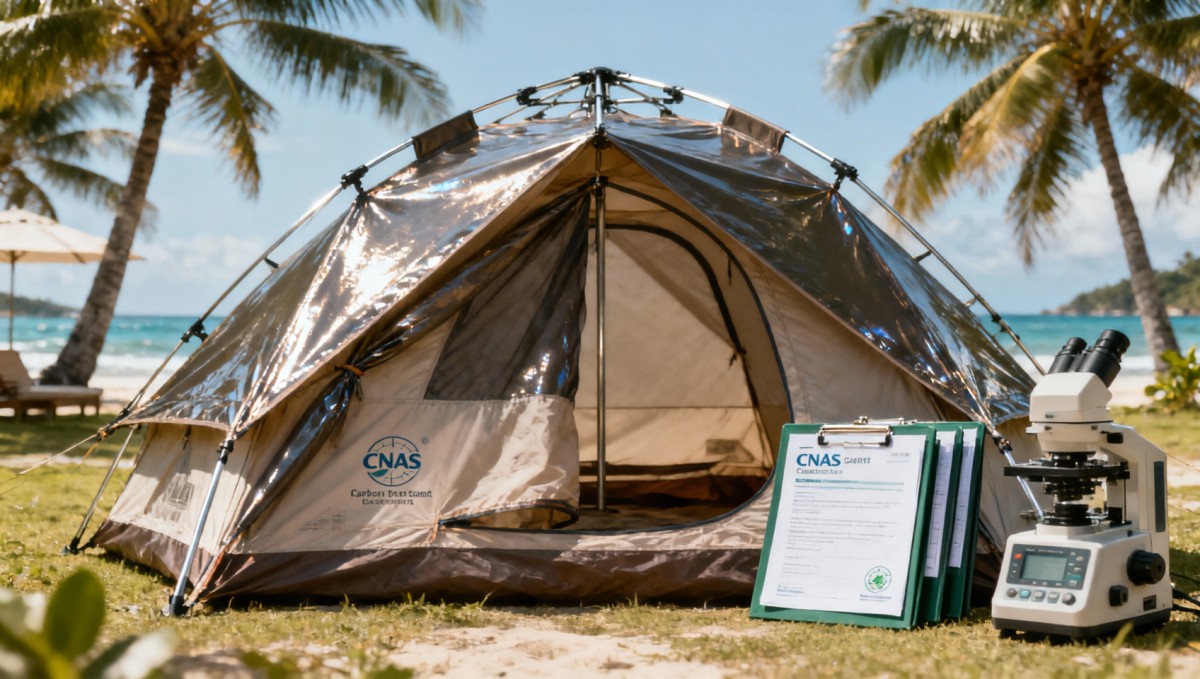
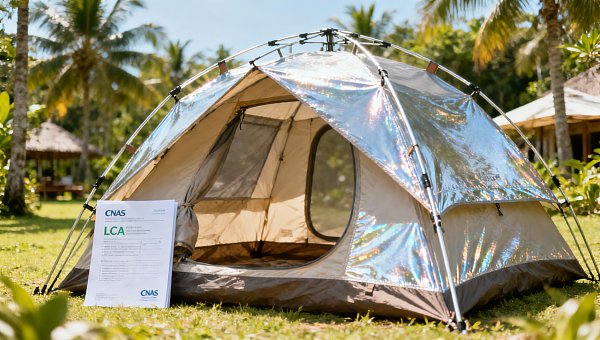
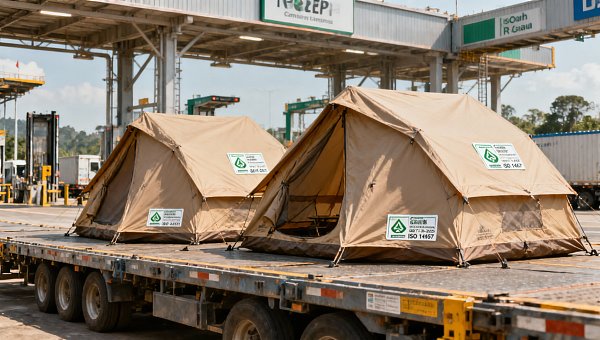
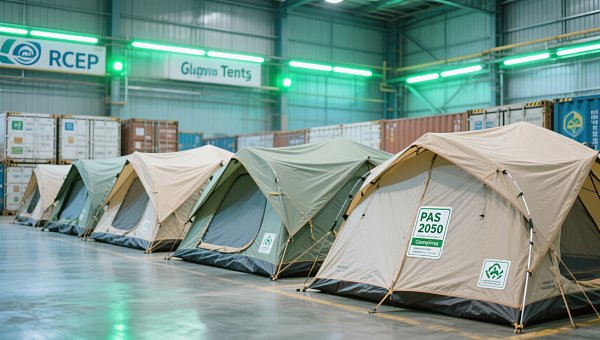
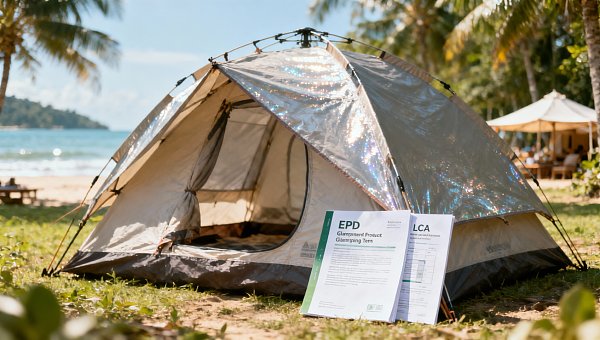
On May 5, 2026, the Philippines’ Bureau of Product Standards (BPS) officially recognized Life Cycle Assessment (LCA) reports issued by CNAS-accredited laboratories in China for Glamping Tents — marking a key step in RCEP green trade facilitation. Exporters of Glamping Tents, outdoor equipment manufacturers, and sustainability-compliance service providers should monitor implications for Philippine market access, customs efficiency, and carbon data validation requirements.
Event Overview
On May 5, 2026, the Philippines’ Bureau of Product Standards (BPS) issued an official announcement recognizing LCA reports for Glamping Tents issued by laboratories accredited by the China National Accreditation Service for Conformity Assessment (CNAS). These reports are now accepted as valid evidence under the Regional Comprehensive Economic Partnership (RCEP) framework for green customs clearance and preferential evaluation in Philippine government procurement processes. According to the announcement, this mutual recognition reduces average customs clearance time for Chinese Glamping Tents entering the Philippines by 3.2 days and cuts redundant carbon testing costs by 67%.
Industries Affected
Direct Exporters of Glamping Tents
Exporters shipping Glamping Tents from China to the Philippines will experience faster customs release and reduced documentation friction. The direct impact lies in shortened lead times and lower compliance-related transaction costs — especially where carbon transparency is required for tariff preferences or public tenders.
Manufacturers & Assemblers of Glamping Tents
Manufacturers relying on third-party LCA reporting must ensure their chosen CNAS-accredited lab covers the specific product configuration, materials, and declared functional unit aligned with BPS expectations. Inconsistent scope or methodology may still trigger verification requests despite mutual recognition.
Raw Material & Component Suppliers
Suppliers providing fabrics, frames, coatings, or insulation materials used in Glamping Tents may face upstream data requests. Buyers may begin requiring environmental data sheets (EDS) or cradle-to-gate emission values to support downstream LCA submissions — particularly for components with high embodied carbon.
Supply Chain & Certification Support Providers
Consultancies, testing labs, and logistics firms offering RCEP compliance services now have a defined pathway for carbon data acceptance in the Philippines. However, this applies only to LCA reports — not broader ESG disclosures or decarbonization claims — and remains limited to Glamping Tents as a defined product category.
What Relevant Enterprises or Practitioners Should Focus On
Monitor Official Implementation Guidance from BPS
The BPS announcement confirms recognition in principle but does not yet publish technical annexes specifying acceptable LCA standards (e.g., ISO 14040/44), system boundaries, or data quality thresholds. Enterprises should track subsequent BPS circulars or FAQs for operational clarity.
Verify Lab Accreditation Scope and Report Alignment
CNAS-accredited labs vary in their approved LCA scopes. Exporters must confirm that the issuing lab’s accreditation explicitly covers Glamping Tents — including structural type, intended use, and lifecycle stages reported — and that the final report matches BPS’ expected format and disclosure level.
Distinguish Between Policy Signal and Operational Readiness
This is a formal policy-level mutual recognition, not automatic system integration. Philippine customs officers and procurement evaluators may require internal training before consistent application. Early adopters should prepare supporting documentation (e.g., lab accreditation certificates, methodology summaries) to preempt ad hoc verification.
Assess Readiness for Broader RCEP Carbon Alignment
While currently limited to Glamping Tents and the Philippines, this development signals growing momentum for cross-border LCA acceptance within RCEP. Companies with multi-market export strategies should audit current LCA practices for scalability — e.g., harmonizing inventory databases, adopting modular reporting templates, and documenting primary data sources.
Editorial Perspective / Industry Observation
Observably, this move represents an early-stage, product-specific implementation of RCEP’s environmental cooperation provisions — not a comprehensive carbon equivalence regime. Analysis shows it functions primarily as a procedural alignment tool rather than a substantive harmonization of carbon accounting rules. From an industry perspective, it is best understood as a pilot signal: validating the feasibility of bilateral LCA recognition while highlighting remaining gaps in methodology alignment, data transparency, and enforcement consistency. Continued attention is warranted not just for Philippines-bound shipments, but as a potential precedent for other RCEP members considering similar pathways for low-carbon trade facilitation.

Conclusion
This mutual recognition marks a concrete, albeit narrow, advancement in RCEP green trade infrastructure. It delivers measurable operational benefits for a defined product category and market, but does not imply broad-based carbon standard convergence. Currently, it is more accurately understood as a targeted regulatory easing measure — valuable for affected exporters, yet requiring careful implementation due to its scope limitations and dependency on evolving local enforcement practice.
Source Attribution
Main source: Official announcement published by the Philippines’ Bureau of Product Standards (BPS) on May 5, 2026.
Points requiring ongoing observation: Technical implementation guidelines, list of accepted CNAS labs and their validated LCA scopes, and field-level adoption rate across Philippine customs and procurement agencies.Recommended News
 May 07, 2026RCEP Glamping Tents Carbon Mutual Recognition Extended to PhilippinesRCEP Glamping Tents carbon mutual recognition now extends to the Philippines — faster customs, 67% lower testing costs, and green procurement advantages. Act now!
 May 06, 2026RCEP Glamping Tents Carbon Mutual Recognition Extended to PhilippinesRCEP Glamping Tents carbon mutual recognition now extends to the Philippines — cut customs delays by 7–10 days & slash compliance costs 35%. Act now for faster, greener market access.
 May 05, 2026RCEP Adds Glamping Tents to Carbon Footprint Mutual RecognitionRCEP adds glamping tents to carbon footprint mutual recognition—CNAS-accredited LCA reports now unlock tariff cuts & green subsidies in Myanmar.
 May 05, 2026ADQ Launches $210M Premium Camping Fund Targeting Chinese Glamping TentsADQ Launches $210M Premium Camping Fund targeting Chinese glamping tents — ISO 21932:2025 & GCC green certified suppliers gain priority access. Act now!
 May 04, 2026RCEP Adds Glamping Tents to Carbon Footprint Mutual RecognitionRCEP Adds Glamping Tents to Carbon Footprint Mutual Recognition — streamline Myanmar market access with CNAS-accepted LCA reports and cut certification costs now.
 May 03, 2026RCEP Adds Glamping Tents Carbon Footprint Mutual RecognitionRCEP Adds Glamping Tents Carbon Footprint Mutual Recognition: Myanmar now accepts CNAS-accredited LCA reports for faster green procurement & customs clearance.
 May 02, 2026Qatar Restores 24/7 Maritime Transit: Glamping Tents Delivery to Middle East Shortens by 5–8 DaysGlamping tents delivery to Middle East speeds up by 5–8 days as Qatar restores 24/7 maritime transit through Strait of Hormuz—boosting GCC tourism supply chains.
 May 02, 2026RCEP Adds Cambodia, Laos to Carbon Label Mutual Recognition for Glamping TentsRCEP carbon label mutual recognition now covers Cambodia & Laos for Glamping Tents — streamline customs, cut costs, and accelerate market entry with CNAS/ISO 14067-compliant reports.
 May 02, 2026ASTM F3509-26 Enforces Dual UL 2111 + Carbon Footprint Verification for Glamping TentsASTM F3509-26 mandates dual UL 2111 + carbon footprint verification for glamping tents—key to U.S. market access. Act now to avoid CPSC rejection.
 May 01, 2026ASTM F3509-26 Enforces Dual UL 2111 + Carbon Footprint Compliance for US Glamping TentsASTM F3509-26 mandates dual UL 2111 + carbon footprint compliance for US glamping tents—act now to avoid port delays, rejections, and lost revenue.
 May 01, 2026RCEP Adds Cambodia, Laos to Carbon Label Mutual Recognition for Glamping TentsRCEP carbon label mutual recognition now covers Cambodia & Laos for Glamping Tents — leverage GB/T 32150-2025 reports to speed customs clearance and win green tenders.
 Apr 30, 2026ASTM F3509-26 Enforced: Glamping Tents Require UL 2111 + Carbon Footprint Verification for US MarketASTM F3509-26 enforced: Glamping tents for US market now require UL 2111 flammability testing + ISO 14067 carbon footprint verification—act now to avoid port detention.
 Apr 30, 2026RCEP Adds Cambodia, Laos to Carbon Label Mutual Recognition for Glamping TentsRCEP adds Cambodia & Laos to carbon label mutual recognition for glamping tents—unlock faster, low-cost green exports with ISO 14067-compliant reports.
 Apr 29, 2026ASTM F3509-26 Enacted: Glamping Tents Require UL 2111 + PAS 2050ASTM F3509-26 is live: Glamping tents now require UL 2111 + PAS 2050 compliance for U.S. parks & platforms—act now to avoid listing bans.
 Apr 29, 2026RCEP Adds Cambodia, Laos to Carbon Label Mutual Recognition for Glamping TentsRCEP carbon label mutual recognition now includes Cambodia & Laos for glamping tents—leverage GB/T 32150-2025 reports for faster clearance & green procurement wins.
 Apr 28, 2026RCEP Adds Cambodia, Laos to Carbon Label Mutual RecognitionRCEP Adds Cambodia, Laos to Carbon Label Mutual Recognition—unlock faster clearance & lower tariffs for Glamping Tents with CNAS-verified carbon reports.
 Apr 28, 2026ASTM F3509-26 Enforced: Glamping Tents Require UL 2111 + Carbon VerificationASTM F3509-26 enforced: Glamping tents now require UL 2111 flame resistance + verified carbon footprint—key for U.S. importers, OEMs & sustainability teams.
 Apr 29, 2026ASTM F3509-26 Enacted: Glamping Tents Require UL 2111 + Carbon Footprint VerificationASTM F3509-26 is live: Glamping tents for the U.S. now require UL 2111 Class A fire safety + ISO 14067 carbon footprint verification—act now to avoid delisting.
 Apr 27, 2026RCEP Adds Cambodia, Laos to Glamping Tents Carbon Label Mutual RecognitionRCEP Adds Cambodia, Laos to Glamping Tents Carbon Label Mutual Recognition — streamline low-carbon exports, cut retesting costs & accelerate green procurement across ASEAN.
 Apr 26, 2026RCEP Carbon Label Mutual Recognition Extended to Cambodia and LaosRCEP Carbon Label Mutual Recognition now extends to Cambodia and Laos for Glamping Tents — unlock faster customs clearance and green procurement advantages today.
 Apr 26, 2026ASTM F3509-26 Enforces Dual UL 2111 + Carbon Footprint Compliance for Glamping TentsASTM F3509-26 mandates dual UL 2111 Class A + carbon footprint ≤8.2 kg CO₂e/m² for U.S.-bound glamping tents—act now to avoid customs delays & Amazon delisting!
 Apr 25, 2026RCEP Green Mutual Recognition Expanded for Glamping TentsRCEP Green Mutual Recognition now covers Glamping Tents—EPD & LCA reports from Chinese certifiers accepted in 6 ASEAN markets for faster, greener customs clearance.
 Apr 24, 2026RCEP Green Mutual Recognition Expands to Glamping TentsRCEP Green Mutual Recognition now covers glamping tents—unlock faster ASEAN customs clearance with ISO 14067-compliant carbon reports.
 Apr 23, 2026RCEP Green Mutual Recognition Expanded for Glamping TentsRCEP Green Mutual Recognition now covers glamping tents — CNAS-issued ISO 14067 reports accepted across 6 ASEAN markets for faster clearance & green trade advantage.
Quarterly Executive Summaries Delivered Directly.
Join 50,000+ industry leaders who receive our proprietary market analysis and policy outlooks before they hit the public library.