Search News
TerraVista Metrics (TVM)Industry Portal
TerraVista Metrics (TVM)Hot Articles
TerraVista Metrics (TVM)- Choosing Sustainable Prefab Building Materials: Embodied Carbon and DurabilityChoose prefab sustainable building materials with confidence. Compare embodied carbon, durability, and EPDs to reduce whole-life impacts and make smarter procurement decisions.
- Winnebago Q4 Revenue Falls 17% to $645.1 Million as Full-Year Profit RisesWinnebago Q4 revenue fell 17% to $645.1 million as full-year profit rose. Explore RV shipment trends, product mix shifts and what fiscal 2027 earnings guidance signals.
- Choosing Large Play Equipment for Parks: Space, Age Groups, and SafetyChoose large play equipment with confidence. Explore park space planning, age suitability, safety standards, and lifetime costs to create a safer, more inclusive playground.
Popular Tags
TerraVista Metrics (TVM)Industry NewsWholesale Prefab Space Capsule: Where Quality Gaps Show Up
auth.Julian Thorne (Sustainable Infrastructure Architect)Time
Oct 22, 2026Click Count
In wholesale prefab space capsule sourcing, the real quality gaps rarely appear in brochures—they emerge in thermal performance, structural consistency, and long-term integration with smart hospitality systems. For buyers comparing a modular hotel manufacturer China, commercial glamping tent wholesale options, or a smart hotel room controller supplier, objective benchmarks matter more than sales claims. This article shows where defects hide and how data-driven evaluation reduces procurement risk.
Where do quality gaps in wholesale prefab space capsules actually appear?
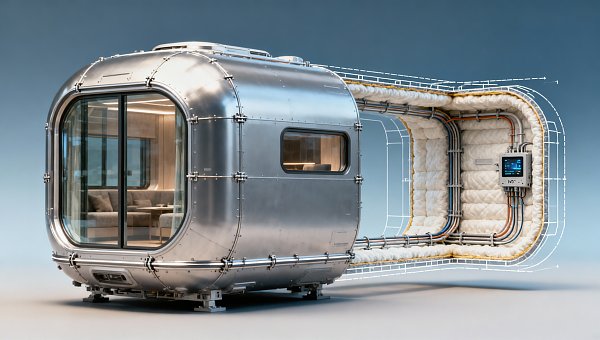
For information researchers and procurement teams, the first mistake is assuming that visible finish equals engineering quality. In reality, the most expensive failures often come from hidden layers: insulation continuity, steel frame tolerance, waterproof detailing, glazing performance, wiring routing, and interface compatibility with hotel or campsite systems. A prefab space capsule may look premium on delivery day yet show thermal drift, condensation, door deformation, or unstable smart control performance within 6–18 months of field use.
This matters even more in tourism infrastructure. A unit used as a modular hotel room, eco-resort cabin, or premium glamping suite is not only a shelter. It is part of a guest-experience chain that includes HVAC, lighting scenes, access control, occupancy sensing, and property management integration. If one subsystem fails, operational costs rise quickly through maintenance dispatches, guest complaints, and room downtime. For distributors and project evaluators, this makes factory comparison a technical exercise, not a catalog exercise.
TerraVista Metrics (TVM) approaches this gap by treating the supplier shortlist as a benchmark problem. Instead of relying on showroom language, TVM focuses on measurable procurement indicators across 3 layers: structural durability, environmental performance, and digital interoperability. This is especially useful when buyers need to compare a modular hotel manufacturer China source with multiple cross-category vendors, including commercial glamping tent wholesale providers and smart hotel room controller suppliers.
In most cross-border projects, quality gaps show up during 4 predictable stages: factory review, pre-shipment inspection, on-site assembly, and early operation. A unit may pass visual review but fail in transport rigidity, seal consistency, or sensor communication stability after installation. That is why serious sourcing teams define the acceptance process before placing a deposit, not after the first batch ships.
The hidden risk zones buyers often underestimate
- Envelope performance: poor insulation joints, weak window sealing, and thermal bridges that become visible only under hot-cold cycling or humid operation.
- Structural repeatability: batch-to-batch differences in frame alignment, door fit, floor levelness, and panel fastening that increase installation time by 2–5 days per site cluster.
- System compatibility: room controls, smart locks, occupancy sensors, and HVAC controllers that work in isolation but not within one hospitality management environment.
- Maintenance accessibility: attractive interior skins that conceal service points, making future repair cycles slower and more expensive.
For B2B buyers, these risk zones affect more than product quality. They also affect installation labor, operating margins, warranty disputes, and the credibility of the local distributor. In other words, wholesale prefab space capsule sourcing should be evaluated as a lifecycle decision over 3–7 years, not as a one-time purchase decision.
Which technical metrics matter most before you compare suppliers?
A structured comparison starts with technical thresholds. Even when specifications differ by design style, the buyer can still request the same core categories from every supplier. For a prefab space capsule used in tourism or hospitality, the most practical categories are thermal insulation performance, weather resistance, structural tolerance, interior systems integration, and serviceability. These metrics are easier to compare than marketing descriptions such as luxury, premium, or resort-grade.
TVM recommends building a 5-point technical review matrix before RFQ circulation. At minimum, the matrix should cover insulation material type, wall and roof build-up, window system configuration, steel or aluminum frame treatment, and electrical architecture. Where smart hospitality is involved, buyers should also check communication protocols, control cabinet accessibility, and compatibility with standard room-management scenarios such as HVAC setback, occupancy-based lighting, and access-triggered power logic.
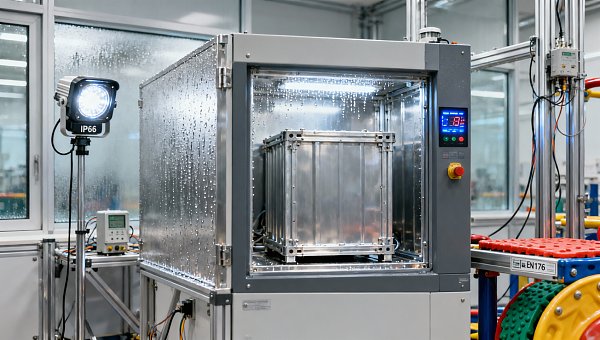
If your project spans different climates, thermal and moisture behavior deserve special attention. A unit optimized for mild climate deployment may not perform the same way in coastal humidity, high solar load, or altitude-driven temperature swings. Common buyer review windows include 24-hour temperature holding behavior, condensation-prone junctions, and drainage performance during continuous rain exposure. These are not luxury checks; they are standard operational risk checks.
The table below summarizes practical evaluation dimensions that can be applied when screening a modular hotel manufacturer China source or comparing hybrid suppliers that provide cabins, tented structures, and smart room systems.
This table is useful because it moves supplier discussion from style preference to acceptance criteria. For example, a buyer can request tolerance ranges, material stack details, interface diagrams, and maintenance access evidence within the quotation stage. That alone filters out many weak candidates before samples or factory visits begin.
A practical 5-check shortlist before sample approval
- Ask for a full material and subsystem bill of description, not just renderings and room layouts.
- Request tolerance and sealing details for doors, windows, roof edges, and transport joints.
- Confirm whether the smart hotel room controller supplier can provide wiring logic compatible with the prefab manufacturer’s internal routing.
- Review maintainability: service access panels, replacement paths, and spare part cycles over 12–24 months.
- Require pre-shipment inspection criteria tied to measurable outcomes, not visual approval alone.
When buyers use these checks consistently, the comparison between factories becomes faster, cleaner, and easier to defend internally during commercial approval.
How should buyers compare prefab space capsules, glamping structures, and smart hospitality integration?
Many procurement projects no longer involve one product type. A resort developer may compare rigid prefab space capsules for premium rooms, commercial glamping tent wholesale units for seasonal expansion, and a smart hotel room controller supplier for unified room logic across both categories. The challenge is that these products are often quoted separately, even though the operator will run them as one guest asset portfolio.
This is where a comparison model helps. Instead of asking which product is universally better, ask which product fits which operating profile. For permanent high-occupancy deployment, rigid modular units may offer stronger durability and easier standardization. For scenic or low-impact sites, tented or hybrid structures may reduce foundation demands. For high-service hospitality, digital control readiness may outweigh shell appearance. Procurement quality improves when comparison follows usage logic.
The next table compares common decision dimensions relevant to tourism infrastructure buyers. It is not a ranking table. It is a fit-for-purpose table that helps researchers, distributors, and business evaluators align product type with operating conditions, expected guest profile, and maintenance capacity.
For decision-makers, the key takeaway is that product comparison should follow operational intent. A wholesale prefab space capsule may justify a higher upfront cost if it reduces climate control loss, rework, and room downtime. A glamping structure may be the smarter option if terrain limits heavy foundations. A smart room control package creates value only when the shell and wiring architecture are ready for it.
Questions to ask before choosing one or combining several
Operational fit
Will the unit operate year-round or seasonally? Will average occupancy justify higher envelope investment? If the answer involves 9–12 months of use per year, thermal and serviceability metrics usually deserve higher weighting than pure appearance.
System fit
Can the shell, controls, and site utilities be integrated without custom rework in every room? Even a 1–2 hour extra installation burden per unit becomes expensive when scaled across multi-unit hospitality deployment.
Commercial fit
Does the supplier quote include packaging, transport restraints, on-site guidance, spare parts, and post-install documentation? Missing scope items often distort total landed cost more than the visible product price difference.
What should a procurement and compliance review include before purchase?
A reliable procurement process should balance technical review, commercial review, and compliance review. In tourism infrastructure, compliance does not always mean one global certificate fits all. It often means confirming material declarations, electrical safety alignment, fire-related material suitability, transport packaging integrity, and local project approval requirements. Buyers should verify what is available, what is project-dependent, and what still needs local engineering confirmation.
TVM’s value in this stage is benchmark translation. Many factories can manufacture well, but not all factories present their data in a form that procurement directors or overseas distributors can compare quickly. Standardized whitepaper-style documentation helps convert scattered factory claims into reviewable categories: thermal build-up, subsystem interfaces, fatigue-related concerns, maintenance logic, and carbon-conscious material decision points. This reduces ambiguity during internal investment approval.
For most buyers, the procurement workflow is easiest to manage in 4 stages over roughly 2–8 weeks, depending on project scale. The stages are specification alignment, sample or document review, pre-production confirmation, and pre-shipment acceptance. Skipping one stage may seem fast, but it usually increases variation and post-delivery negotiation.
The checklist below gives a practical review framework for wholesale prefab space capsule sourcing and adjacent hospitality systems.
A 6-item review checklist for business evaluators and distributors
- Document clarity: confirm drawings, material stack descriptions, electrical schematics, and interface notes are consistent across quotation and production documents.
- Batch consistency: ask how the supplier controls tolerances, component substitution, and finish variation between pilot unit and mass batch.
- Transport and assembly planning: review lifting points, packaging protection, container fit, and on-site assembly sequence.
- Compliance mapping: identify which elements are factory-provided, which require local installer confirmation, and which depend on project jurisdiction.
- Service scope: define spare parts list, remote troubleshooting path, and recommended maintenance interval, often every quarter or every 6 months depending on environment.
- Integration risk: verify whether the smart hotel room controller supplier and shell manufacturer have aligned power logic, interface ports, and commissioning responsibility.
A well-run compliance review is also a cost-control tool. When interface responsibilities are clear, buyers reduce the chance of paying twice for wiring adaptation, seal correction, or software recommissioning after installation.
Common misconceptions that create avoidable risk
One common misconception is that a stronger-looking shell always means better real-world durability. Heavy materials can still fail if junction design, anti-corrosion treatment, or transport protection is weak. Another misconception is that smart controls can be added later with minimal impact. In practice, retrofitting often becomes slower and more expensive if routing space, mounting points, and control logic were not planned at the factory stage.
A third misconception is that a lower ex-factory price equals a lower project cost. For hospitality projects, total cost includes freight configuration, site installation labor, commissioning time, replacement cycles, and guest-facing downtime. The lowest quotation sometimes becomes the highest operational burden within the first 12 months.
How can buyers reduce lifecycle cost and make a safer sourcing decision?
Lifecycle cost control starts by separating visible cost from operational cost. Visible cost includes unit price, freight, packaging, and installation. Operational cost includes climate control efficiency, spare part replacement, technician access time, and the revenue impact of guest-room downtime. For tourism operators, even one recurring fault category across 10–20 units can affect annual room availability and service reputation.
A safer sourcing decision therefore depends on choosing the right data set before contract signing. Buyers should request not only design drawings but also maintenance logic, component replacement paths, and integration maps. When a modular hotel manufacturer China source can explain how the unit behaves during transport, installation, and 12-month operation, the procurement case becomes much stronger. This is exactly the type of engineering visibility that TVM is built to support.
If your sourcing scope includes space capsules, commercial glamping tent wholesale structures, and room automation hardware, one of the best strategies is phased validation. Start with one benchmarked configuration, one documented acceptance standard, and one responsibility matrix across vendors. Once field feedback is stable over the first operating cycle, scale to batch procurement. This approach may add 1 review step upfront, but it often prevents multi-unit rework later.
For distributors and agents, the same logic applies. The stronger your pre-sales evaluation framework, the easier it becomes to defend your recommended supplier to local developers, hotel groups, and resort investors. Technical clarity accelerates commercial trust.
Why choose us for benchmark-led tourism hardware sourcing?
TerraVista Metrics (TVM) does not replace the manufacturer. We strengthen the buyer’s decision process by translating factory capability into comparable engineering evidence. For teams evaluating a wholesale prefab space capsule, a modular hotel manufacturer China partner, commercial glamping tent wholesale options, or a smart hotel room controller supplier, we help clarify what to test, what to compare, and where hidden failure points are likely to appear.
You can contact TVM for support on parameter confirmation, multi-supplier comparison frameworks, delivery-cycle review, integration risk analysis, specification alignment, sample assessment, and documentation requirements for project evaluation. We also help procurement and business teams structure factory data into decision-ready formats that are easier to use in internal approvals and distributor negotiations.
If your current challenge is narrowing a supplier list, verifying technical durability, checking carbon-conscious material suitability, or aligning prefab accommodation with smart hospitality systems, the next practical step is to define the 5–8 key indicators that matter for your project. With the right benchmark structure, sourcing becomes less subjective and far more predictable.
FAQ for wholesale prefab space capsule buyers
How should I evaluate a wholesale prefab space capsule if I cannot visit every factory?
Start with document quality, not photo quantity. Request material descriptions, interface drawings, installation logic, maintenance access details, and pre-shipment inspection points. A supplier that can explain 4–6 measurable categories clearly is usually easier to manage than one offering only visual catalogs and broad claims.
What is the usual delivery consideration for modular tourism units?
The answer depends on customization depth, batch size, packaging method, and whether smart control hardware is integrated at factory stage. In practice, buyers should separate production time, transport time, and site commissioning time rather than expecting one combined number to explain the whole delivery cycle.
Are commercial glamping tent wholesale products a substitute for prefab space capsules?
Sometimes, but not always. They serve different operational profiles. Tented structures can fit lower-impact or scenic environments well, while prefab space capsules often suit more permanent, all-season hospitality use. The better choice depends on climate, expected occupancy, maintenance resources, and guest positioning.
Why should smart room control be reviewed together with the cabin shell?
Because routing space, power logic, mounting points, and communication interfaces are easier to manage before production than after installation. Early coordination between the shell supplier and the smart hotel room controller supplier reduces retrofit risk and shortens commissioning time.
Recommended News
 Oct 18, 20262026 Asian Tourism Equipment Expo Closes with Focus on Pod Lodging and Smart Controls2026 Asian Tourism Equipment Expo highlights pod lodging, luxury tents and smart controls. Explore what resort buyers should assess for compatibility, sustainability and guest comfort.
 May 28, 2026What sets a strong Space Capsules manufacturer apart?Space Capsules manufacturer evaluation starts with data, not claims. Learn what defines a reliable partner in structure, compliance, durability, and long-term project value.
 May 28, 2026Are Space Capsules for tourism worth the hype in 2026?Space Capsules for tourism in 2026: are they truly worth the hype? Explore comfort, price, smart features, and sustainability before you book.
 Apr 21, 2026Wholesale Prefab Space Capsule: Where Quality Gaps Show UpWholesale prefab space capsule sourcing explained: compare prefab cabin thermal conductivity benchmark, modular hotel manufacturer China quality, smart hotel room controller supplier fit, and Cableway Tech insights.
 Apr 28, 2026How to Read a Structural Fatigue Test ReportLearn how to read a structural fatigue test report for eco-friendly cabins, smart hotel IoT, and amusement hardware. Compare durability, compliance, and modular building wind load resistance with confidence.
 Apr 28, 2026Why Space Capsule Fatigue Tests MatterSpace capsule structural fatigue test insights for eco-friendly cabins in the hospitality ecosystem—help tourism architects and buyers benchmark durability, safety, and lifecycle ROI.
 Apr 20, 2026Wholesale prefab space capsule costs beyond the unit priceWholesale prefab space capsule costs go beyond unit price—compare prefab cabin thermal conductivity benchmark, smart controls, logistics, compliance, and lifecycle ROI before you buy.
 Apr 20, 2026Wholesale prefab space capsule sizes that sell best in 2026Wholesale prefab space capsule sizes that sell best in 2026: compare top-selling 26–32 m² models, prefab cabin thermal conductivity benchmark data, and smart hotel-ready specs for faster sourcing.
 Apr 20, 2026What a Space Capsule Structural Fatigue Test Reveals Before LaunchSpace capsule structural fatigue test insights for hospitality benchmarking, prefab glamping, smart hotel IoT, and amusement hardware—helping tourism architects compare durability, safety, and supplier fit before launch.
 Apr 20, 2026Why Space Capsule Structural Fatigue Tests Fail After Design ChangesSpace capsule structural fatigue test insights for hospitality benchmarking, prefab glamping, smart hotel IoT, tourism architects, and playground safety standards EN1176 buyers.
 Apr 19, 2026Space Capsules Designed for Desert Climates Often Underperform in Humid ZonesGlamping Tents, Space Capsules & eco-friendly cabins underperform in humidity—discover hygrothermal benchmarks for Glamping Tents, RV accessories wholesale, and smart hotel systems.
 Apr 19, 2026Space Capsules vs. Modular Cabins: Where Do Real ROI Gains Start?Glamping Tents, Space Capsules & eco-friendly cabins—discover where real ROI begins. Kinetic Art, smart hotel systems, high-end furniture & RV accessories wholesale—benchmarked, not branded.
 Apr 15, 2026Wholesale Prefab Space Capsule: What Happens to Thermal Bridging at Joint Interfaces?Wholesale prefab space capsule thermal performance decoded—critical for eco-friendly hotel amenities manufacturers, smart hotel room controller suppliers & modular hotel manufacturer China partners. Get TVM’s joint-integrity insights now!
 Apr 15, 2026Wholesale Prefab Space Capsule: Are Structural Certifications Valid Outside the EU?Wholesale prefab space capsule? Discover if EU structural certifications hold globally—critical for eco-friendly hotel amenities manufacturers, modular hotel OEMs & smart room controller suppliers.
 Apr 18, 2026Space capsules pitched as turnkey hospitality units—what’s missing from the spec sheet?Premium Camping meets smart hospitality—yet RV components, prefab units & yacht tech often lack verified data throughput, eco-textiles, and carbon compliance. Discover what’s missing.
 Apr 17, 2026Space capsule structural fatigue test protocols still rely on static loads — not orbital vibration spectraSpace capsule structural fatigue test protocols overlook orbital vibration—exposing risks in tourism hardware, prefab cabin thermal conductivity, RV battery cycle life, and B1 fire retardant fabric standards. Discover TVM’s spectral benchmarking.
 Apr 16, 2026Space capsule structural fatigue test data rarely reflects long-duration mission stress profilesSpace capsule structural fatigue test data falls short for tourism hardware—discover real-world benchmarks for hotel automation PCBs, outdoor lighting IP ratings, EN1176 playground safety & more.
 Apr 16, 2026Engineering metrics for space capsules rarely include real-world payload vibration toleranceEngineering metrics meet real-world resilience: Discover how vibration tolerance transforms RV accessories wholesale, glamping units, hotel IoT, and eco-friendly cabins—backed by TerraVista’s field-proven VRI scoring.
 Apr 14, 2026System integration for space capsules: Why legacy HVAC protocols break down under remote monitoringSystem integration for space capsules, Glamping Tents & prefab cabins—benchmarking smart hotel HVAC against legacy failures. Discover why MQTT/JSON beats BACnet for sustainable tourism & smart lighting control.
 Apr 14, 2026Space capsules marketed as ‘luxury’—but do they meet real-world fire safety or acoustic standards?Space Capsules, benchmarking, smart hotel & glamping tents—do they meet fire safety, acoustic, and system integration standards? Get engineering-grade validation for sustainable tourism and prefab cabins.
{item.publish_time}{item.title}{item.description}Quarterly Executive Summaries Delivered Directly.
Join 50,000+ industry leaders who receive our proprietary market analysis and policy outlooks before they hit the public library.