Labor savings can support an investment proposal, but hotel technology ROI depends on measurable cash flow, implementation costs, and how reliably benefits survive real operating conditions.
For business leaders, the central question is whether a system generates enough additional operating cash flow to recover its full cost within an acceptable investment horizon.
Using TerraVista Metrics’ benchmarking approach, this article explains how to evaluate revenue, energy, asset availability, and implementation risk before committing capital to hotel technology projects.
What Should Count as a Return on Hotel Technology?
A credible business case separates financial returns from operational improvements. Faster service, better visibility, and higher satisfaction matter, but each needs a defensible connection to cash flow.
Start with five potential benefit categories: incremental contribution from revenue, avoided operating expenses, recovered room availability, reduced maintenance costs, and cash savings from workforce changes.
Then subtract recurring ownership costs, including subscriptions, support, connectivity, cybersecurity, and replacement allowances. Initial implementation spending belongs in the investment calculation, even when vendors omit it.
Use the same boundary throughout the model. A property investment should include property costs; a portfolio project must also include central integration and governance expenses.
Keep strategic benefits visible without forcing them into the financial forecast. Better reporting or brand consistency may justify consideration, but unsupported valuations weaken investment discipline.
The strongest hotel technology ROI cases demonstrate both attractive economics and operational feasibility. Neither an impressive feature list nor a short vendor payback estimate establishes that.
Which Benefits Translate Into Measurable Cash Flow?
Revenue growth: measure contribution after associated costs
Revenue management, digital upselling, and booking tools can increase sales. Calculate their value using incremental contribution after commissions, fulfillment costs, refunds, and other variable expenses.
If automated offers sell additional breakfasts, the return is not total breakfast revenue. Deduct food, servicing, payment fees, and discounts before claiming an investment benefit.
Separate new purchases from purchases that would have happened anyway. Moving an existing guest purchase into an application does not necessarily create additional hotel revenue.
For direct booking technology, count commission savings only when bookings genuinely shift from commissioned channels. Include acquisition spending, booking engine fees, and any direct booking discounts.
Guest retention requires similar discipline. Track repeat bookings among comparable guests and account for seasonality, loyalty promotions, and rate changes before attributing improvements to technology.
Energy efficiency: savings depend on operating conditions
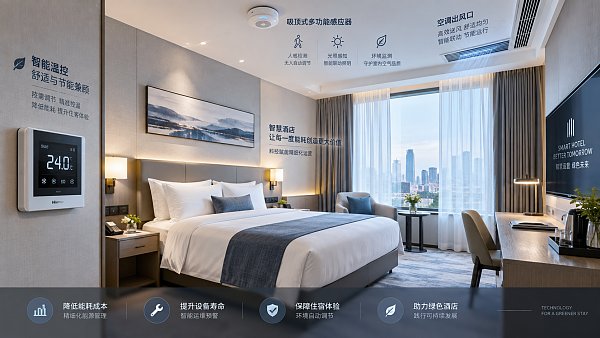
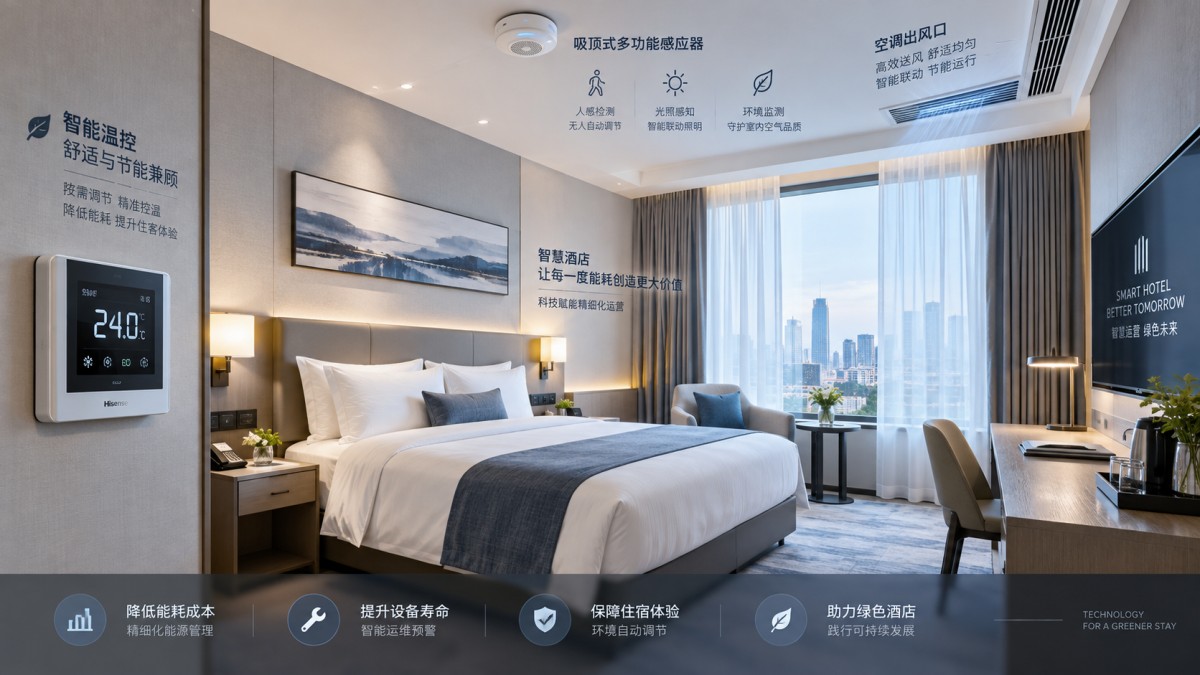
Smart thermostats and occupancy controls can reduce energy consumption, but savings vary with climate, building condition, occupancy patterns, guest overrides, and existing control system performance.
Evaluate consumption against weather and occupancy, not just last year’s utility bill. Lower spending caused by falling tariffs or fewer occupied rooms is not technology performance.
Convert verified reductions into financial savings using applicable tariffs. Where demand charges apply, assess whether controls reduce peak demand rather than merely shifting electricity consumption.
Keep comfort and service quality as operating constraints. An energy reduction that increases complaints, refunds, or equipment wear may produce a weaker overall financial outcome.
Availability and maintenance: distinguish avoided costs from theoretical value
Predictive maintenance, connected locks, and equipment monitoring may prevent failures or shorten repairs. Their financial value depends on actual downtime, repair spending, and displaced room demand.
Restoring ten room nights does not automatically create ten additional sales. Estimate recovered contribution using the probability that those rooms would otherwise have been booked.
Maintenance savings should reflect fewer emergency callouts, lower parts consumption, or demonstrably extended asset life. Avoid counting the same prevented failure across multiple benefit categories.
When estimating longer equipment life, include expected replacement timing and uncertainty. Treat deferred capital expenditure separately from recurring operating savings so decision-makers can assess each assumption.
Labor: time released is not always payroll saved
Automation often frees staff time without reducing payroll. Recognize cash savings only through reduced overtime, avoided agency shifts, lower headcount, or demonstrably avoided future hiring.
Redeployment can still create value through better service or additional sales. Measure those outcomes separately, and avoid valuing released hours alongside the same resulting revenue.
What Does the Technology Really Cost to Own?
Purchase price is only one component of total cost of ownership. Integration, training, disruption, and support can materially change the economics of an apparently inexpensive system.
Initial spending may include hardware, installation, network upgrades, interface development, data migration, configuration, staff training, and project management. Include internal effort when it incurs incremental costs.
Recurring costs include software subscriptions, API charges, connectivity, vendor support, security monitoring, maintenance, and refresher training. Model contractual price increases and usage thresholds explicitly over time.
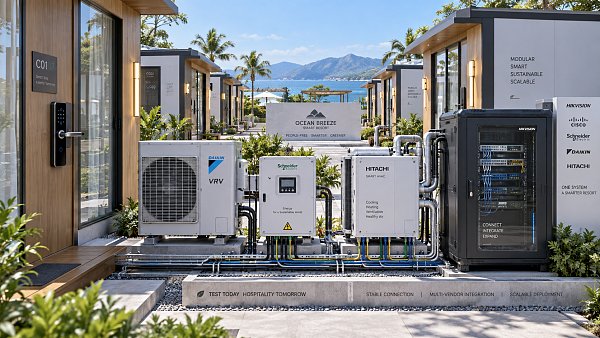
Also assess replacement cycles, batteries, warranties, and failure rates. A low acquisition price can become expensive when devices require frequent replacement or specialist site visits.
Implementation disruption deserves its own estimate. Training coverage, temporary manual processes, and rooms taken out of service can create costs before the system delivers benefits.
Contract review should cover data export, termination charges, interface ownership, and renewal pricing. These conditions affect switching costs and the hotel’s ability to replace underperforming technology.
For multi-property deployments, separate shared platform costs from property expenses. Allocate them consistently so attractive flagship results do not conceal weaker economics at smaller hotels.
How Do You Calculate ROI and Payback Correctly?
Use a defined evaluation period, usually aligned with the expected useful life or contract term. State whether the model uses pretax or after-tax cash flows.
Calculate simple project ROI as total benefits minus total costs, divided by total costs. Include initial spending and recurring ownership costs across the same evaluation period.
Calculate payback from cumulative net cash flow. The investment pays back when cumulative benefits, after recurring costs, recover the initial cash outlay and implementation spending.
Dividing initial investment by steady annual net benefit provides a useful shortcut. However, it understates payback when installation delays or gradual adoption reduce early benefits.
For larger investments, add net present value using the organization’s approved discount rate. This accounts for timing and helps compare projects with different cash flow profiles.
An illustrative hotel investment
Consider a hypothetical hotel investing $120,000 in integrated controls, maintenance monitoring, and guest upselling. The following assumptions illustrate the calculation; they are not industry benchmarks.
At full adoption, simple payback is $120,000 divided by $72,000, or approximately twenty months. That estimate assumes the full benefit starts immediately after investment expenditure.
Now assume the hotel realizes only seventy percent of benefits in year one, while paying all recurring costs. First-year net benefit falls to $42,300.
With $72,000 net benefit in each subsequent year, cumulative operating cash benefit reaches $186,300 after three years. Subtracting initial investment leaves $66,300 of project surplus.
Three-year total benefits equal $267,300, and total costs equal $201,000. Simple project ROI is therefore approximately thirty-three percent using the total-cost denominator defined above for consistency.
Payback moves to approximately twenty-five months if benefits accrue evenly within each year. Actual monthly cash timing could shift that result, so investment approval requires a dated forecast.
How Can You Verify That Technology Caused the Improvement?
Establish the baseline before installation. Record relevant consumption, downtime, staffing costs, revenue contribution, occupancy, and guest complaints over a period that captures meaningful operating variation.
Choose a measurement period suited to the benefit. Upselling may generate evidence quickly; seasonal energy performance and infrequent equipment failures usually require longer observation periods.
Where practical, pilot the system in comparable rooms or properties while maintaining an untreated comparison group. Record differences in occupancy, room type, pricing, and refurbishment status.
Define metrics before the pilot begins, including data sources, calculation rules, and acceptance thresholds. This prevents selective reporting when results differ from the original proposal.
Combine technical and financial measurements. A connected device can function correctly while producing little value because staff ignore alerts or integration fails to trigger useful action.
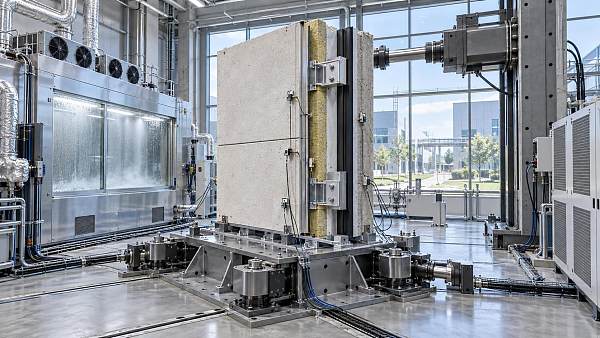
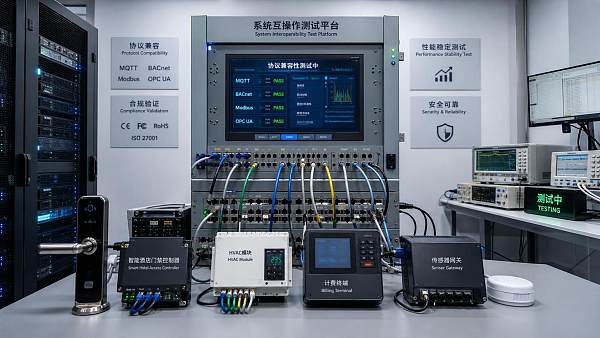
TerraVista Metrics’ benchmarking approach links engineering evidence, interoperability, and operating performance to procurement decisions. Apply that discipline by requiring testable claims and accessible data from suppliers.
Ask vendors to document performance conditions, interface dependencies, and service commitments. Independent verification is especially valuable when projected returns rely on assumptions the operator cannot inspect.
Which Risks Could Change the Investment Decision?
Build conservative, base, and optimistic scenarios around the assumptions that materially affect returns. Avoid changing every input indiscriminately; focus on the project’s actual economic drivers.
For upselling tools, test adoption and incremental conversion. For energy controls, test achievable consumption reductions. For maintenance systems, test failure frequency and the value of avoided downtime.
Include deployment delays, subscription increases, integration overruns, and weaker staff adoption. Compare downside payback and net present value with the organization’s investment limits before approving rollout.
Technical due diligence should examine compatibility with existing management systems, network resilience, data access, cybersecurity responsibilities, and manual fallback procedures during outages or vendor service interruptions.
Assign accountability for each benefit. Engineering should own energy verification, commercial teams should validate incremental contribution, and finance should reconcile realized savings against the approved model.
Use pilot results to decide whether to expand, redesign, or stop. A portfolio rollout should depend on validated economics across representative properties, rather than one favorable demonstration.
Approve Measurable Value, Then Track Whether It Arrives
Hotel technology ROI becomes decision-ready when every material benefit has a baseline, an accountable owner, a measurement method, and a clear connection to operating cash flow.
Approve investments that meet financial thresholds under credible assumptions and fit the property’s operational capabilities. Keep unverified benefits separate until evidence supports their inclusion in forecasts.
After deployment, review realized returns against the business case and investigate gaps promptly. Sustainable value comes from measurable performance, disciplined ownership costs, and consistent operational adoption.