Search News
TerraVista Metrics (TVM)Industry Portal
TerraVista Metrics (TVM)Hot Articles
TerraVista Metrics (TVM)- What Do Eco-Lodging Standards Cost, From Certification Fees to Compliance Upgrades?Eco lodging standards cost explained: compare certification fees, compliance upgrades, documentation, and operational investments to budget smarter and avoid costly rework.
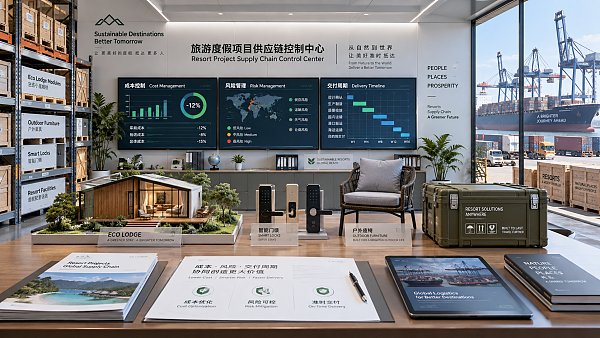
- Supply Chain Analysis: How to Identify Cost, Risk, and Lead-Time BottlenecksSupply chain analysis helps tourism project leaders uncover cost, risk, and lead-time bottlenecks—protecting opening dates, budgets, and guest-ready operations.
- How to Choose Industry Benchmarking Tools That Deliver Actionable Performance InsightsIndustry benchmarking tools: learn how to validate data, compare lifecycle costs, assess compliance, and turn performance evidence into smarter decisions.
Popular Tags
TerraVista Metrics (TVM)Industry NewsMicro-inverters vs string setups in partial shade conditions
auth.Time
Sep 19, 2026Click Count
In partial shade conditions, the choice between micro-inverters and string setups can significantly affect system yield, fault isolation, and long-term asset performance. For technical evaluators comparing real-world reliability rather than marketing claims, understanding how micro-inverters respond to uneven irradiance is essential to making data-backed procurement and design decisions.
Why partial-shade design is becoming a more serious evaluation issue
The decision between micro-inverters and string architectures is no longer a niche engineering debate. Across tourism assets, hospitality campuses, mixed-use destination developments, and remote accommodation projects, rooftops and distributed solar surfaces are becoming more irregular. Mechanical penthouses, parapets, decorative façade elements, trees, seasonal structures, and phased site expansion all increase the probability of partial shade. As a result, energy system selection is shifting from ideal-lab efficiency comparisons toward resilience under imperfect operating conditions.
For technical assessment teams, this change matters because shade is not only an energy-yield issue. It influences maintenance patterns, monitoring granularity, fault tracing, safety strategy, replacement logistics, and the predictability of lifecycle performance. In sectors where operators increasingly link energy performance to sustainability reporting and asset branding, underestimating partial shade can distort ROI assumptions and carbon accounting.
That is why the comparison between micro-inverters and string setups is gaining attention in procurement reviews. The market signal is clear: buyers are no longer asking which topology performs best in uniform sunlight; they are asking which topology remains stable when the site behaves like a real site.
The trend signal: procurement is moving from peak efficiency to shade tolerance
A few years ago, many project teams emphasized nominal conversion efficiency, low upfront cost, and simplified installation. Today, the decision frame is broader. Evaluators are placing greater weight on module-level performance visibility, mismatch mitigation, outage containment, and operational continuity. This shift favors technologies that can isolate underperforming modules instead of allowing one shaded zone to suppress a larger segment of the array.
In this context, micro-inverters have gained strategic relevance because each module operates more independently. In a string setup, modules are electrically linked in ways that make the weakest or most shaded section more influential. The practical result is not that string systems are obsolete, but that the penalty for poor shade mapping is becoming more expensive.
What is driving this shift in the market
Several drivers are pushing technical teams to reconsider traditional string assumptions in partial shade conditions.
1. More complex building envelopes
Hospitality and tourism developments increasingly use architecturally expressive roofs, modular expansion zones, and mixed-orientation surfaces. Solar arrays are therefore installed on less uniform layouts, making mismatch more common. The cleaner the roof drawing looks in design software, the less it may reflect real obstructions over time.
2. Greater demand for verifiable performance data
Operators want evidence, not assumptions. This is especially relevant for organizations like TerraVista Metrics that benchmark technical durability and system behavior under practical conditions. A topology that makes losses easier to attribute can reduce ambiguity during commissioning, warranty review, and cross-vendor dispute resolution.
3. Higher cost of operational surprises
Remote resorts, eco-lodges, glamping sites, and distributed guest infrastructure often have limited maintenance windows. When one shaded string underperforms, diagnosing whether the issue is soiling, shade migration, module degradation, connector failure, or inverter behavior can take time. Technical teams increasingly value architectures that limit the spread of losses and make root-cause analysis faster.
4. Safety and shutdown expectations
Although safety requirements vary by jurisdiction, the market generally expects better controllability and clearer isolation procedures. This does not automatically make one solution universally superior, but it means evaluators should review how each architecture behaves during maintenance events, emergency shutdown, and component replacement.
How micro-inverters and string setups behave when shade is uneven
Under partial shade, the key technical question is how far the impact travels. With micro-inverters, each panel typically converts power independently, so a shaded module mainly reduces its own output. That limits mismatch propagation and usually preserves better array-level harvest when shading is scattered, moving, or orientation-related.
In a conventional string setup, modules are grouped, and current constraints inside the string can cause a shaded or weaker module to influence other modules more strongly. Bypass diodes help, and advanced string designs can reduce some penalties, but the architecture remains more sensitive to shade pattern, string design quality, and the accuracy of up-front layout assumptions.
This is why technical evaluators should avoid generic claims such as “micro-inverters always produce more” or “string systems are always more efficient.” The correct conclusion is conditional: micro-inverters often show stronger real-world resilience where shade is variable, fragmented, or difficult to model precisely, while string systems can remain highly effective on open, uniform, well-controlled surfaces.
Who feels the impact most across the project chain
The effects of this technology choice do not stop at the electrical engineer. They reach several functions involved in destination infrastructure and hospitality asset delivery.
The hidden decision factors beyond energy yield
A common mistake in comparing micro-inverters with string systems is to treat annual energy as the only meaningful output. In practice, technical quality also includes how the system behaves when something changes after installation.
First, module-level visibility has become more valuable. If a tree canopy expands, a neighboring structure is added, or debris affects only part of the array, granular data can reveal the pattern quickly. Second, fault containment matters. In some distributed hospitality projects, losing visibility or power across a broad section of the array can create operational risk disproportionate to the pure energy loss.
Third, system expansion flexibility deserves attention. When tourism sites add cabins, shaded amenity zones, or phased utility buildings, the original solar design may need modification. Micro-inverters can simplify some expansion scenarios because module independence reduces the need to preserve ideal string symmetry. That said, this advantage depends on the electrical plan, stock compatibility, and the service model available in the destination region.
Where string setups still remain competitive
Trend analysis should not turn into technology absolutism. String systems still make strong sense in many cases: broad unshaded roofs, utility-like conditions within commercial estates, disciplined orientation consistency, and projects with strong engineering control during design and operation. In such settings, lower component count at module level and centralized service models may remain attractive.
For evaluators, the important shift is not that string architecture has lost relevance. It is that the margin for design error is narrowing in partially shaded environments. If the site contains uncertain or evolving shade sources, the cost advantage of a string design can erode through lower yield, slower diagnostics, and more ambiguous accountability.
How technical evaluators should judge the next wave of proposals
The strongest review process starts with evidence of shade behavior, not brochure claims. Ask vendors to show how their proposed topology performs under morning edge shade, seasonal obstruction shifts, mixed azimuth layouts, and partial soiling scenarios. Require clarity on whether their production model assumes static or dynamic shade, and whether losses are applied at module, substring, or string level.
It is also useful to compare proposals through a staged decision lens rather than a one-time equipment lens.
Signals worth watching over the next procurement cycle
Several indicators can help organizations decide whether micro-inverters deserve stronger weighting in future RFPs. One is the rise of distributed, design-sensitive solar on hospitality properties rather than only on plain service roofs. Another is the growing expectation for data transparency, especially where sustainability claims must stand up to investor, guest, or regulatory review. A third is the increase in retrofit projects, where existing buildings impose irregular geometry and inherited shading constraints.
If these conditions are present, the market direction points toward more nuanced architecture selection. Not every site should default to micro-inverters, but more sites now require them to be seriously modeled rather than dismissed as a premium option.
Practical guidance for tourism and hospitality infrastructure teams
For organizations evaluating solar assets within broader infrastructure packages, the most useful approach is to integrate shade-response testing into technical due diligence. Pair yield simulation with actual obstruction mapping. Review maintenance access in relation to rooftop layout. Check whether monitoring outputs can feed the site’s wider digital management environment. And most importantly, align topology choice with how the property is likely to evolve over five to ten years, not just with how it looks on the day of installation.
This is particularly aligned with the TerraVista Metrics view of infrastructure benchmarking: decisions improve when raw engineering behavior is made visible. In partial shade conditions, that means evaluating not only efficiency figures, but also traceability, controllability, and the reliability of performance under change.
Final judgment and next-step questions
The most important industry change is clear: solar selection is moving away from idealized comparisons and toward site-specific resilience. In partial shade conditions, micro-inverters often offer stronger operational protection because they localize loss, improve visibility, and reduce the impact of uneven irradiance. String setups remain viable, but their success increasingly depends on disciplined site conditions and precise design assumptions.
If your organization wants to judge how this trend affects a specific project, focus on five questions: How predictable is the shade profile? How costly would misdiagnosed underperformance be? How important is module-level monitoring? Will the site expand or change over time? And does the procurement model value lowest upfront spend more than verified lifecycle stability? Those answers will usually reveal whether micro-inverters are simply an option—or the more future-ready choice.
Recommended News
 Sep 20, 2026Supply Chain Analysis: How to Identify Cost, Risk, and Lead-Time BottlenecksSupply chain analysis helps tourism project leaders uncover cost, risk, and lead-time bottlenecks—protecting opening dates, budgets, and guest-ready operations.
 Sep 19, 2026How to Choose Industry Benchmarking Tools That Deliver Actionable Performance InsightsIndustry benchmarking tools: learn how to validate data, compare lifecycle costs, assess compliance, and turn performance evidence into smarter decisions.
 Sep 14, 2026Engineering Performance Testing Trends Reshaping Product Validation WorkflowsEngineering performance testing trend analysis reveals how assembly validation, realistic environmental loads, and digital resilience improve product reliability and reduce field failures.
 Sep 12, 2026Cloud Integration Interoperability Testing: Methods, Metrics, and Release GatesSystem interoperability testing cloud integration: explore practical methods, key metrics, and evidence-based release gates for secure, reliable connected operations.
 Sep 05, 2026What Engineering Performance Testing Should Cover During a Specification ReviewEngineering performance testing for specification review: learn how to verify structural strength, durability, safety, sustainability, and system reliability before costly project decisions.
 Aug 11, 2026How to Evaluate Materials Performance Analysis Services in Europe for Compliance-Critical ProjectsMaterials performance analysis Europe: learn how to compare accredited labs, verify compliance readiness, and choose a provider whose data, methods, and reports stand up to real project scrutiny.
 Jul 27, 2026Product Application Analysis for Procurement: How to Compare Fit, Risk, and ROIProduct application analysis for procurement helps buyers compare fit, compliance risk, lifecycle cost, and ROI with confidence. Learn a practical framework to avoid costly sourcing mistakes.
 Jul 22, 2026How to Evaluate Weather Resistance in Materials Performance Analysis?Materials performance analysis weather resistance explained: learn how to assess UV, moisture, temperature, and corrosion risks to choose durable materials with confidence.
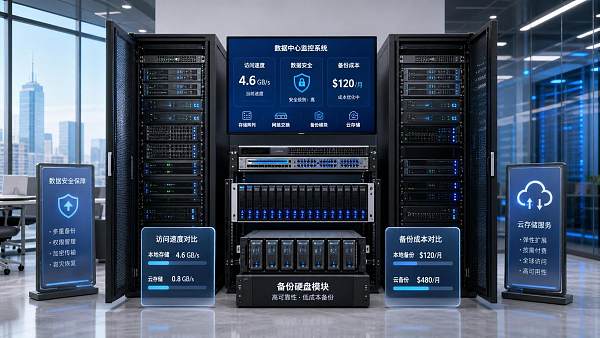
 Jul 15, 2026Cloud Storage for Business: How to Compare Security, Access Speed, and Backup CostsCloud storage for business: compare security, access speed, and backup costs with a practical framework to reduce risk, control spend, and choose the right provider with confidence.
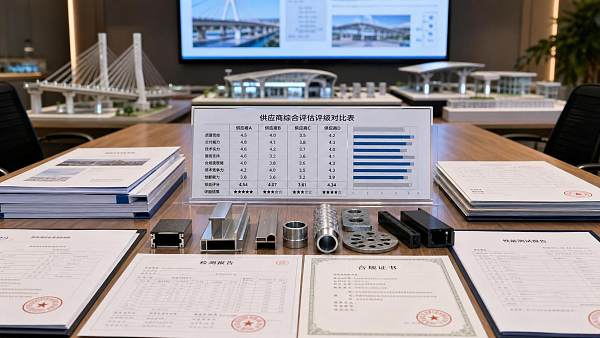
 Jul 14, 2026What Are Standardized Performance Benchmarks Ratings Used For in Vendor Evaluation?Standardized performance benchmarks rating explains how buyers compare vendors with verified data on compliance, durability, and lifecycle value for smarter procurement decisions.
 Jul 13, 2026Product Benchmarking Rating Explained: How to Compare Scores Across SuppliersProduct benchmarking rating explained: learn how to compare supplier scores with confidence, verify methodology, spot hidden risks, and make smarter procurement decisions.
 Jul 13, 2026How to Choose a Product Benchmarking Data Provider for Reliable Market ComparisonsProduct benchmarking data provider selection starts with methodology, transparency, and sector fit. Learn how to compare providers for reliable market insights and smarter procurement decisions.
 Jul 10, 2026Technical Integration Resilience Explained: How to Reduce Downtime Across Connected SystemsTechnical integration resilience explained: learn how to reduce downtime, prevent cascading failures, and improve uptime across connected systems with practical planning insights.
 Jul 08, 2026How to Use Product Benchmarking KPIs to Compare Competing SolutionsProduct benchmarking KPIs help you compare competing solutions with real evidence. Learn how to measure performance, lifecycle cost, compliance, and risk for smarter buying decisions.
 Jul 05, 2026How to Run an Environmental Sustainability Assessment: Metrics, Boundaries, and Trend AnalysisEnvironmental sustainability assessment trend analysis made practical: learn how to set metrics and boundaries, compare lifecycle impacts, and turn sustainability data into smarter decisions.
 Jul 04, 2026Hospitality Design Benchmarks Metrics Explained: Which KPIs Matter for Guestroom Upgrades?Hospitality design benchmarks metrics explained: discover the KPIs that matter most for guestroom upgrades, from lifecycle cost and durability to energy use, maintenance, and guest satisfaction.
 Jul 02, 2026How to Compare Product Category Pricing Models for Better Margin PlanningProduct category pricing model comparison made practical: learn how to evaluate total cost, hidden risks, and lifecycle value to improve margin planning and make smarter sourcing decisions.
 Jun 30, 2026How Technical Explainer Content for Procurement Helps Compare Specs, Risks, and SuppliersTechnical explainer content for procurement helps teams compare specs, uncover supplier risks, and choose solutions that improve compliance, lifecycle value, and long-term performance.
 Jun 29, 2026System Interoperability Testing Vendors: Key Criteria for Compliance and PerformanceSystem interoperability testing vendors compared: discover how to assess compliance, performance, independence, and real-world reliability before costly integration failures happen.
 Jun 28, 2026Product Benchmarking Explained: How to Compare Performance, Cost, and QualityProduct benchmarking explained: learn how to compare performance, cost, and quality with a practical framework that reduces risk, improves supplier selection, and supports smarter long-term decisions.
 Jun 27, 2026How to Build a Product Benchmarking Comparison Matrix for Hospitality Equipment SelectionProduct benchmarking comparison matrix guide for hospitality equipment selection. Learn to compare cost, compliance, durability, and lifecycle value with confidence.
 Jun 25, 2026What Drives System Interoperability Testing Implementation Cost in Multi-Vendor Projects?System interoperability testing implementation cost rises in multi-vendor projects due to scope gaps, retesting, compliance, and downtime risk. Learn how to control costs early.
 Jun 24, 2026Maintenance Planning Workflow Automation: Which Tasks Should You Automate First?Maintenance planning workflow automation starts with the right tasks. Learn what to automate first to cut downtime, improve data quality, and boost asset performance.
 Jun 22, 2026How Data-Backed Procurement Helps Compare Vendors and Control Purchasing RiskData-backed procurement helps buyers compare vendors with verified performance, lifecycle cost, and compliance data to reduce purchasing risk and make smarter, safer decisions.
Quarterly Executive Summaries Delivered Directly.
Join 50,000+ industry leaders who receive our proprietary market analysis and policy outlooks before they hit the public library.