Search News
TerraVista Metrics (TVM)Industry Portal
TerraVista Metrics (TVM)Hot Articles
TerraVista Metrics (TVM)- What Do Eco-Lodging Standards Cost, From Certification Fees to Compliance Upgrades?Eco lodging standards cost explained: compare certification fees, compliance upgrades, documentation, and operational investments to budget smarter and avoid costly rework.
- Supply Chain Analysis: How to Identify Cost, Risk, and Lead-Time BottlenecksSupply chain analysis helps tourism project leaders uncover cost, risk, and lead-time bottlenecks—protecting opening dates, budgets, and guest-ready operations.
- How to Choose Industry Benchmarking Tools That Deliver Actionable Performance InsightsIndustry benchmarking tools: learn how to validate data, compare lifecycle costs, assess compliance, and turn performance evidence into smarter decisions.
Popular Tags
TerraVista Metrics (TVM)Industry NewsWholesale Home Goods Margins: Where Profits Often Slip Away
auth.Time
Sep 19, 2026Click Count
In the wholesale home goods business, margins rarely disappear all at once—they erode through hidden logistics costs, inconsistent product durability, compliance oversights, and weak supplier benchmarking. For business evaluators assessing sourcing decisions, understanding where profits slip away is essential to protecting long-term value. This article examines the overlooked factors behind margin loss and why data-driven procurement standards matter more than ever.
Why do wholesale home goods margins weaken even when unit prices look competitive?
At first glance, wholesale home goods sourcing often appears straightforward: compare quoted prices, confirm lead time, and negotiate payment terms. In practice, however, margin leakage usually begins after the quote is approved. Freight volatility, packaging damage, inconsistent material grades, missing compliance documentation, and after-sales friction can all turn a low purchase price into a high total cost.
For business evaluators, the core challenge is not simply finding cheaper products. It is identifying whether the supplier can sustain cost predictability across the full procurement cycle. This becomes even more critical in tourism and hospitality environments, where home goods may serve guestrooms, glamping cabins, resort lounges, serviced apartments, and visitor facilities. In these settings, product failure is not only a replacement cost; it affects guest satisfaction, maintenance schedules, and brand perception.
TerraVista Metrics (TVM) approaches this problem from a technical and benchmarking perspective. Instead of relying on visual catalogs or generic promises, TVM evaluates how tourism-related hardware and supply components perform under operational conditions. That mindset is highly relevant to wholesale home goods procurement because it shifts decision-making from surface pricing to measurable durability, integration fit, and lifecycle value.
- A lower ex-works price may hide higher inland transport, consolidation, or repacking costs.
- Minor variation in coatings, textiles, hinges, or load-bearing components can increase return rates.
- Unverified environmental or safety claims may create customs delays or project approval issues.
- Poor specification control often causes mismatched deliveries across multiple project sites.
The difference between price savings and margin protection
In wholesale home goods, price savings happen at the moment of purchase. Margin protection happens only when the products arrive on time, pass inspection, survive operational use, and avoid avoidable maintenance or replacement expense. Evaluators who focus only on invoice price often underestimate the cost of defects, downtime, fragmented vendor communication, and product inconsistency across batches.
Where do profits often slip away in wholesale home goods sourcing?
The most common causes of margin erosion can be mapped across sourcing, logistics, compliance, installation, and operational performance. For hospitality and tourism procurement teams, these losses often accumulate quietly. A product that is “acceptable” in a showroom may prove expensive in a live resort, hotel, or mixed-use destination.
The table below helps business evaluators identify where wholesale home goods projects tend to lose profitability and what evidence should be requested before supplier approval.
This framework shows why wholesale home goods margins rarely fail at one single point. They weaken through compounding issues. An evaluator who requests technical evidence early can often prevent downstream losses that would never appear in a basic quote comparison.
Hidden costs that are often underestimated
- Reorder costs caused by project-site damage or missing components.
- Labor inefficiency when items arrive with poor labeling or incomplete installation guidance.
- Guest-facing replacement cycles that shorten due to low abrasion resistance or moisture sensitivity.
- Administrative overhead from chasing certificates, test reports, and claim responses after shipment.
Which evaluation metrics matter most for hospitality-linked wholesale home goods?
Not all wholesale home goods are used in the same way. A decorative item for a residential reseller carries different risk than a furnishing component used in a coastal resort, mountain glamping site, or high-turnover hotel. Business evaluators should rank products by environmental stress, guest contact frequency, cleaning exposure, and replacement difficulty.
TVM’s broader work in tourism infrastructure benchmarking is useful here because it emphasizes measurable performance. Whether assessing prefab accommodation systems, hotel IoT integration, or guest-use hardware, the principle remains the same: procurement quality should be verified by data, not assumed from appearance.
Core metrics to request before approving a supplier
- Material stability: Ask for substrate type, coating system, textile composition, and tolerance range.
- Durability indicators: Review wear resistance, fatigue performance, moisture behavior, and load suitability where applicable.
- Packaging efficiency: Confirm carton dimensions, stacking logic, unit-per-container ratio, and drop-risk mitigation.
- Compliance readiness: Check destination-specific safety, emissions, and environmental documentation.
- Batch consistency: Require pre-production samples and a method for approving substitutions.
In wholesale home goods, these metrics are especially important for operators who buy at project scale. A small variance repeated across hundreds of units can turn into visible operational loss. Evaluators should therefore translate technical details into financial impact: shorter replacement cycle, higher cleaning burden, more breakage, or delayed project launch.
How should business evaluators compare suppliers beyond quote sheets?
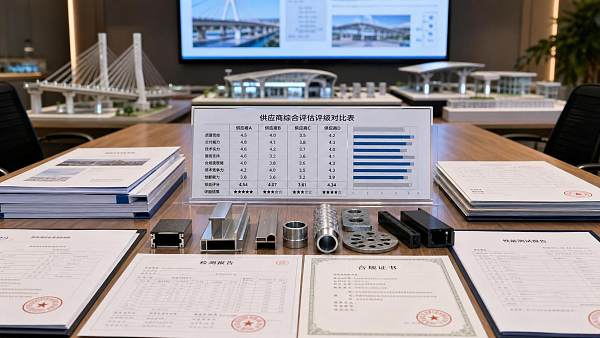
A quote sheet captures declared price. It does not capture reliability under real conditions. The stronger method is side-by-side supplier benchmarking, especially for wholesale home goods used in tourism, lodging, and public guest environments. This is where structured comparison creates purchasing clarity.
The following comparison table can be used during supplier review meetings to separate visually similar offers with very different risk profiles.
For wholesale home goods buyers, the second supplier type may not always offer the lowest initial quote. Yet it often protects gross margin better by reducing correction costs, project delays, and replacement exposure. This is precisely why benchmarking matters in business evaluation.
A practical decision filter
When two suppliers appear similar, ask four questions: Can they prove material consistency? Can they map compliance to the destination market? Can they explain packaging efficiency in cost terms? Can they show how quality deviations are escalated and corrected? If the answer is vague, the margin risk is not low—it is simply hidden.
What procurement standards reduce risk in wholesale home goods projects?
For business evaluators, standardization is one of the most effective tools for margin defense. Wholesale home goods projects often involve multiple SKUs, variable materials, and cross-border delivery. Without a defined procurement standard, even capable suppliers may interpret specifications differently, causing inconsistency across orders.
Recommended procurement control points
- Create a specification sheet for each product group, including finish, dimensions, packaging method, and allowed tolerances.
- Classify SKUs by operational risk, especially for humid, outdoor, high-touch, or cleaning-intensive environments.
- Require sample sign-off tied to production batches rather than treating samples as visual references only.
- Map destination-market requirements early, including general safety, chemical, labeling, or sustainability documentation where relevant.
- Build claim-handling rules into purchase agreements so post-delivery issues do not become negotiation disputes.
TVM’s value in this process lies in bringing engineering-style discipline into hospitality procurement. In tourism supply chains, products are rarely evaluated in isolation. Thermal efficiency, system compatibility, material endurance, and carbon-related considerations increasingly shape procurement approval. The same discipline should be applied to wholesale home goods when they support destination infrastructure and guest-experience assets.
Compliance and sustainability are now commercial issues
Business evaluators should not treat sustainability claims as marketing extras. In many projects, especially tourism developments with public visibility, environmental performance, emissions transparency, and material traceability influence stakeholder approval and brand positioning. Weak evidence in these areas can slow procurement, complicate tenders, or increase reputational risk.
Which scenarios create the highest margin pressure?
Some wholesale home goods categories are more vulnerable to profit loss than others because operating conditions are harsher or replacement costs are more visible. Evaluators should pay close attention when products are used in hybrid tourism settings where aesthetics, durability, and sustainability all matter at once.
The table below highlights common use scenarios and the sourcing checks that deserve extra scrutiny.
These scenarios show why wholesale home goods should be evaluated according to use conditions, not generic catalog descriptions. A product that performs adequately in one channel may underperform badly in a tourism asset where environmental exposure and guest expectations are higher.
Common misconceptions that distort margin decisions
“If the sample looks good, the production order is safe.”
A sample proves appearance at one point in time. It does not confirm batch consistency, packaging suitability, or long-term operational behavior. In wholesale home goods, many disputes come from assuming sample approval equals production assurance.
“Compliance can be handled after the order is placed.”
Late compliance review is a major source of avoidable delay. Business evaluators should identify destination requirements before commercial commitment, especially for hospitality projects under launch deadlines or investor scrutiny.
“Freight is external, so it is not part of product margin.”
In project-scale wholesale home goods procurement, freight and packaging design directly shape unit economics. Products that waste container space or suffer avoidable transit damage reduce margin as surely as a manufacturing defect.
FAQ: what do business evaluators ask most about wholesale home goods?
How should I evaluate wholesale home goods when multiple suppliers offer similar prices?
Use total landed and operational cost, not invoice price alone. Compare packaging efficiency, defect-control process, material transparency, lead-time discipline, and compliance readiness. The supplier with the clearest technical documentation often presents lower hidden risk.
Which products require stricter durability checks?
Prioritize items exposed to moisture, repetitive guest use, frequent cleaning, or difficult replacement logistics. In tourism settings, this often includes public-area furnishings, glamping cabin interiors, bathroom-adjacent items, and products used across distributed sites.
What documentation should be requested before approving a wholesale home goods order?
Request a product specification sheet, packaging details, sample approval record, destination-market compliance documents where relevant, and a clear statement on permitted material substitutions. For larger projects, inspection checkpoints and corrective-action procedures should also be defined.
Why is benchmarking valuable if the products are not highly technical?
Because margin leakage often comes from operational performance rather than visible complexity. Even simple wholesale home goods can create outsized cost when materials degrade early, packaging fails, or quality varies between batches. Benchmarking creates measurable comparison instead of assumption-based selection.
Why choose us for procurement evaluation support?
TVM brings a data-driven, infrastructure-focused perspective to sourcing decisions that affect tourism and hospitality assets. We do not rely on showroom language or broad sourcing claims. We help business evaluators examine whether a supplier’s wholesale home goods offering aligns with real operating conditions, compliance expectations, and lifecycle cost priorities.
If you are reviewing suppliers for resorts, hotels, glamping developments, visitor facilities, or mixed-use tourism projects, we can support technical and commercial clarification across key decision points.
- Parameter confirmation for materials, packaging logic, and operational suitability.
- Supplier benchmarking for durability evidence, compliance preparedness, and delivery discipline.
- Selection support for tourism-facing use scenarios, including prefab accommodation and smart hospitality environments.
- Discussion on lead time risk, customization scope, documentation needs, and quotation structure.
- Guidance on sample review priorities and which specifications should be locked before order confirmation.
If your team is trying to protect margin in wholesale home goods procurement, the most useful next step is not another broad catalog review. It is a structured discussion around specifications, risk points, certification needs, delivery constraints, and real operating conditions. Contact TVM to review your sourcing framework, compare supplier evidence, and turn procurement uncertainty into measurable decision confidence.
Recommended News
 Sep 20, 2026Supply Chain Analysis: How to Identify Cost, Risk, and Lead-Time BottlenecksSupply chain analysis helps tourism project leaders uncover cost, risk, and lead-time bottlenecks—protecting opening dates, budgets, and guest-ready operations.
 Sep 19, 2026How to Choose Industry Benchmarking Tools That Deliver Actionable Performance InsightsIndustry benchmarking tools: learn how to validate data, compare lifecycle costs, assess compliance, and turn performance evidence into smarter decisions.
 Sep 14, 2026Engineering Performance Testing Trends Reshaping Product Validation WorkflowsEngineering performance testing trend analysis reveals how assembly validation, realistic environmental loads, and digital resilience improve product reliability and reduce field failures.
 Sep 12, 2026Cloud Integration Interoperability Testing: Methods, Metrics, and Release GatesSystem interoperability testing cloud integration: explore practical methods, key metrics, and evidence-based release gates for secure, reliable connected operations.
 Sep 05, 2026What Engineering Performance Testing Should Cover During a Specification ReviewEngineering performance testing for specification review: learn how to verify structural strength, durability, safety, sustainability, and system reliability before costly project decisions.
 Aug 11, 2026How to Evaluate Materials Performance Analysis Services in Europe for Compliance-Critical ProjectsMaterials performance analysis Europe: learn how to compare accredited labs, verify compliance readiness, and choose a provider whose data, methods, and reports stand up to real project scrutiny.
 Jul 27, 2026Product Application Analysis for Procurement: How to Compare Fit, Risk, and ROIProduct application analysis for procurement helps buyers compare fit, compliance risk, lifecycle cost, and ROI with confidence. Learn a practical framework to avoid costly sourcing mistakes.
 Jul 22, 2026How to Evaluate Weather Resistance in Materials Performance Analysis?Materials performance analysis weather resistance explained: learn how to assess UV, moisture, temperature, and corrosion risks to choose durable materials with confidence.
 Jul 15, 2026Cloud Storage for Business: How to Compare Security, Access Speed, and Backup CostsCloud storage for business: compare security, access speed, and backup costs with a practical framework to reduce risk, control spend, and choose the right provider with confidence.
 Jul 14, 2026What Are Standardized Performance Benchmarks Ratings Used For in Vendor Evaluation?Standardized performance benchmarks rating explains how buyers compare vendors with verified data on compliance, durability, and lifecycle value for smarter procurement decisions.
 Jul 13, 2026Product Benchmarking Rating Explained: How to Compare Scores Across SuppliersProduct benchmarking rating explained: learn how to compare supplier scores with confidence, verify methodology, spot hidden risks, and make smarter procurement decisions.
 Jul 13, 2026How to Choose a Product Benchmarking Data Provider for Reliable Market ComparisonsProduct benchmarking data provider selection starts with methodology, transparency, and sector fit. Learn how to compare providers for reliable market insights and smarter procurement decisions.
 Jul 10, 2026Technical Integration Resilience Explained: How to Reduce Downtime Across Connected SystemsTechnical integration resilience explained: learn how to reduce downtime, prevent cascading failures, and improve uptime across connected systems with practical planning insights.
 Jul 08, 2026How to Use Product Benchmarking KPIs to Compare Competing SolutionsProduct benchmarking KPIs help you compare competing solutions with real evidence. Learn how to measure performance, lifecycle cost, compliance, and risk for smarter buying decisions.
 Jul 05, 2026How to Run an Environmental Sustainability Assessment: Metrics, Boundaries, and Trend AnalysisEnvironmental sustainability assessment trend analysis made practical: learn how to set metrics and boundaries, compare lifecycle impacts, and turn sustainability data into smarter decisions.
 Jul 04, 2026Hospitality Design Benchmarks Metrics Explained: Which KPIs Matter for Guestroom Upgrades?Hospitality design benchmarks metrics explained: discover the KPIs that matter most for guestroom upgrades, from lifecycle cost and durability to energy use, maintenance, and guest satisfaction.
 Jul 02, 2026How to Compare Product Category Pricing Models for Better Margin PlanningProduct category pricing model comparison made practical: learn how to evaluate total cost, hidden risks, and lifecycle value to improve margin planning and make smarter sourcing decisions.
 Jun 30, 2026How Technical Explainer Content for Procurement Helps Compare Specs, Risks, and SuppliersTechnical explainer content for procurement helps teams compare specs, uncover supplier risks, and choose solutions that improve compliance, lifecycle value, and long-term performance.
 Jun 29, 2026System Interoperability Testing Vendors: Key Criteria for Compliance and PerformanceSystem interoperability testing vendors compared: discover how to assess compliance, performance, independence, and real-world reliability before costly integration failures happen.
 Jun 28, 2026Product Benchmarking Explained: How to Compare Performance, Cost, and QualityProduct benchmarking explained: learn how to compare performance, cost, and quality with a practical framework that reduces risk, improves supplier selection, and supports smarter long-term decisions.
 Jun 27, 2026How to Build a Product Benchmarking Comparison Matrix for Hospitality Equipment SelectionProduct benchmarking comparison matrix guide for hospitality equipment selection. Learn to compare cost, compliance, durability, and lifecycle value with confidence.
 Jun 25, 2026What Drives System Interoperability Testing Implementation Cost in Multi-Vendor Projects?System interoperability testing implementation cost rises in multi-vendor projects due to scope gaps, retesting, compliance, and downtime risk. Learn how to control costs early.
 Jun 24, 2026Maintenance Planning Workflow Automation: Which Tasks Should You Automate First?Maintenance planning workflow automation starts with the right tasks. Learn what to automate first to cut downtime, improve data quality, and boost asset performance.
 Jun 22, 2026How Data-Backed Procurement Helps Compare Vendors and Control Purchasing RiskData-backed procurement helps buyers compare vendors with verified performance, lifecycle cost, and compliance data to reduce purchasing risk and make smarter, safer decisions.
Quarterly Executive Summaries Delivered Directly.
Join 50,000+ industry leaders who receive our proprietary market analysis and policy outlooks before they hit the public library.