Search News
TerraVista Metrics (TVM)Industry Portal
TerraVista Metrics (TVM)Hot Articles
TerraVista Metrics (TVM)- What Is Textile Engineering? Processes and Industrial ApplicationsExplore textile engineering, from fiber selection and fabric production to performance testing and industrial applications. Learn how to evaluate textiles with confidence.
- Maintenance Planning for Marinas: Scheduling Dock Inspections and RepairsMaintenance planning for marinas made practical: schedule dock inspections, prioritize repairs, and reduce disruption with a risk-based approach.
- Trailborn Acquires Two Yosemite Lodges and Takes Over Firefall Ranch ManagementTrailborn acquires two Yosemite lodges and takes over Firefall Ranch management. Explore the deal and what it means for outdoor hospitality.
Popular Tags
TerraVista Metrics (TVM)Industry NewsWhat Is Textile Engineering? Processes and Industrial Applications
auth.Time
Nov 22, 2026Click Count
Textile engineering is the application of engineering principles to the design, production, and performance of fibers, yarns, fabrics, and other textile materials. It connects raw materials with the demands of real products: a hotel chair covering must resist wear, a tent fabric must manage weather exposure, and a medical textile may need carefully controlled barrier properties.
Understanding textile engineering helps researchers and buyers look beyond labels such as “durable” or “waterproof.” The useful questions are how a material is made, which properties have been measured, and whether those measurements reflect the conditions in which the product will be used.
What does textile engineering involve?
Textile engineering combines materials science, mechanical engineering, chemistry, manufacturing, and quality control. Its scope extends from selecting a fiber to evaluating a finished fabric after repeated use and cleaning.
A textile engineer might adjust yarn construction to improve strength, choose a fabric structure that balances airflow and stability, or investigate why a coating fails after outdoor exposure. The work often involves trade-offs: increasing fabric density, for example, may improve coverage but also affect weight, flexibility, or drying behavior.
Textile engineering differs from textile design, although the two overlap. Design may focus on appearance, texture, and the user experience; engineering concentrates on how materials and processes deliver the required performance. In practice, successful products need both perspectives.
From fiber to finished fabric: the main processes
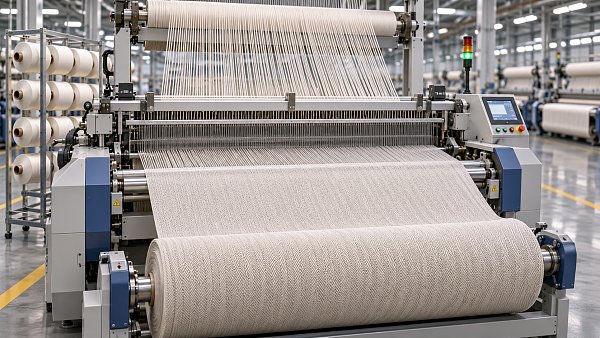
Not every textile follows the same manufacturing route. A woven upholstery fabric, a knitted garment, and a nonwoven filter can start with similar fibers but develop very different properties as they are processed.
1. Fiber selection and preparation
Fibers are the basic building blocks. They may be natural, such as cotton and wool; manufactured from natural polymers, such as viscose; or synthetic, such as polyester and nylon. Each family offers a different combination of moisture behavior, strength, heat sensitivity, and chemical compatibility.
Engineers also consider fiber length, fineness, and uniformity. Short staple fibers generally need to be aligned and twisted into yarn, while continuous filaments can be combined and processed without the same staple-spinning route. Preparation may include cleaning, blending, carding, and drawing, depending on the fiber and end product.
2. Yarn manufacturing
Spinning converts prepared fibers into yarn. The chosen method influences yarn strength, evenness, texture, and production characteristics. Twist helps bind staple fibers together, but more twist is not automatically better: it can change softness, appearance, and how the yarn behaves during later processing.
Filament yarns can also be textured to change bulk and surface feel. At this stage, engineers assess whether the yarn will tolerate weaving, knitting, or another forming process without excessive breakage or variation.
3. Fabric formation
Fabric construction is as important as fiber composition. A polyester woven fabric and a polyester knit may behave very differently even though their fiber labels match.
Some products combine structures. A coated outdoor fabric, for instance, may use a woven base for mechanical support and a separate coating for weather protection. Evaluating only one component can miss weaknesses in the finished assembly.
4. Dyeing, finishing, and coating
After fabric formation—or sometimes earlier in the production sequence—materials may be dyed, printed, washed, or finished. Finishes can alter appearance, handle, water repellency, or other properties. Coatings and laminates add functional layers, but their performance depends on adhesion, formulation, and the conditions of use.
A water-repellent surface is not necessarily waterproof: repellency concerns how water behaves on the surface, while resistance to water penetration requires a separate assessment. Likewise, a finish that works on a new sample may change after abrasion, cleaning, or exposure to sunlight. Ask whether performance claims apply before or after conditioning and laundering.
5. Cutting, assembly, and quality control
Fabric becomes a usable product through cutting, sewing, welding, lamination, or other assembly methods. Seams, zippers, edges, and attachment points can become failure locations even when the fabric itself performs well.
Quality control therefore needs to address both the material and the finished product. A strong tent fabric, for example, does not establish that its seams will resist water penetration or that its anchoring system is suitable for the intended site.
How textile engineers measure performance
There is no single test for a “good” textile. Test selection starts with the expected failure mode: abrasion for chair upholstery, tear propagation for a tent shell, or filtration behavior for a filter medium. Results are most useful when the test method, specimen preparation, and acceptance criteria are stated together.
- Strength and tearing: Tensile and tear tests assess different behaviors. A fabric that withstands a pulling load may still be vulnerable once a cut or puncture starts a tear.
- Abrasion and pilling: Abrasion testing helps compare wear resistance, while pilling tests assess the formation of small fiber balls on the surface. The result depends on the test method and endpoint.
- Moisture and weather: Water penetration, water-vapor transfer, and resistance to light exposure answer different questions. A claim about one should not be treated as proof of the others.
- Dimensional stability and color: Washing, drying, and exposure can affect shrinkage, shape, and colorfastness. Care instructions should reflect the conditions used to assess the material.
- Fire behavior: A relevant test depends on the application and jurisdiction. A fabric test result alone does not necessarily establish compliance of a complete furnishing or structure.
For example, ISO 12947 describes the Martindale method for determining fabric abrasion resistance, while ISO 811 addresses resistance to water penetration using a hydrostatic pressure test. These methods measure different properties; neither result should be interpreted without its test conditions and the applicable product requirements. Sources: International Organization for Standardization, ISO 12947 series and ISO 811 (https://www.iso.org/standards.html).
When comparing reports, check the standard and edition, sample identification, conditioning, number of specimens, reported result, and any deviations. A result is not a pass or fail unless it is compared with a relevant specification or regulatory limit.
Where textile engineering is used
Hospitality furnishings
Upholstery, curtains, bedding, and mattress components must balance appearance with cleaning and service life. A procurement team assessing a lounge chair fabric should consider abrasion, seam performance, colorfastness, and cleaning compatibility together. A high abrasion result alone cannot predict how the entire chair will perform when exposed to spills, sunlight, and repeated cleaning.
Outdoor recreation and temporary structures
Tents, awnings, backpacks, and glamping structures often combine strength requirements with water resistance and manageable weight. Outdoor exposure adds questions about ultraviolet degradation, coating durability, mildew management, and repairability. For a shelter, compare not only the shell fabric but also seams, closures, ventilation, and the manufacturer’s maintenance instructions.
Construction and infrastructure
Technical textiles serve as reinforcement, filtration, separation, or protection layers in construction. Geotextiles, for example, can be used in contact with soil and other materials as part of a civil engineering system. Their selection depends on the project function and site conditions, rather than on fabric strength alone. Source: Federal Highway Administration, Geosynthetic Design and Construction Guidelines (https://www.fhwa.dot.gov/engineering/geotech/pubs/05037/).
Healthcare, filtration, and industry
Nonwovens and other engineered textiles appear in medical products, protective equipment, industrial filters, and reinforcement materials. Requirements vary sharply by application: a fabric suitable for a comfort layer should not be assumed to provide a medical barrier or respiratory protection. Those uses require evaluation against the standards and regulatory requirements applicable to the complete product.
Sustainability: assess the system, not just the fiber
Fiber origin matters, but it is only one part of a textile’s environmental profile. Spinning, dyeing, finishing, transport, use, cleaning, and end-of-life treatment can all contribute to impacts. A recycled-content claim, for example, describes an input; by itself, it does not establish the total environmental impact or the recyclability of the finished product.
Useful questions include whether the material can achieve the required service life, how it should be cleaned, whether components can be separated, and what evidence supports any environmental claim. Blends, coatings, and laminates may improve performance while making material recovery more complicated.
Life-cycle assessment can help structure comparisons, but results depend on the study boundaries, assumptions, and functional unit. Comparing materials is most meaningful when they deliver the same function over a comparable service life. Source: ISO 14040, Environmental management — Life cycle assessment — Principles and framework (https://www.iso.org/standard/37456.html).
How to evaluate a textile specification
If you are researching or purchasing a textile, start with its intended use rather than a preferred fiber. A practical review can follow this sequence:
- Define the operating conditions. Identify exposure to users, weather, cleaning chemicals, moisture, and mechanical stress.
- List the important failure modes. Decide whether tearing, abrasion, fading, water penetration, seam failure, or another issue would be most consequential.
- Request comparable evidence. Ask for current test reports identifying the tested material, method, conditions, and results—not just an undated marketing sheet.
- Check the complete assembly. Include seams, coatings, backing materials, and attachment details where they affect performance.
- Confirm applicable requirements. Verify product-specific rules and fire or safety obligations for the destination market and intended installation.
- Plan for maintenance. Compare cleaning instructions, expected wear points, repair options, and replacement arrangements before making a decision.
TerraVista Metrics’ focus on data-backed procurement is relevant to this kind of evaluation: comparable evidence is more useful than an isolated performance claim. For any project, the appropriate tests and acceptance criteria should be agreed with qualified specialists and the parties responsible for compliance.
Frequently asked questions
Is textile engineering only about clothing?
No. Apparel is one application, but textile engineering also supports furnishings, outdoor equipment, construction materials, filtration, healthcare products, and industrial components.
Does a higher fabric weight mean better durability?
Not necessarily. Weight can affect performance, but fiber, yarn, construction, finishing, and the type of wear matter too. Compare materials using tests relevant to the intended application.
Can one certification or test prove a textile is suitable?
Usually not on its own. A certification or report has a defined scope. Check what was assessed, which product or component it covers, and whether the result addresses your operating conditions and local requirements.
Recommended News
 Nov 24, 2026What Is Textile Engineering? Processes and Industrial ApplicationsExplore textile engineering, from fiber selection and fabric production to performance testing and industrial applications. Learn how to evaluate textiles with confidence.
 Nov 21, 2026What Is Animal Feed? Types, Ingredients, and Uses for LivestockDiscover what animal feed is, explore common types and ingredients, and learn how to choose safe, balanced rations for your livestock.
 Nov 19, 2026Hospitality Compliance in Europe: Fire, Food Safety and Accessibility RulesExplore hospitality compliance standards Europe operators must navigate, from fire and food safety to accessibility. Discover practical steps for your property.
 Oct 30, 2026Choosing Woven Rope Resort Furniture for Sun and Salt ExposureChoosing woven rope resort furniture? Discover how to assess UV resistance, coastal corrosion, and supplier evidence for lasting comfort and value.
 Oct 26, 2026Is an Integrated Hotel System Less Risky Than Separate Systems?Is one integrated hotel system less risky than separate systems? Compare outage resilience, security, and recovery to discover the safer architecture for your hotel.
 Oct 18, 2026Can Hotel Room Accessibility Be Improved Without a Full Renovation?Can hotel rooms be made more accessible without a full renovation? Discover practical upgrades to layouts, controls, and bathrooms—and learn when bigger changes are needed.
 Oct 16, 2026How Can You Fix Scratched Luxury Furniture Without Replacing It?How can I repair scratched luxury furniture finishes without replacing the furniture? Discover finish-safe touch-ups, color matching, and expert repair tips to restore elegance and protect value.
 Oct 04, 2026A Procurement Checklist for Tourism Hardware Equipment in Resorts and Visitor CentersTourism hardware equipment procurement checklist for resorts and visitor centers: compare durability, compliance, lifecycle costs, supplier support, and logistics.
 Sep 23, 2026Planning Smart Classroom Solutions for Hybrid Learning Without Creating AV Support GapsSmart classroom solutions for reliable hybrid learning: standardize workflows, strengthen AV support, and deliver seamless teaching experiences.
 Sep 11, 2026Hotel Security Protocols: A Compliance Checklist for Protecting Guests and StaffSecurity protocols for hospitality: use this practical hotel compliance checklist to protect guests, staff, data, access points, and emergency operations.
 Sep 03, 2026How to Plan Theme Park Infrastructure for Mixed-Use DevelopmentsTheme park infrastructure for mixed use developments: plan resilient utilities, circulation, attractions, hospitality, and digital systems for scalable destinations.
 Aug 23, 2026What Makes Community Based Eco Resort Development Successful in Rural Destinations?Community based eco resort development succeeds when land fit, local participation, infrastructure, and operations align. Discover practical strategies for resilient, high-value rural eco resorts.
 Aug 21, 2026How Many Rooms Should an Eco Resort Have to Balance ROI and Guest Experience?Eco resort development room count directly shapes ROI, infrastructure efficiency, and guest privacy. Learn how to choose the right key range to protect margins and elevate the experience.
 Aug 15, 2026How to Analyze Stainless Steel Fatigue in Cyclic Load ApplicationsStainless steel fatigue analysis helps you spot hidden cyclic load risks early, improve reliability, and prevent costly failures in real-world applications.
 Aug 08, 2026Hospitality Engineering Standards for Resorts: Key Compliance Checks Before Design ApprovalHospitality engineering standards for resorts explained: discover the key compliance checks before design approval to avoid delays, reduce risk, and build guest-ready, resilient resort projects.
 Jul 21, 2026Tourism Destination Infrastructure Solutions: How to Plan Smarter Visitor FacilitiesTourism destination infrastructure solutions for smarter visitor facilities: learn how to reduce risk, improve uptime, and plan scalable, data-backed destinations that perform long term.
 Jul 19, 2026How to Choose Rustproof Hotel Furniture for Coastal and High-Humidity PropertiesRustproof hotel furniture is essential for coastal and high-humidity properties. Learn how to compare materials, finishes, and supplier claims to reduce maintenance costs and extend service life.
 Jul 16, 2026How to Choose Resort Bar Furniture for Outdoor Hospitality SpacesResort bar furniture buying guide for outdoor hospitality spaces: compare materials, durability, comfort, and maintenance to choose stylish, long-lasting commercial pieces.
 Jul 15, 2026Commercial Thermal Efficiency Testing: Key Metrics, Test Methods, and Compliance BasicsCommercial thermal efficiency testing explained: learn key metrics, test methods, common compliance risks, and practical steps to improve performance, cut costs, and make smarter asset decisions.
 Jul 14, 2026Smart Tourism Integration vs Standalone Systems: Which Setup Fits Multi-Site Operations?Smart tourism integration or standalone systems? Discover which setup best fits multi-site tourism operations, improves visibility, compliance, scalability, and guest experience.
 Jul 13, 2026Export Market Opportunities in Latin America: How to Identify Profitable Entry PointsExport market opportunities in Latin America are shifting toward high-margin, compliant sectors. Discover how to spot profitable entry points in tourism, hospitality, and smart infrastructure.
 Jul 12, 2026Carbon Compliance in North America: Key Reporting Rules and Risk Points for ManufacturersCarbon compliance North America: learn the key U.S. and Canada reporting rules, top risk points for manufacturers, and how to strengthen data, supplier checks, and compliance readiness.
 Jul 11, 2026How to Evaluate Coated Surface Structural Performance Testing for Outdoor InstallationsCoated surface structural performance testing for outdoor installations: learn how to assess adhesion, crack resistance, corrosion durability, and real-world structural risk before procurement.
 Jul 10, 2026Outdoor Furniture Durability Cost: Which Materials Last Longer and Cost Less to Maintain?Outdoor furniture durability cost explained: compare aluminum, teak, steel, and HDPE to find materials that last longer, reduce maintenance, and deliver better long-term value.
{item.publish_time}{item.title}{item.description}Quarterly Executive Summaries Delivered Directly.
Join 50,000+ industry leaders who receive our proprietary market analysis and policy outlooks before they hit the public library.