Search News
TerraVista Metrics (TVM)Industry Portal
TerraVista Metrics (TVM)Hot Articles
TerraVista Metrics (TVM)- How to Design Scalable System Integration Testing for Multi-Vendor DeploymentsScalable system integration testing for multi-vendor deployments: build resilient, secure, and growth-ready operations with proven interface, resilience, and acceptance strategies.
- Regulatory Compliance Procurement Support: How to Vet Suppliers Before Contract AwardRegulatory compliance procurement support helps buyers vet suppliers, verify evidence, manage risks, and secure compliant assets before contract award.
- Resort System Integration: How to Connect PMS, Guestroom Controls, and KiosksResort system integration guide: connect PMS, guestroom controls, and kiosks with reliable workflows, secure data, and seamless guest experiences.
Popular Tags
TerraVista Metrics (TVM)Industry NewsHow to Compare Veterinary Supplies Beyond Unit Price
auth.Time
Sep 25, 2026Click Count
Comparing veterinary supplies by unit price alone can hide major differences in compliance, product reliability, performance consistency, and downstream operating cost. For procurement professionals, the better question is not “Which item is cheapest today?” but “Which supplier and specification create the best total value with the lowest operational risk?” A sound comparison framework should include quality assurance, lifecycle cost, supply continuity, technical fit, and documentation strength before any purchase decision is finalized.
Why unit price is a weak standalone metric for veterinary supplies
When buyers compare veterinary supplies only by item price, they often miss the real drivers of cost. A lower quoted price may come with shorter service life, more breakage, variable sterility, or weak packaging performance.
In clinical and animal care environments, these hidden differences can directly affect workflow, inventory loss, treatment reliability, and even regulatory exposure. What appears inexpensive at purchase can become expensive once replacement frequency and failure consequences are included.
For procurement teams, the useful comparison unit is total delivered value. That means evaluating not only what the product costs to buy, but also what it costs to store, use, replace, audit, and defend.
Start with the real purchasing question: what risk does this product carry?
Not all veterinary supplies should be compared with the same decision model. A commodity cleaning cloth does not create the same operational risk as a sterile syringe, diagnostic consumable, implant-related component, or cold-chain sensitive product.
The first step is to classify items by clinical criticality, usage frequency, and failure impact. Once those categories are clear, buyers can spend more time on the products where inconsistency would disrupt treatment, staff efficiency, or compliance readiness.
A simple risk-based matrix helps. Ask whether failure would affect patient safety, treatment accuracy, infection control, or service continuity. The higher the consequence, the less useful unit price becomes as the main decision criterion.
Compare total cost of ownership, not just purchase cost
Total cost of ownership is one of the most practical tools for evaluating veterinary supplies. It converts a narrow price comparison into a broader financial view that reflects actual use conditions and procurement realities.
Key cost elements include freight, import duties where relevant, storage requirements, spoilage risk, shelf-life loss, staff training time, replacement rates, warranty claims, and the administrative burden of supplier follow-up. These items often erase headline savings.
For example, gloves with a slightly lower unit price may tear more often, increasing usage per procedure. A diagnostic strip with unstable performance may require repeat testing. A lower-cost instrument may need calibration more frequently, consuming labor and service budget.
Even packaging matters. If cartons arrive damaged, if labeling is unclear, or if inner packs are inefficient for dispensing, the buying organization absorbs hidden handling cost. Procurement performance improves when these details are measured, not assumed.
Check specification consistency before comparing quotes
Many buying errors happen because quotes are compared across products that are not truly equivalent. Two veterinary supplies may share a category name while differing in material grade, tolerance range, sterility assurance, dimensions, compatibility, or packaging format.
Before price evaluation, build a normalized comparison sheet. Include product code, exact dimensions, material composition, compliance references, shelf life, sterilization method if relevant, packaging unit, and intended application. This step prevents false comparisons.
Procurement teams should also confirm whether the quoted item matches actual use conditions. A product that looks acceptable on paper may not fit dispensers, storage systems, treatment protocols, or existing equipment interfaces.
When internal users report that “the cheaper version does not work the same,” the issue is often not preference but specification mismatch. Standardizing the comparison framework reduces this problem and improves cross-functional trust.
Quality assurance documents matter more than marketing claims
Suppliers often present veterinary supplies with broad quality language, but procurement professionals need verifiable evidence. Marketing adjectives such as premium, advanced, or durable are not decision tools unless they are supported by auditable documentation.
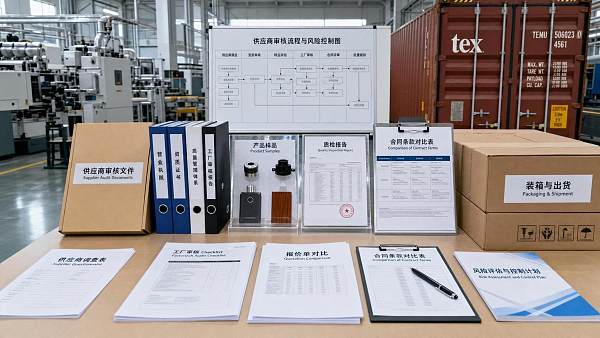
Ask for certificates, batch traceability procedures, inspection protocols, testing summaries, deviation handling methods, and complaint response timelines. If the product is regulated in your market, confirm all applicable registrations and labeling compliance.
Useful quality evidence may include lot-level consistency data, sterility validation, material safety information, biocompatibility references where applicable, and transport qualification records for temperature-sensitive items. The exact list depends on product category and risk.
A supplier that can quickly provide complete, organized documentation usually creates less procurement friction later. The administrative responsiveness of the supplier is itself a quality signal, especially for recurring contracts and audits.
Evaluate supplier reliability, not just product quality
Even strong veterinary supplies can become poor purchasing choices if the supplier is inconsistent. Delivery delays, unstable lead times, poor communication, and frequent substitutions can damage clinic operations and inflate emergency purchasing costs.
Supplier reliability should be measured through on-time delivery rate, fill rate, response speed, corrective action quality, quote accuracy, and inventory planning capability. These indicators are often better predictors of procurement success than a single low quote.
Buyers should also assess manufacturing depth and supply chain visibility. Does the supplier control production, or are they trading from multiple unknown sources? Can they explain raw material continuity, backup capacity, and quality control checkpoints?
In categories with recurring demand, consistency often creates more value than initial savings. A supplier that ships correctly, communicates clearly, and maintains stable quality reduces firefighting across procurement, operations, and finance teams.
Don’t ignore packaging, storage, and usability factors
Veterinary supplies are used in fast-moving care environments, so packaging design and usability can materially affect cost and staff efficiency. Procurement should examine how products are opened, dispensed, counted, stored, and rotated in practice.
If labels are hard to read, lot numbers are difficult to track, cartons waste storage space, or inner packs are poorly sized for actual use, the product creates handling inefficiency. Those issues rarely appear in the unit price but show up every day in operations.
Shelf life is another major factor. A low-cost item with a short remaining shelf life may drive avoidable write-offs. For slow-moving categories, buyers should compare not only listed expiration periods but actual shelf life on delivery.
Where products require temperature control or moisture protection, packaging integrity becomes even more important. Better packaging can reduce spoilage, simplify audits, and improve confidence during receiving inspections.
Use performance data from real usage conditions
Procurement decisions become stronger when they are based on field performance rather than assumptions. Trial programs, user feedback, defect logs, and consumption analysis can reveal whether a quoted product truly performs at the required standard.
For high-volume veterinary supplies, consider controlled comparisons across departments or facilities. Measure breakage rate, rework frequency, user acceptance, waste percentage, and time required per task. These indicators often translate directly into cost differences.
For technical items, ask end users to score compatibility, handling, visibility, comfort, and consistency. Procurement should not treat user feedback as subjective noise. In many categories, it is an early warning system for hidden lifecycle cost.
Where possible, convert usage observations into simple metrics. Cost per successful use, cost per procedure, and defect incidents per thousand units are usually more informative than cost per piece alone.
Build a weighted scorecard for supplier comparison
One of the best ways to compare veterinary supplies fairly is to use a weighted procurement scorecard. This creates a repeatable structure and reduces the influence of headline pricing during sourcing discussions.
A practical scorecard may assign weight to price, technical compliance, quality documentation, supplier reliability, lead time, packaging suitability, shelf life, service responsiveness, and commercial terms. Weighting should reflect product criticality.
For a high-risk consumable, documentation and consistency may deserve more weight than minor price differences. For a lower-risk commodity, price can have a stronger role, provided minimum quality thresholds are met.
This method also improves internal alignment. Finance sees cost discipline, operations sees usability, and clinical teams see safety and fit. Procurement benefits because decisions become easier to justify and easier to repeat.
Questions procurement teams should ask before awarding business
Before selecting among veterinary supplies, ask whether the product specification has been normalized, whether real use requirements are documented, and whether batch consistency has been verified. These basics prevent many avoidable sourcing errors.
Ask suppliers how they manage nonconformance, what their average lead time variance is, how they handle urgent replenishment, and whether they can provide recent quality performance records. Weak answers often indicate future operational friction.
Also ask what happens if demand spikes. Can the supplier scale? Do they hold safety stock? Do they have alternate raw material approval pathways? Supply resilience matters more than ever in categories with fluctuating availability.
Finally, confirm total commercial clarity. Minimum order quantities, price validity period, shipping terms, replacement policy, and documentation support should all be explicit before purchase orders are issued.
How to avoid common mistakes when comparing veterinary supplies
A common mistake is treating all line items as equal and applying the same lowest-price logic across the board. This usually leads to overcontrol on low-risk products and underanalysis on critical products where failure costs are much higher.
Another mistake is overrelying on samples. A good sample proves limited potential, not long-term consistency. Buyers should verify whether the quality seen in testing can be maintained across production batches and shipment cycles.
Procurement teams also sometimes separate supplier assessment from product assessment. In practice, they are linked. A technically acceptable product from an unstable supplier may still be the wrong business decision.
Lastly, avoid making decisions with incomplete landed-cost data. If freight volatility, customs cost, storage constraints, or spoilage risk are not included, the comparison is financially incomplete from the start.
A practical framework for better purchasing outcomes
The most effective procurement approach is simple: define criticality, normalize specifications, gather quality evidence, compare total cost, test real-world performance, and score suppliers with weighted criteria. This process is more rigorous, but also more efficient over time.
It reduces emergency sourcing, lowers defect-driven waste, improves internal confidence, and supports stronger supplier relationships. Most importantly, it shifts purchasing from reactive price chasing to strategic value management.
For organizations buying veterinary supplies repeatedly, this framework can be standardized into sourcing templates, supplier review forms, and quarterly performance dashboards. That creates consistency across buyers and locations.
Once comparison criteria are documented, procurement teams can negotiate more effectively as well. They know exactly where a supplier is strong, where risk remains, and which price differences are truly meaningful.
Conclusion
Comparing veterinary supplies beyond unit price is not a theoretical best practice. It is a practical way to reduce waste, improve supply reliability, protect operations, and make purchasing decisions that hold up under scrutiny.
The cheapest quote is only the best choice when specification fit, quality consistency, documentation strength, and supplier performance are already proven. Without that proof, low price may simply shift cost and risk elsewhere in the organization.
For procurement professionals, the goal is clear: buy veterinary supplies that deliver stable performance, dependable supply, and measurable long-term value. When decisions are built on data rather than price alone, purchasing outcomes become stronger and more defensible.
Recommended News
 Sep 18, 2026Technical Procurement in Southeast Asia: Evaluating Suppliers, Compliance, and Lead TimesTechnical procurement Southeast Asia: evaluate suppliers, compliance, lead times, and total cost to secure reliable, project-ready assets. Read the practical guide.
 Sep 17, 2026Glamping Site Supplier Selection: A Checklist for Quality, Lead Times, and SupportGlamping site supplier selection made simple: assess quality, lead-time reliability, installation readiness, and after-sales support for a resilient, profitable site.
 Sep 10, 2026How to Evaluate Resort Slide System Suppliers for Safety, Capacity, and Project SupportResort slide systems supplier evaluation guide: compare safety evidence, real capacity, durable materials, and project support for confident resort investments.
 Aug 27, 2026Hospitality Supplier Comparison: A Procurement Framework for Quality, Cost, and ReliabilityHospitality supplier comparison: evaluate quality, total cost, compliance, and service reliability to reduce procurement risk and protect guest experience.
 Aug 14, 2026Bedding Sets Wholesale: How to Choose the Right Supplier for Hotels and RetailersBedding sets wholesale for hotels and retailers: learn how to choose the right supplier for quality, compliance, and reliable delivery.
 Aug 11, 2026ITB China 2026 Closes With 900 Global ExhibitorsITB China 2026 closes with 900 global exhibitors from 85 countries, highlighting China’s growing role in tourism sourcing, travel tech, and cross-border supply chain opportunities.
 Aug 06, 2026How to Evaluate a Marine Hospitality Solutions Provider for Guest Experience and ROIMarine hospitality solutions provider evaluation starts with performance, not visuals. Learn how to assess guest experience, compliance, integration, and lifecycle ROI before you invest.
 Jul 20, 2026Supplier Capability Verification: How to Assess Quality, Capacity, and Delivery RiskSupplier capability verification helps buyers assess quality, production capacity, and delivery risk with a practical framework to reduce sourcing surprises and make smarter procurement decisions.
 Jul 14, 2026Global Sourcing Procurement Planning: Key Cost, Risk, and Lead-Time Factors to CompareGlobal sourcing procurement planning: compare total landed cost, lead-time reliability, compliance, and supplier risk to avoid hidden losses and make smarter sourcing decisions.
 Jul 12, 2026Hotel Furnishing for Guest Rooms: What to Check Before Comparing Suppliers and QuotesHotel furnishing for guest rooms: learn what to verify before comparing suppliers and quotes, from materials and compliance to lead times and lifecycle cost.
 Jul 09, 2026High-End Furniture Quotation Explained: What Drives Price and How to Compare OffersHigh-end furniture quotation explained: learn what drives price, how to compare offers, spot hidden risks, and choose durable, compliant value for hospitality projects.
 Jul 08, 2026How to Choose a Thermal Efficiency Testing Service Provider for Compliance and ROIThermal efficiency testing service provider selection affects more than compliance. Learn how to compare scope, reporting, and ROI to reduce risk, control costs, and choose with confidence.
![]() Jul 07, 2026How to Choose a Smart Home Devices Wholesale Supplier in China for Stable OEM OrdersSmart home devices wholesale supplier in China selection starts with OEM stability, compliance, and quality control. Learn how to avoid sourcing risks and secure reliable long-term orders.
Jul 07, 2026How to Choose a Smart Home Devices Wholesale Supplier in China for Stable OEM OrdersSmart home devices wholesale supplier in China selection starts with OEM stability, compliance, and quality control. Learn how to avoid sourcing risks and secure reliable long-term orders. Jul 05, 2026How to Use Sourcing Guides Category Education to Compare Suppliers and Reduce Buying RiskSourcing guides category education helps buyers compare suppliers with real evidence, cut procurement risk, and evaluate compliance, durability, integration, and total cost with confidence.
 Jul 04, 2026Plastic Machinery Buying Guide: Key Machine Types, Output Needs, and Cost FactorsPlastic machinery buying guide covering key machine types, real output planning, and total cost factors. Compare suppliers smarter, reduce risk, and choose equipment that supports quality and ROI.
 Jul 03, 2026Metal Fabrication Processes Compared: Cutting, Bending, Welding, and When to Use EachMetal fabrication choices shape cost, strength, finish, and lead time. Compare cutting, bending, and welding to choose the right process for durable, efficient results.
 Jul 02, 2026Product Category ISO Standards: How to Check Compliance Requirements Before SourcingProduct category ISO standards are the first check before sourcing. Learn how to verify real compliance, reduce risk, avoid delays, and choose suppliers with confidence.
 Jul 01, 2026How to Use an Exporters Directory with Verified Suppliers for Safer Sourcing DecisionsExporters directory with verified suppliers: learn how to screen exporters, spot weak claims, reduce sourcing risk, and build a safer shortlist for smarter buying decisions.
 Jun 30, 2026CNC Machining Price Breakdown: What Drives Cost for Materials, Tolerances, and Volume?CNC machining price explained: see how materials, tolerances, and production volume affect cost, risk, and quote accuracy to help buyers source smarter and save more.
 Jun 29, 2026How to Evaluate a Technical Integration Solutions Provider for Multi-System ProjectsTechnical integration solutions provider selection starts with risk, not demos. Learn how to assess interoperability, security, compliance, and long-term reliability for multi-system projects.
 Jun 28, 2026Hospitality Equipment Comparison: What to Evaluate Before Buying for Hotels and ResortsHospitality equipment comparison for hotels and resorts: evaluate durability, compliance, integration, sustainability, and lifecycle cost before buying to avoid costly mistakes.
 Jun 24, 2026Trade Resources for Importers in China: How to Vet Suppliers and Compare TermsTrade resources for importers in China help you vet suppliers, compare terms, and uncover quality or compliance risks early for smarter, safer sourcing decisions.
 Jun 23, 2026How to Evaluate a Structural Steel Manufacturer for Quality, Capacity, and CertificationsStructural steel manufacturer evaluation guide: learn how to assess quality systems, production capacity, and certifications to reduce risk, avoid delays, and choose a supplier with confidence.
 Jun 22, 2026Supplier Capability Analysis: Which Metrics Matter Before You Approve a New Supplier?Supplier capability analysis helps you assess quality, delivery, compliance, and risk before approving a new supplier. Discover the key metrics that protect performance and support smarter procurement decisions.
Quarterly Executive Summaries Delivered Directly.
Join 50,000+ industry leaders who receive our proprietary market analysis and policy outlooks before they hit the public library.