Search News
TerraVista Metrics (TVM)Industry Portal
TerraVista Metrics (TVM)Hot Articles
TerraVista Metrics (TVM)- How to Design Scalable System Integration Testing for Multi-Vendor DeploymentsScalable system integration testing for multi-vendor deployments: build resilient, secure, and growth-ready operations with proven interface, resilience, and acceptance strategies.
- Regulatory Compliance Procurement Support: How to Vet Suppliers Before Contract AwardRegulatory compliance procurement support helps buyers vet suppliers, verify evidence, manage risks, and secure compliant assets before contract award.
- Resort System Integration: How to Connect PMS, Guestroom Controls, and KiosksResort system integration guide: connect PMS, guestroom controls, and kiosks with reliable workflows, secure data, and seamless guest experiences.
Popular Tags
TerraVista Metrics (TVM)Industry NewsNew AI Terminal Intelligence Grading Standard Released
auth.Lydia Vancini (Smart Hospitality IoT Consultant)Time
Sep 25, 2026Click Count
On May 8, 2026, China’s Ministry of Industry and Information Technology (MIIT), the State Administration for Market Regulation (SAMR), and two other departments jointly issued the Intelligence Grading Standard for Artificial Intelligence Terminals (GB/Z 177—2026), a national guideline set to take effect on May 13, 2026. The standard introduces the first formal classification framework for AI capabilities in smart building and service terminals—including Smart Lighting controllers, self-service kiosks (Kiosk Tech), and guestroom automation systems—marking a pivotal step toward harmonizing technical claims, certification requirements, and export compliance across high-growth segments of intelligent hardware.
Event Overview
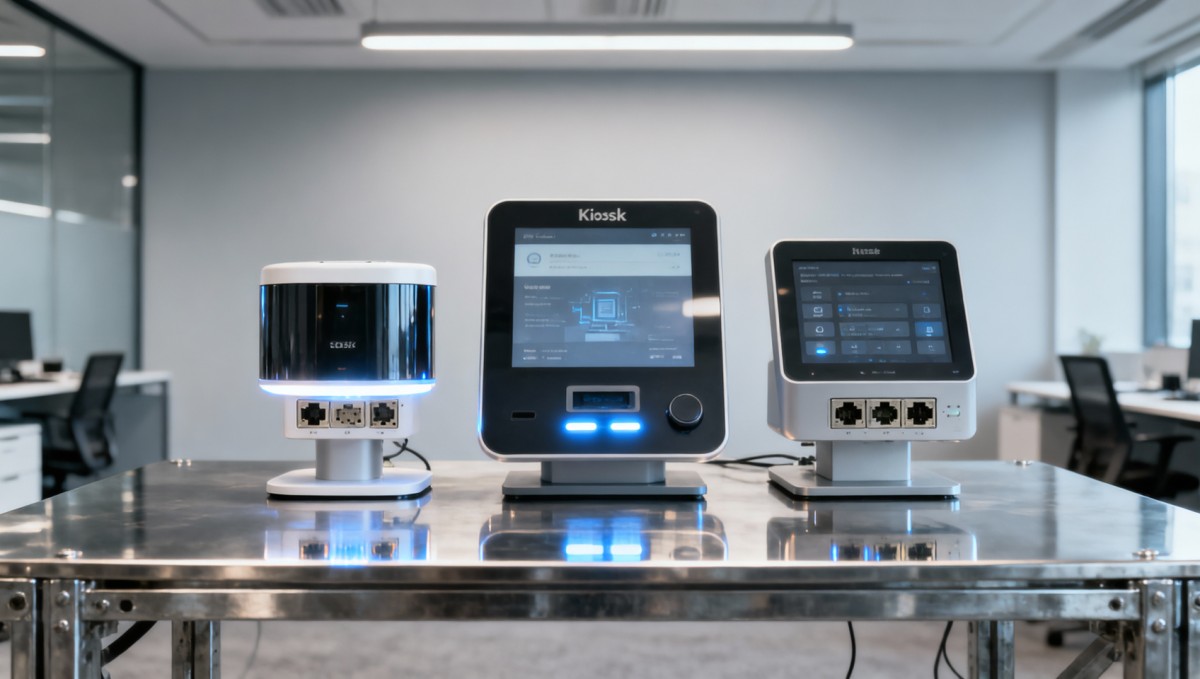
On May 8, 2026, MIIT, SAMR, the Standardization Administration of China (SAC), and the China National Certification and Accreditation Administration (CNCA) jointly released GB/Z 177—2026. The standard defines five intelligence levels (L1–L5) based on verifiable criteria: local inference capability, multimodal response performance, and autonomous decision-making scope. It explicitly includes Smart Lighting controllers, Kiosk interactive terminals, and hotel Guestroom Automation central control panels within its assessment scope. For export products labeled with ‘AI functionality’, mandatory grading certification by CNAS-accredited laboratories is now required prior to market release.
Industries Affected
Direct trading enterprises: Exporters marketing AI-branded terminals to overseas markets—including EU, ASEAN, and Middle Eastern buyers—now face new pre-shipment compliance obligations. Claims such as ‘AI-powered lighting’ or ‘intelligent kiosk’ will trigger verification against L1–L5 benchmarks; unverified labeling may result in customs rejection, post-market recalls, or reputational exposure under evolving global AI transparency regulations.
Raw material procurement enterprises: Suppliers of edge AI chips (e.g., NPU-enabled SoCs), multimodal sensors (e.g., fused audio-visual modules), and low-latency communication components must now align technical specifications with L3+ readiness thresholds—particularly for local inference latency (
Manufacturing enterprises: OEM/ODM producers of Smart Lighting systems, public-access kiosks, and integrated guestroom automation platforms must revise firmware architecture, UI logic, and embedded AI model deployment strategies to meet level-specific validation. For example, L4 certification requires demonstrable fallback autonomy during cloud disconnection—a shift from current cloud-dependent designs.
Supply chain service enterprises: Third-party testing labs, certification consultants, and logistics compliance coordinators are seeing rising demand for GB/Z 177–2026 gap assessments, pre-audit staging, and CNAS-aligned test report generation. Lead times for full-cycle grading certification are currently averaging 22–28 working days, per preliminary data from three accredited labs.
Key Focus Areas and Recommended Actions
Verify current product labeling against L1–L5 definitions
Manufacturers and exporters should conduct an internal audit of all public-facing materials—including datasheets, e-commerce listings, and sales brochures—to identify unsubstantiated ‘AI’ claims. Any reference to AI functionality must map to at least one validated capability under the corresponding level (e.g., L2 requires real-time voice command parsing without cloud round-trip).
Engage CNAS-accredited labs early for baseline testing
Given limited lab capacity and upcoming deadlines for Q3 2026 shipments, firms should initiate pre-certification consultations no later than June 2026. Priority testing should cover local inference throughput, multimodal fusion accuracy (e.g., gesture + voice co-detection), and fail-safe behavior logs—core inputs for L3+ evaluation.
Update R&D roadmaps to support modular intelligence grading
Design teams should adopt a tiered AI architecture: base firmware supporting L1–L2 out-of-the-box, with optional L3–L5 upgrades via certified secure OTA modules. This enables flexible positioning across markets—e.g., L2 for domestic budget deployments, L4 for premium international hospitality contracts.
Editorial Perspective / Industry Observation
Observably, GB/Z 177—2026 does not prescribe technology lock-in (e.g., specific chipsets or frameworks) but enforces outcome-based verification—a notable departure from earlier vertical standards. Analysis shows this approach incentivizes architectural innovation over vendor dependency, especially in edge-AI middleware development. From an industry perspective, the inclusion of Guestroom Automation reflects growing recognition of hospitality tech as a frontline AI integration domain—not merely consumer electronics. Current more critical concern lies in interoperability: while the standard grades individual terminals, it does not address cross-device coordination (e.g., lighting + HVAC + voice assistant handoff), leaving system-level AI claims outside its scope.
Conclusion
This standard signals a maturing phase in China’s AI governance—shifting from principle-based guidance to granular, testable, and trade-relevant technical discipline. It does not raise absolute barriers, but raises the bar for credibility: AI is no longer a marketing adjective, but a graded engineering attribute. For global stakeholders, GB/Z 177—2026 serves less as a restriction and more as a calibration point—helping distinguish substantiated intelligence from speculative capability.
Source Attribution
Official documents published on the websites of the Ministry of Industry and Information Technology (www.miit.gov.cn), the State Administration for Market Regulation (www.samr.gov.cn), and the Standardization Administration of China (www.sac.gov.cn). Full text of GB/Z 177—2026 available for public consultation until June 30, 2026. Implementation details—including approved CNAS labs list and test protocol annexes—are pending official release and remain under active monitoring.

Recommended News
 Aug 02, 2026EU EN 16798-2:2026 Raises Smart Lighting Export BarEN 16798-2:2026 reshapes smart lighting exports to the EU with stricter CE-related testing, faster compliance deadlines, and new customs risks. Learn what buyers and manufacturers must do now.
 Jul 23, 2026How to Choose Commercial LED Lighting for Offices, Retail Stores, and WarehousesCommercial LED lighting guide for offices, retail stores, and warehouses. Learn how to compare performance, controls, and lifecycle cost to choose smarter, longer-lasting solutions.
 Jul 15, 2026UL 1598C v2.1 Takes Effect for Smart LightingUL 1598C v2.1 takes effect for smart lighting, making cybersecurity certification mandatory for U.S. market entry. Learn who is affected, what products are in scope, and how to stay compliant.
 Jul 14, 2026UL 1598C v2.1 Makes Cybersecurity a Gate for Smart LightingUL 1598C v2.1 makes cybersecurity mandatory for smart lighting in the U.S. and Canada. Learn what cULus changes mean for compliance, exports, ODMs, and market access before Dec 1, 2026.
 Jul 13, 2026UL 1598C Rule Tightens Access for Smart Lighting ExportsUL 1598C Rule Tightens Access for Smart Lighting exports to the U.S. and Canada. Learn how OTA security, firmware verification, and network isolation now impact certification, listings, and shipment continuity.
 Jul 10, 2026UL 62368-3:2026 Reshapes U.S. Smart Lighting ExportsUL 62368-3:2026 reshapes U.S. smart lighting exports with new dynamic blue light and system certification rules. Learn the compliance risks, listing impact, and actions exporters should take now.
 Jun 28, 2026ISH 2027 Signals New Hotel Lighting Bid RulesISH 2027 highlights new hotel lighting bid rules as smart lighting buyers favor DALI-2 and Bluetooth Mesh. See what exporters and suppliers must prepare to win more hotel projects.
 Jun 27, 2026ITMA 2026 Countdown: Smart Lighting Enters Hotel TendersITMA 2026 smart lighting tenders are reshaping hotel procurement. Discover how DALI-2, EnOcean, ISO 50001 data, and EN 50131-1 may impact supplier shortlist access.
 Jun 26, 2026Berlin ITMA 2026 Signals New Hotel Buying RulesBerlin ITMA 2026 signals new hotel buying rules as smart lighting shifts into compliance. Learn how certification, BEMS interoperability, and procurement standards may reshape supplier selection.
 Jun 25, 2026Beijing Summit Report Makes Smart Lighting a New Procurement BenchmarkSmart lighting is emerging as a new procurement benchmark after the Beijing Summit report. See how DALI-2, Bluetooth Mesh, AI optimization, and response latency may reshape tourism infrastructure tenders.
 Jun 24, 2026HiYue Sets Up Singapore Unit for Smart Lighting ComplianceSmart Lighting exporters should watch HiYue’s new Singapore unit as it may streamline ASEAN origin certification, SGS energy-efficiency labeling, and REACH market-entry compliance.
 Jun 23, 2026CME Disruption Delays Quotes, Raises Copper Cost RisksCME disruption delays quotes and heightens copper cost risks, pressuring Smart Lighting Q3 pricing, surcharges, and supply chains. See what exporters and buyers should monitor now.
 Jun 23, 2026Zhejiang E-commerce Expo Opens with Compliance FocusZhejiang E-commerce Expo Opens with Compliance Focus, highlighting overseas warehousing, logistics, and cross-border compliance support to help exporters enter 22 markets with confidence.
 Jun 22, 2026Vietnam Requires VietCloud SDK in Smart Lighting ImportsVietnam Requires VietCloud SDK in Smart Lighting Imports from Sept. 1, 2026. Learn compliance steps, VIEPA testing impact, and how exporters can avoid licensing delays.
 Jun 21, 2026Vietnam Tightens Smart Lighting Entry RulesSmart lighting exporters face new Vietnam entry rules as VIEPA ties imports to VnCloud-IoT connectivity and lab verification. Learn the key compliance risks, timeline, and trade impact.
 Jun 20, 2026Indium Export Review Raises Display Module ConcernsIndium export review raises display module concerns for OLED and Mini-LED supply. Learn how sourcing, compliance, BOM costs, and delivery risks may impact smart hardware projects.
 Jun 18, 2026EU Sets 2026 Carbon Footprint Label Rule for Smart LightingEU 2026 carbon footprint label rule for smart lighting: learn how EPD, EN 15804+A2 verification, and new EU compliance deadlines will affect exporters, buyers, and project planning.
 Jun 17, 2026EU Moves to Require Carbon Labels for Smart LightingEU carbon labels for Smart Lighting are set to reshape compliance. Learn how ESPR rules, CE DoC carbon modules, and third-party verification impact EU exports and guestroom automation projects.
 Jun 16, 2026EU Enforces System-Level Smart Lighting Energy CertificationEU smart lighting energy certification now shifts to system-level testing under EN 15193-1:2026. Learn the new EU compliance rules, third-party certification impact, and export risks.
 Jun 15, 2026EU Rule Takes Effect: Smart Lighting Exports Need EN 15193-1:2026EU Rule Takes Effect: Smart Lighting Exports Need EN 15193-1:2026. Learn who must prove system-level energy efficiency, avoid EU customs holds, and protect shipments.
 Jun 14, 2026EU EPBD Rule Raises Integration Bar for Smart LightingEU EPBD Rule Raises Integration Bar for Smart Lighting from May 2026. Learn how EU smart lighting compliance, building automation, Matter, DALI-253, and SRI may reshape tenders and market access.
 Jun 13, 2026EU Enforces EN 63284-1:2026 for Smart LightingEU enforces EN 63284-1:2026 for smart lighting, making CE compliance and new certification essential for EU market access. Learn the risks, scope, and urgent actions for exporters and buyers.
 Jun 12, 2026EU Starts EN 63284-1:2026 Certification for Smart LightingEU Starts EN 63284-1:2026 Certification for Smart Lighting: learn how the new EU rules on EMC, cybersecurity, OTA security, and AI dimming affect exports, customs clearance, and market access.
 Jun 10, 2026UL 60335-2-107:2026 Adds New Tests for Smart LightingUL 60335-2-107:2026 adds new tests for smart lighting, including RF immunity and thermal runaway checks. Learn how the Dec 1, 2026 rule affects US exports, documents, and lead times.
Quarterly Executive Summaries Delivered Directly.
Join 50,000+ industry leaders who receive our proprietary market analysis and policy outlooks before they hit the public library.