Search News
TerraVista Metrics (TVM)Industry Portal
TerraVista Metrics (TVM)Hot Articles
TerraVista Metrics (TVM)- Italy’s Ferretti Cuts 2026 Guidance for Second Consecutive QuarterFerretti cuts 2026 earnings guidance for a second consecutive quarter as yacht demand slows. Explore what longer buying decisions could mean for suppliers, procurement and delivery planning.
- Food Export Compliance: What to Check Before Your First Overseas ShipmentFood export compliance starts before dispatch. Discover essential checks for approvals, labels, certificates, and cold-chain controls to help prevent costly delays on your first overseas shipment.
- Roseate Targets 30 Hotels by 2030, Plans New Smart Hotel BrandRoseate Hotels & Resorts targets 30 hotels by 2030, with an upscale smart hotel brand planned for early 2027. Explore its expansion strategy across India's smaller cities and core markets.
Popular Tags
TerraVista Metrics (TVM)Industry NewsCommercial LED Lighting Upgrades That Lower Maintenance Calls
auth.Lydia Vancini (Smart Hospitality IoT Consultant)Time
Oct 26, 2026Click Count
For after-sales maintenance teams, frequent service calls often point to outdated fixtures, inconsistent drivers, or poor thermal performance. Commercial LED lighting upgrades offer a practical way to reduce failures, improve lighting consistency, and lower labor-intensive maintenance demands. In facilities where uptime, safety, and operating efficiency matter, choosing well-tested LED systems can turn lighting from a recurring problem into a more predictable, data-backed asset.
Why Scenario Differences Matter More Than Product Brochures
For after-sales maintenance personnel, the same Commercial LED lighting specification does not perform the same way in every environment. A corridor that runs 24 hours a day, a back-of-house utility room with unstable temperature, and an outdoor guest pathway exposed to moisture all create very different stress conditions. When service teams evaluate upgrades only by wattage or purchase price, they often inherit future maintenance risk instead of reducing it.
In tourism, hospitality, mixed-use commercial sites, and public visitor facilities, lighting is not just about visibility. It affects response time, guest safety, technician workload, and operational continuity. A fixture that survives 50,000 rated hours on paper may still generate callbacks within 6 to 18 months if the driver is poorly matched, if thermal dissipation is weak, or if surge conditions were ignored at the design stage.
This is where a data-driven review becomes useful. TerraVista Metrics (TVM) focuses on measurable infrastructure performance, helping project teams move from aesthetic claims to practical field criteria. For maintenance teams, that means asking a more useful question: which Commercial LED lighting configuration best fits the actual service environment, maintenance cycle, and replacement burden of the site?
Typical signals that an upgrade is justified
Not every legacy system needs immediate replacement, but recurring patterns often reveal that the installed lighting has become a maintenance liability. Sites with repeated lamp or driver swaps, lighting inconsistency between zones, and stockroom confusion caused by mixed fixture types usually gain the fastest benefit from upgrade planning. In many facilities, if the same zone triggers 3 or more service interventions per quarter, the issue is no longer incidental.
- Frequent driver failures in enclosed ceilings or hot service corridors.
- Visible lumen depreciation after 12 to 24 months in high-hour-use areas.
- Multiple color temperatures across adjacent guest or staff zones.
- Slow repair cycles because one fixture family requires several incompatible parts.
- Repeated night-call dispatches for emergency pathway or parking area outages.
Once these signs appear, maintenance teams should shift from reactive replacement to scenario-based selection. That approach lowers both emergency call frequency and hidden labor costs tied to access equipment, overnight work, and repeated diagnostics.
Three High-Impact Scenarios for Commercial LED Lighting Upgrades
The value of Commercial LED lighting becomes clearer when facilities are divided by service condition rather than by fixture category alone. After-sales teams generally see the strongest maintenance improvements in three scenarios: continuously occupied interior zones, difficult-access technical areas, and exposed outdoor circulation spaces. Each one places different demands on housing, optics, drivers, and serviceability.
The table below helps maintenance staff compare these scenarios using practical field criteria instead of generic catalog language. It is especially useful during retrofit audits, annual maintenance reviews, or pre-procurement discussions with engineering and operations teams.
This comparison shows why a single “best fixture” rarely exists. The right Commercial LED lighting upgrade is usually the one that removes the most expensive maintenance trigger in a specific environment. For one site, that may be driver reliability. For another, it may be corrosion resistance or the ability to replace a module without removing the entire luminaire.
Scenario 1: Guest-facing interiors with long daily runtime
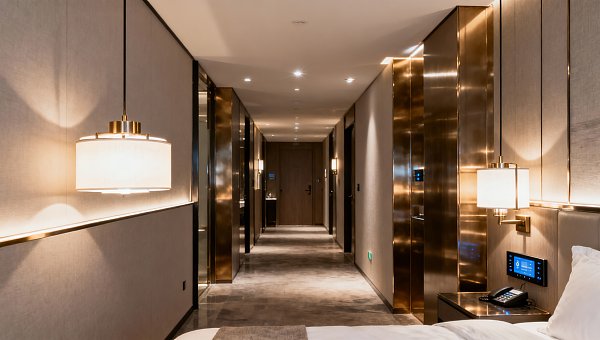
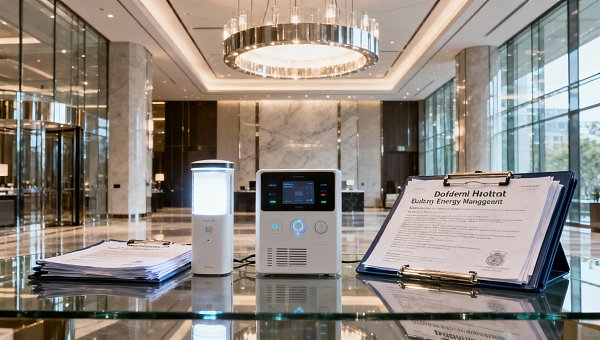
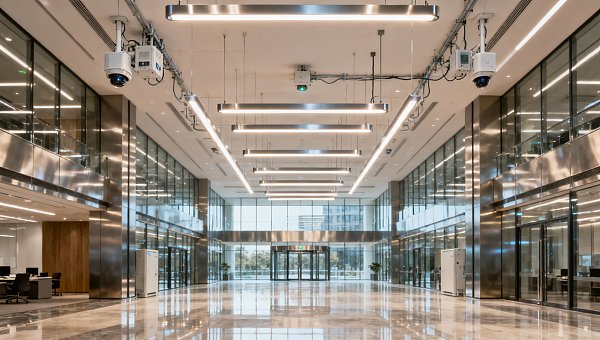
Lobby passages, hotel corridors, check-in zones, dining circulation areas, and retail-like public interiors often run 16 to 24 hours per day. In these spaces, maintenance teams are judged not only on whether lights work, but on whether they remain visually consistent. A failed downlight in a staff room is inconvenient; a failed or dimmed fixture in a premium guest zone is immediately visible and can trigger urgent response requests.
For these areas, Commercial LED lighting should be evaluated for color consistency, driver stability, and thermal behavior inside the actual ceiling void. Even a modest ambient rise of 5 to 10°C above design assumptions can shorten electronic component life. Maintenance teams benefit from fixtures with consistent binning, accessible drivers, and clear replacement mapping by zone.
If a facility has multiple renovation phases, another risk appears: visual mismatch. A practical upgrade plan should specify target color temperature ranges such as 3000K or 4000K by area type, and lock beam angles or diffuser styles for each public zone. This reduces return visits caused by “working but wrong-looking” replacements.
What maintenance teams should confirm
- Whether fixture temperature rise remains controlled in enclosed ceiling cavities during 8 to 12 hour peak periods.
- Whether drivers are replaceable separately from the full housing.
- Whether spare parts remain standardized across at least one full building block or floor cluster.
- Whether emergency and normal lighting interfaces are clearly separated for diagnostics.
These checks help shift maintenance from reactive troubleshooting to predictable asset support. In high-visibility interiors, reducing just 1 unscheduled call per week can significantly improve staff allocation over a 12-month operating cycle.
Scenario 2: Hard-to-access technical and utility spaces
Service corridors, loading canopies, storage mezzanines, machine rooms, and high-bay support zones are less visible to guests but often more expensive to maintain. The issue here is not only failure rate. It is intervention cost. If one fixture replacement requires a lift, two technicians, and partial area restriction, then every avoidable outage matters.
In these spaces, Commercial LED lighting should be judged by service interval and access efficiency. Long-life claims are helpful, but field service design matters more. Can the driver be replaced quickly? Are mounting points straightforward? Does the luminaire allow partial replacement, or must the whole unit be removed? A maintenance-friendly design can save more labor than a marginal gain in nominal efficacy.
For mixed-use tourism and hospitality infrastructure, these areas may also face dust, vibration, or sporadic voltage instability. Maintenance teams should prioritize robust housings, secure electrical interfaces, and practical documentation that supports faster troubleshooting during off-hours. A product that looks efficient on paper but needs 45 minutes of disassembly in the field may not be the right upgrade choice.
Scenario 3: Outdoor circulation and safety-critical pathways
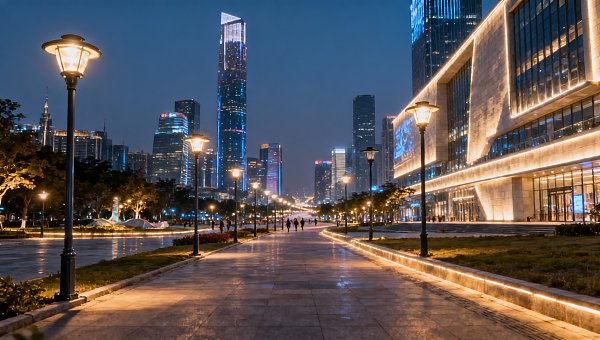
Resort pathways, parking approaches, pedestrian connectors, cabin access routes, and perimeter zones create a different maintenance profile. Here, failures are influenced by humidity, insects, salt air in coastal regions, cable exposure, and transient electrical events. A luminaire that performs well indoors can deteriorate quickly outside if sealing and material choices are weak.
For these applications, Commercial LED lighting upgrades should emphasize ingress protection, corrosion-aware materials, stable optics, and realistic surge protection strategy. Maintenance teams should also review mounting integrity and replacement safety. Outdoor repairs often happen at night or in poor weather, so fixture accessibility and connector quality directly affect labor risk.
Where pathways support guest movement, response urgency increases. A single outage may trigger a safety report even if the rest of the circuit remains operational. In practice, many sites benefit from upgrading outdoor lighting in grouped zones rather than one-off replacement, especially when existing installations are already 5 to 8 years old and component aging is uneven.
How Requirements Change from One Site Type to Another
After-sales maintenance teams often support multiple property types under one management structure. A city hotel, an eco-resort, a transport-linked visitor hub, and a leisure retail complex may all use Commercial LED lighting, but their maintenance priorities are not identical. Comparing site type early helps avoid over-specifying one area and under-protecting another.
The next table outlines how operational context changes upgrade priorities. It is designed for teams that need to coordinate with procurement, engineering, and operations while still protecting long-term service efficiency.
A site-type comparison prevents the common mistake of copying a successful indoor specification into a dispersed or exposed environment. TVM’s benchmarking approach is particularly relevant here because maintenance outcomes depend on measurable context: temperature load, moisture exposure, runtime profile, and replacement logistics.
Operational scale changes the decision
A property with 80 rooms and a compact footprint can tolerate some fixture diversity if access is simple. A distributed resort with 200 pathway luminaires, detached cabins, and multiple back-of-house buildings cannot. At larger scales, every extra driver type, connector format, or trim variation increases stock complexity and the chance of repair delay. Commercial LED lighting upgrades should therefore be evaluated not only by unit performance, but by portfolio simplification.
For maintenance leads, one practical goal is reducing the number of spare-part families used across critical zones. Moving from 9 fixture variants to 3 or 4 compatible lines can improve response speed even if initial procurement takes more planning. Simplification is often one of the least visible but most durable benefits of an upgrade program.
This is also where data-backed supplier review matters. Procurement teams may focus on purchase cost, while maintenance teams need clarity on service parts, replacement instructions, and expected support continuity over the next 24 to 60 months.
Practical Upgrade Criteria That Reduce Maintenance Calls
The best Commercial LED lighting upgrade is not always the highest-output option. For after-sales teams, the right choice is usually the one that lowers intervention frequency, shortens repair time, and improves predictability. That requires looking beyond lumens and considering service architecture.
A useful review process should combine site observation, historical maintenance records, and basic technical screening. Even a 6- to 12-month log of failure locations can reveal whether problems are random or linked to heat, moisture, controls, or poor part standardization.
Core criteria for field-friendly selection
- Confirm driver quality and replacement practicality, because many failures originate in control gear rather than the LED source itself.
- Review thermal design against actual installation conditions, especially enclosed ceilings, canopy housings, and hot mechanical corridors.
- Check ingress protection and corrosion suitability for exterior or semi-exposed applications.
- Reduce SKU complexity wherever possible to simplify stocking and technician training.
- Align controls with maintenance capacity; advanced systems are only helpful if diagnostics are understandable in the field.
These criteria are particularly important in tourism infrastructure, where maintenance windows may be constrained by occupancy, events, or guest expectations. A theoretically advanced system can still underperform if it complicates field service.
Common upgrade misjudgments
One common mistake is replacing old fixtures with high-efficacy products while leaving poor electrical conditions unaddressed. If surge events, unstable supply, or heat build-up remain, callback volume may fall only briefly. Another mistake is mixing too many fixture families during phased retrofits, which creates future identification problems for night-shift technicians.
A third misjudgment is prioritizing initial fixture price over labor exposure. In high ceilings or exterior routes, a product that costs slightly more but avoids even 2 or 3 lift-assisted interventions per year may deliver better operational value. Maintenance teams should make these labor realities visible during procurement review.
Finally, not all controls reduce workload. If dimming networks, sensors, or emergency interfaces are poorly documented, they can increase troubleshooting time. Simplicity, especially across large estates, often produces the most reliable maintenance outcome.
How to Build a Scenario-Based Upgrade Plan
A practical Commercial LED lighting plan should begin with service history, not catalog browsing. After-sales teams already know where repeated failures occur, which zones are hardest to access, and which outages generate the fastest complaints. Converting that experience into a structured upgrade map improves both procurement accuracy and post-installation results.
A phased plan often works best. Facilities can first target the 10% to 20% of zones generating the highest service burden, then expand to adjacent areas once product compatibility is confirmed. This approach helps avoid over-committing to a specification before real-world validation.
Recommended workflow for maintenance-led evaluation
- Map service calls by zone over the last 6 to 12 months.
- Separate failures into likely driver, housing, electrical, environmental, or controls-related causes.
- Group spaces into indoor high-visibility, hard-access utility, and outdoor exposure scenarios.
- Define acceptable replacement time targets, such as under 15 minutes for standard interior swaps.
- Confirm spare part strategy, lead time expectations, and compatibility before wide rollout.
This workflow gives maintenance teams a stronger voice in selection decisions. It also aligns with TVM’s emphasis on measurable infrastructure performance, where durability, system integration, and operational fit matter more than superficial claims.
For organizations managing tourism and hospitality assets across multiple buildings or outdoor environments, scenario-based planning can turn Commercial LED lighting from a recurring service issue into a more controlled asset category. The result is not only fewer failures, but clearer stocking rules, better labor planning, and more stable site presentation.
Why Work With Us on Commercial LED Lighting Evaluation
TerraVista Metrics (TVM) supports infrastructure decision-making with a technical, benchmarking-oriented perspective suited to tourism, hospitality, and mixed-use visitor environments. Instead of relying on broad product claims, we help teams examine the metrics that matter in the field: thermal behavior, integration practicality, maintenance exposure, and deployment suitability across real operating scenarios.
If your maintenance team is reviewing Commercial LED lighting upgrades, we can help you organize the evaluation around the conditions that drive actual service calls. That may include parameter confirmation for interior versus outdoor use, product selection guidance for hard-access zones, expected delivery cycle discussions, support for scenario-based standardization, and comparison of options for replacement efficiency and environmental fit.
Contact us to discuss fixture parameters, driver and housing selection, upgrade phasing, spare-part strategy, certification-related questions, sample review support, or quotation planning. When lighting decisions are built around measurable maintenance realities, upgrade budgets tend to work harder and service teams gain more control over long-term outcomes.
Recommended News
 Aug 02, 2026EU EN 16798-2:2026 Raises Smart Lighting Export BarEN 16798-2:2026 reshapes smart lighting exports to the EU with stricter CE-related testing, faster compliance deadlines, and new customs risks. Learn what buyers and manufacturers must do now.
 Jul 23, 2026How to Choose Commercial LED Lighting for Offices, Retail Stores, and WarehousesCommercial LED lighting guide for offices, retail stores, and warehouses. Learn how to compare performance, controls, and lifecycle cost to choose smarter, longer-lasting solutions.
 Jul 15, 2026UL 1598C v2.1 Takes Effect for Smart LightingUL 1598C v2.1 takes effect for smart lighting, making cybersecurity certification mandatory for U.S. market entry. Learn who is affected, what products are in scope, and how to stay compliant.
 Jul 14, 2026UL 1598C v2.1 Makes Cybersecurity a Gate for Smart LightingUL 1598C v2.1 makes cybersecurity mandatory for smart lighting in the U.S. and Canada. Learn what cULus changes mean for compliance, exports, ODMs, and market access before Dec 1, 2026.
 Jul 13, 2026UL 1598C Rule Tightens Access for Smart Lighting ExportsUL 1598C Rule Tightens Access for Smart Lighting exports to the U.S. and Canada. Learn how OTA security, firmware verification, and network isolation now impact certification, listings, and shipment continuity.
 Jul 10, 2026UL 62368-3:2026 Reshapes U.S. Smart Lighting ExportsUL 62368-3:2026 reshapes U.S. smart lighting exports with new dynamic blue light and system certification rules. Learn the compliance risks, listing impact, and actions exporters should take now.
 Jun 28, 2026ISH 2027 Signals New Hotel Lighting Bid RulesISH 2027 highlights new hotel lighting bid rules as smart lighting buyers favor DALI-2 and Bluetooth Mesh. See what exporters and suppliers must prepare to win more hotel projects.
 Jun 27, 2026ITMA 2026 Countdown: Smart Lighting Enters Hotel TendersITMA 2026 smart lighting tenders are reshaping hotel procurement. Discover how DALI-2, EnOcean, ISO 50001 data, and EN 50131-1 may impact supplier shortlist access.
 Jun 26, 2026Berlin ITMA 2026 Signals New Hotel Buying RulesBerlin ITMA 2026 signals new hotel buying rules as smart lighting shifts into compliance. Learn how certification, BEMS interoperability, and procurement standards may reshape supplier selection.
 Jun 25, 2026Beijing Summit Report Makes Smart Lighting a New Procurement BenchmarkSmart lighting is emerging as a new procurement benchmark after the Beijing Summit report. See how DALI-2, Bluetooth Mesh, AI optimization, and response latency may reshape tourism infrastructure tenders.
 Jun 24, 2026HiYue Sets Up Singapore Unit for Smart Lighting ComplianceSmart Lighting exporters should watch HiYue’s new Singapore unit as it may streamline ASEAN origin certification, SGS energy-efficiency labeling, and REACH market-entry compliance.
 Jun 23, 2026CME Disruption Delays Quotes, Raises Copper Cost RisksCME disruption delays quotes and heightens copper cost risks, pressuring Smart Lighting Q3 pricing, surcharges, and supply chains. See what exporters and buyers should monitor now.
 Jun 23, 2026Zhejiang E-commerce Expo Opens with Compliance FocusZhejiang E-commerce Expo Opens with Compliance Focus, highlighting overseas warehousing, logistics, and cross-border compliance support to help exporters enter 22 markets with confidence.
 Jun 22, 2026Vietnam Requires VietCloud SDK in Smart Lighting ImportsVietnam Requires VietCloud SDK in Smart Lighting Imports from Sept. 1, 2026. Learn compliance steps, VIEPA testing impact, and how exporters can avoid licensing delays.
 Jun 21, 2026Vietnam Tightens Smart Lighting Entry RulesSmart lighting exporters face new Vietnam entry rules as VIEPA ties imports to VnCloud-IoT connectivity and lab verification. Learn the key compliance risks, timeline, and trade impact.
 Jun 20, 2026Indium Export Review Raises Display Module ConcernsIndium export review raises display module concerns for OLED and Mini-LED supply. Learn how sourcing, compliance, BOM costs, and delivery risks may impact smart hardware projects.
 Jun 18, 2026EU Sets 2026 Carbon Footprint Label Rule for Smart LightingEU 2026 carbon footprint label rule for smart lighting: learn how EPD, EN 15804+A2 verification, and new EU compliance deadlines will affect exporters, buyers, and project planning.
 Jun 17, 2026EU Moves to Require Carbon Labels for Smart LightingEU carbon labels for Smart Lighting are set to reshape compliance. Learn how ESPR rules, CE DoC carbon modules, and third-party verification impact EU exports and guestroom automation projects.
 Jun 16, 2026EU Enforces System-Level Smart Lighting Energy CertificationEU smart lighting energy certification now shifts to system-level testing under EN 15193-1:2026. Learn the new EU compliance rules, third-party certification impact, and export risks.
 Jun 15, 2026EU Rule Takes Effect: Smart Lighting Exports Need EN 15193-1:2026EU Rule Takes Effect: Smart Lighting Exports Need EN 15193-1:2026. Learn who must prove system-level energy efficiency, avoid EU customs holds, and protect shipments.
 Jun 14, 2026EU EPBD Rule Raises Integration Bar for Smart LightingEU EPBD Rule Raises Integration Bar for Smart Lighting from May 2026. Learn how EU smart lighting compliance, building automation, Matter, DALI-253, and SRI may reshape tenders and market access.
 Jun 13, 2026EU Enforces EN 63284-1:2026 for Smart LightingEU enforces EN 63284-1:2026 for smart lighting, making CE compliance and new certification essential for EU market access. Learn the risks, scope, and urgent actions for exporters and buyers.
 Jun 12, 2026EU Starts EN 63284-1:2026 Certification for Smart LightingEU Starts EN 63284-1:2026 Certification for Smart Lighting: learn how the new EU rules on EMC, cybersecurity, OTA security, and AI dimming affect exports, customs clearance, and market access.
 Jun 10, 2026UL 60335-2-107:2026 Adds New Tests for Smart LightingUL 60335-2-107:2026 adds new tests for smart lighting, including RF immunity and thermal runaway checks. Learn how the Dec 1, 2026 rule affects US exports, documents, and lead times.
{item.publish_time}{item.title}{item.description}Quarterly Executive Summaries Delivered Directly.
Join 50,000+ industry leaders who receive our proprietary market analysis and policy outlooks before they hit the public library.