Search News
TerraVista Metrics (TVM)Industry Portal
TerraVista Metrics (TVM)Hot Articles
TerraVista Metrics (TVM)- Choosing Sustainable Prefab Building Materials: Embodied Carbon and DurabilityChoose prefab sustainable building materials with confidence. Compare embodied carbon, durability, and EPDs to reduce whole-life impacts and make smarter procurement decisions.
- Winnebago Q4 Revenue Falls 17% to $645.1 Million as Full-Year Profit RisesWinnebago Q4 revenue fell 17% to $645.1 million as full-year profit rose. Explore RV shipment trends, product mix shifts and what fiscal 2027 earnings guidance signals.
- Choosing Large Play Equipment for Parks: Space, Age Groups, and SafetyChoose large play equipment with confidence. Explore park space planning, age suitability, safety standards, and lifetime costs to create a safer, more inclusive playground.
Popular Tags
TerraVista Metrics (TVM)Industry NewsChina Customs Launches Green Clearance for Modular Cabins
auth.Julian Thorne (Sustainable Infrastructure Architect)Time
Oct 22, 2026Click Count
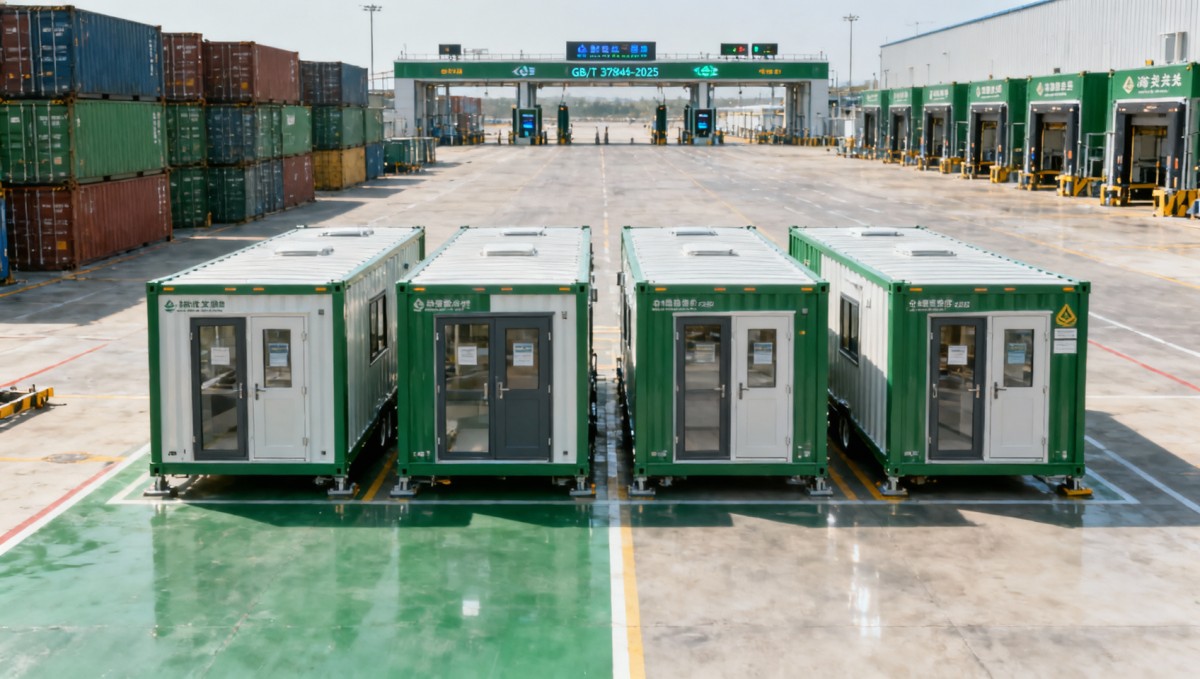
On April 24, 2026, China Customs launched a dedicated ‘green clearance channel’ for cultural tourism equipment — specifically modular cabins meeting GB/T 37849-2025 — significantly reducing inspection rates and shortening customs turnaround. This development directly affects modular construction exporters, cross-border logistics providers, and RCEP/MENA/Latin American market-facing文旅 equipment suppliers, as it reshapes compliance expectations, lead-time planning, and documentation workflows.
Event Overview
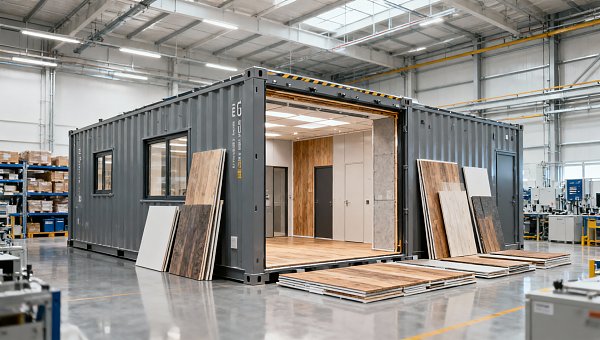
On April 24, 2026, the General Administration of Customs of China officially activated a specialized ‘green clearance channel’ for cultural tourism equipment. Under this initiative, modular cabins compliant with GB/T 37849-2025 — the newly issued General Technical Requirements for Prefabricated Cultural Tourism Buildings — are subject to a streamlined inspection protocol: ‘document verification + remote video inspection’. As a result, average customs clearance time has been reduced to 3.2 working days, and the physical inspection rate dropped from the standard 5.8% to just 0.2%. The channel is currently open for appointment-based use by exporters targeting RCEP, Middle Eastern, and Latin American markets.
Industries Affected
Direct Exporters of Modular Cabins
These enterprises face immediate operational implications: eligibility for green clearance depends strictly on certification against GB/T 37849-2025. Non-compliant units revert to standard clearance — meaning longer dwell times and higher inspection exposure. The 0.2% inspection rate applies only when both technical conformity and procedural accuracy (e.g., correct HS code classification, accurate origin declaration) are verified upfront.
Manufacturers & Integrators of Prefab Tourism Structures
Production lines and quality assurance protocols must now align with GB/T 37849-2025’s structural, fire safety, and environmental performance criteria — not just for domestic sale, but as a prerequisite for preferential customs treatment. Certification readiness becomes a gatekeeper for export efficiency, not merely a marketing differentiator.
Cross-Border Logistics & Customs Brokerage Firms
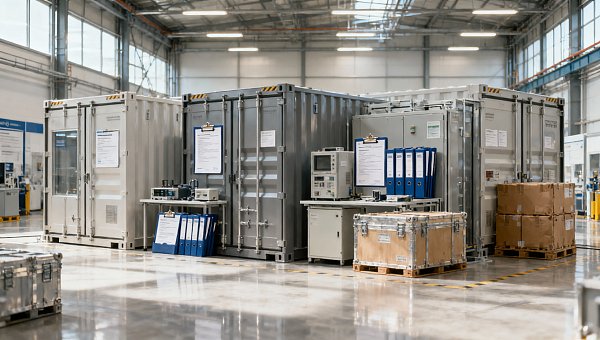
Service providers must update internal checklists to verify GB/T 37849-2025 compliance documentation prior to submission — including test reports, factory inspection records, and technical declarations. Remote video inspection requires stable, standardized camera access to cargo staging areas, introducing new coordination responsibilities between shippers and forwarders.
Importers & Distributors in RCEP / MENA / Latin America
While not directly handling Chinese customs, these stakeholders face upstream pressure to specify GB/T 37849-2025–compliant units in procurement contracts — otherwise facing unpredictable delays or cost volatility from fallback to standard clearance. Their demand signals now influence upstream manufacturing and certification decisions.
What Enterprises and Practitioners Should Focus On Now
Confirm alignment with GB/T 37849-2025 technical requirements
Verify whether current modular cabin designs — including materials, jointing methods, insulation ratings, and emergency egress provisions — meet the mandatory clauses of GB/T 37849-2025. Third-party testing or factory audit reports may be required at clearance; self-declaration alone is insufficient.
Prepare for remote video inspection readiness
Ensure warehouse or loading zones have consistent lighting, fixed-angle wide-field cameras, and secure network connectivity. Customs may request live video feed during cargo presentation — pre-submission rehearsals with brokers reduce procedural friction.
Review HS code classification and origin documentation
The green channel applies only to correctly classified goods. Misclassification — e.g., using generic prefab building codes instead of those specific to ‘cultural tourism use’ — disqualifies shipments regardless of technical compliance. Certificates of origin must explicitly reference the intended end-use.
Monitor appointment availability and regional rollout scope
Initial access is limited to RCEP, Middle Eastern, and Latin American destinations. Exporters targeting other markets (e.g., EU, Africa) should track official announcements for expansion timelines — but should not assume automatic inclusion.
Editorial Perspective / Industry Observation
From an industry perspective, this initiative is best understood not as a broad regulatory relaxation, but as a targeted operational upgrade for a narrowly defined product category under strict technical governance. Analysis来看, the 0.2% inspection rate reflects process optimization — not reduced oversight — since remote video inspection maintains evidentiary rigor while cutting physical touchpoints. Observation来看, the linkage between national standards (GB/T 37849-2025) and customs facilitation signals a broader trend: technical compliance is increasingly becoming a prerequisite for trade efficiency, not just market access. Current more appropriate interpretation is that this is a pilot-grade policy signal — its scalability depends on implementation feedback and uptake volume over the next 6–12 months.

In summary, the green clearance channel introduces a measurable, standards-driven efficiency gain for compliant modular cabin exporters — but does not lower technical or documentation thresholds. Its value lies in predictability and speed, not leniency. For the sector, this is less a policy shift than a calibration: alignment with GB/T 37849-2025 is now operationally consequential, not merely advisory.
Source: General Administration of Customs of China (official announcement, April 24, 2026). Note: Expansion to additional markets and potential updates to remote inspection protocols remain under observation and are not yet confirmed.
Recommended News
 Oct 21, 2026Prefab Cabin Integration Testing: Power, HVAC, and Controls Checks Before DeliveryExplore prefab integration testing for cabins to verify power, HVAC, controls, and fault recovery before delivery. Discover key checks to reduce risk and make confident acceptance decisions.
 Oct 20, 2026What Is Modular Tourism, and Where Do Prefab Guest Cabins Make Sense?Explore modular tourism and discover where prefab guest cabins work best. Compare site access, approvals, infrastructure, and costs to plan a smarter tourism investment.
 Oct 19, 2026How Do You Prevent Condensation Inside an Eco Cabin?How do I stop condensation inside an eco cabin? Discover practical ventilation, humidity control, and insulation tips to reduce dampness and keep your cabin dry and comfortable.
 Oct 18, 2026How Much Does an Eco Cabin Cost Including Delivery and Installation?How much does an eco cabin cost once delivery and installation are included? Discover hidden site costs, compare quotes, and build a reliable guest-ready budget before you buy.
 Oct 17, 2026Why Is a Well-Insulated Cabin Still Expensive to Cool?Why is a well-insulated cabin still expensive to cool? Uncover hidden solar gain, air leaks, humidity, and HVAC issues—and learn how to cut cooling costs without sacrificing comfort.
 Oct 16, 2026Can a Modular Cabin Be Relocated Without Voiding Its Warranty?Can a modular cabin be relocated without losing its warranty? Discover the approval, transport, and reinstallation steps that help protect coverage and avoid costly relocation mistakes.
 Oct 15, 2026Do Cracks Around Cabin Joints Require an Engineering Inspection?Do cracks around cabin joints need an engineering inspection? Discover key warning signs, when monitoring is appropriate, and how to choose the right next step before repairs.
 Oct 15, 2026How Do You Verify a Prefab Cabin's Wind-Load Rating?How do I verify a prefab cabin's wind-load rating? Discover the engineering reports, site checks, and anchorage details you need to assess supplier claims and buy with confidence.
 Oct 14, 2026What Makes Eco Cabins Sustainable? Materials, Energy Use, and Site ImpactWhat makes eco cabins truly sustainable? Explore materials, energy use, and site impact, plus the evidence you need to compare options and make smarter, greener choices.
 Sep 22, 2026Industrial Compressors: How to Size Air Capacity and Pressure for Factory DemandIndustrial compressors sizing guide: calculate factory air capacity, end-use pressure, peak demand, receiver storage, leakage, and energy-efficient system performance.
 Sep 09, 2026Sustainable Building Materials Pricing: How Buyers Compare Cost, Life Cycle, and RiskSustainable building materials pricing explained: compare installed cost, life-cycle value, carbon evidence, and supply-chain risk for smarter procurement decisions.
 Aug 29, 2026How to Assess Modular Building Suitability for Middle East Climate and Site ConditionsModular building assessment Middle East: evaluate heat, dust, corrosion, logistics, compliance, and lifecycle value for resilient site-ready projects.
 Aug 16, 2026EU Sets Mandatory Carbon Footprint Certification for Imported Modular CabinsEU mandatory carbon footprint certification will reshape imported modular cabins compliance from 2027. Learn key EU rules, EN 15804+A2 impacts, exporter risks, and how to prepare early.
 Aug 12, 2026New Exit Compliance Rule Reshapes Bids and AI Travel ProofExit compliance rule now reshapes bids and AI travel proof, raising export compliance demands for glamping tents, modular cabins, smart lighting, and kiosk tech. Learn what changes first.
 Jul 13, 2026EU Fire Rule Tightens Testing for Modular CabinsEU Fire Rule Tightens Testing for Modular Cabins: learn how EN 13501-1:2026 shifts CE compliance to component fire testing, impacts lead times, and affects EU export planning.
 Jul 12, 2026Prefab Thermal Efficiency Analysis: Which Metrics Matter for Off-Grid Cabin Design?Prefab thermal efficiency analysis for off-grid cabins: discover the key metrics that shape energy use, comfort, moisture control, and smarter supplier selection.
 Jul 11, 2026EN 16893:2026 Takes Effect for Modular CabinsEN 16893:2026 takes effect for modular cabins in the EU, making third-party verification essential for customs, listing, and project approval. Learn the key compliance changes now.
 Jul 10, 2026China Customs Tightens EU Modular Cabin DeclarationsChina Customs tightens EU Modular Cabin declarations: learn the new EN 16893:2026 and CNAS filing rules, 72-hour delay risks, and how exporters can stay compliant.
 Jul 09, 2026Berlin ITMA 2026 Adds Modular Cabins ZoneBerlin ITMA 2026 adds a Modular Cabins Zone for carbon-neutral prefab solutions, featuring verification, compatibility testing, and cross-border sourcing insights. See what buyers and suppliers should watch.
 Jul 09, 2026Modular Tourism Structures Cost: 7 Factors That Affect Budget, Transport, and InstallationModular tourism structures cost explained: discover the 7 key factors shaping budget, transport, and installation, and learn how to avoid hidden expenses before signing.
 Jul 07, 2026Vietnam Enforces New Import Rules for Modular CabinsVietnam Enforces New Import Rules for Modular Cabins: learn how VNSP registration, QR labeling, and LCA carbon filings affect customs clearance, supplier readiness, and delivery risk.
![]() Jul 06, 2026Vietnam Mandates QR Traceability Labels for Modular CabinsVietnam mandates QR traceability labels for Modular Cabins from July 15, 2026. Learn the new compliance rules, port return risks, and key actions for exporters and buyers.
Jul 06, 2026Vietnam Mandates QR Traceability Labels for Modular CabinsVietnam mandates QR traceability labels for Modular Cabins from July 15, 2026. Learn the new compliance rules, port return risks, and key actions for exporters and buyers. Jul 05, 2026Pre-Engineered Cabins Buying Guide: Key Specs, Layout Options, and Cost FactorsPre-engineered cabins buying guide covering key specs, layout options, and real cost factors. Learn how to compare suppliers, avoid hidden costs, and choose units built for long-term performance.
 Jul 04, 2026How to Choose Insulated Hospitality Units for Year-Round Resorts and Remote SitesInsulated hospitality units for year-round resorts and remote sites: learn how to compare thermal performance, durability, compliance, and lifecycle cost for smarter investment decisions.
{item.publish_time}{item.title}{item.description}Quarterly Executive Summaries Delivered Directly.
Join 50,000+ industry leaders who receive our proprietary market analysis and policy outlooks before they hit the public library.