Search News
TerraVista Metrics (TVM)Industry Portal
TerraVista Metrics (TVM)Hot Articles
TerraVista Metrics (TVM)- How to Evaluate a Structural Steel Manufacturer for Quality, Capacity, and CertificationsStructural steel manufacturer evaluation guide: learn how to assess quality systems, production capacity, and certifications to reduce risk, avoid delays, and choose a supplier with confidence.
- Hydraulic Press for Automotive Parts: How to Size Tonnage, Stroke, and Cycle TimeHydraulic press for automotive parts sizing made practical: learn how to calculate tonnage, optimize stroke, and estimate real cycle time for stable output, lower risk, and smarter buying decisions.
- Medical Grade Materials Explained: Key Properties, Common Uses, and Compliance BasicsMedical grade materials explained clearly: explore key properties, common uses, and compliance basics to choose safer, durable, and fit-for-purpose materials with confidence.
Popular Tags
TerraVista Metrics (TVM)Industry NewsIs Smart Hotel IoT Worth the Upgrade Cost
auth.Lydia Vancini (Smart Hospitality IoT Consultant)Time
Jun 23, 2026Click Count
As hotels weigh upgrade budgets against long-term returns, smart hotel IoT is no longer just a tech trend but a measurable part of the hospitality ecosystem. For procurement teams, tourism architects, and benchmarking-focused buyers, the real question is how performance data—from smart hotel zigbee mesh latency to hotel automation pcb assembly specs—translates into guest experience, efficiency, and asset value.
When Is Smart Hotel IoT Actually Worth the Upgrade Cost?
The answer depends less on a headline promise and more on where the property sits in its lifecycle. For a new-build resort, a retrofit business hotel, or a mixed-use tourism project, smart hotel IoT affects room control, energy management, access, maintenance response, and guest-service automation in very different ways. In many procurement reviews, the mistake is evaluating devices one by one instead of assessing the full operating system of the site.
In hospitality, the upgrade cost is usually justified when three conditions are present: recurring utility waste, fragmented control systems, and rising expectations for digital guest experience. If a property has 80–300 rooms, runs HVAC and lighting around the clock, and already operates a PMS, BMS, or access-control layer, smart hotel IoT often moves from optional to economically relevant. The cost discussion then shifts from hardware price to system-level return.
For information researchers and commercial evaluators, the key issue is not whether automation exists, but whether its technical profile matches real hospitality traffic. A demo that looks smooth in a showroom may fail under high device density, multi-floor signal interference, or seasonal occupancy peaks. That is why benchmarking data such as network latency, gateway redundancy, sensor drift range, and PCB assembly consistency matter before any procurement decision is made.
TerraVista Metrics (TVM) approaches smart hospitality hardware as infrastructure, not decoration. For tourism developers and hotel buyers, this matters because durable performance, carbon alignment, and integration discipline are what determine whether an upgrade becomes a strategic asset or an expensive maintenance burden over the next 3–7 years.
What buyers are really paying for
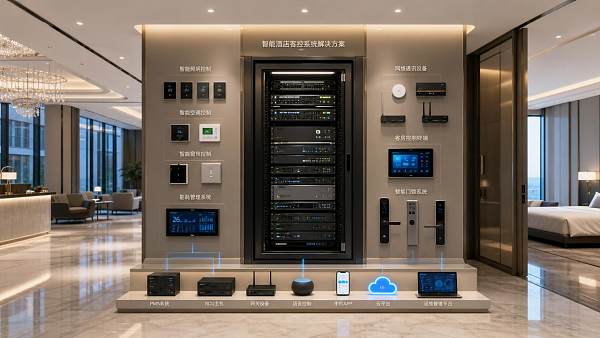
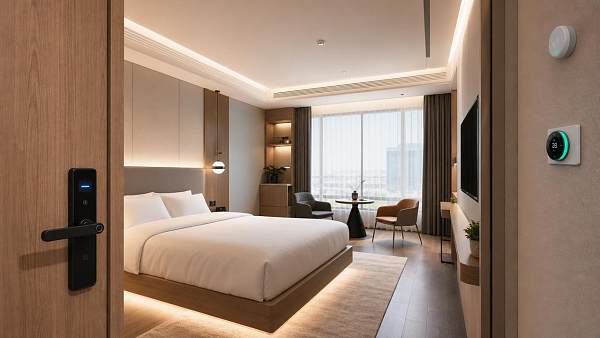
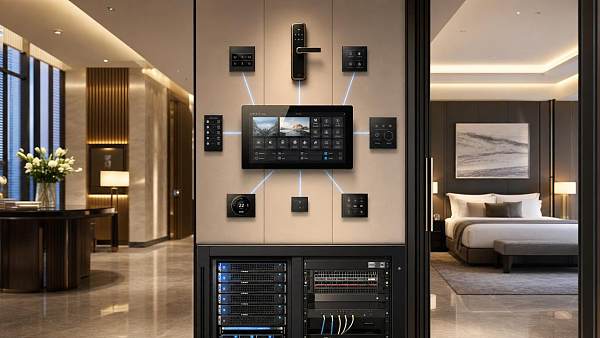
A smart hotel IoT upgrade usually includes more than switches and sensors. It typically involves room controllers, communication gateways, edge logic, lock integration, occupancy detection, HVAC coordination, mobile or kiosk interfaces, and a middleware layer that connects hotel operations to guest-facing systems. In retrofit projects, the hidden cost often lies in rewiring constraints, protocol conversion, and commissioning time rather than in the visible device count.
- Capital cost includes field devices, gateways, panels, power modules, software licenses, and installation labor.
- Operational value comes from lower energy waste, faster housekeeping turnarounds, reduced manual inspection, and better room-status visibility.
- Strategic value appears in guest personalization, scalable multi-property control, and easier compliance reporting for sustainability-oriented destinations.
That layered value model is why experienced procurement teams compare total installed architecture, not just unit pricing. A cheaper sensor ecosystem can create a higher 12–24 month support burden if signal stability, firmware updates, or spare-part sourcing are weak.
Which Technical Metrics Matter More Than Marketing Claims?
Hospitality buyers often hear broad claims about “smart rooms” and “AI-powered operations,” but procurement-grade evaluation should focus on measurable indicators. For a hotel IoT network, core metrics include communication stability, response time, interoperability, energy-control logic, and maintenance accessibility. In practice, that means asking how the system behaves during peak occupancy, partial network failure, or a phased room rollout.
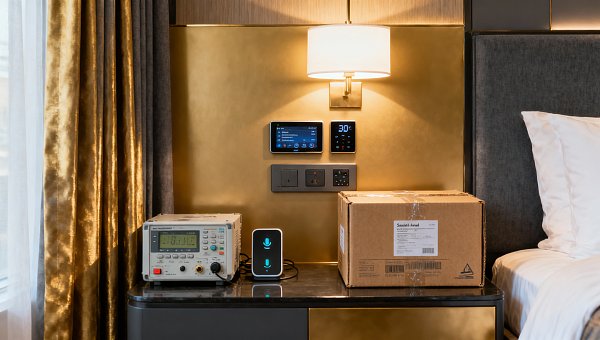
For example, smart hotel zigbee mesh latency is relevant because delays in room commands affect user experience immediately. If guests tap a scene button and lights or curtains respond after a noticeable lag, the digital experience feels unreliable. Likewise, if gateway loading is too high or topology design is weak, a property may face intermittent room offline events across 2–5 floors instead of isolated maintenance incidents.
Another overlooked factor is hotel automation PCB assembly quality. In tourism environments with frequent HVAC cycling, temperature variation, and continuous daily use, solder consistency, connector retention, and component-grade selection influence field failure rates over 24–36 months. For commercial buyers, this is not a manufacturing detail; it directly affects replacement volume, warranty friction, and service continuity.
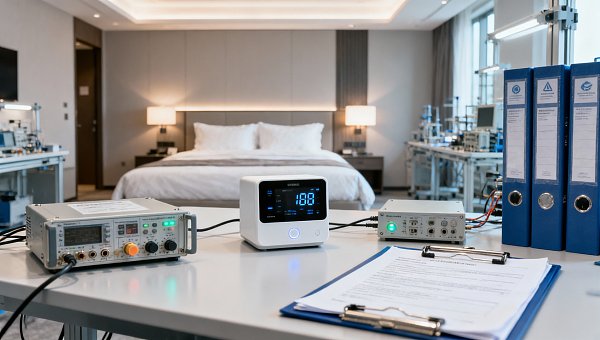
TVM’s value in this stage is turning supplier narratives into comparable engineering inputs. By benchmarking throughput, durability, and integration readiness, procurement teams can filter out systems that look advanced in a brochure but create risk in a real destination asset.
Core technical checkpoints for smart hotel IoT
Before shortlisting any vendor or distribution line, it helps to structure evaluation around a fixed set of metrics. The table below summarizes the checkpoints most relevant to hotel automation buyers, developers, and regional resellers evaluating scalable inventory.
This framework helps separate surface-level smart room features from infrastructure-grade systems. For procurement decisions above a pilot scale, a technical review that covers at least these 4 dimensions is usually more reliable than price-led screening alone.
Useful benchmark questions for suppliers
- How many devices can a gateway manage under typical hospitality traffic without delayed room response?
- What is the recommended deployment range per floor or per zone, and how does the mesh recover after one node fails?
- Which hotel platforms are already supported through standard interfaces, and which require custom middleware work?
- Can failed room controllers or panels be replaced within 15–30 minutes by on-site engineering staff?
Where Do Smart Hotel IoT Upgrades Deliver the Strongest Return?
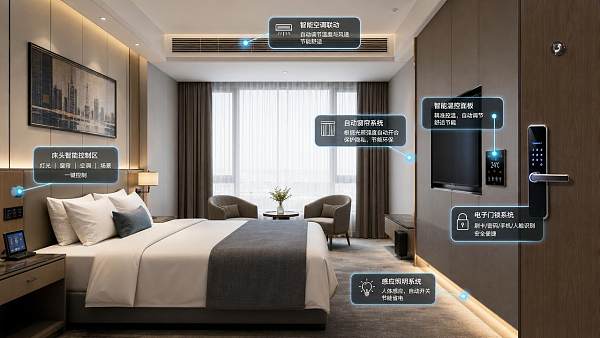
Not every hotel area produces the same return from automation. The strongest ROI usually appears where occupancy patterns, energy use, and service workflows overlap. Guest rooms are the first target because they combine HVAC, lighting, presence detection, and status monitoring. Public areas, back-of-house zones, and specialty assets such as glamping units or resort villas can follow, but their value logic differs.
For example, a city hotel with high room turnover may benefit most from occupancy-linked HVAC setbacks and automated room-status signaling. A destination resort may place greater value on distributed infrastructure monitoring, remote villa control, and reduced technician travel time between zones. In eco-tourism or modular hospitality projects, IoT also supports sustainability reporting and site-wide energy visibility across off-grid or semi-grid conditions.
Distributors and agents should pay attention to this scenario logic because the same product line sells differently across segments. A hotel chain evaluating 150 rooms has different priorities from a glamping operator managing 20 premium cabins over a dispersed terrain. The value of the upgrade depends on layout complexity, labor structure, and system integration depth, not just room count.
TVM’s tourism infrastructure perspective is especially useful here. Instead of treating smart hotel IoT as a generic building-automation layer, it benchmarks how digital control performs inside hospitality ecosystems where guest comfort, sustainability targets, and operational uptime must coexist.
Scenario comparison for buyers and project planners
The table below helps identify where smart hotel IoT upgrade cost is more likely to convert into measurable value, and where a lighter or phased deployment may be the better route.
This comparison shows why there is no single universal ROI formula. A strong project fit comes from matching smart hotel IoT functions to the operational friction points that the property experiences every day, whether that is power waste, slow room turnover, guest dissatisfaction, or fragmented technical oversight.
Typical upgrade triggers
- The property is already replacing locks, thermostats, or room panels in a 12–18 month renovation cycle.
- Engineering teams spend recurring time on manual room checks, after-hours HVAC complaints, or disconnected subsystems.
- Ownership requires measurable sustainability improvements, energy tracking, or asset-value enhancement before refinancing or repositioning.
How Should Procurement Teams Compare Full Upgrade Cost, Phased Rollout, and Alternatives?
A common mistake is to compare a full smart hotel IoT upgrade only against doing nothing. In reality, procurement teams usually have at least three options: a complete integrated deployment, a phased room-by-room or floor-by-floor rollout, or a limited-function alternative focused on one pain point such as access control or energy management. Each path changes risk, coordination effort, and operational visibility.
A full deployment offers stronger system coherence and less interface fragmentation, but it demands tighter upfront planning and capital allocation. A phased rollout reduces immediate budget pressure and allows live-site learning over 1–3 pilot zones, yet it can create temporary mixed-system complexity. A limited-function alternative lowers entry cost, but it may postpone interoperability benefits and produce a second integration project later.
For business evaluators and channel partners, the decision should reflect more than budget ceiling. It should consider occupancy disruption, room outage tolerance, spare-part strategy, software dependency, and cross-system compatibility. An apparently affordable alternative may become expensive if it locks the property into isolated hardware without a workable upgrade path.
TVM supports this stage by comparing solution architecture in a way that is useful to procurement committees: what is measurable now, what can scale later, and where hidden integration cost is likely to appear over the next operating cycle.
Decision matrix for upgrade path selection
The table below can help buyers decide whether the smart hotel IoT upgrade cost is justified as a full project, a phased deployment, or a limited substitute.
In many hospitality projects, a phased deployment becomes the most practical middle path. It allows technical validation, guest feedback review, and installation refinement within a 4–12 week pilot window before the owner commits to full-site scaling.
A practical 5-point procurement checklist
- Map existing systems first: PMS, BMS, locks, HVAC controllers, and network backbone.
- Define 3–5 measurable project outcomes such as room response stability, energy reduction logic, or maintenance visibility.
- Request protocol and integration documentation before final commercial negotiation.
- Check spare-part lead times and field replacement method for controllers, gateways, and touch panels.
- Pilot in representative conditions, not only in VIP rooms or a showroom zone.
What Risks, Compliance Points, and Misconceptions Should Buyers Watch?
Smart hotel IoT can fail to justify its upgrade cost when the procurement process focuses only on visible features. In hospitality infrastructure, the major risks usually come from hidden technical mismatch: weak interoperability, unstable wireless planning, unclear maintenance ownership, and insufficient compliance review for the destination market. These issues do not always appear on day one, but they often surface in the first high-occupancy season.
Compliance is not only about formal certification labels. Buyers should also confirm electrical safety suitability, communication protocol documentation, data handling expectations, and compatibility with local installation practice. In cross-border sourcing, the practical questions are whether product documentation is complete, whether component traceability is adequate for commercial projects, and whether system updates can be managed without major operational disruption.
Another misconception is that premium guest-facing interfaces automatically mean premium infrastructure. A polished touch panel or mobile control app can hide an underdeveloped backend. In B2B hospitality procurement, the smarter question is whether the system remains serviceable after 2 years, 4 firmware revisions, and multiple room turnovers, not whether it impressed during a sales presentation.
This is where independent benchmarking has real value. TVM acts as a structural filter for tourism supply-chain buyers by prioritizing engineering metrics over presentation aesthetics, helping stakeholders reduce uncertainty before committing to large-volume sourcing or distribution partnerships.
Common misconceptions
Does more automation always mean better ROI?
No. Over-automation can create unnecessary hardware density and software dependence. In a 60-room boutique hotel, a simpler stack with robust occupancy logic and integrated room control may outperform a feature-heavy system that requires frequent vendor intervention. The best ROI usually comes from targeted automation linked to measurable operational needs.
Can hotels rely on one protocol without testing interoperability?
That is risky. Even if a hotel IoT system uses a common protocol such as Zigbee or standard IP-based communication, actual interoperability depends on device profile implementation, gateway logic, API openness, and integration discipline. Protocol name alone is not enough for procurement confidence.
Is retrofit always too disruptive for operating hotels?
Not necessarily. With phased planning, room blocks can often be upgraded in controlled windows such as 1–2 floors at a time or during lower-demand periods. The real determinant is installation method, compatibility with existing electrical layout, and how much off-room infrastructure must change.
Risk signals that should trigger deeper due diligence
- The supplier cannot explain gateway capacity, room-node topology, or offline recovery behavior in clear technical terms.
- Documentation for hotel automation PCB assembly, power design, or maintenance replacement workflow is incomplete.
- The proposal avoids discussing spare parts, firmware support cycle, or cross-system commissioning responsibility.
- Quoted lead times appear short, but no staged implementation plan or acceptance checklist is provided.
Why Work With TerraVista Metrics Before You Finalize a Smart Hotel IoT Upgrade?
For buyers in tourism infrastructure, the hardest part is not finding suppliers. It is filtering claims into decision-grade evidence. TerraVista Metrics serves developers, hotel procurement teams, business evaluators, and channel partners by converting hospitality hardware complexity into structured benchmarking inputs. That means less ambiguity around smart hotel IoT upgrade value and more confidence in technical fit, carbon alignment, and integration readiness.
If you are comparing smart hotel zigbee mesh architecture, reviewing hotel automation PCB assembly quality, or assessing whether a phased rollout can support your property’s operating model, the most useful next step is a metric-based consultation rather than another general product pitch. Early-stage screening can save significant rework across specification, sourcing, and deployment.
TVM is especially relevant when the project involves cross-border manufacturing evaluation, hospitality sustainability targets, or multi-system integration. By framing tourism hardware as measurable infrastructure, not lifestyle marketing, TVM helps stakeholders make sharper decisions within real procurement constraints such as budget windows, delivery schedules, and compliance expectations.
Whether you are an information researcher building a supplier shortlist, a procurement manager preparing technical review points, a commercial evaluator testing project feasibility, or a distributor exploring scalable product lines, a structured benchmark can reduce risk before you commit to samples, pricing rounds, or rollout plans.
What you can discuss with us
- Parameter confirmation for hotel IoT networks, room controllers, gateway planning, and device density per zone.
- Solution selection for new-build hotels, retrofit properties, resorts, modular hospitality, and glamping projects.
- Delivery-cycle planning, pilot sequencing, sample evaluation, and phased implementation logic over 2–4 stages.
- Documentation review covering integration scope, maintainability, spare-part strategy, and general compliance requirements.
- Quotation discussions tied to technical scope, not just line-item pricing, so cost comparisons reflect actual deployment value.
Contact us for a benchmark-led evaluation
If your team is deciding whether smart hotel IoT is worth the upgrade cost, contact TerraVista Metrics with your room count, property type, current systems, and project timeline. We can help you review technical parameters, compare architecture options, identify likely integration risks, and clarify whether a full deployment, phased rollout, or narrower alternative is the most practical path for your tourism asset.
Recommended News
 Jun 23, 2026How Smart Hospitality Solutions Improve Check-In, Energy Control, and Guest ExperienceSmart hospitality solutions improve check-in speed, energy control, and guest experience by aligning automation with property type, occupancy patterns, and operational performance.
 Jun 22, 2026Germany Sets TR-03147 Rule for Guestroom AutomationGermany sets TR-03147 V2.1 rule for Guestroom Automation from Oct 1, 2026. Learn CE marking impacts, cybersecurity requirements, and what suppliers, buyers, and exporters must do now.
 Jun 21, 2026Germany Sets Mandatory Cybersecurity Certification for Guestroom AutomationGermany Sets Mandatory Cybersecurity Certification for Guestroom Automation: learn how TR-03163-2 rules from April 2027 will impact hotel tech vendors, integrators, and buyers in Germany.
 Jun 20, 2026Canada Ends Subsidy Probe Into CIMC Reefer UnitCanada Ends Subsidy Probe Into CIMC Reefer Unit: learn how the CBSA de minimis ruling may ease North American compliance, sourcing risk, and market access for certified high-efficiency equipment.
 Jun 19, 20262026 Report Puts Guestroom Automation at the Center2026 Report Puts Guestroom Automation at the Center: learn how new digital benchmarking elevates interoperability, AI voice latency, and hotel procurement standards for buyers and suppliers.
 Jun 19, 2026US-Iran Deal Lifts Chip Stocks, Supports Smart Hotel ExportsUS-Iran deal lifts chip stocks and boosts confidence in smart hotel exports. See how Guestroom Automation, Smart Lighting, and Kiosk Tech may gain better delivery stability and higher order conversion.
 Jun 18, 2026Guestroom Automation Becomes a Core Tourism MetricGuestroom Automation becomes a core tourism metric as new hotel projects face stricter standards for compatibility, latency, and energy management. See what this means for buyers and suppliers.
 Jun 18, 2026Smart Hotel Guest Experience Solutions: How Automation Improves Check-In, Lighting, and ServiceSmart hotel guest experience strategies work best when automation fits real hotel operations. Discover how check-in, lighting, and service systems improve comfort, efficiency, and guest satisfaction.
 Jun 17, 2026Guestroom Automation Becomes a Core KPI in 2026 Tourism ReportGuestroom Automation becomes a core KPI in the 2026 tourism report, reshaping smart hotel procurement, interoperability standards, OTA performance, and AI energy management priorities.
 Jun 11, 2026Smart Hotel Systems Integration: What to Compare Before Requesting Vendor QuotesSmart hotel systems integration starts with the right comparison framework. Learn what to assess before requesting vendor quotes to reduce risk, control costs, and choose a scalable solution.
 Jun 11, 2026Guestroom Automation for Hotels: Which Functions Improve Operations and Guest ExperienceGuestroom Automation helps hotels cut energy waste, speed room turnover, and improve guest comfort. Discover which functions deliver the best operational and service results.
![]() Jun 09, 2026Smart Hotel Solutions Comparison: PMS, Lighting, Access Control, and In-Room AutomationSmart hotel solutions compared: discover how PMS, lighting, access control, and in-room automation impact guest experience, efficiency, security, and long-term ROI.
Jun 09, 2026Smart Hotel Solutions Comparison: PMS, Lighting, Access Control, and In-Room AutomationSmart hotel solutions compared: discover how PMS, lighting, access control, and in-room automation impact guest experience, efficiency, security, and long-term ROI.![]() Jun 09, 2026What Is a Smart Kitchen System and Which Features Matter for Hotels and Rentals?Smart kitchen systems can help hotels and rentals improve safety, energy control, and operations. Discover which features matter most before you invest.
Jun 09, 2026What Is a Smart Kitchen System and Which Features Matter for Hotels and Rentals?Smart kitchen systems can help hotels and rentals improve safety, energy control, and operations. Discover which features matter most before you invest. Jun 08, 2026What Is a Smart Hotel? Key Systems, Guest Benefits, and Upgrade PrioritiesSmart hotel strategies explained: discover core systems, guest benefits, and upgrade priorities that improve comfort, cut costs, and help hotel operators invest with confidence.
![]() Jun 05, 2026How to Evaluate Integrated Systems for Hotel Automation by Room Type and PMS CompatibilityIntegrated systems for hotel automation: learn how to evaluate room-type fit and PMS compatibility to reduce integration risk, control costs, and improve guest experience.
Jun 05, 2026How to Evaluate Integrated Systems for Hotel Automation by Room Type and PMS CompatibilityIntegrated systems for hotel automation: learn how to evaluate room-type fit and PMS compatibility to reduce integration risk, control costs, and improve guest experience. Jun 04, 2026FDA Listing Becomes Mandatory for Health-Enabled Guestroom AutomationFDA listing becomes mandatory for health-enabled guestroom automation by Oct 1, 2026. Learn how this FDA compliance shift impacts market access, customs clearance, procurement, and delivery planning.
 Jun 02, 2026Saudi SASO Sets New Guestroom Automation RulesSaudi SASO’s new guestroom automation rules require energy efficiency testing and labels from Sept. 2026—learn how exporters can prepare.
 Jun 01, 2026Saudi SASO Mandates Guestroom Automation CertificationSaudi SASO Guestroom Automation Certification becomes mandatory in 2026. Learn key SASO IECEE CB requirements, customs risks, and compliance steps for smart hotel systems.
 Jun 01, 2026Is facialrecognitionaccess safe for smart buildings?facialrecognitionaccess can secure smart buildings when accuracy, privacy, IoT integration, and failover are tested. Learn key safeguards before deployment.
 May 29, 2026Is Smart Hospitality Worth It for Small Hotels?Smart hospitality can help small hotels cut costs, improve guest service, and reduce risk—if chosen wisely. Learn when it delivers real ROI and what to assess first.
 May 27, 2026System integration for eco resorts can prevent costly gapsSystem integration for eco resorts helps project leaders avoid delays, compliance risks, and hidden costs with smarter planning, stronger coordination, and better long-term ROI.
 May 26, 2026How system integration for hospitality cuts daily errorsSystem integration for hospitality helps hotels cut booking, housekeeping, and billing errors by connecting data and workflows. See how smarter integration improves guest service and daily efficiency.
 May 24, 2026EU Draft Rules: Kiosk & Guestroom Tech Require Dual GDPR + EN 301 549 V3.2.1 CertificationEU draft rules demand dual GDPR + EN 301 549 V3.2.1 certification for kiosk & guestroom tech—key to EU procurement access in 2027.
 May 23, 2026Are custom smart hotel solutions worth the added cost?Smart hotel custom solution: discover when the added cost delivers real ROI through better integration, lower risk, and stronger guest value.
Quarterly Executive Summaries Delivered Directly.
Join 50,000+ industry leaders who receive our proprietary market analysis and policy outlooks before they hit the public library.