Search News
TerraVista Metrics (TVM)Industry Portal
TerraVista Metrics (TVM)Hot Articles
TerraVista Metrics (TVM)- Solar Trackers vs. Fixed-Tilt Systems: Which Suits Your Utility-Scale Project?Solar trackers or fixed-tilt systems? Compare energy yield, site constraints, maintenance, and lifetime costs to find the best fit for your utility-scale project.
- Italy’s Ferretti Cuts 2026 Guidance for Second Consecutive QuarterFerretti cuts 2026 earnings guidance for a second consecutive quarter as yacht demand slows. Explore what longer buying decisions could mean for suppliers, procurement and delivery planning.
- Food Export Compliance: What to Check Before Your First Overseas ShipmentFood export compliance starts before dispatch. Discover essential checks for approvals, labels, certificates, and cold-chain controls to help prevent costly delays on your first overseas shipment.
Popular Tags
TerraVista Metrics (TVM)Industry NewsDo Locally Sourced Cabins Always Have a Lower Carbon Footprint?
auth.Julian Thorne (Sustainable Infrastructure Architect)Time
Oct 27, 2026Click Count
Do locally sourced cabins always have a lower carbon footprint? No. Shorter delivery distances can reduce transport emissions, but they do not tell the whole sustainability story. Material production, manufacturing efficiency, insulation performance, maintenance, and service life can outweigh the benefit of buying nearby.
For tourism developers, this creates an uncomfortable procurement question: could a cabin shipped from overseas have a lower lifetime climate impact than one built locally? Sometimes, yes. The opposite is also possible. Neither proximity nor international manufacturing is proof of better environmental performance.
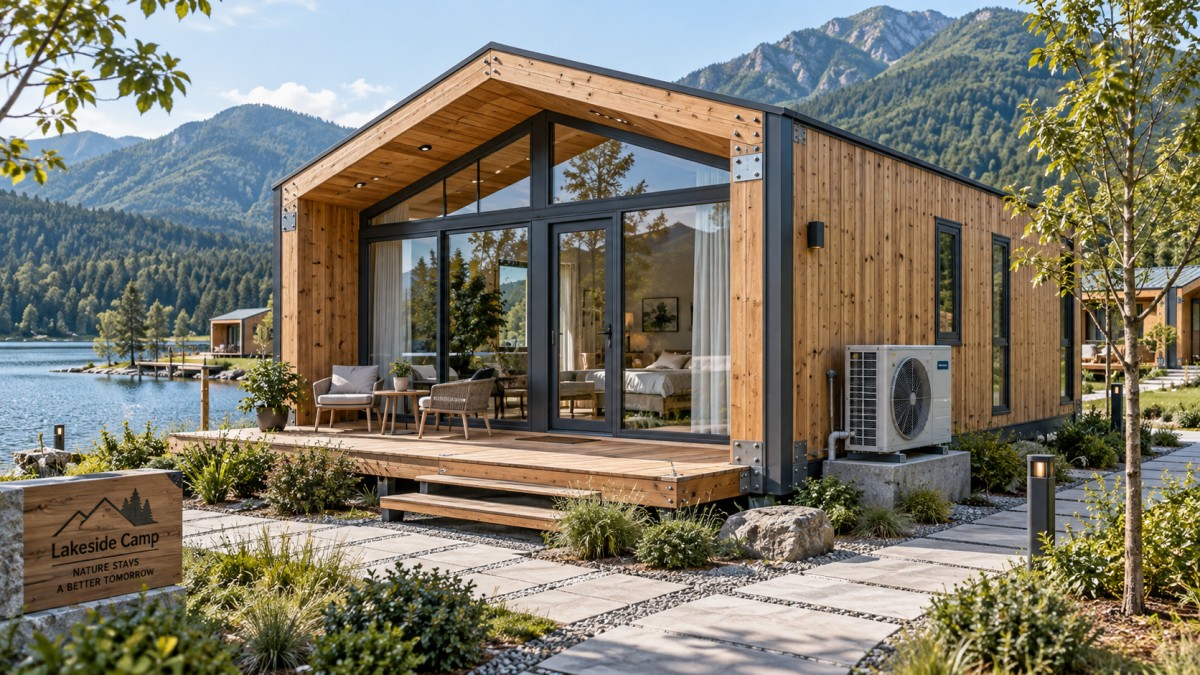
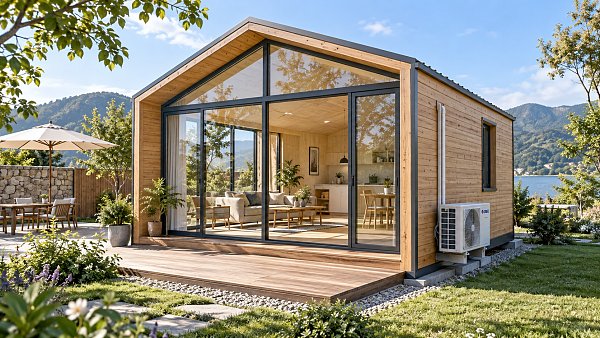
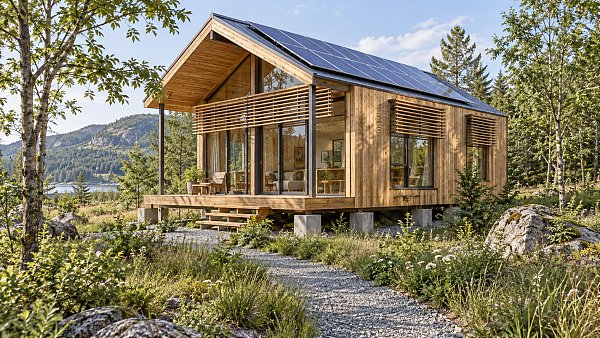
A cabin beside a lake may look reassuringly natural, with timber cladding and a supplier based in the next county. Yet its carbon footprint depends on decisions guests never see: where its steel was produced, how its insulation performs, what powers the factory, and how often damaged components need replacing. Using TerraVista Metrics’ data-driven benchmarking perspective, the following questions explain what to compare before treating “local” as evidence of lower-carbon construction.
What does “locally sourced” actually mean for a cabin?
There is no single, universal distance threshold that makes a cabin local. A supplier may use the term to describe its workshop location, final assembly, material sourcing, or delivery area. Those are different claims.
A locally assembled cabin might contain imported structural steel, insulation, glazing, electrical equipment, and interior finishes. Conversely, a cabin manufactured farther away might use materials sourced close to its factory and arrive through an efficient freight network.
Ask suppliers to separate three things:
- Material origin: Where were the principal materials extracted, processed, and manufactured?
- Assembly location: Where were the cabin’s panels, modules, or finished structure produced?
- Delivery route: How did materials and the completed unit reach the installation site?
Local procurement can still offer valuable benefits, including easier site visits, regional employment, faster repairs, and stronger relationships with tradespeople. Those advantages deserve consideration, but they should not be presented as measured carbon savings unless supporting evidence exists.
Which parts of a cabin’s life cycle determine its carbon footprint?
A meaningful comparison follows the cabin beyond the delivery gate. Whole-life carbon assessment considers emissions associated with producing, installing, operating, maintaining, and eventually removing the asset.
In building life-cycle assessments, these stages are often grouped into modules covering production and construction, use, and end of life. Potential benefits beyond the assessed system boundary, such as future recycling, should be reported separately rather than quietly deducted from today’s emissions.

The important distinction is between embodied carbon and operational carbon. Embodied carbon comes from materials, construction, maintenance, replacement, and end-of-life processes. Operational carbon comes from energy consumed during use. A supplier’s claim about one does not automatically describe the other.
Can transport emissions make an imported cabin the worse choice?
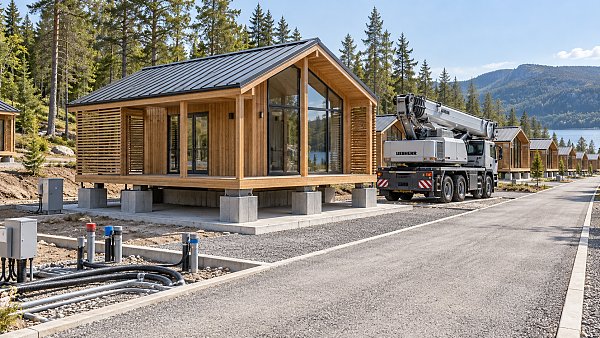
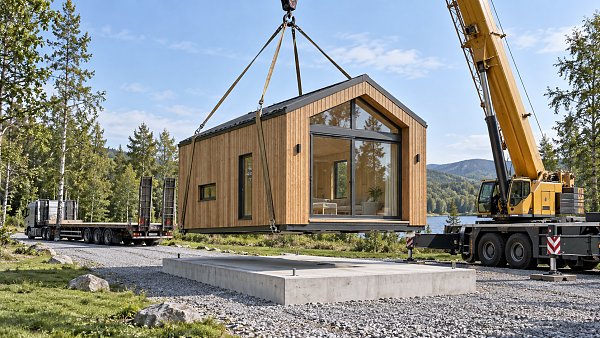
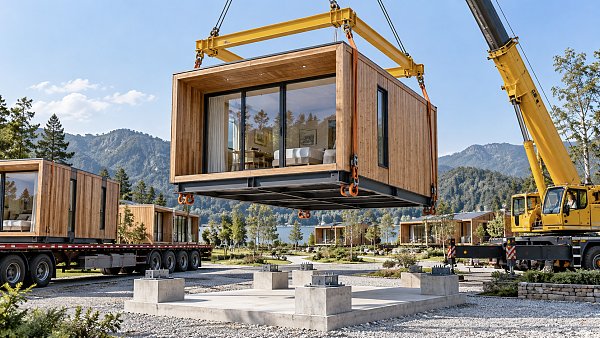
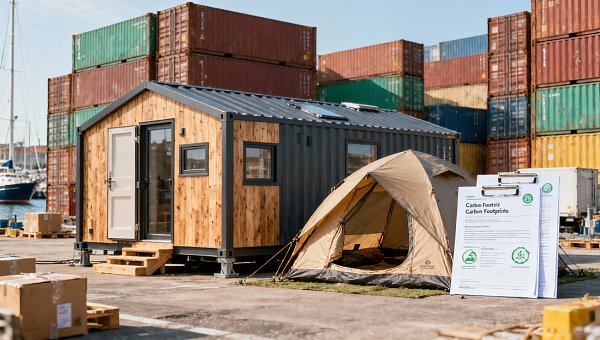
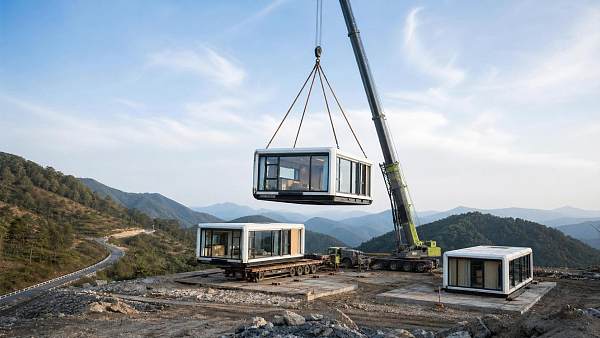
Absolutely. Transport can be significant, particularly for bulky, fully assembled cabins moved over long distances with poor load utilization. A unit may occupy substantial cargo space while carrying relatively little mass. Oversized loads, specialist trailers, multiple handling stages, and difficult final access can increase the burden.
However, kilometres alone are a weak comparison. Freight emissions also depend on:
- The transport mode and vehicle or vessel characteristics.
- The shipment’s mass, dimensions, and usable load capacity.
- Whether cabins travel fully assembled, panelized, or flat-packed.
- Intermediate warehouses, ports, and additional deliveries.
- How emissions are allocated across shared loads and return journeys.
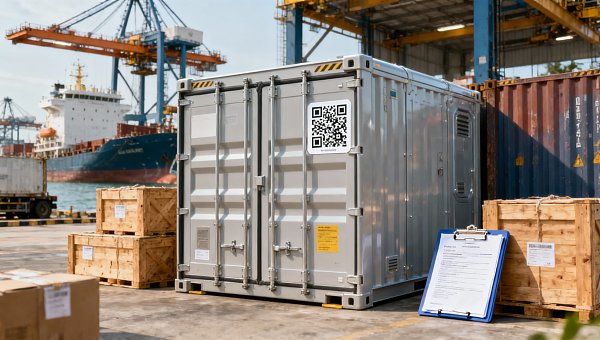
Sea freight generally has lower emissions per tonne-kilometre than road freight, but a long ocean route can still add substantial emissions. For volume-constrained cargo, a simple weight-based calculation may also fail to represent the shipment accurately.
Request a route-specific estimate covering delivery to the actual site, not just to the destination port. Include inland haulage, installation equipment, and any unusual access requirements. “Shipping included” is a commercial statement, not a carbon assessment.
When could a farther-away cabin have a lower whole-life footprint?
Consider two cabins providing equivalent accommodation in the same climate. One is built nearby but has substantial material waste, weak airtightness, and finishes that require frequent replacement. The other comes from a more distant factory with verified lower-impact materials, efficient production, a better thermal envelope, and accessible repair components.
The second cabin could have a lower whole-life footprint if those advantages outweigh its additional transport emissions. This is a comparison scenario, not a claim that imported cabins generally perform better.
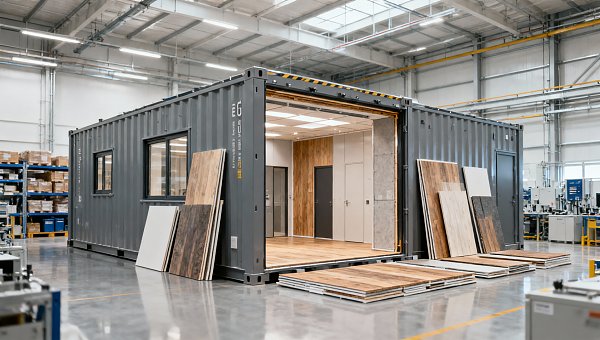
Manufacturing efficiency matters. Repeatable cutting patterns, controlled storage, and accurate fabrication can reduce waste and rework. But prefabrication is not automatically low carbon: an energy-intensive factory or excessive structural material can undermine those gains.
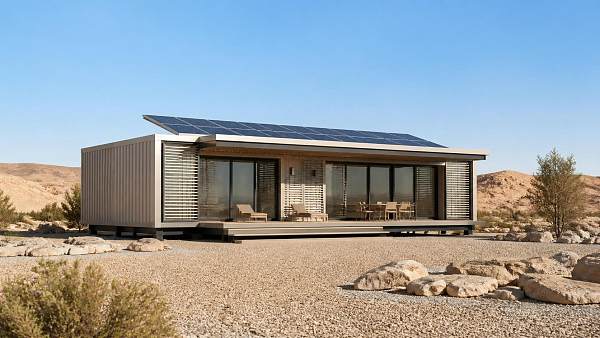
Thermal performance matters differently by location. In a cold destination operating year-round, heating demand may strongly influence the result. In a hot climate, shading, glazing, ventilation, and cooling efficiency become critical. A cabin marketed as suitable for “all climates” still needs location-specific evidence.
Durability matters under hospitality conditions. Salt exposure, humidity, snow loads, pests, and repeated guest turnover can accelerate deterioration. A structure that performs well in a mild residential setting may need substantial repairs at an exposed coastal resort.
The reverse scenario is equally credible: a well-designed local cabin using suitable materials, reliable workmanship, and efficient delivery may outperform an imported unit. Evidence should decide the outcome—not the procurement team’s preferred sourcing story.
Are timber cabins automatically lower carbon?
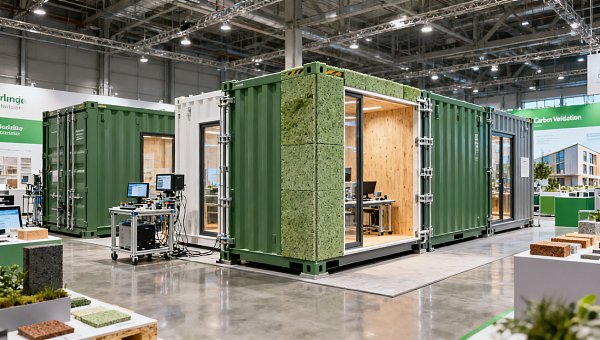
No. Timber can offer climate advantages, particularly when it replaces more emissions-intensive materials in an appropriate design. But “wooden” is not a complete environmental specification.
Relevant questions include forest management, processing energy, drying, adhesives, protective treatments, transport, and expected service life. Chain-of-custody certification can support responsible sourcing; it does not, by itself, establish the cabin’s whole-life carbon footprint.
Wood also stores biogenic carbon during its useful life. Accounting for that storage requires care because end-of-life treatment can change the result. Reuse, combustion, and landfill scenarios have different implications, and assessment methods may handle them differently.
A timber cabin still includes other materials: foundations, roofing, windows, insulation, fixtures, and building services. Concentrating on visible wood while ignoring those components can produce a misleading comparison.
What evidence should procurement teams request?
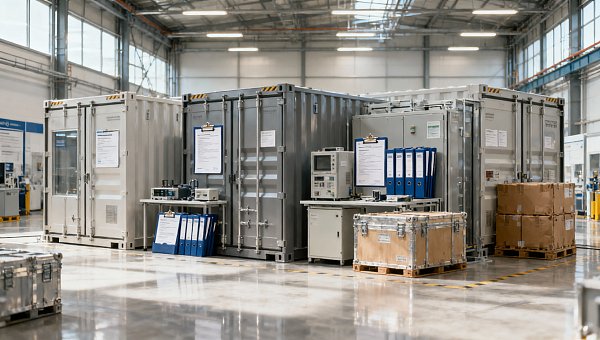
The most useful supplier response is not a sustainability brochure. It is a traceable evidence pack tied to the cabin model, configuration, and installation conditions being considered.
Start with quantities and documented environmental data
Request a bill of materials showing the principal material quantities and origins. Where available, ask for relevant Environmental Product Declarations, or EPDs. These provide standardized environmental information within defined boundaries; they are not certificates declaring a product environmentally superior.
Check whether each EPD applies to the actual product, remains valid, and uses a compatible assessment method. An EPD for structural timber does not establish the footprint of a complete furnished cabin.
Check performance rather than relying on adjectives
Ask for thermal specifications, glazing data, airtightness evidence where available, and energy modelling suited to the intended destination. Terms such as “eco-insulated” or “energy-saving” are not substitutes for measured or calculated performance.
For hospitality use, the model should reflect realistic occupancy, thermostat settings, ventilation, hot-water demand, and seasonal operation. A permanently occupied dwelling and an intermittently occupied glamping unit may behave differently.
Investigate repairability and lifespan assumptions
Request maintenance schedules, component replacement intervals, warranty terms, and spare-parts availability. A long stated design life is more credible when supported by suitable materials, exposure classifications, engineering documentation, and a practical maintenance plan.
Where evidence is incomplete, record the gap. TerraVista Metrics’ benchmarking perspective is to distinguish verified performance, modelled estimates, and unsupported claims rather than merge them into one reassuring sustainability score.
How can two cabin proposals be compared fairly?
Before comparing carbon totals, establish a common functional basis. Both options should provide comparable usable space, guest capacity, comfort, safety, and expected service life.
A lower-carbon cabin is not genuinely equivalent if it achieves its result by omitting the bathroom, reducing insulation, or excluding foundations that the competing proposal includes.
A practical comparison brief should specify:
- The destination and climate: Include relevant exposure and access conditions.
- The complete scope: Define foundations, installation, furnishings, and building services.
- The assessment period: Apply the same study period and consistent replacement assumptions.
- The operating scenario: Use comparable occupancy, comfort requirements, and energy supply assumptions.
- The reporting basis: Show total emissions alongside useful normalized measures, such as emissions per square metre over the study period.
- Data quality: Identify measured, supplier-specific, generic, and missing information.
Emissions per guest-night can provide an additional tourism metric, but it is sensitive to occupancy. Higher occupancy may reduce emissions per guest-night without reducing the cabin’s total emissions. Keep both measures visible.
Test uncertain assumptions, especially service life, grid decarbonization, transport routes, and major replacements. If a small assumption change reverses the ranking, report that uncertainty rather than declaring a decisive winner.
Does renewable electricity make embodied carbon the only concern?
No. Lower-carbon electricity can reduce operational emissions, making embodied carbon relatively more important, but it does not eliminate the need for energy-efficient design.
On-site solar generation varies with season and weather. A resort may still import electricity or operate backup generators when heating or cooling demand peaks. Off-grid destinations can face particularly strong constraints on available power.
Efficient cabins can reduce required generation, storage, and backup capacity. Those systems also carry embodied impacts. Evaluate the cabin and its energy infrastructure together where the procurement scope allows, while stating clearly what is included.
So, should developers prioritize local cabins?
Prioritize credible whole-life performance, then consider locality alongside cost, delivery risk, service support, community value, and regulatory requirements.
A local supplier with transparent material data, climate-appropriate engineering, and a reliable repair network may be an excellent choice. A distant manufacturer with stronger verified performance may also deserve consideration, provided logistics, compliance, and after-sales support are properly assessed.
For tourism procurement teams, the decisive question is not simply, “How close is the factory?” It is: “Which cabin delivers the required guest experience with the lowest credible whole-life emissions under our actual site conditions?”
Local sourcing is a useful input to that decision. It is not the answer by itself.
Recommended News
 Oct 21, 2026Prefab Cabin Integration Testing: Power, HVAC, and Controls Checks Before DeliveryExplore prefab integration testing for cabins to verify power, HVAC, controls, and fault recovery before delivery. Discover key checks to reduce risk and make confident acceptance decisions.
 Oct 28, 2026Do Locally Sourced Cabins Always Have a Lower Carbon Footprint?Do locally sourced cabins always have a lower carbon footprint? Discover how materials, transport, energy use, and lifespan affect emissions—and make smarter cabin sourcing decisions.
 Oct 27, 2026How Can I Keep Cabin Installation Delays From Delaying a Resort Opening?How do I keep cabin installation delays from pushing back a resort opening? Discover practical steps for permits, site readiness, and phased launches to protect your opening date.
 Oct 20, 2026What Is Modular Tourism, and Where Do Prefab Guest Cabins Make Sense?Explore modular tourism and discover where prefab guest cabins work best. Compare site access, approvals, infrastructure, and costs to plan a smarter tourism investment.
 Oct 19, 2026How Do You Prevent Condensation Inside an Eco Cabin?How do I stop condensation inside an eco cabin? Discover practical ventilation, humidity control, and insulation tips to reduce dampness and keep your cabin dry and comfortable.
 Oct 18, 2026How Much Does an Eco Cabin Cost Including Delivery and Installation?How much does an eco cabin cost once delivery and installation are included? Discover hidden site costs, compare quotes, and build a reliable guest-ready budget before you buy.
 Oct 17, 2026Why Is a Well-Insulated Cabin Still Expensive to Cool?Why is a well-insulated cabin still expensive to cool? Uncover hidden solar gain, air leaks, humidity, and HVAC issues—and learn how to cut cooling costs without sacrificing comfort.
 Oct 16, 2026Can a Modular Cabin Be Relocated Without Voiding Its Warranty?Can a modular cabin be relocated without losing its warranty? Discover the approval, transport, and reinstallation steps that help protect coverage and avoid costly relocation mistakes.
 Oct 15, 2026Do Cracks Around Cabin Joints Require an Engineering Inspection?Do cracks around cabin joints need an engineering inspection? Discover key warning signs, when monitoring is appropriate, and how to choose the right next step before repairs.
 Oct 15, 2026How Do You Verify a Prefab Cabin's Wind-Load Rating?How do I verify a prefab cabin's wind-load rating? Discover the engineering reports, site checks, and anchorage details you need to assess supplier claims and buy with confidence.
 Oct 14, 2026What Makes Eco Cabins Sustainable? Materials, Energy Use, and Site ImpactWhat makes eco cabins truly sustainable? Explore materials, energy use, and site impact, plus the evidence you need to compare options and make smarter, greener choices.
 Sep 22, 2026Industrial Compressors: How to Size Air Capacity and Pressure for Factory DemandIndustrial compressors sizing guide: calculate factory air capacity, end-use pressure, peak demand, receiver storage, leakage, and energy-efficient system performance.
 Sep 09, 2026Sustainable Building Materials Pricing: How Buyers Compare Cost, Life Cycle, and RiskSustainable building materials pricing explained: compare installed cost, life-cycle value, carbon evidence, and supply-chain risk for smarter procurement decisions.
 Aug 29, 2026How to Assess Modular Building Suitability for Middle East Climate and Site ConditionsModular building assessment Middle East: evaluate heat, dust, corrosion, logistics, compliance, and lifecycle value for resilient site-ready projects.
 Aug 16, 2026EU Sets Mandatory Carbon Footprint Certification for Imported Modular CabinsEU mandatory carbon footprint certification will reshape imported modular cabins compliance from 2027. Learn key EU rules, EN 15804+A2 impacts, exporter risks, and how to prepare early.
 Aug 12, 2026New Exit Compliance Rule Reshapes Bids and AI Travel ProofExit compliance rule now reshapes bids and AI travel proof, raising export compliance demands for glamping tents, modular cabins, smart lighting, and kiosk tech. Learn what changes first.
 Jul 13, 2026EU Fire Rule Tightens Testing for Modular CabinsEU Fire Rule Tightens Testing for Modular Cabins: learn how EN 13501-1:2026 shifts CE compliance to component fire testing, impacts lead times, and affects EU export planning.
 Jul 12, 2026Prefab Thermal Efficiency Analysis: Which Metrics Matter for Off-Grid Cabin Design?Prefab thermal efficiency analysis for off-grid cabins: discover the key metrics that shape energy use, comfort, moisture control, and smarter supplier selection.
 Jul 11, 2026EN 16893:2026 Takes Effect for Modular CabinsEN 16893:2026 takes effect for modular cabins in the EU, making third-party verification essential for customs, listing, and project approval. Learn the key compliance changes now.
 Jul 10, 2026China Customs Tightens EU Modular Cabin DeclarationsChina Customs tightens EU Modular Cabin declarations: learn the new EN 16893:2026 and CNAS filing rules, 72-hour delay risks, and how exporters can stay compliant.
 Jul 09, 2026Berlin ITMA 2026 Adds Modular Cabins ZoneBerlin ITMA 2026 adds a Modular Cabins Zone for carbon-neutral prefab solutions, featuring verification, compatibility testing, and cross-border sourcing insights. See what buyers and suppliers should watch.
 Jul 09, 2026Modular Tourism Structures Cost: 7 Factors That Affect Budget, Transport, and InstallationModular tourism structures cost explained: discover the 7 key factors shaping budget, transport, and installation, and learn how to avoid hidden expenses before signing.
 Jul 07, 2026Vietnam Enforces New Import Rules for Modular CabinsVietnam Enforces New Import Rules for Modular Cabins: learn how VNSP registration, QR labeling, and LCA carbon filings affect customs clearance, supplier readiness, and delivery risk.
![]() Jul 06, 2026Vietnam Mandates QR Traceability Labels for Modular CabinsVietnam mandates QR traceability labels for Modular Cabins from July 15, 2026. Learn the new compliance rules, port return risks, and key actions for exporters and buyers.
{item.publish_time}{item.title}{item.description}Quarterly Executive Summaries Delivered Directly.
Join 50,000+ industry leaders who receive our proprietary market analysis and policy outlooks before they hit the public library.