Search News
TerraVista Metrics (TVM)Industry Portal
TerraVista Metrics (TVM)Hot Articles
TerraVista Metrics (TVM)- Food Export Compliance: What to Check Before Your First Overseas ShipmentFood export compliance starts before dispatch. Discover essential checks for approvals, labels, certificates, and cold-chain controls to help prevent costly delays on your first overseas shipment.
- Roseate Targets 30 Hotels by 2030, Plans New Smart Hotel BrandRoseate Hotels & Resorts targets 30 hotels by 2030, with an upscale smart hotel brand planned for early 2027. Explore its expansion strategy across India's smaller cities and core markets.
- EU Cableway Compliance: Safety Analysis and Pre-Opening Approval RequirementsMaster EU cableway systems regulatory compliance: explore safety analysis, conformity evidence, and pre-opening approval requirements to avoid delays and prepare for passenger service.
Popular Tags
TerraVista Metrics (TVM)Industry NewsHow Smart Hotel Management Cuts Daily Operating Waste
auth.Time
Oct 26, 2026Click Count
As destinations pursue efficiency and greener operations, smart hotel management is no longer just a branding upgrade. It is a practical way to cut the daily waste that quietly drains margins: unused energy, overstaffed routines, preventable water loss, food spoilage, reactive maintenance, and disconnected systems that create hidden operating costs. For procurement teams, evaluators, and tourism infrastructure decision-makers, the key question is not whether smart hotel automation sounds innovative, but whether it delivers measurable reductions in waste, integrates reliably with existing assets, and supports long-term sustainability targets. The short answer is yes—when the system is selected based on operational data, technical compatibility, and performance benchmarks rather than feature lists alone.
What “daily operating waste” really means in a hotel environment
In hotel operations, waste is broader than trash disposal. It includes every recurring loss that adds cost without improving guest value. Smart hotel management targets these losses at the infrastructure and process level.
The most common categories include:
- Energy waste: HVAC and lighting running in vacant rooms, inefficient temperature control, poorly scheduled public-area systems, and unmanaged peak demand.
- Water waste: Leaks, over-irrigation, delayed fault detection, and room-level overconsumption that goes unnoticed until billing cycles close.
- Labor waste: Manual inspections, repetitive service workflows, delayed housekeeping coordination, and fragmented communication between departments.
- Food and inventory waste: Overstocking, inaccurate demand planning, inconsistent cold-chain monitoring, and poor visibility into consumption patterns.
- Maintenance waste: Reactive repairs, asset downtime, premature equipment failure, and unnecessary replacement caused by missing condition data.
For buyers in hospitality and tourism infrastructure, this matters because waste reduction is no longer judged only by internal management goals. It increasingly affects carbon reporting, operating resilience, procurement standards, and asset valuation.
How smart hotel management reduces waste on a day-to-day basis
The value of smart hotel design comes from connecting building systems, room controls, occupancy signals, and operational workflows into one decision layer. Instead of relying on fixed schedules and staff assumptions, the property responds to real conditions.
1. Occupancy-based energy control
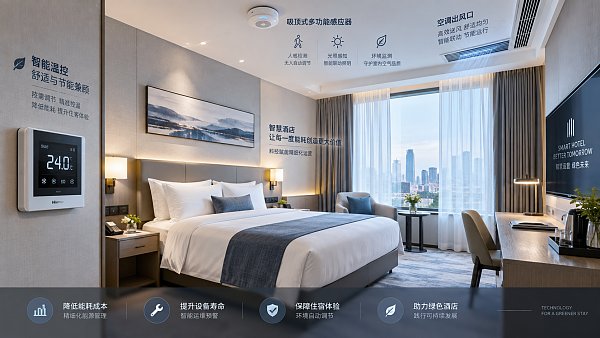
Smart hotel IoT solutions can link guest presence, booking status, door sensors, and room controls. When a room is unoccupied, the system can automatically adjust HVAC setpoints, dim lighting, and reduce nonessential energy use. This prevents one of the most common sources of daily waste: conditioning empty space as if it were occupied.
For hotels attached to resorts, amusement destinations, or mixed-use tourism projects, this becomes especially valuable because occupancy fluctuates sharply by hour, season, and event schedule.
2. Smarter housekeeping and room turnover
When room status, guest preferences, and maintenance alerts are integrated, housekeeping no longer works from static lists alone. Smart hotel automation can prioritize rooms based on actual checkout timing, service requests, or maintenance readiness. That reduces unnecessary room checks, shortens turnover delays, and lowers labor inefficiency without hurting guest satisfaction.
3. Water monitoring and leak detection
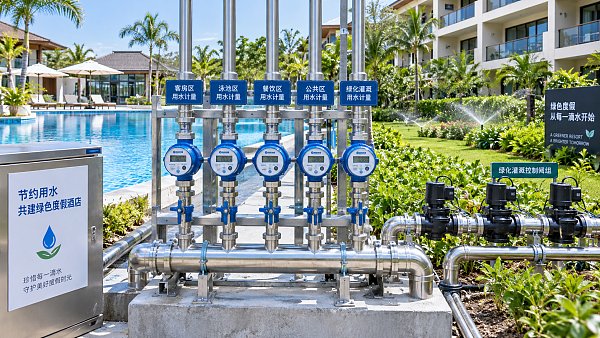
Small leaks create outsized waste in hospitality properties because they often continue unnoticed across rooms, kitchens, spas, or landscaped areas. Networked meters and anomaly detection tools can flag abnormal consumption patterns early. The result is lower water loss, fewer damage incidents, and better support for sustainable tourism standards.
4. Predictive maintenance for high-use assets
Elevators, chillers, laundry systems, pumps, and kitchen equipment do not fail all at once; they usually show warning signals first. Smart monitoring can track vibration, runtime, load, and fault history to identify decline before major breakdowns occur. That reduces emergency repair cost, avoids service disruption, and extends equipment life.
5. Better food and inventory control
Integrated data from reservations, event schedules, weather trends, and F&B demand can improve purchasing accuracy. Combined with cold-chain monitoring and storage alerts, this reduces spoilage and overordering. In resort hotels or tourism complexes with variable visitor flows, that is a direct and measurable waste-reduction benefit.
Which waste-reduction applications matter most to buyers and evaluators
Not every smart hotel system creates the same return. Procurement and assessment teams should focus first on applications with visible operational impact and clear metrics.
In most cases, the strongest first-phase opportunities are:
- Room energy controls for HVAC, lighting, and occupancy-linked automation
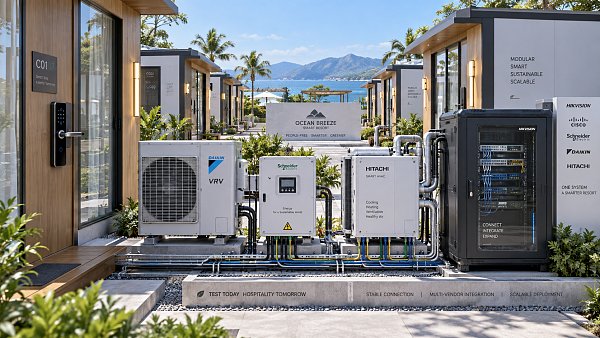
- Central building management integration to prevent isolated systems from operating inefficiently
- Water submetering and leak analytics in guest rooms, back-of-house zones, and landscape systems
- Maintenance monitoring for critical MEP and guest-facing equipment
- Workflow integration across front desk, housekeeping, engineering, and facility management
These areas typically outperform more cosmetic “smart” features because they target recurring cost leakage rather than novelty. For commercial evaluators, this distinction is crucial. A feature-rich interface does not automatically equal operational efficiency.
How to judge whether a smart hotel solution will actually cut waste
One of the biggest mistakes in smart hotel procurement is evaluating systems mainly by dashboard appearance, app convenience, or marketing language such as “AI-powered hospitality.” The real test is whether the infrastructure can produce reliable, repeatable operating gains.
Use the following criteria when comparing vendors or system packages:
Data quality and granularity
Can the system measure room-level, floor-level, or asset-level performance? Broad monthly totals are not enough to identify daily operating waste. Better decisions require granular, real-time, or near-real-time data.
System interoperability
Can it integrate with PMS, BMS, HVAC controls, access systems, utility meters, and maintenance software? Fragmented smart hotel automation often creates a new layer of complexity instead of reducing waste.
Actionability
Does the system only report problems, or can it trigger automated responses? For example, can it shift room climate settings after checkout, issue leak alerts instantly, or generate maintenance tickets automatically?
Verification metrics
Ask how performance is validated. Buyers should request benchmark data on energy savings, water reduction, alert accuracy, downtime reduction, and payback period under comparable operating conditions.
Scalability across property types
For destination operators, developers, or groups managing cabins, resorts, or hotels near amusement facilities, the platform should scale across different occupancy models and building types without requiring a full redesign each time.
Cybersecurity and operational resilience
The more connected the hotel, the more important network integrity becomes. Procurement teams should review security architecture, device reliability, offline fallback behavior, and software update governance.
What concerns decision-makers usually have—and how to address them
Target readers in procurement and business evaluation rarely resist smart hotel systems because they dislike innovation. More often, they are managing valid concerns about cost, compatibility, and execution risk.
“Will the savings justify the investment?”
This is the central question. The answer depends on whether the deployment targets major waste drivers first. A phased rollout often works better than a full-property technology refresh. Start with high-consumption zones and systems where baseline waste is measurable. In many cases, energy, water, and maintenance optimization produce the fastest operational return.
“Will this integrate with existing infrastructure?”
Legacy systems are common in hospitality assets. Buyers should ask for protocol compatibility, retrofit requirements, middleware architecture, and examples of similar integrations. Smart hotel design should reduce fragmentation, not add another disconnected control layer.
“Will staff actually use it?”
A powerful platform fails if workflows remain impractical. The best systems simplify decisions for housekeeping, engineering, and operations teams rather than forcing them into extra reporting work. Role-based interfaces and automated alerts matter more than visual complexity.
“Could automation harm guest experience?”
Poorly configured automation can create discomfort, but well-designed systems do the opposite. They stabilize room conditions, reduce service delays, and detect issues before guests notice them. The right benchmark is not how much automation is installed, but whether it improves operational precision without reducing hospitality quality.
Why smart hotel management is increasingly tied to sustainability compliance
For tourism developers and hospitality procurement directors, waste reduction is now closely linked to compliance and brand competitiveness. Sustainable tourism solutions are being judged with more rigor, especially in projects involving international investment, eco-positioning, or long-term operating partnerships.
Smart hotel management supports sustainability in ways that are auditable:
- Lower energy intensity per occupied room
- Reduced water use through continuous monitoring
- Longer asset life through predictive maintenance
- Lower material waste from fewer avoidable failures and replacements
- Improved carbon reporting through measured utility data
This is where technical verification becomes more important than sustainability claims alone. Buyers increasingly need raw performance data, not just green branding. A solution that cannot demonstrate measurable efficiency gains may offer limited value in serious procurement review.
Where this matters most in tourism and amusement-linked hospitality projects
In the amusement and broader tourism infrastructure sector, hotel operations are rarely isolated. They are often part of larger ecosystems that include entertainment venues, transport links, retail areas, glamping units, or seasonal accommodations. That creates added volatility in occupancy, utilities demand, and service coordination.
Smart hotel IoT solutions are particularly useful in these environments because they can adapt operations to changing demand patterns rather than forcing static resource consumption. For example:
- Resort hotels can reduce room and public-space energy load during low-traffic periods.
- Destination properties can align staffing and service cycles with event-driven occupancy spikes.
- Mixed accommodation sites can compare performance across cabins, lodges, and hotel units using common benchmarks.
- Operators can detect whether sustainability targets are being met at the building level, not just at brand level.
For distributors, agents, and commercial intermediaries, this also creates a stronger sales case. Products supported by engineering metrics and operational proof are easier to position in a market increasingly focused on compliance, ROI, and durability.
A practical framework for evaluating smart hotel waste-reduction potential
If the goal is to make a sound procurement or recommendation decision, use a simple framework:
- Identify the biggest recurring waste categories at the property or project level.
- Establish a measurable baseline for energy, water, labor friction, maintenance incidents, and inventory loss.
- Prioritize systems that act on real-time data, not just report historical summaries.
- Verify integration requirements across existing building and hospitality software systems.
- Request benchmark evidence from comparable deployments.
- Model payback by function rather than treating all smart features as one investment pool.
- Review long-term support and upgradeability to avoid technical obsolescence.
This approach helps teams separate genuine smart infrastructure from superficial digital add-ons.
Conclusion
Smart hotel management cuts daily operating waste when it is deployed as an integrated operational system, not as a standalone technology trend. The strongest value comes from reducing avoidable energy use, detecting water loss early, streamlining labor workflows, improving maintenance timing, and giving operators measurable control over resource consumption. For information researchers, procurement teams, business evaluators, and channel partners, the right decision starts with one principle: judge smart hotel design by verified performance, compatibility, and operational relevance. In a tourism market shaped by tighter margins and stricter sustainable tourism standards, that is what turns automation from a promise into a measurable asset.
Recommended News
 Oct 27, 2026How Do I Compare Resort Water Savings When Occupancy Rates Differ?How do I compare resort water savings when occupancy rates differ? Learn to adjust baselines, track guest-night metrics, and verify real savings for smarter investment decisions.
 Oct 20, 2026Hotel Technology ROI: Calculating Payback Beyond Labor SavingsCalculate hotel technology ROI beyond labor savings. Discover how revenue gains, energy savings, ownership costs, and adoption risks affect payback—and make smarter investment decisions.
 Sep 27, 2026How to Design Scalable System Integration Testing for Multi-Vendor DeploymentsScalable system integration testing for multi-vendor deployments: build resilient, secure, and growth-ready operations with proven interface, resilience, and acceptance strategies.
 Sep 24, 2026Hotel Tourism Benchmarking: Which KPIs Reveal Competitive Market Position?Tourism benchmarking for hotels reveals the KPIs that define competitive position, from RevPAR index and demand quality to profit, guest experience, and asset resilience.
 Sep 20, 2026Supply Chain Analysis: How to Identify Cost, Risk, and Lead-Time BottlenecksSupply chain analysis helps tourism project leaders uncover cost, risk, and lead-time bottlenecks—protecting opening dates, budgets, and guest-ready operations.
 Sep 19, 2026How to Choose Industry Benchmarking Tools That Deliver Actionable Performance InsightsIndustry benchmarking tools: learn how to validate data, compare lifecycle costs, assess compliance, and turn performance evidence into smarter decisions.
 Sep 14, 2026Engineering Performance Testing Trends Reshaping Product Validation WorkflowsEngineering performance testing trend analysis reveals how assembly validation, realistic environmental loads, and digital resilience improve product reliability and reduce field failures.
 Sep 12, 2026Cloud Integration Interoperability Testing: Methods, Metrics, and Release GatesSystem interoperability testing cloud integration: explore practical methods, key metrics, and evidence-based release gates for secure, reliable connected operations.
 Sep 05, 2026What Engineering Performance Testing Should Cover During a Specification ReviewEngineering performance testing for specification review: learn how to verify structural strength, durability, safety, sustainability, and system reliability before costly project decisions.
 Aug 11, 2026How to Evaluate Materials Performance Analysis Services in Europe for Compliance-Critical ProjectsMaterials performance analysis Europe: learn how to compare accredited labs, verify compliance readiness, and choose a provider whose data, methods, and reports stand up to real project scrutiny.
 Jul 27, 2026Product Application Analysis for Procurement: How to Compare Fit, Risk, and ROIProduct application analysis for procurement helps buyers compare fit, compliance risk, lifecycle cost, and ROI with confidence. Learn a practical framework to avoid costly sourcing mistakes.
 Jul 22, 2026How to Evaluate Weather Resistance in Materials Performance Analysis?Materials performance analysis weather resistance explained: learn how to assess UV, moisture, temperature, and corrosion risks to choose durable materials with confidence.
 Jul 15, 2026Cloud Storage for Business: How to Compare Security, Access Speed, and Backup CostsCloud storage for business: compare security, access speed, and backup costs with a practical framework to reduce risk, control spend, and choose the right provider with confidence.
 Jul 14, 2026What Are Standardized Performance Benchmarks Ratings Used For in Vendor Evaluation?Standardized performance benchmarks rating explains how buyers compare vendors with verified data on compliance, durability, and lifecycle value for smarter procurement decisions.
 Jul 13, 2026Product Benchmarking Rating Explained: How to Compare Scores Across SuppliersProduct benchmarking rating explained: learn how to compare supplier scores with confidence, verify methodology, spot hidden risks, and make smarter procurement decisions.
 Jul 13, 2026How to Choose a Product Benchmarking Data Provider for Reliable Market ComparisonsProduct benchmarking data provider selection starts with methodology, transparency, and sector fit. Learn how to compare providers for reliable market insights and smarter procurement decisions.
 Jul 10, 2026Technical Integration Resilience Explained: How to Reduce Downtime Across Connected SystemsTechnical integration resilience explained: learn how to reduce downtime, prevent cascading failures, and improve uptime across connected systems with practical planning insights.
 Jul 08, 2026How to Use Product Benchmarking KPIs to Compare Competing SolutionsProduct benchmarking KPIs help you compare competing solutions with real evidence. Learn how to measure performance, lifecycle cost, compliance, and risk for smarter buying decisions.
 Jul 05, 2026How to Run an Environmental Sustainability Assessment: Metrics, Boundaries, and Trend AnalysisEnvironmental sustainability assessment trend analysis made practical: learn how to set metrics and boundaries, compare lifecycle impacts, and turn sustainability data into smarter decisions.
 Jul 04, 2026Hospitality Design Benchmarks Metrics Explained: Which KPIs Matter for Guestroom Upgrades?Hospitality design benchmarks metrics explained: discover the KPIs that matter most for guestroom upgrades, from lifecycle cost and durability to energy use, maintenance, and guest satisfaction.
 Jul 02, 2026How to Compare Product Category Pricing Models for Better Margin PlanningProduct category pricing model comparison made practical: learn how to evaluate total cost, hidden risks, and lifecycle value to improve margin planning and make smarter sourcing decisions.
 Jun 30, 2026How Technical Explainer Content for Procurement Helps Compare Specs, Risks, and SuppliersTechnical explainer content for procurement helps teams compare specs, uncover supplier risks, and choose solutions that improve compliance, lifecycle value, and long-term performance.
 Jun 29, 2026System Interoperability Testing Vendors: Key Criteria for Compliance and PerformanceSystem interoperability testing vendors compared: discover how to assess compliance, performance, independence, and real-world reliability before costly integration failures happen.
 Jun 28, 2026Product Benchmarking Explained: How to Compare Performance, Cost, and QualityProduct benchmarking explained: learn how to compare performance, cost, and quality with a practical framework that reduces risk, improves supplier selection, and supports smarter long-term decisions.
{item.publish_time}{item.title}{item.description}Quarterly Executive Summaries Delivered Directly.
Join 50,000+ industry leaders who receive our proprietary market analysis and policy outlooks before they hit the public library.