Search News
TerraVista Metrics (TVM)Industry Portal
TerraVista Metrics (TVM)Hot Articles
TerraVista Metrics (TVM)- Synthetic Rattan Resort Furniture: What to Check for Coastal DurabilityBuying synthetic rattan resort furniture? Discover key checks for UV resistance, corrosion protection, and warranty coverage to reduce coastal replacement costs and buy with confidence.
- Six Flags to Add Seat Belts to Goliath and Similar Roller CoastersSix Flags plans to add seat belts to Goliath and similar roller coasters. Learn about the safety changes, Goliath’s closure and what visitors should watch for next.
- Which Hospitality Furniture Compliance Standards Apply to U.S. Hotels?Explore hospitality furniture compliance standards for U.S. hotels, from fire safety and ADA requirements to supplier documentation. Make informed purchases and reduce compliance risks.
Popular Tags
TerraVista Metrics (TVM)Industry NewsSmart Hotel Zigbee Mesh Latency Fixes
auth.Lydia Vancini (Smart Hospitality IoT Consultant)Time
Oct 24, 2026Click Count
In smart hospitality ecosystems, even minor network delays can disrupt guest experience and weaken procurement confidence. This introduction explores smart hotel Zigbee mesh latency through the lens of hospitality benchmarking, helping tourism architects, buyers, and evaluators understand how smart hotel IoT performance, hotel automation PCB assembly specs, and system integration standards shape reliable, data-driven decisions.
For hotels, resorts, serviced apartments, and mixed-use tourism developments, Zigbee mesh latency is not a niche engineering issue. It directly affects lighting scenes, occupancy sensors, smart locks, HVAC triggers, curtain motors, and room-level energy automation. When response delays rise from a typical sub-300 ms range to 1.5–3 seconds, guest perception changes immediately, and operators begin to question device quality, PCB design, firmware maturity, and gateway architecture.
For procurement teams and commercial evaluators, the real challenge is separating marketing claims from measurable performance. TerraVista Metrics approaches the topic as an infrastructure benchmark: not only asking whether a Zigbee network works, but under what device density, floor layout, interference load, and integration depth it continues to perform reliably over 12–36 months of hospitality operation.
Why Zigbee Mesh Latency Becomes a Hotel Operations Problem
A Zigbee mesh network is designed to let devices relay messages across multiple nodes, which is useful in guest rooms, corridors, public areas, and back-of-house spaces where direct gateway coverage is uneven. In a small demo environment with 20–30 nodes, latency may seem negligible. In a live property with 300–1,500 endpoints, however, routing overhead, device sleep cycles, interference, and poor network planning can compound quickly.
Hospitality environments are especially demanding because many actions are event-driven and time-sensitive. A guest opens a door and expects lights, climate presets, and curtains to react within 0.5–1 second. If the response takes 2 seconds or more, the system feels unreliable even if it technically completes the command. This is why smart hotel IoT performance must be measured against human perception, not only protocol specifications.
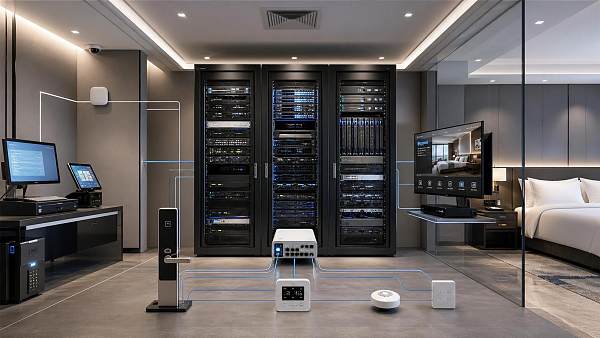
Latency problems often originate from architectural mismatches rather than one defective component. A hotel may combine battery-powered sensors, mains-powered routers, third-party gateways, and a building management platform that polls devices too frequently. The result is packet congestion, route instability, and delayed command execution. In procurement reviews, these issues are often misclassified as “software bugs” when the deeper cause is mesh design and PCB-level implementation quality.
From a commercial standpoint, latency has a downstream cost. Slower room automation increases guest complaints, raises maintenance dispatch frequency, and forces integrators to perform repeated on-site tuning. A network that requires 2–3 corrective visits per floor is not cost-efficient, even if the original device quotation looked competitive.
Common latency triggers in hospitality deployments
- Overloaded gateway zones where 80–120 devices are attached without segmentation by floor, wing, or functional area.
- Insufficient mains-powered routers, leaving battery devices to depend on weak or unstable hop paths.
- RF interference from Wi-Fi channels, BLE beacons, smart TVs, and poorly isolated power supplies.
- PCB assembly inconsistency that reduces radio sensitivity or causes unstable power regulation under load.
- Cloud-to-edge logic designs that route local automation tasks through remote servers instead of local execution.
For buyers comparing vendors, the practical lesson is clear: low latency is not only a function of chipset selection. It depends on network topology, repeater density, firmware routing behavior, enclosure design, antenna layout, and how the hotel automation platform schedules control traffic.
Benchmarking Smart Hotel Zigbee Mesh Performance
A useful benchmark framework should evaluate more than “connected” versus “not connected.” In hospitality procurement, latency should be tested in at least 4 dimensions: command response time, route stability, packet retry rate, and degradation under density. A room scene trigger that averages 250 ms in an empty lab but rises to 1.8 seconds when 60 rooms are active is not deployment-ready.
The table below outlines practical benchmark ranges procurement teams can use when comparing smart hotel Zigbee systems. These are general decision ranges for commercial evaluation, not universal certification limits, and should be validated against project-specific layouts and device counts.
The key conclusion is that latency must be reviewed as a system behavior over time, not a one-time showroom demonstration. Testing should cover morning housekeeping peaks, evening occupancy peaks, and failover conditions. In larger properties, a 24–72 hour stress test provides a more realistic picture than a 30-minute acceptance trial.
Benchmark conditions that matter
A serious evaluation should document floor materials, wall density, elevator cores, service shafts, and metal-rich interior elements. Reinforced concrete and mirrored finishes can alter RF behavior significantly. Device count per gateway, average hop count, and the number of battery endpoints per room should also be recorded because these variables influence the final latency result more than brochure specifications suggest.
Recommended test profile
- Test at least 3 room types or zones, such as standard rooms, suites, and corridor/service areas.
- Simulate 30%, 70%, and 100% command concurrency to reflect real occupancy patterns.
- Measure local automation separately from cloud-linked logic.
- Record both average latency and worst-case spikes above 1 second.
This type of benchmark gives procurement directors a stronger basis for comparing suppliers, especially when multiple integrators claim equivalent compatibility with the same hotel PMS, BMS, or energy platform.
PCB Assembly and Hardware Design Fixes That Reduce Latency
When hotel teams hear “latency issue,” they often think first about software. In practice, hardware quality and hotel automation PCB assembly decisions play a major role. A Zigbee module may use a capable radio chip, yet poor solder quality, unstable voltage regulation, weak RF shielding, or suboptimal antenna placement can degrade signal performance enough to create visible delays in mesh response.
For hospitality-grade deployments, device boards should be evaluated for operating stability across common indoor temperature bands such as 0°C to 45°C, especially in ceiling cavities, equipment closets, and facade-adjacent rooms. Power conditioning matters because relay switching, motor start-up, and long cable runs can create noise that increases packet retransmission. In busy room-control panels, a small electrical design weakness can multiply into network-wide responsiveness problems.
Another common problem is under-designed router nodes. In Zigbee mesh, mains-powered devices such as wall switches, control panels, and dedicated repeaters carry a heavy routing burden. If these units are built on boards with thermal stress issues or low-quality components, route tables can become unstable after weeks of continuous operation. That is why buyers should ask not only for function lists, but also for endurance and board-level consistency information.
Hardware factors to verify during supplier assessment
The following checklist helps turn technical review into a procurement tool. It is especially useful when evaluating OEM or ODM hospitality device manufacturers whose products appear similar at the enclosure level but differ substantially in engineering depth.
The purchasing implication is straightforward: hospitality buyers should treat PCB assembly quality as an operational reliability issue, not a hidden factory detail. A stronger board and RF design often reduces troubleshooting hours, avoids over-installation of repeaters, and supports more predictable room commissioning.
Practical fix strategies
- Increase mains-powered router density in weak zones, typically one reliable router every 8–12 meters in corridor-heavy layouts.
- Separate noisy loads and radio modules more effectively in wall panels and room controllers.
- Use firmware and hardware combinations validated under 24-hour stress tests rather than one-off engineering samples.
- Specify batch-level quality controls before large-volume deployment, especially for projects above 500 rooms.
These fixes do not eliminate every delay scenario, but they remove many of the hidden physical causes that turn a promising smart hotel concept into an unstable field deployment.
Network Architecture Fixes for Large Hospitality Projects
In medium and large properties, the most effective latency reduction usually comes from architecture changes rather than device replacement alone. A Zigbee mesh should be designed by operational zone, not only by floor plan convenience. Guest rooms, corridors, public areas, meeting spaces, and service rooms have different traffic patterns. Grouping too many unlike functions into one mesh domain often increases collisions and route complexity.
One of the most common corrective measures is gateway segmentation. Instead of attaching 100 or more endpoints to one gateway cluster, many projects perform better when split into smaller domains of roughly 40–80 active devices, depending on automation intensity. This reduces contention, shortens average route paths, and makes diagnosis easier when latency spikes occur in a specific wing or floor.
Local execution is equally important. Basic hospitality automations such as entry scene, unoccupied setback, curtain open/close, and night mode should run at the edge whenever possible. If every trigger depends on cloud confirmation or upstream middleware, the hotel introduces avoidable delay and a larger failure surface. For critical in-room experience, local logic typically delivers faster and more consistent results.
Architecture comparison for latency control
The table below compares common deployment patterns seen in hospitality projects and how they affect latency, maintenance, and procurement risk.
For most hospitality buyers, the most resilient pattern is segmented Zigbee control with local room logic and upstream platform integration reserved for supervision, analytics, and non-critical orchestration. This approach balances speed, maintainability, and future expansion.
Implementation sequence that reduces rework
- Map room types, public areas, and service zones before assigning gateway domains.
- Identify high-interference areas such as AV-heavy conference floors and back-of-house electrical rooms.
- Commission one pilot block of 20–50 rooms and measure latency for 7–14 days.
- Adjust repeater density and logic placement before full-scale rollout.
This phased method is especially valuable for developers, distributors, and hotel procurement teams seeking predictable commissioning timelines and lower post-handover dispute risk.
Procurement Criteria, Delivery Risk, and Commercial Evaluation
For sourcing teams, a low quoted device price does not guarantee a lower project cost. The more relevant question is how many engineering hours, reconfiguration rounds, and maintenance interventions the system will need after installation. A smart hotel Zigbee mesh with hidden latency problems can turn a 6-week deployment into a 10-week commissioning cycle, particularly when multiple subcontractors are involved.
Commercial evaluation should therefore combine technical metrics with delivery discipline. Buyers should review sample testing, firmware update procedures, spare policy, gateway failover design, and support response times. A supplier that can explain how it handles packet retries, route reformation, and mixed-vendor integration generally presents lower execution risk than one that only demonstrates polished mobile app interfaces.
Key procurement checkpoints
- Request latency testing under realistic load, not only single-room demo conditions.
- Ask for architecture guidance by floor or wing, including expected router density and gateway count.
- Confirm whether local room automations continue to function during WAN or platform interruptions.
- Review the manufacturer’s PCB assembly controls and batch-level test process for hospitality devices.
- Define acceptance criteria in writing, such as target scene response below 1 second and recovery time below 60 seconds after node loss.
Distributors and agents should pay special attention to support scalability. A technically acceptable product can still become commercially difficult if every property requires custom tuning from the original engineering team. Products with repeatable templates, documented topology rules, and clear debug tools are easier to distribute across regions and hotel brands.
Typical risk areas in hotel smart system sourcing
The most common mistakes are underestimating device density, accepting generic compatibility claims, and skipping pilot validation. Another frequent issue is treating all room controller boards as interchangeable. In reality, differences in relay design, power noise control, and RF layout can materially change network behavior after 3–6 months of operation.
This is where a benchmarking-driven approach adds value. By translating technical performance into comparable procurement criteria, buyers can better evaluate total project stability instead of relying on surface-level product claims alone.
FAQ: Practical Questions About Fixing Zigbee Mesh Latency in Hotels
How fast should a smart hotel Zigbee response be for guest-facing control?
For room-level commands such as lighting, entry scene, or curtain response, a practical target is 150–500 ms for single actions and under 1 second for coordinated scenes involving 4–8 devices. Once delays consistently exceed 1.5 seconds, guests often perceive the system as lagging even if the command completes successfully.
Can adding more Zigbee devices improve latency?
Not always. Adding the right mains-powered router nodes can improve route quality, but simply increasing device count may worsen congestion. The key is balanced topology. In many hotel layouts, performance improves when router placement is planned intentionally and gateway loads stay within realistic limits such as 40–80 active endpoints per segment.
What should buyers ask about PCB assembly during supplier review?
Buyers should ask about power stability design, RF layout controls, thermal behavior under 24/7 operation, and production test coverage. The goal is not to audit the factory in depth, but to verify that the device board can support long-term hospitality use without introducing intermittent radio performance issues that later appear as latency.
How long should a meaningful pilot test last before mass procurement?
A useful pilot typically lasts 7–14 days for a small block and can extend to 24–72 hours of concentrated stress testing for latency and failover observations. For larger projects, commissioning one sample zone of 20–50 rooms before full rollout is a practical way to verify mesh behavior, integration logic, and maintenance workflow.
Is cloud integration bad for hotel automation latency?
Cloud integration is valuable for analytics, monitoring, and portfolio management, but guest-facing room controls should not depend entirely on it. The strongest architecture usually keeps immediate room actions local while sending status, logs, and optimization data upstream. This preserves speed while still supporting centralized management.
Smart hotel Zigbee mesh latency is ultimately a procurement and infrastructure quality issue, not just a troubleshooting detail. The most reliable fixes combine disciplined benchmarking, stronger PCB assembly scrutiny, segmented network design, and local-first automation logic. For tourism developers, hotel operators, evaluators, and channel partners, these factors make the difference between a visually impressive demo and a dependable hospitality system that performs at scale.
TerraVista Metrics helps decision-makers interpret these engineering variables through measurable hospitality benchmarks, making supplier comparison more transparent and project risk easier to control. If you are evaluating smart hotel IoT performance, hotel automation hardware quality, or integration-readiness for a new tourism asset, contact us to discuss a tailored benchmarking framework, request a custom evaluation plan, or learn more about practical procurement guidance.
Recommended News
 Oct 20, 2026Amadeus Adds Embedded Travel Protection to iHotelierAmadeus adds embedded travel protection to iHotelier with Pattern. Explore the potential for greater guest confidence, new hotel revenue and key considerations before adoption.
 Oct 17, 2026Custom Smart Hotel Solutions: Integrating Room Controls With Your Existing PMSDiscover a smart hotel custom solution that connects room controls to your existing PMS, enhances guest comfort, and improves reliability without unnecessary infrastructure replacement.
 Oct 25, 2026How Do I Check Smart Lock Compatibility With Existing Hotel Software?How do I check whether smart locks will work with our existing hotel software? Discover PMS checks, mobile-key tests, and outage safeguards to validate compatibility before you invest.
 Oct 22, 2026Where to Place Smart Sensors in Hotels for Early Water Leak DetectionDiscover where to place smart sensors for hospitality properties to detect water leaks early. Protect guestrooms, HVAC units, and service areas with practical placement tips.
 Oct 22, 2026How Smart Sensors Connect to Hotel Property and Building Management SystemsExplore smart sensors for hospitality property management: learn how PMS and BMS integration supports guest comfort, reliable controls, and security—and what to verify before deployment.
 Oct 19, 2026How Can You Verify Energy Cost Savings From Hotel Room Automation?How do I check whether room automation actually reduced energy costs? Learn to verify hotel savings with occupancy-adjusted data, tariff analysis, and comfort checks before investing.
 Oct 17, 2026How Do You Revoke a Former Contractor's Access to Hotel Smart Systems?How do I revoke a former contractor's access to hotel smart systems? Get a practical checklist to disable accounts, revoke keys, and secure integrations without disrupting hotel operations.
 Sep 25, 2026Resort System Integration: How to Connect PMS, Guestroom Controls, and KiosksResort system integration guide: connect PMS, guestroom controls, and kiosks with reliable workflows, secure data, and seamless guest experiences.
 Sep 08, 2026How to Build Stable Interoperability Across Hotel Guestroom SystemsHospitality system interoperability stable: learn how hotels can align room states, command priorities, local fallback, and testing for reliable guestroom operations.
 Aug 18, 2026What Hotel System Interoperability Means for PMS, POS, and Guestroom TechHotel system interoperability shapes how PMS, POS, and guestroom tech perform in real hotels. Learn the key risks, validation points, and smarter ways to build resilient operations.
 Aug 10, 2026How to Evaluate a Smart Hotel System Integration Quotation Before ApprovalSystem integration quotation for smart hotels: learn how to assess scope, interoperability, cybersecurity, lifecycle cost, and hidden risks before approval.
 Jul 28, 2026How to Evaluate a Smart Hotel Application for Guest Experience and Staff EfficiencySmart hotel application evaluation made practical: learn how to compare integrations, guest journey design, staff workflows, security, and total cost to choose a smarter hotel solution.
 Jul 12, 2026Premium Camping Q2 Up 19% as Europe Expands Guestroom AutomationPremium camping grew 19% in Q2 as Europe accelerates guestroom automation. Discover how Germany, France, and Switzerland are driving demand for smarter campsites.
 Jul 11, 2026System Integration Testing for Resorts: Key Steps Before Guestroom Tech Goes LiveSystem integration testing for resorts: discover the 6 essential pre-opening steps to prevent guestroom tech failures, reduce launch risk, and protect guest satisfaction.
 Jul 10, 2026Hospitality System Interoperability Buyer Guide: What to Check Before You BuyHospitality system interoperability buyer guide: learn what to verify before you buy, from APIs and device compatibility to security, scalability, hidden costs, and vendor risk.
 Jul 09, 2026CPSC advisory puts offline AI checks on hotel voice devicesCPSC advisory reshapes compliance for hotel voice devices with offline AI. Learn how FCC Part 15 checks, labeling, and shipment readiness may impact U.S. hotel projects.
 Jul 08, 2026CPSC Sets Offline AI Rule for Guestroom Voice ModulesCPSC Sets Offline AI Rule for Guestroom Voice Modules: learn how the 2026 U.S. update impacts compliance, imports, hotel tech sourcing, and recall risk for suppliers.
 Jul 07, 2026CPSC Sets Offline AI Bar for Hotel Voice DevicesCPSC sets a new offline AI bar for hotel voice devices. Learn how the 2026 guidance impacts guestroom automation, import checks, supplier compliance, and hotel procurement decisions.
![]() Jul 06, 2026CPSC Requires Offline AI in Guestroom Voice SystemsCPSC requires offline AI in guestroom voice systems starting Oct 1, 2026. Learn how this rule impacts Alexa/Google integrations, compliance, procurement, and U.S. market shipments.
Jul 06, 2026CPSC Requires Offline AI in Guestroom Voice SystemsCPSC requires offline AI in guestroom voice systems starting Oct 1, 2026. Learn how this rule impacts Alexa/Google integrations, compliance, procurement, and U.S. market shipments. Jul 06, 2026How to Reduce Hospitality System Interoperability Latency Across PMS, POS, and IoTHospitality system interoperability latency affects guest experience, revenue accuracy, and IoT responsiveness. Learn practical ways to reduce delays across PMS, POS, and smart hotel systems.
 Jul 05, 2026CPSC Orders Offline AI for Hotel Voice ModulesCPSC orders offline AI for hotel voice modules by Oct 1, 2026. Learn how local AI inference rules will impact U.S. hotel automation sourcing, integration, and compliance.
 Jul 04, 2026CPSC Mandates Offline AI for Guestroom Voice UnitsCPSC mandates offline AI for guestroom voice units entering the U.S. Learn how FCC Part 15B and UL 60730-1 compliance will reshape hotel procurement, OEM design, and delivery plans.
 Jul 03, 2026CPSC Requires Offline AI for Guestroom Voice ModulesCPSC Requires Offline AI for Guestroom Voice Modules: learn what the emergency U.S. rule means for compliance, sourcing, hotel tech procurement, and avoiding delisting or fines.
 Jul 02, 2026CPSC Requires Offline AI for Hotel Voice DevicesCPSC Requires Offline AI for Hotel Voice Devices: learn how the new U.S. rule impacts hotel automation, OEM/ODM suppliers, and guestroom voice compliance.
{item.publish_time}{item.title}{item.description}Quarterly Executive Summaries Delivered Directly.
Join 50,000+ industry leaders who receive our proprietary market analysis and policy outlooks before they hit the public library.