Search News
TerraVista Metrics (TVM)Industry Portal
TerraVista Metrics (TVM)Hot Articles
TerraVista Metrics (TVM)- Trailborn Acquires Two Yosemite Lodges and Takes Over Firefall Ranch ManagementTrailborn acquires two Yosemite lodges and takes over Firefall Ranch management. Explore the deal and what it means for outdoor hospitality.
- What Is Premium Camping? Comfort, Costs, and What to ExpectDiscover what premium camping offers, from comfortable beds to outdoor stays. Compare costs, amenities, and practical tips before you book.
- Hong Kong Unveils First Five-Year Modular Construction Plan to Advance Greater Bay Area CooperationHong Kong's five-year modular construction plan aims to boost Greater Bay Area cooperation. Explore its potential impact on projects and procurement.
Popular Tags
TerraVista Metrics (TVM)Industry NewsChoosing Prefab Cabin Suppliers: Quality, Lead Times and Delivery Costs
auth.Julian Thorne (Sustainable Infrastructure Architect)Time
Nov 21, 2026Click Count
Choosing prefab cabin suppliers requires more than comparing catalog prices and architectural styles. The strongest choice combines documented quality, credible production scheduling, and a complete delivered cost.
For procurement professionals, the real decision rests on verifiable build quality, dependable lead times, and the full cost of delivery to the project site.
Differences in insulation, structural performance, production capacity, shipping terms, and local compliance can all affect budgets and opening schedules throughout a hospitality development project.
This guide explores how to assess suppliers using practical benchmarks, ask for meaningful documentation, and identify hidden costs before committing to a purchase.
Start With a Specification Suppliers Can Price Consistently
Before requesting quotations, define the cabin’s intended use, location, occupancy, expected service life, and opening date. These details determine many technical and commercial requirements.
A seasonal glamping unit in a mild climate needs a different envelope and utility package from a year-round cabin exposed to snow or coastal winds.
Specify the number of units, floor area, accessibility needs, interior finishes, furniture, appliances, and required utility connections. Identify optional features separately to make comparisons easier.
Provide site information, including road restrictions, unloading space, ground conditions, available utilities, and the distance between the unloading point and each final cabin position.
Ask every supplier to price the same scope and identify deviations. A low initial quote may exclude foundations, bathrooms, commissioning, transport, or installation supervision.
Where requirements remain uncertain, request a base proposal and clearly priced alternatives. This reveals the financial effect of decisions without making competing offers impossible to compare.
How Can You Verify Cabin Quality Before Ordering?
Start with the proposed design and bill of materials, then ask for evidence that the finished product matches them. Attractive renderings cannot establish durability.
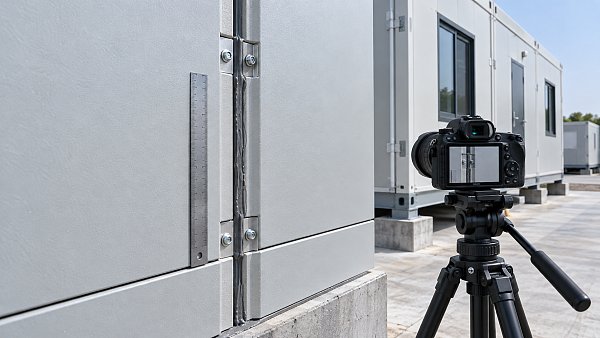
Request drawings showing structural members, wall and roof assemblies, floor construction, insulation, moisture control, windows, doors, and the connection between modules and foundations.
For hospitality projects, examine components guests will use repeatedly: door hardware, flooring, bathroom fixtures, ventilation controls, and finishes around entrances and wet areas.
Ask for product specifications and test reports relevant to the actual configuration. Confirm the report identifies the product, test method, result, and issuing organization.
A certificate for an individual material does not automatically establish the performance of a complete wall assembly or demonstrate approval for a local installation.
Request photographs or inspection records from comparable completed projects, preferably operating in similar climates. Speak with references about defects, maintenance, and supplier responsiveness.
If the order is substantial, arrange a factory visit or independent inspection. Agree on inspection points, acceptance criteria, and the process for correcting defects.
Check the structure against the site
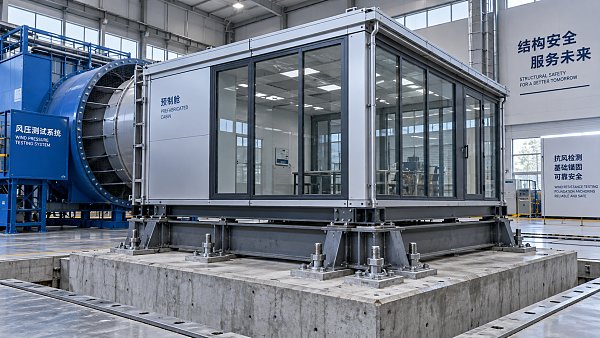
Ask a qualified local structural professional to review the design for applicable wind, snow, seismic, and ground conditions, including transport and lifting loads.
Request calculations, connection details, and foundation reactions for the supplied configuration. Confirm who designs foundations and who signs off on the interface with the cabin.
Check how the structure will be anchored and whether the design assumes sheltered exposure. A cabin suitable for one site may need changes elsewhere.
Compare thermal and moisture performance
Ask for the insulation type and thickness in each assembly, but also request whole-assembly thermal performance where available, including the units and calculation method.
Check window performance, air sealing, ventilation, and thermal bridges around frames and structural connections. Insulation thickness alone cannot predict heating or cooling costs.
Review condensation and moisture-control details for the local climate. Ask how the design manages water at roofs, windows, bathrooms, and junctions between prefabricated sections.
For coastal, humid, or high-rainfall sites, examine corrosion protection, drainage, and maintenance requirements. Specify the expected exposure rather than accepting a generic weather-resistant claim.
Separate sustainability claims from evidence
If environmental performance matters to the project, request relevant material declarations, sourcing records, or lifecycle information, and check which products and stages they cover.
Compare claims on a consistent basis. A recycled-content figure, an operational energy estimate, and a whole-building carbon assessment answer different questions and should not be treated interchangeably.
Who Is Responsible for Permits and Local Compliance?
Determine the applicable approval pathway before placing an order. Requirements depend on the jurisdiction, occupancy, cabin design, and whether the structure is permanent or temporary.
Engage the local authority and qualified design professionals early. A supplier’s experience in another market does not establish that its standard model meets local rules.
Ask for a compliance matrix covering the applicable building, fire, electrical, plumbing, energy, and accessibility requirements. Identify the evidence and responsible party for each item.
Check whether drawings, calculations, factory inspections, or components need local approval. Imported electrical equipment and plumbing fixtures may require substitutions or additional verification.
For guest accommodation, review fire separation, escape routes, alarms, accessibility, and site layout alongside the cabin itself. Approval often depends on the complete development.
Include time and budget for design revisions. State in the contract who pays when a proposed specification must change to meet an identified requirement.
How Reliable Is the Supplier’s Lead Time?
A quoted production period is only one part of the schedule. Ask suppliers to map the entire path from contract signing to operational handover.
Typical stages include design approval, permitting, material procurement, manufacturing, factory inspection, transport, customs clearance where applicable, installation, utility connections, and final inspection.
For each stage, request a duration, start condition, responsible party, and key dependency. Clarify whether the quoted lead time begins at deposit or drawing approval.
Ask what production capacity is available for your order and whether a factory slot is reserved. A general monthly output figure does not guarantee availability.
Check the supply status of long-lead components such as glazing, electrical equipment, and specialized finishes. Request a process for approving substitutes before procurement begins.
For multiple cabins, ask whether deliveries will be staged and how output rates may change during production. Align the sequence with site readiness and installation capacity.
Build a contingency around the opening date, informed by the project’s risks. Customs, severe weather, road permits, and incomplete site works can disrupt delivery.
Use contract milestones for approved drawings, production completion, inspection, dispatch, and delivery. Define notice requirements, remedies for delay, and any agreed exclusions or relief events.
What Does Delivery to the Site Actually Cost?
Compare suppliers using a landed and installed cost, not just a cabin price. The lowest factory quotation can become the most expensive after logistics.
Ask each supplier to break out the costs and assumptions below, including taxes and duties where applicable. Have local contractors quote any excluded work.
- Factory packing, protective wrapping, loading, and preparation for transport.
- Inland haulage at origin, port handling, freight, insurance, and destination charges.
- Customs clearance, duties, import taxes, inspections, and documentation fees.
- Oversize permits, route surveys, escorts, restricted travel windows, and local haulage.
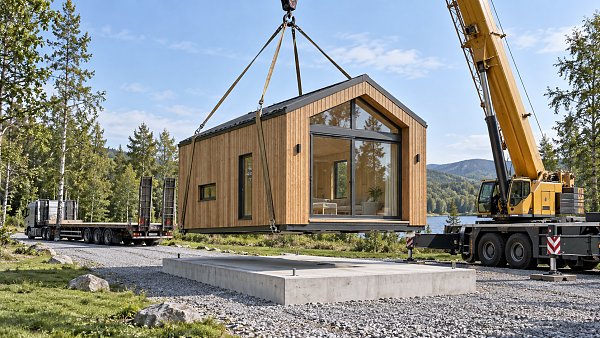
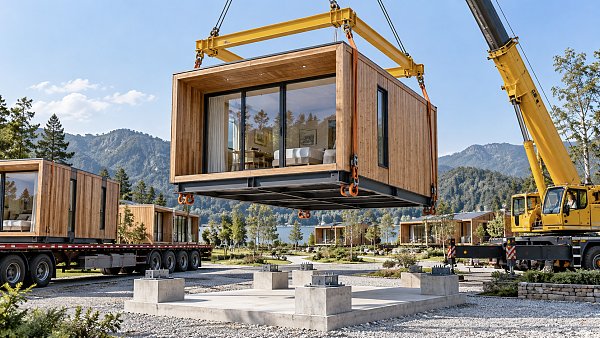
- Unloading equipment, crane mobilization, lifting crews, temporary storage, and site movement.
- Foundations, installation, utility connections, commissioning, inspections, and repairs after transport.
Confirm the dimensions and weight of each transport section, including packaging. A wider or heavier module may require special permits, escorts, or different equipment.
Review the route from the nearest suitable port or factory to the site. Bridges, road curvature, overhead lines, and soft ground can affect feasibility.
Ask who arranges cargo insurance, what risks and value it covers, and how damage is documented. Check whether coverage extends through unloading and site placement.
For international purchases, specify the agreed Incoterms rule and version, named place, and any separate unloading or installation obligations. Check when risk transfers between parties.
Incoterms do not determine every contractual issue, including ownership or payment. Address those separately and confirm that the chosen rule fits the actual transport arrangement.
Use a simple delivered-cost comparison
For illustration, suppose Supplier A quotes $40,000 per cabin and Supplier B quotes $44,000. Both prices cover the same agreed cabin specification.
If A’s transport, unloading, and installation add $15,000 while B’s add $8,000, their estimated installed costs become $55,000 and $52,000 respectively.
These figures are illustrative, not market prices. Add duties, taxes, foundations, and other project costs as applicable before using the comparison for a decision.
Which Contract Terms Protect the Project?
Attach the approved specification, drawings, finishes schedule, compliance responsibilities, and delivery scope to the contract. Record any exclusions and resolve conflicting documents before signature.
Define acceptance at factory inspection, delivery, and final handover. Include measurable criteria, a defect list, correction deadlines, and responsibility for retesting after repairs.
Link payments to verifiable milestones that reflect the commercial agreement. Consider how deposits, progress payments, and any retention affect exposure if production or delivery fails.
Review warranties for structural elements, weatherproofing, finishes, appliances, and installation. Check coverage periods, exclusions, claim procedures, response times, and who pays for site visits.
Ask how spare parts will be supplied and whether replacement components are available locally. Proprietary windows, locks, or control systems can complicate future repairs.
Confirm how changes are priced and approved after the order. Even a minor layout adjustment can affect engineering, production slots, shipping dimensions, or permits.
How Should Procurement Teams Compare Prefab Cabin Suppliers?
Use a weighted scorecard after checking mandatory requirements. Disqualify proposals that cannot meet essential safety, compliance, site, or delivery conditions before ranking the remainder.
An illustrative weighting is 35% for technical quality and compliance, 25% for total delivered cost, 25% for schedule confidence, and 15% for service support.
Adjust those weights to the project. A remote site may need greater emphasis on logistics and service, while a fixed opening date elevates schedule confidence.
Score evidence rather than promises. For example, reward a documented production slot and component schedule more highly than an unsupported statement of fast delivery.
Record assumptions and unresolved items beside each score. Obtain revised quotations when scope changes, so the final recommendation compares equivalent offers on the same basis.
Before award, review references, financial and operational capacity, inspection arrangements, contract exceptions, and the supplier’s plan for defects or disruption. Escalate material gaps for resolution.
Make the Final Decision on Evidence and Total Exposure
The best supplier is the one that can deliver the specified cabins to your site, meet applicable requirements, and support them throughout their operating life.
Confirm the technical evidence, a realistic milestone schedule, and the full installed cost before signing. Together, these give procurement teams a defensible basis for selection.
Recommended News
 Nov 21, 2026Hong Kong Unveils First Five-Year Modular Construction Plan to Advance Greater Bay Area CooperationHong Kong's five-year modular construction plan aims to boost Greater Bay Area cooperation. Explore its potential impact on projects and procurement.
 Nov 09, 2026Choosing Prefab Cabin Suppliers: Quality, Lead Times and Delivery CostsCompare prefab cabin suppliers on quality, lead times, compliance, and total delivery costs. Learn what to verify before you buy and avoid costly surprises.
 Nov 04, 2026ICC Expert Examines Code Readiness for Modular ConstructionModular construction codes are evolving. Explore ICC expert insights on off-site compliance, technical integration and the ICC/MBI 1200 standards.
 Nov 04, 2026Choosing an Eco Cabin Certification Company: Standards and CredentialsChoosing an eco cabin certification company? Learn how to verify credentials, assess standards and compare evidence before you invest.
 Nov 01, 2026Choosing an H-Type Automatic Cage System for 30,000+ Laying HensChoosing a >30000 Layers H Type Automatic Battery Cage? Compare capacity, ventilation, welfare, automation and costs before investing.
 Oct 28, 2026Modular Homes Draw Canton Fair Buyers as Chinese Manufacturing Expands OverseasModular homes draw Canton Fair buyers as Chinese manufacturers expand overseas. Explore customization opportunities and standards checks to guide smarter procurement decisions.
 Oct 21, 2026Prefab Cabin Integration Testing: Power, HVAC, and Controls Checks Before DeliveryExplore prefab integration testing for cabins to verify power, HVAC, controls, and fault recovery before delivery. Discover key checks to reduce risk and make confident acceptance decisions.
 Oct 29, 2026How Do I Choose Regional Lifecycle Data for Imported Cabin Materials?How do I choose regional lifecycle data for imported cabin materials? Learn to compare EPDs, match production regions, and assess transport impacts for smarter procurement decisions.
 Oct 28, 2026Do Locally Sourced Cabins Always Have a Lower Carbon Footprint?Do locally sourced cabins always have a lower carbon footprint? Discover how materials, transport, energy use, and lifespan affect emissions—and make smarter cabin sourcing decisions.
 Oct 27, 2026How Can I Keep Cabin Installation Delays From Delaying a Resort Opening?How do I keep cabin installation delays from pushing back a resort opening? Discover practical steps for permits, site readiness, and phased launches to protect your opening date.
 Oct 20, 2026What Is Modular Tourism, and Where Do Prefab Guest Cabins Make Sense?Explore modular tourism and discover where prefab guest cabins work best. Compare site access, approvals, infrastructure, and costs to plan a smarter tourism investment.
 Oct 19, 2026How Do You Prevent Condensation Inside an Eco Cabin?How do I stop condensation inside an eco cabin? Discover practical ventilation, humidity control, and insulation tips to reduce dampness and keep your cabin dry and comfortable.
 Oct 18, 2026How Much Does an Eco Cabin Cost Including Delivery and Installation?How much does an eco cabin cost once delivery and installation are included? Discover hidden site costs, compare quotes, and build a reliable guest-ready budget before you buy.
 Oct 17, 2026Why Is a Well-Insulated Cabin Still Expensive to Cool?Why is a well-insulated cabin still expensive to cool? Uncover hidden solar gain, air leaks, humidity, and HVAC issues—and learn how to cut cooling costs without sacrificing comfort.
 Oct 16, 2026Can a Modular Cabin Be Relocated Without Voiding Its Warranty?Can a modular cabin be relocated without losing its warranty? Discover the approval, transport, and reinstallation steps that help protect coverage and avoid costly relocation mistakes.
 Oct 15, 2026Do Cracks Around Cabin Joints Require an Engineering Inspection?Do cracks around cabin joints need an engineering inspection? Discover key warning signs, when monitoring is appropriate, and how to choose the right next step before repairs.
 Oct 15, 2026How Do You Verify a Prefab Cabin's Wind-Load Rating?How do I verify a prefab cabin's wind-load rating? Discover the engineering reports, site checks, and anchorage details you need to assess supplier claims and buy with confidence.
 Oct 14, 2026What Makes Eco Cabins Sustainable? Materials, Energy Use, and Site ImpactWhat makes eco cabins truly sustainable? Explore materials, energy use, and site impact, plus the evidence you need to compare options and make smarter, greener choices.
 Sep 22, 2026Industrial Compressors: How to Size Air Capacity and Pressure for Factory DemandIndustrial compressors sizing guide: calculate factory air capacity, end-use pressure, peak demand, receiver storage, leakage, and energy-efficient system performance.
 Sep 09, 2026Sustainable Building Materials Pricing: How Buyers Compare Cost, Life Cycle, and RiskSustainable building materials pricing explained: compare installed cost, life-cycle value, carbon evidence, and supply-chain risk for smarter procurement decisions.
 Aug 29, 2026How to Assess Modular Building Suitability for Middle East Climate and Site ConditionsModular building assessment Middle East: evaluate heat, dust, corrosion, logistics, compliance, and lifecycle value for resilient site-ready projects.
 Aug 16, 2026EU Sets Mandatory Carbon Footprint Certification for Imported Modular CabinsEU mandatory carbon footprint certification will reshape imported modular cabins compliance from 2027. Learn key EU rules, EN 15804+A2 impacts, exporter risks, and how to prepare early.
 Aug 12, 2026New Exit Compliance Rule Reshapes Bids and AI Travel ProofExit compliance rule now reshapes bids and AI travel proof, raising export compliance demands for glamping tents, modular cabins, smart lighting, and kiosk tech. Learn what changes first.
 Jul 13, 2026EU Fire Rule Tightens Testing for Modular CabinsEU Fire Rule Tightens Testing for Modular Cabins: learn how EN 13501-1:2026 shifts CE compliance to component fire testing, impacts lead times, and affects EU export planning.
{item.publish_time}{item.title}{item.description}Quarterly Executive Summaries Delivered Directly.
Join 50,000+ industry leaders who receive our proprietary market analysis and policy outlooks before they hit the public library.