Search News
TerraVista Metrics (TVM)Industry Portal
TerraVista Metrics (TVM)Hot Articles
TerraVista Metrics (TVM)- Synthetic Rattan Resort Furniture: What to Check for Coastal DurabilityBuying synthetic rattan resort furniture? Discover key checks for UV resistance, corrosion protection, and warranty coverage to reduce coastal replacement costs and buy with confidence.
- Six Flags to Add Seat Belts to Goliath and Similar Roller CoastersSix Flags plans to add seat belts to Goliath and similar roller coasters. Learn about the safety changes, Goliath’s closure and what visitors should watch for next.
- Which Hospitality Furniture Compliance Standards Apply to U.S. Hotels?Explore hospitality furniture compliance standards for U.S. hotels, from fire safety and ADA requirements to supplier documentation. Make informed purchases and reduce compliance risks.
Popular Tags
TerraVista Metrics (TVM)Industry NewsHow to Read a Structural Fatigue Test Report
auth.Julian Thorne (Sustainable Infrastructure Architect)Time
Oct 24, 2026Click Count
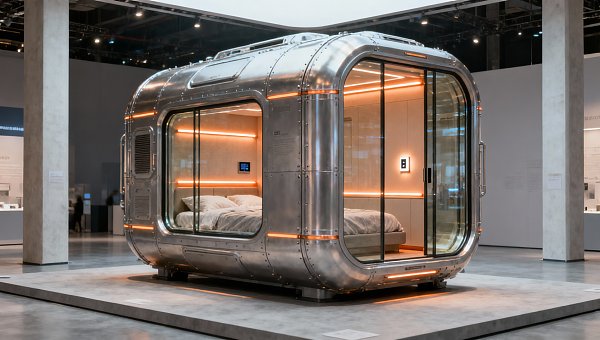
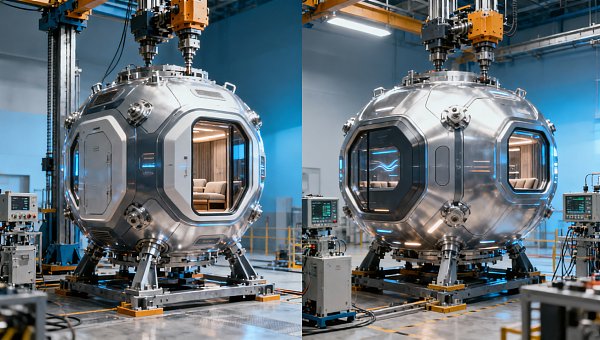
Reading a structural fatigue test report is essential for buyers and evaluators comparing amusement hardware, eco-friendly cabins, and smart hotel IoT systems. For tourism architects and procurement teams, understanding indicators behind a space capsule structural fatigue test, modular building wind load resistance, and hospitality benchmarking helps verify durability, compliance, and long-term value across today’s evolving hospitality ecosystem.
What does a structural fatigue test report actually tell you?
A structural fatigue test report is not just a pass-or-fail document. In procurement, it is a technical decision tool that shows how a component, frame, joint, panel, bracket, or assembled system behaves after repeated loading over time. For tourism infrastructure, this matters because glamping cabins, amusement hardware, viewing platforms, modular hospitality units, and support frames for hotel systems often face cyclic loads every day, not just one-time static pressure.
When reading the report, start with three core questions: what was tested, under which loading conditions, and what failed first. A useful report should clearly define specimen type, dimensions, material grade when available, test setup, cycle count, load amplitude, test frequency, and termination criteria. Without these items, the report may look technical but still provide weak procurement value for buyers, distributors, and business evaluators.
In hospitality and tourism projects, fatigue performance often affects long-term maintenance cost across a 3-year, 5-year, or even 10-year asset planning cycle. A support bracket that survives static verification may still crack under vibration, opening and closing, wind-induced oscillation, guest movement, or repeated transport assembly. That is why fatigue reports are especially relevant when a project combines prefabrication, modular installation, and continuous public use.
TerraVista Metrics (TVM) approaches these reports as a structural filter. Instead of accepting marketing descriptions such as “reinforced,” “heavy duty,” or “durable,” TVM focuses on measurable engineering evidence. For tourism supply chain decisions, that means turning a structural fatigue test report into a benchmark that can be compared across suppliers, system categories, and operating scenarios.
The minimum sections you should expect in a usable report
- Test object definition, including assembly level, material scope, and connection points.
- Loading method, such as tensile, compressive, bending, torsional, vibration-related, or combined cyclic loading.
- Cycle count and load range, often shown in intervals such as 10,000, 50,000, 100,000, or more cycles depending on intended use.
- Failure mode description, for example weld crack initiation, bolt loosening, panel deformation, seal degradation, or displacement growth.
- Acceptance criteria and observations, including whether the part remained functional after the test and what residual deformation was measured.
If one of these sections is missing, the report may still be useful for internal engineering review, but it becomes harder to use for supplier comparison. This is especially true when you need to assess 2–4 candidate manufacturers in a tight bid timeline.
Which report metrics matter most for procurement and commercial evaluation?
Procurement teams often receive structural fatigue test reports filled with charts, force units, and lab terminology, yet the buying decision usually depends on a smaller set of practical indicators. The report should help you judge service life risk, maintenance exposure, installation reliability, and compatibility with the actual use case. A distributor or sourcing manager does not need every lab detail, but they do need the right decision signals.
In tourism infrastructure, five indicators are especially relevant: load range, cycle count, displacement change, crack or damage initiation point, and post-test functionality. For example, if a modular cabin hinge, ride support member, or mounting frame reaches visible cracking at 30,000 cycles under expected operating load, the commercial implication is very different from a similar unit that remains stable through 100,000 cycles with minor deformation.
Another key point is whether the tested load reflects real-world duty. A report showing low-frequency cyclic loading over a narrow range may not represent actual wind gusts, transport vibration, guest occupancy variation, or repeated door and mechanism operation. This is why TVM emphasizes scenario interpretation, not only lab notation. A credible fatigue report should connect the test setup to service conditions within a realistic operating window.
The table below summarizes how common fatigue report fields translate into procurement meaning for buyers, commercial evaluators, and channel partners working with tourism and hospitality hardware.
For commercial review, this table helps separate engineering language from business impact. A report becomes far more useful when each metric can be linked to installation risk, maintenance intervals, spare parts exposure, or distributor support obligations over the first 12–24 months.
How to prioritize the data
First priority: service relevance
Check whether the loading method matches the intended application. For a space capsule accommodation unit or modular scenic cabin, wind-induced movement and transport assembly cycles may be more important than a simple vertical static load repetition. For amusement hardware, vibration and dynamic stress concentration often deserve closer attention.
Second priority: progressive damage
Look for changes over time, not only the final result. A test that records crack initiation at 40,000 cycles and severe deformation at 60,000 cycles tells a much more useful durability story than a report that only states “no obvious fracture at completion.”
Third priority: post-test operability
In many hospitality systems, functionality matters as much as structural integrity. Doors, joints, mounts, access mechanisms, and integrated housing components may still stand after fatigue testing but no longer align or operate correctly. That distinction directly affects commissioning and user experience.
How to compare fatigue reports across cabins, amusement hardware, and smart hospitality systems
A common procurement mistake is comparing two structural fatigue test reports as if they were directly equivalent. In reality, test relevance depends on asset type, load path, installation mode, and environmental exposure. A prefabricated tourism cabin, a ride support assembly, and a smart hotel equipment bracket may all have fatigue reports, but the interpretation framework should differ.
For modular hospitality structures, the key concern often lies in frame stability, connection fatigue, wind load interaction, and transport-related stress. For amusement hardware, repetitive dynamic loading and safety margin retention are usually central. For smart hotel IoT supports, enclosures, and mounting systems, smaller load values may still matter if vibration, thermal cycling, and repeated service access create long-term fastening issues.
This is where standardized benchmarking becomes valuable. TVM helps buyers compare not only whether a test was performed, but whether the test scope is decision-ready for the project category. A distributor selecting one supplier for three regions may need a report that is easier to explain to local partners, installers, and investors. A detailed but inconsistent report can create more confusion than confidence.
Use the following comparison framework when you need to evaluate reports from different product families or suppliers within a 2-stage or 3-stage sourcing process.
The purpose of comparison is not to force identical numbers across categories. It is to judge whether each structural fatigue test report answers the right technical question for the intended use. That is the difference between document collection and real procurement due diligence.
A practical 4-step comparison method
- Group reports by application, not by supplier brochure category alone.
- Normalize the decision criteria into 4–6 comparable fields such as cycles, load, failure point, residual deformation, and operability.
- Flag missing test conditions immediately; incomplete data is itself a commercial risk signal.
- Translate engineering findings into maintenance, warranty, installation, and lifecycle implications before price negotiation.
This method is especially useful when a sourcing team must shortlist vendors within 7–15 working days and cannot afford repeated technical clarification rounds.
What standards, compliance, and testing context should you verify?
A structural fatigue test report gains value when it is tied to a clear testing context. Buyers should confirm whether the report references a recognized methodology, internal protocol, or project-specific standard. Even when exact certification is not required, the test method should still be traceable, repeatable, and technically understandable. Vague statements without method description reduce confidence during tender review and cross-border distribution decisions.
For tourism and hospitality projects, structural evaluation rarely stands alone. It may sit alongside wind load resistance checks, material assessments, corrosion considerations, fire-related design reviews, thermal efficiency data, or integration documents for smart systems. That means a fatigue report should be read as one piece of a larger compliance and performance package, not as a complete substitute for all technical verification.
Procurement teams should also check the test boundary. Was the specimen a raw component, a welded subassembly, or a final assembled system? Was the test conducted at room temperature only, or did it consider environmental cycling common to outdoor hospitality use? A report that is technically correct but too narrow in scope may support factory design, yet remain insufficient for project approval or distributor onboarding.
TVM’s advantage is not simply reading the report line by line. It is connecting structural fatigue data to adjacent benchmarking areas such as thermal performance for cabins, network reliability for smart hospitality infrastructure, and system integration risk for international tourism projects. This wider context helps decision-makers avoid overvaluing one strong test while missing another weak subsystem.
Checklist for compliance-oriented review
- Confirm test method traceability and whether procedures can be reproduced or audited.
- Verify specimen scope: component-only, subassembly, or full installed configuration.
- Check whether loading frequency, cycle threshold, and end criteria were explicitly defined.
- Review whether environmental conditions were representative of indoor, outdoor, coastal, or transport-related use.
- Ensure the fatigue report aligns with the broader bid file, including installation drawings, material descriptions, and maintenance assumptions.
For projects with multi-country delivery or dealer networks, this checklist reduces interpretation gaps between engineering teams and commercial stakeholders. It also helps structure a cleaner technical clarification process within 1–2 review rounds instead of scattered email exchanges.
Common mistakes, FAQ, and how to turn a report into a buying decision
Even experienced buyers can misread a structural fatigue test report when time pressure is high. The most common mistake is treating higher cycle counts as automatically better without checking load range or failure mode. Another is assuming that a report from one application category can be reused for another without considering different duty cycles, environmental exposure, and installation behavior.
A second common mistake is separating engineering review from commercial review. If the technical team says “acceptable” but the report still leaves open questions about replacement intervals, transport constraints, or installer tolerances, the business risk is still unresolved. Good procurement requires translation from test data into operational consequences over the first 6–12 months and beyond.
For distributors and commercial evaluators, the best use of a fatigue report is often comparative. You are not just asking whether one product can survive a lab procedure. You are asking which option is easier to specify, easier to defend in front of clients, and less likely to create support issues after deployment.
Below are practical questions that frequently arise during sourcing, bid review, and technical due diligence for tourism infrastructure and hospitality hardware.
How many cycles are enough in a structural fatigue test report?
There is no universal number. The right threshold depends on service frequency, expected lifespan, load severity, and maintenance strategy. In practice, buyers should ask whether the tested cycle range represents realistic use over the intended inspection interval, such as quarterly review, annual maintenance, or multi-year operation. A larger cycle count at unrealistically low load can be less meaningful than a moderate count under realistic stress.
Can a fatigue report replace a full structural assessment?
No. A fatigue report is one important layer, especially for repeated-load performance, but it should be read together with design drawings, material specifications, connection details, load assumptions, and any project-specific compliance checks. For modular tourism assets, wind exposure and transport conditions may require separate evaluation.
What should procurement teams ask suppliers if the report is unclear?
Ask for 5 items: the exact tested configuration, load range, cycle count, failure criterion, and post-test condition. If possible, request photos or diagrams of the setup and clarification on whether the tested sample matches the deliverable product. These five questions usually reveal whether the structural fatigue test report supports a real sourcing decision or merely provides generic reassurance.
How do you use the report during supplier shortlisting?
Convert the report into a scorecard with 4–6 weighted criteria: test relevance, load realism, endurance level, failure transparency, and service impact. Then compare this technical score against cost, lead time, compliance readiness, and after-sales capability. This creates a more balanced shortlist than price-first filtering alone.
Why work with TVM when evaluating structural fatigue data for tourism infrastructure?
TerraVista Metrics (TVM) helps buyers move from document collection to evidence-based selection. In the tourism and hospitality supply chain, the challenge is rarely lack of brochures. The real challenge is knowing whether a structural fatigue test report, a modular building durability claim, or an IoT equipment support specification truly matches the operational demands of the project. TVM focuses on raw engineering metrics so your team can evaluate durability, compliance, and integration with greater precision.
For information researchers, TVM can help clarify what a report means and what is still missing. For procurement managers, TVM can support product selection, parameter confirmation, and supplier benchmarking. For business evaluators and channel partners, TVM can translate technical reports into commercial language that supports quoting, tender response, and risk screening across different markets.
If you are reviewing a space capsule structural fatigue test, comparing modular building wind load resistance, or validating hardware durability for amusement and hospitality deployment, the most valuable next step is a structured interpretation, not another marketing PDF. TVM can assist with 3 core decision areas: report relevance, benchmark comparison, and project-fit assessment for actual tourism infrastructure use.
You can contact TVM for support on parameter confirmation, product selection, delivery-cycle planning, customization review, test document interpretation, certification-related clarification, sample evaluation, and quotation-stage technical comparison. This is particularly useful when you need to screen 2–5 suppliers quickly, align engineering and purchasing teams, or prepare a more defensible sourcing decision for investors, developers, or regional distribution partners.
Recommended News
 Oct 18, 20262026 Asian Tourism Equipment Expo Closes with Focus on Pod Lodging and Smart Controls2026 Asian Tourism Equipment Expo highlights pod lodging, luxury tents and smart controls. Explore what resort buyers should assess for compatibility, sustainability and guest comfort.
 May 28, 2026What sets a strong Space Capsules manufacturer apart?Space Capsules manufacturer evaluation starts with data, not claims. Learn what defines a reliable partner in structure, compliance, durability, and long-term project value.
 May 28, 2026Are Space Capsules for tourism worth the hype in 2026?Space Capsules for tourism in 2026: are they truly worth the hype? Explore comfort, price, smart features, and sustainability before you book.
 Apr 21, 2026Wholesale Prefab Space Capsule: Where Quality Gaps Show UpWholesale prefab space capsule sourcing explained: compare prefab cabin thermal conductivity benchmark, modular hotel manufacturer China quality, smart hotel room controller supplier fit, and Cableway Tech insights.
 Apr 28, 2026How to Read a Structural Fatigue Test ReportLearn how to read a structural fatigue test report for eco-friendly cabins, smart hotel IoT, and amusement hardware. Compare durability, compliance, and modular building wind load resistance with confidence.
 Apr 28, 2026Why Space Capsule Fatigue Tests MatterSpace capsule structural fatigue test insights for eco-friendly cabins in the hospitality ecosystem—help tourism architects and buyers benchmark durability, safety, and lifecycle ROI.
 Apr 20, 2026Wholesale prefab space capsule costs beyond the unit priceWholesale prefab space capsule costs go beyond unit price—compare prefab cabin thermal conductivity benchmark, smart controls, logistics, compliance, and lifecycle ROI before you buy.
 Apr 20, 2026Wholesale prefab space capsule sizes that sell best in 2026Wholesale prefab space capsule sizes that sell best in 2026: compare top-selling 26–32 m² models, prefab cabin thermal conductivity benchmark data, and smart hotel-ready specs for faster sourcing.
 Apr 20, 2026What a Space Capsule Structural Fatigue Test Reveals Before LaunchSpace capsule structural fatigue test insights for hospitality benchmarking, prefab glamping, smart hotel IoT, and amusement hardware—helping tourism architects compare durability, safety, and supplier fit before launch.
 Apr 20, 2026Why Space Capsule Structural Fatigue Tests Fail After Design ChangesSpace capsule structural fatigue test insights for hospitality benchmarking, prefab glamping, smart hotel IoT, tourism architects, and playground safety standards EN1176 buyers.
 Apr 19, 2026Space Capsules Designed for Desert Climates Often Underperform in Humid ZonesGlamping Tents, Space Capsules & eco-friendly cabins underperform in humidity—discover hygrothermal benchmarks for Glamping Tents, RV accessories wholesale, and smart hotel systems.
 Apr 19, 2026Space Capsules vs. Modular Cabins: Where Do Real ROI Gains Start?Glamping Tents, Space Capsules & eco-friendly cabins—discover where real ROI begins. Kinetic Art, smart hotel systems, high-end furniture & RV accessories wholesale—benchmarked, not branded.
 Apr 15, 2026Wholesale Prefab Space Capsule: What Happens to Thermal Bridging at Joint Interfaces?Wholesale prefab space capsule thermal performance decoded—critical for eco-friendly hotel amenities manufacturers, smart hotel room controller suppliers & modular hotel manufacturer China partners. Get TVM’s joint-integrity insights now!
 Apr 15, 2026Wholesale Prefab Space Capsule: Are Structural Certifications Valid Outside the EU?Wholesale prefab space capsule? Discover if EU structural certifications hold globally—critical for eco-friendly hotel amenities manufacturers, modular hotel OEMs & smart room controller suppliers.
 Apr 18, 2026Space capsules pitched as turnkey hospitality units—what’s missing from the spec sheet?Premium Camping meets smart hospitality—yet RV components, prefab units & yacht tech often lack verified data throughput, eco-textiles, and carbon compliance. Discover what’s missing.
 Apr 17, 2026Space capsule structural fatigue test protocols still rely on static loads — not orbital vibration spectraSpace capsule structural fatigue test protocols overlook orbital vibration—exposing risks in tourism hardware, prefab cabin thermal conductivity, RV battery cycle life, and B1 fire retardant fabric standards. Discover TVM’s spectral benchmarking.
 Apr 16, 2026Space capsule structural fatigue test data rarely reflects long-duration mission stress profilesSpace capsule structural fatigue test data falls short for tourism hardware—discover real-world benchmarks for hotel automation PCBs, outdoor lighting IP ratings, EN1176 playground safety & more.
 Apr 16, 2026Engineering metrics for space capsules rarely include real-world payload vibration toleranceEngineering metrics meet real-world resilience: Discover how vibration tolerance transforms RV accessories wholesale, glamping units, hotel IoT, and eco-friendly cabins—backed by TerraVista’s field-proven VRI scoring.
 Apr 14, 2026System integration for space capsules: Why legacy HVAC protocols break down under remote monitoringSystem integration for space capsules, Glamping Tents & prefab cabins—benchmarking smart hotel HVAC against legacy failures. Discover why MQTT/JSON beats BACnet for sustainable tourism & smart lighting control.
 Apr 14, 2026Space capsules marketed as ‘luxury’—but do they meet real-world fire safety or acoustic standards?Space Capsules, benchmarking, smart hotel & glamping tents—do they meet fire safety, acoustic, and system integration standards? Get engineering-grade validation for sustainable tourism and prefab cabins.
{item.publish_time}{item.title}{item.description}Quarterly Executive Summaries Delivered Directly.
Join 50,000+ industry leaders who receive our proprietary market analysis and policy outlooks before they hit the public library.